ZAMBIA
Zambia rarely tops the list when observers discuss Africa’s tech hubs — that conversation still gravitates to Lagos, Nairobi, and Cairo. But beneath the radar, Lusaka has quietly built one of Southern Africa’s more mature digital-finance infrastructures, and in 2026 it is layering three initiatives on top of that base: a national move toward open finance, a homegrown digital identity system meant to underpin everything from banking to healthcare, and a modest but growing venture ecosystem anchored by the country’s oldest technology hub. Together they represent a bet that Zambia’s copper-dependent economy can diversify its growth engines through financial-sector digitization, even as the country works through a broader debt-restructuring recovery.
Mobile Money Has Become Zambia’s Dominant Financial Rail
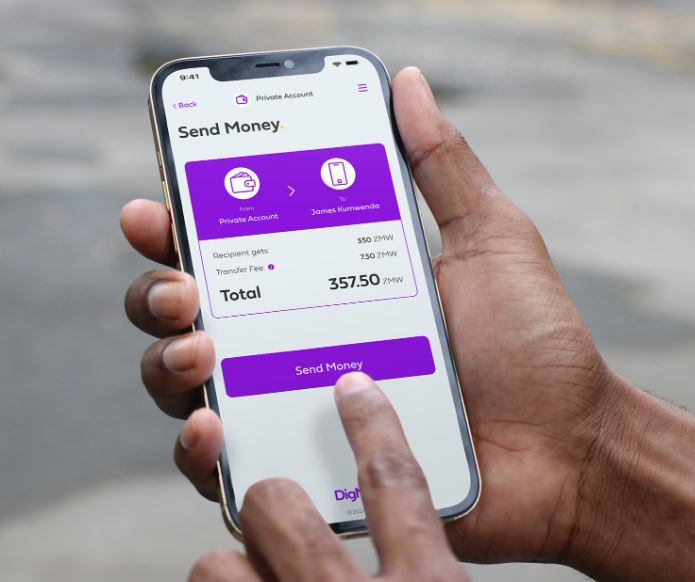
The scale of Zambia’s mobile money adoption is striking. Penetration rose from close to zero in 2009 to 58.4% by 2020, making mobile money the single most widely used financial product in the country, ahead of traditional banking. The value moved through mobile money platforms grew from K3.6 billion in 2016 to K486.3 billion in 2024 — a roughly 135-fold increase in eight years — while the number of active mobile money accounts climbed from 521,098 to 12,328,755 over the same period, in a country of about 20 million people. That trajectory has been driven by an interoperable payments backbone: the Zambian Interbank Payment and Settlement System (ZIPSS) for high-value transfers and the National Financial Switch (NFS), which together allow real-time, cross-provider payments rather than confining users to walled-garden mobile wallets.
A 2023 UNCDF study counted 57 fintech companies operating in Zambia, more than double the 25 recorded in 2018, spanning three main verticals. The first is technology enablement for banks and other regulated institutions — Union54 is the sector’s best-known example, providing card-issuing infrastructure and operating the ChitChat conversational-payments app. The second is digital payments and mobile money itself, where Zoona’s network serves more than 7 million customers. The third is digital lending, exemplified by firms such as Lupiya. Analysts expect that in 2026, mobile money providers will keep pushing beyond simple person-to-person transfers into merchant payments, savings products, credit, and insurance — a shift that would deepen financial inclusion for the small and medium-sized enterprises that dominate Zambia’s informal economy.
Open Finance: The Bank of Zambia’s Next Regulatory Frontier
In June 2026, the Bank of Zambia published a Position Paper on Open Finance, setting out how the country’s payments regulator intends to move from today’s largely closed, provider-siloed data environment toward one in which customers can permission third parties to access their financial data via standardized APIs. The paper leans on the existing ZIPSS and NFS rails as foundational infrastructure and highlights the adoption of the ISO 20022 global messaging standard as a prerequisite for secure data exchange between institutions — a technical detail that matters because it is what will ultimately let a Zambian fintech safely pull a customer’s transaction history from a bank to underwrite a loan or design a savings product. The central bank has proposed establishing industry-led working groups to hammer out the specific APIs, data formats, and sharing protocols, and the position paper frames the effort as building on both the National Financial Inclusion Strategy II (2024-2028) and ongoing electronic Know-Your-Customer (eKYC) system upgrades. The approach mirrors an emerging pattern across African financial regulators — Nigeria, Kenya, and Ghana have all pursued comparable open-banking frameworks — but Zambia’s version is notable for explicitly tying open finance to the country’s parallel digital identity rollout rather than treating the two as separate workstreams.
A Homegrown Digital ID Built to Anchor Everything Else
That identity rollout is arguably 2026’s single biggest Zambian tech story. The government has set an end-of-2026 target to issue digital identification cards nationwide, replacing the old National Registration Card with a credential that can also be used for travel and for accessing both public and private-sector services, from banking to healthcare to social protection. The program is being driven by the Digital Zambia Acceleration Project (DZAP), approved by the World Bank Group in March 2026 and backed by a US$100 million grant from the International Development Association, which aims to expand internet access and digitally enabled public services nationwide alongside the identity system itself. Officials have emphasized a deliberately “homegrown” approach — building the system domestically on a Modular Open-Source Identity Platform (MOSIP) base rather than importing a turnkey foreign solution — while still seeking an international system integrator to support deployment and customization. The Ministry of Home Affairs and Internal Security has reported passing the milestone of 1 million citizens registered on the underlying Integrated National Registration Information System (INRIS), and Zambia’s digital-ID progress was prominent enough to feature at the id4Africa 2026 conference in May, alongside a broader e-government push through the ZamPortal e-services platform. If the identity layer lands on schedule, it would give Zambia’s open-finance and mobile-money ecosystems a shared, verifiable customer identifier — closing a gap that has slowed similar reforms elsewhere on the continent.
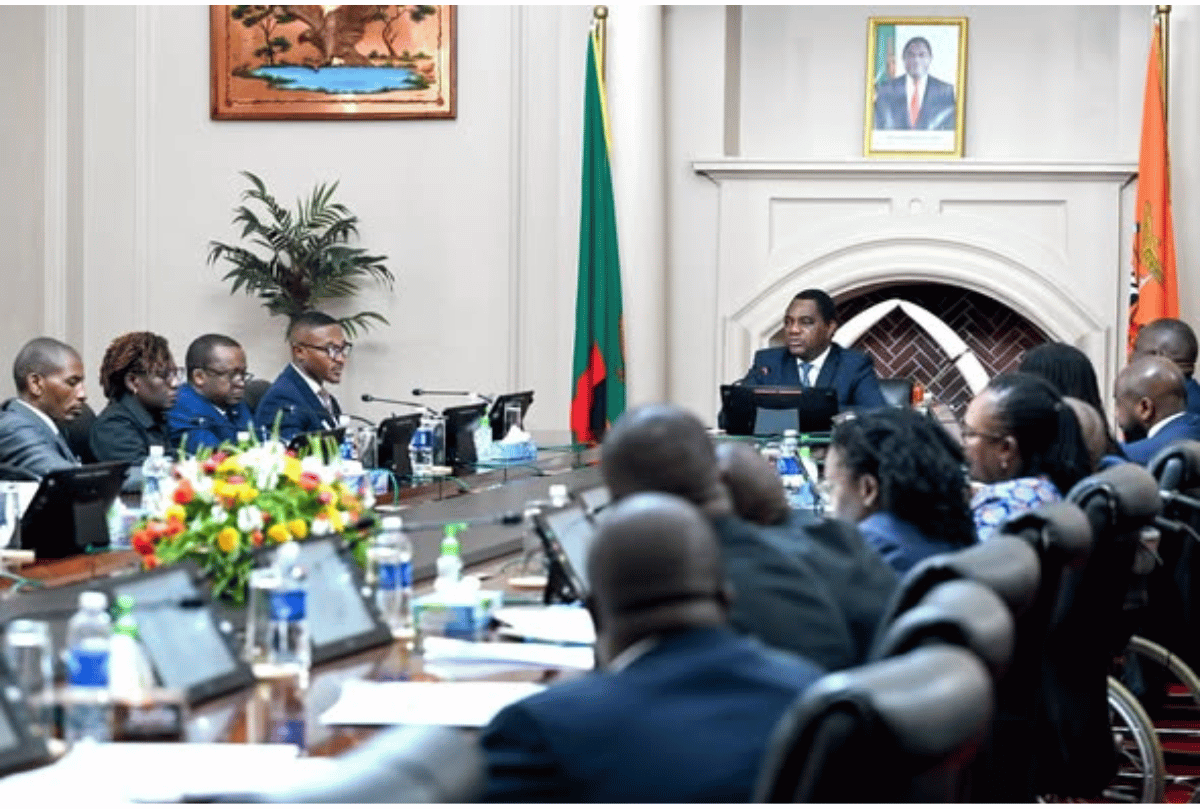
Zambia's President Engages Mobile Money Sector on Digital Financial Inclusion
A Small but Growing Startup Ecosystem
Zambia’s venture ecosystem remains modest by regional standards but is expanding. Tracxn data shows the country’s startups have collectively raised over US$1.11 billion across all funding stages historically, with about US$11.2 million raised across two equity rounds in the first two months of 2026 alone. StartupBlink ranks Zambia’s ecosystem 112th globally and third in Southern Africa, noting 30.4% growth in 2025 and total tracked startup funding above US$41 million that year, concentrated in fintech, edtech, and agritech — sectors that map directly onto the country’s financial-inclusion and rural-development priorities. BongoHive, Zambia’s first technology and innovation hub, founded in Lusaka in 2011, remains the ecosystem’s anchor institution. In 2026 it launched a 24-month accelerator with AUG10FORD Training designed to take youth-led startups from proof-of-concept to investor-ready status, sponsoring four founders per cohort in a fully funded program running through 2030. The hub also highlighted a local win on the continental stage: Koloso App, an edtech venture led by Petra Chikasa, took first place in the EdTech category at the GITEX Africa 2026 Supernova Pitch Competition — a signal that Zambian founders are starting to compete credibly against better-funded peers from Lagos, Nairobi, and Cairo.
What Ties It Together
None of these three threads — open finance, digital ID, and startup capital — is transformative in isolation, but the sequencing is deliberate. A verified national identity makes open-finance data-sharing safer and easier to regulate; interoperable payment rails and open APIs give fintech startups a foundation to build lending, savings, and insurance products without having to negotiate bilateral data deals with each bank; and accelerator programs like BongoHive’s give the resulting startups a path from prototype to funded company. The test for 2026 and 2027 will be execution: whether the Digital Zambia Acceleration Project hits its year-end identity target, whether the Bank of Zambia’s working groups convert a position paper into binding technical standards, and whether the country’s still-thin venture-capital base grows fast enough to fund the fintechs that a fully interoperable, digitally-verified financial system would make possible.
Published By | Tech Wiz