Written By | International News Agencies
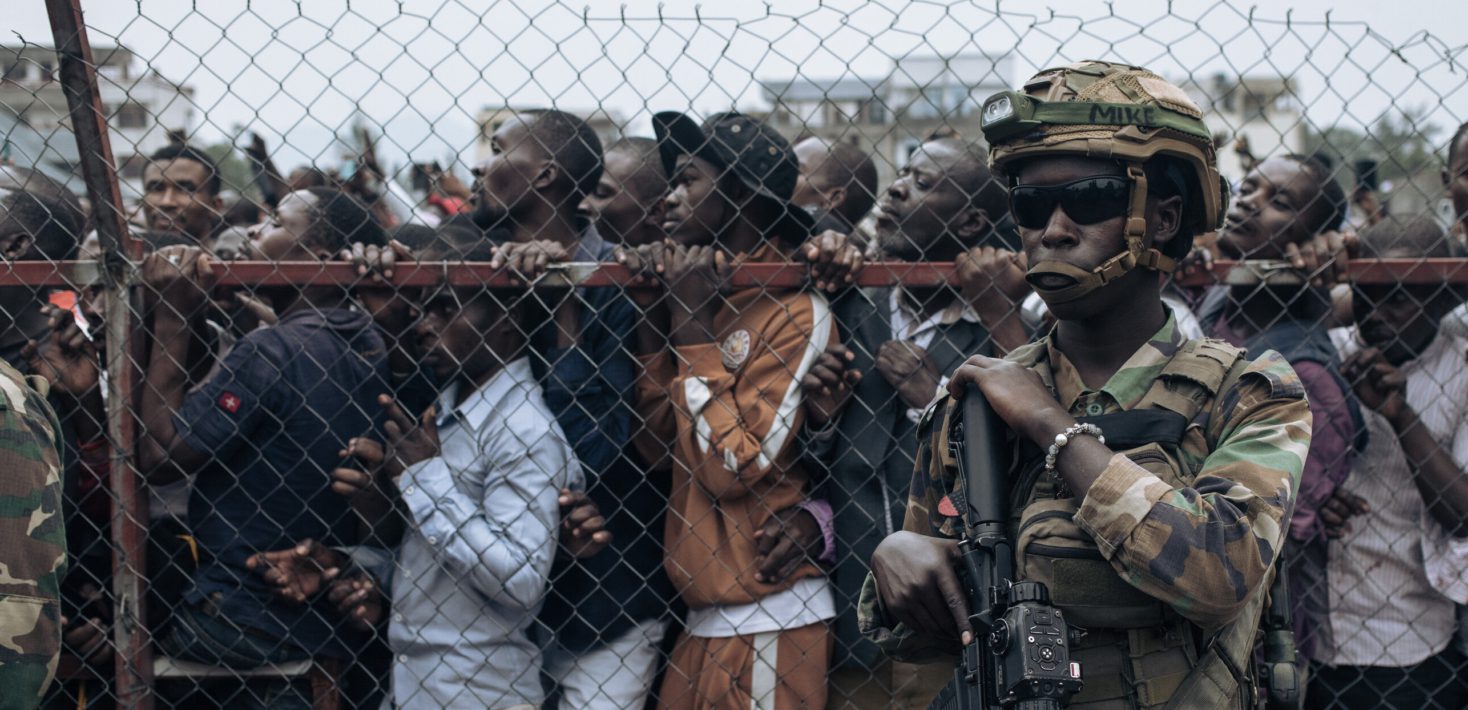
According to Amnesty's findings, ten of the victims were beaten to death, two were shot, and six were abducted before later being found dead
Goma/Kinshasa
Amnesty International on Sunday published new evidence that fighters from the Rwanda-backed M23 armed group have killed at least 18 artisanal miners and detained dozens more in underground cells at mining sites they control in eastern Democratic Republic of the Congo, even as the group traffics gold and coltan extracted at those same sites into neighboring Rwanda. The report lands just days after the latest round of U.S.- and Qatar-mediated talks in Geneva ended without resolving the two disputes that have kept a nominal ceasefire from translating into a durable peace: the disarmament of a Rwandan Hutu militia and the withdrawal of Rwandan forces from Congolese soil.
Together, the two developments illustrate the gap between the diplomatic architecture built around the conflict over the past 15 months and the reality facing civilians living under M23 control in North and South Kivu provinces — a gap that has defined the eastern Congo war since M23 seized the regional capital of Goma in January 2025.
What Amnesty found
The report, titled "DRC: 'We didn't come to play': M23 abuses at artisanal mines and the trafficking of gold and coltan to Rwanda," is based on interviews with 26 people, including artisanal miners, mining experts, shaft owners and relatives of victims. It documents the killing of 18 miners at two sites: Rubaya, a major coltan-mining hub in North Kivu that has been under M23 control since April 2024, and Lomera, a gold-mining site in South Kivu. According to Amnesty's findings, ten of the victims were beaten to death, two were shot, and six were abducted before later being found dead. The organization also documented more than 20 miners held in underground detention cells at Rubaya, and said tens of thousands of Congolese now depend for their livelihoods on mines under the armed group's control.
Amnesty said the minerals extracted under these conditions are moved across the border into Rwanda, tracing a trafficking route through the sand port of Kamembe, in Rwanda's Western Province, and describing soil containing gold and coltan being loaded at the port of Lomera for transport. "Rwanda-backed M23 is committing horrific human rights abuses" in the course of controlling and profiting from the mining sites, Amnesty Secretary General Agnès Callamard said in a statement accompanying the report.
Amnesty called on all countries and companies to stop purchasing coltan and gold sourced from Rwanda, to halt transactions with Rwanda-linked mineral processors and refineries, and for Rwanda's government to end its receipt of trafficked Congolese minerals. The organization also urged the United States and European Union to reject any mineral-supply agreements tied to M23-controlled mines that lack independent oversight — a pointed reference to Western governments' own interest in securing coltan and other so-called critical minerals essential to electronics and battery manufacturing. Neither M23 nor Rwandan government officials responded to Amnesty's requests for comment, according to the report.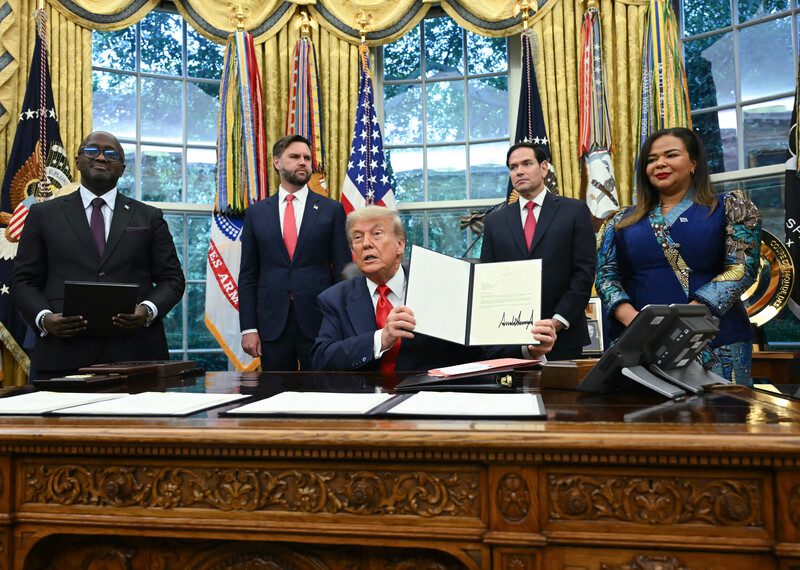
The peace process the report complicates
The allegations surface at a delicate moment for the broader DRC-Rwanda peace process, which has moved in fits and starts since the two governments signed a peace agreement in Washington in June 2025 and reaffirmed it in December of that year. Under that framework, a body called the Joint Security Coordination Mechanism has met periodically to oversee implementation — most recently in Geneva on September 16 and 17, following an earlier session in mid-August. The mechanism is charged with resolving two interlocking obligations that have proven the hardest to implement: the disarmament and neutralization of the Democratic Forces for the Liberation of Rwanda, a Hutu-led militia with roots in the 1994 Rwandan genocide that Kigali has long cited as the justification for its military presence in eastern Congo, and Rwanda's corresponding withdrawal of forces from Congolese territory.
Those disputes remain effectively unresolved. Rwandan officials, including President Paul Kagame, have described progress on FDLR disarmament as "insufficient," while Congolese officials maintain that demobilization efforts are underway and that Rwanda is using the FDLR issue as a pretext to maintain its military footprint. M23, which operates under the political umbrella of the Congo River Alliance, has pursued a parallel and separate track of negotiations with Kinshasa mediated by Qatar in Doha, reflecting the layered and at times overlapping character of a peace process that involves at least four distinct sets of talks — Washington, Doha, Geneva and an African Union-backed framework — without any single venue yet producing an enforceable, comprehensive settlement.
A ceasefire-monitoring mission, established under the Doha framework, arrived in South Kivu in late August to begin verifying compliance on the ground, and M23 announced in December 2025 that it would withdraw from the town of Uvira as part of an earlier, U.S.-brokered arrangement. Yet fighting and mutual accusations of ceasefire violations have recurred repeatedly over the life of the process, including clashes reported in February. A trilateral planning conference is scheduled for October, according to diplomats involved in the talks, with the FDLR dispute again expected to dominate the agenda.
Civil society's verdict: talk, but no trust
For Congolese civilians and activists, the diplomatic timeline has done little to change conditions on the ground. A Congolese civil society activist quoted in reporting on the Geneva round, identified as Walayi, captured the ambivalence many in the region feel toward Kigali's continued military presence: "Rwanda prefers to attack us ... something we cannot accept." Another activist, identified as Amani, offered a more measured view of the value of continued negotiation even amid its evident limitations, describing dialogue as "preferable to escalation" — an assessment that underscores how low the bar for success has fallen after more than a year of intermittent warfare, even as it implicitly concedes that the talks have not yet stopped the abuses Amnesty documented this weekend.
Why the mining sector is central to the conflict
Eastern Congo's vast reserves of coltan — used in the tantalum capacitors found in nearly every smartphone, laptop and electric vehicle — and gold have functioned for decades as both a driver of conflict and a source of financing for armed groups operating with little state oversight. Rubaya alone is estimated to account for a substantial share of global coltan supply, and control over the site has been a strategic objective for multiple armed factions since well before M23's 2025 offensive. Amnesty's report adds to a body of research, including from United Nations experts, alleging that Rwanda has served as a transit and laundering point for minerals extracted from Congolese territory under M23 control, allegations Kigali has consistently denied, characterizing its own mineral exports as sourced from domestic production.
The economic dimension complicates the diplomacy in a specific way: Rwanda's government has in recent years cultivated its role as a regional minerals-processing and export hub, including in partnership with international firms, making allegations of trafficking in conflict minerals a reputational and economic liability that goes beyond the immediate security dispute over the FDLR and troop withdrawal. It also complicates Washington's position, given the Trump administration's stated interest in securing access to Congolese critical minerals as part of the broader peace framework it has brokered — an interest that sits uneasily alongside Amnesty's call for the U.S. to reject mineral agreements tied to M23-controlled sites absent independent oversight.
Analysis: parallel tracks, converging risks
The juxtaposition of Sunday's Amnesty report with the inconclusive Geneva talks points to a structural problem in the peace process: the diplomatic track has focused overwhelmingly on state-to-state issues — troop withdrawals, militia disarmament timelines, verification mechanisms — while the human and economic engine of the conflict, control over mineral wealth, has received comparatively less attention as a subject of enforceable, verifiable commitments. Until access to and revenue from sites like Rubaya and Lomera are addressed as directly as troop positions are, analysts and rights groups argue, M23 and any successor armed groups will retain both the financial means and the incentive to maintain territorial control regardless of what is agreed in Geneva, Doha or Washington.
What to watch next
The October trilateral planning conference will be the next formal test of whether the JSCM process can produce a verifiable timeline on FDLR neutralization, the single issue negotiators on both sides have identified as the most intractable. Also worth watching: whether Amnesty's report prompts any concrete response from mineral-purchasing companies or governments, particularly the U.S. and EU; whether Rwanda's government issues any formal rebuttal beyond its customary denials; and whether the ceasefire-monitoring mission in South Kivu documents further violations at Rubaya or Lomera specifically, which would test whether the verification architecture built over the past year can translate into accountability for the abuses Amnesty has now detailed in granular form.



