Background
On June 21, 2026, Colombia held a presidential runoff between right-wing lawyer and political outsider Abelardo de la Espriella and progressive Senator Iván Cepeda, a protégé of outgoing leftist President Gustavo Petro. The result was one of the tightest in the country's modern history: de la Espriella defeated Cepeda by roughly one percentage point, or about 251,000 votes out of more than 26 million cast, according to Colombia's electoral authority. De la Espriella, a former television commentator and defense attorney who spent years living in Miami and holds U.S. citizenship, campaigned as an anti-establishment hardliner, promising to reverse the peace-process approach of the Petro government and pursue an aggressive military campaign against guerrilla groups, drug cartels, and illegal mining operations that he says have flourished under years of negotiated settlements.
His victory represents a sharp rightward swing for a country that, only four years earlier, had elected Petro as its first leftist president. De la Espriella received the enthusiastic public backing of U.S. President Donald Trump throughout the campaign, and his platform — combining aggressive security crackdowns with free-market economic policies, including plans to shrink the size of government by roughly 40 percent, reactivate the hydrocarbons sector, and cut taxes to spur private investment — closely mirrors positions favored by Washington and by right-leaning governments elsewhere in Latin America, including El Salvador's Nayib Bukele, whom de la Espriella has cited as a model for his planned expansion of the prison system.
Key Developments
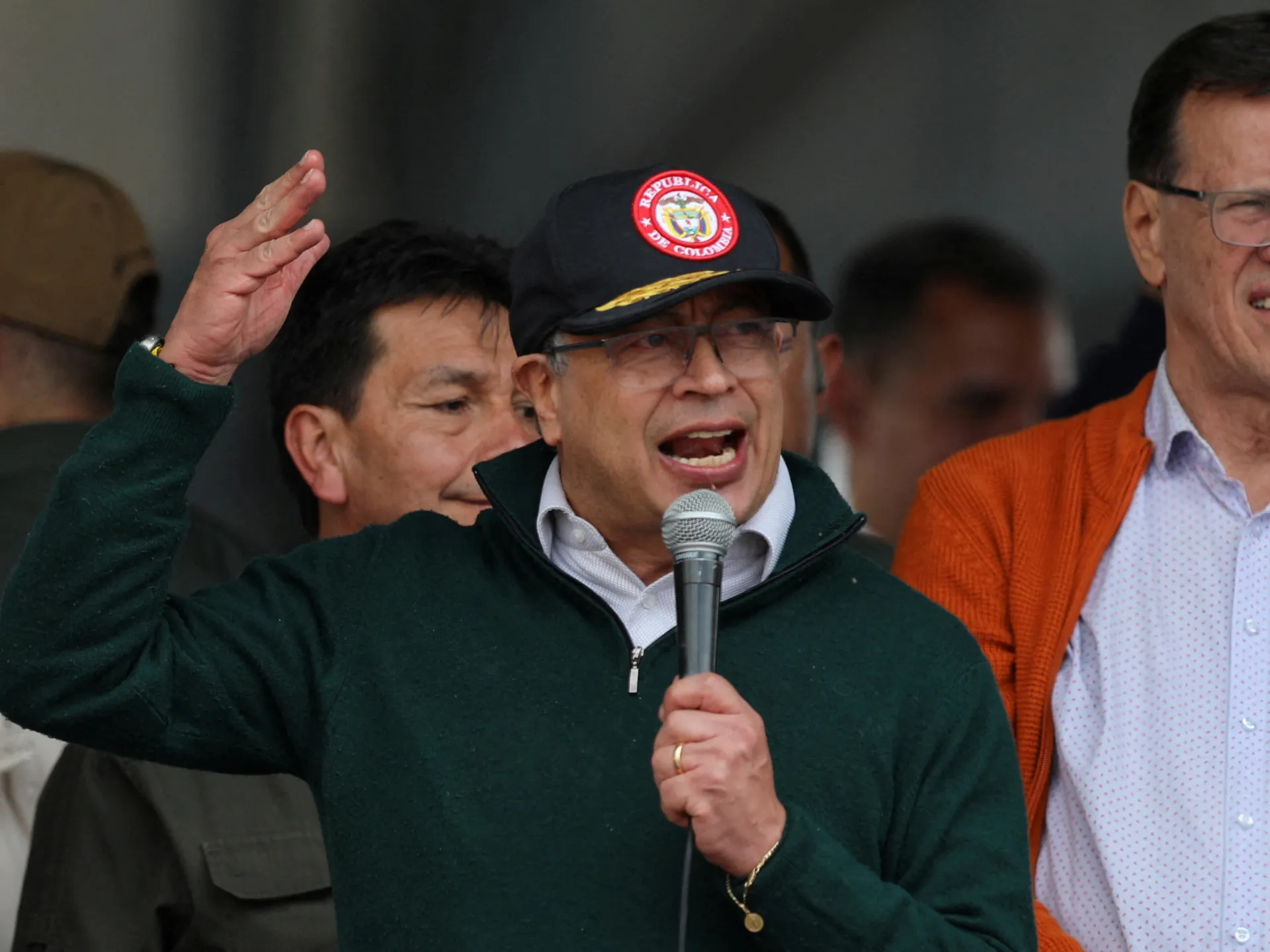
The election's aftermath proved almost as consequential as the vote itself. Petro refused to accept the results, alleging widespread fraud and claiming, without providing evidence, that Israel and the United States had interfered to tip the outcome in de la Espriella's favor. Cepeda's campaign filed formal challenges against vote counts from roughly 33,000 ballot boxes nationwide, though international observers, including missions from the European Union and the Organization of American States, found no evidence of irregularities and characterized the vote as free and fair.
In early July, the dispute escalated further: de la Espriella's transition team suspended the formal handover process after accusing Petro and his allies of attempting to orchestrate a “coup d'état” by refusing to recognize the results and continuing to contest the count. Germán Ávila, Petro's finance minister and the government's transition coordinator, in turn ordered his own team to halt cooperation, effectively freezing the institutional machinery meant to ensure a peaceful transfer of power even as the August 7 inauguration date remained fixed on the calendar.
Even as the political standoff played out, de la Espriella began announcing sweeping changes to Colombia's foreign policy well before taking office. In late July, his team confirmed plans to close 14 embassies and 15 consulates — including missions in Cuba, Nicaragua, Algeria, Hungary, Romania, Ghana, South Africa, and elsewhere — citing cost savings that would be redirected toward domestic security, health, and education priorities. He also pledged to sever diplomatic relations entirely with Cuba and Nicaragua, declaring “In my government there will be no ties whatsoever with tyrannies,” while simultaneously announcing plans to reopen Colombia's embassy in Jerusalem — reversing the break with Israel ordered by Petro in 2024 — and to open a new embassy in Nigeria.
The most visible preparations, however, have centered on the inauguration itself, which will break with more than a century of Colombian tradition. Rather than being sworn in at the Capitolio Nacional in Bogotá, as has been customary, de la Espriella will take the oath of office on August 7 inside the enclosed arena of the Santiago de Cali University — the first time in over a hundred years that a Colombian presidential transfer of power has taken place outside the capital, and the first time it has been held inside a closed venue rather than an open public ceremony. The choice of venue itself became a flashpoint: de la Espriella's team initially explored holding the ceremony at a military installation in southern Colombia, a plan Petro's government blocked by barring the use of military sites for the event, prompting the shift to the Cali arena.
In response, national and regional authorities have mounted what officials describe as one of the largest security operations in Cali's recent history. Multi-layered security plans call for extensive troop and police deployment, designated and restricted protest zones, and explicit warnings that demonstrations — expected from both supporters and opponents of the incoming government given the country's polarized political mood — will not be permitted to block strategic roads or disrupt the ceremony. De la Espriella has said that one of his first acts as president, to be signed by decree on inauguration day itself, will be the creation of an “Urban Security Defense Block” coordinating the armed forces, police, and local governments in a stepped-up push against urban crime.
Reactions
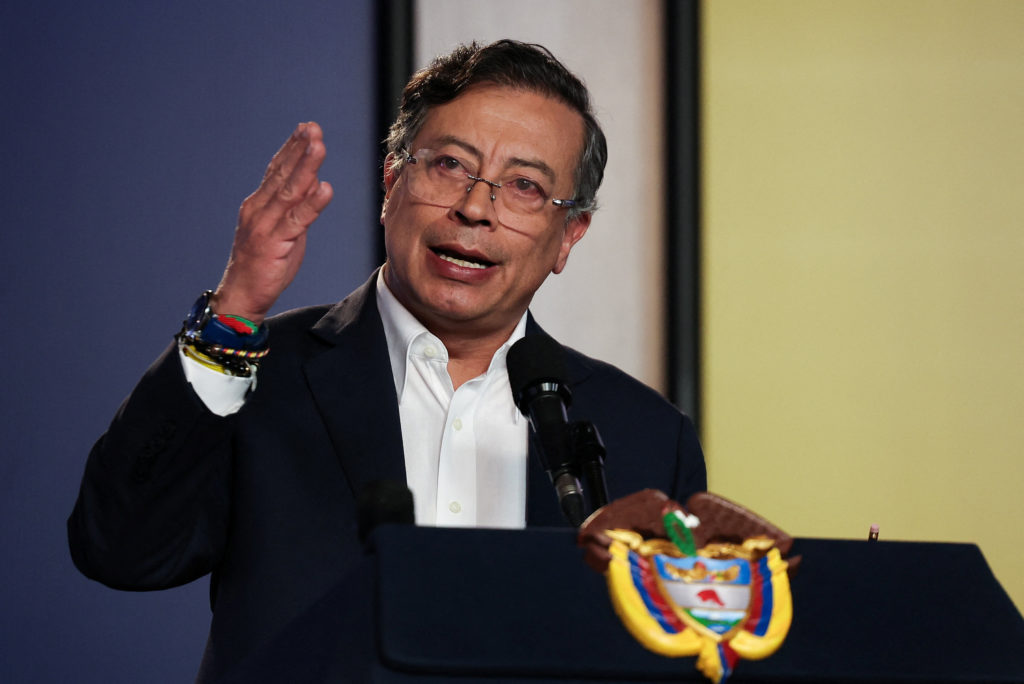
Reaction to de la Espriella's rise and the transition standoff has split sharply along Colombia's political and international fault lines. Trump has been effusive in his public support, and analysts note that de la Espriella's security-first, market-friendly agenda aligns closely with the priorities Washington has pushed across the region. Commentary from the Atlantic Council and other regional policy voices has described the incoming administration as a significant realignment for Colombia, historically one of the United States' closest security partners in Latin America, after four years of friction under Petro, who had pursued closer ties with Venezuela's government and a more independent foreign policy line.
Domestically, Petro's camp and Cepeda's supporters have continued to characterize the outcome as illegitimate, pointing to the razor-thin margin and alleging manipulation, even though the specific evidence for those claims has not been substantiated by any independent observer mission. Human rights and peace-process advocates within Colombia have voiced alarm over de la Espriella's stated intention to abandon negotiated settlements with armed groups in favor of renewed military offensives, warning of a return to the kind of large-scale conflict that peace agreements over the past decade sought to wind down. Business and investor sentiment, by contrast, has generally welcomed the prospect of tax cuts, reduced state intervention, and expanded hydrocarbons development, viewing it as a reversal of the more interventionist economic approach pursued under Petro.
What's Next
With the inauguration set for August 7, the immediate question is whether the transition — frozen since early July over the coup allegations — can be sufficiently restored in the final days to ensure a functional handover of government operations, budgets, and security responsibilities. Colombian institutions have signaled the ceremony itself will proceed regardless, but the deeper rupture between the outgoing and incoming administrations, and the unresolved fraud allegations still working through legal challenges over tens of thousands of ballot boxes, leave open the possibility of continued legal and political conflict well beyond inauguration day.
Beyond the immediate handover, de la Espriella's promised policy shifts — the military offensive against armed groups, the embassy closures, the diplomatic rupture with Havana and Managua, and the reopening of ties with Israel — are likely to reshape Colombia's regional posture quickly once he takes office, with ripple effects for neighboring Venezuela, where Colombia's position could influence the broader regional response to that country's own fragile post-Maduro transition. How the security establishment responds to his mega-prison and anti-cartel plans, and whether the security lockdown in Cali passes without major incident, will offer an early indicator of how his four-year term is likely to unfold.
Published By | News Editor