Rabat, Morocco
Morocco's ruling coalition topped Wednesday's parliamentary election, but the headline result out of Rabat was not who won — it was who came back from the dead. The Justice and Development Party (PJD), the Islamist movement that led the government for a decade before being all but wiped out in 2021, more than quadrupled its seat count, from 13 to 54, in an election marked by the lowest voter engagement of King Mohammed VI's 27-year reign. The combination of a fragmented governing majority, a resurgent opposition that says it wants no part of the next government, and turnout of just 38.08% has left Morocco facing weeks of coalition bargaining over a parliament that reflects a country simultaneously restless and disengaged.
What happened
Interior Minister Abdelouafi Laftit announced official results on September 23 showing the Authenticity and Modernity Party (PAM) finishing first with 97 of 395 seats, an increase of 10 from 2021. But the rest of the outgoing coalition fared far worse: the National Rally of Independents (RNI), the party of outgoing Prime Minister Aziz Akhannouch, collapsed from 102 seats to 66, and the conservative Istiqlal Party fell from 81 to 65. Together, the three governing parties still control 228 seats — comfortably above the 198 needed for a majority under Morocco's 395-seat House of Representatives — making a simple renewal of the outgoing coalition mathematically the path of least resistance.
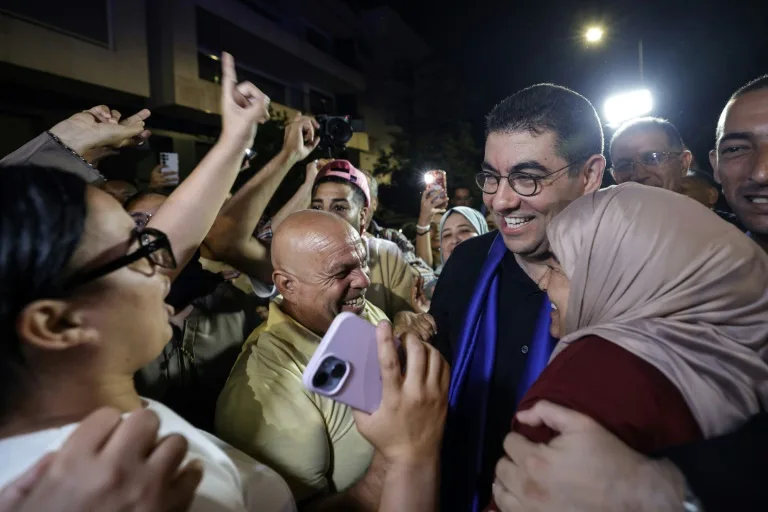
The PJD's revival was the election's most striking storyline. Reduced from the largest party in parliament to a rump of 13 seats in the 2021 landslide that swept in Akhannouch, the Islamist party rebuilt around Abdelilah Benkirane, the former prime minister who led Morocco's government from 2011 to 2017 and has remained the PJD's most recognizable figure. Benkirane, addressing supporters after results were announced, called the outcome "a blessing from God" and declared that "the role of PJD today in the history of Morocco … is a very, very major role" — remarks that reflected the scale of the comeback even as his party finished fourth.
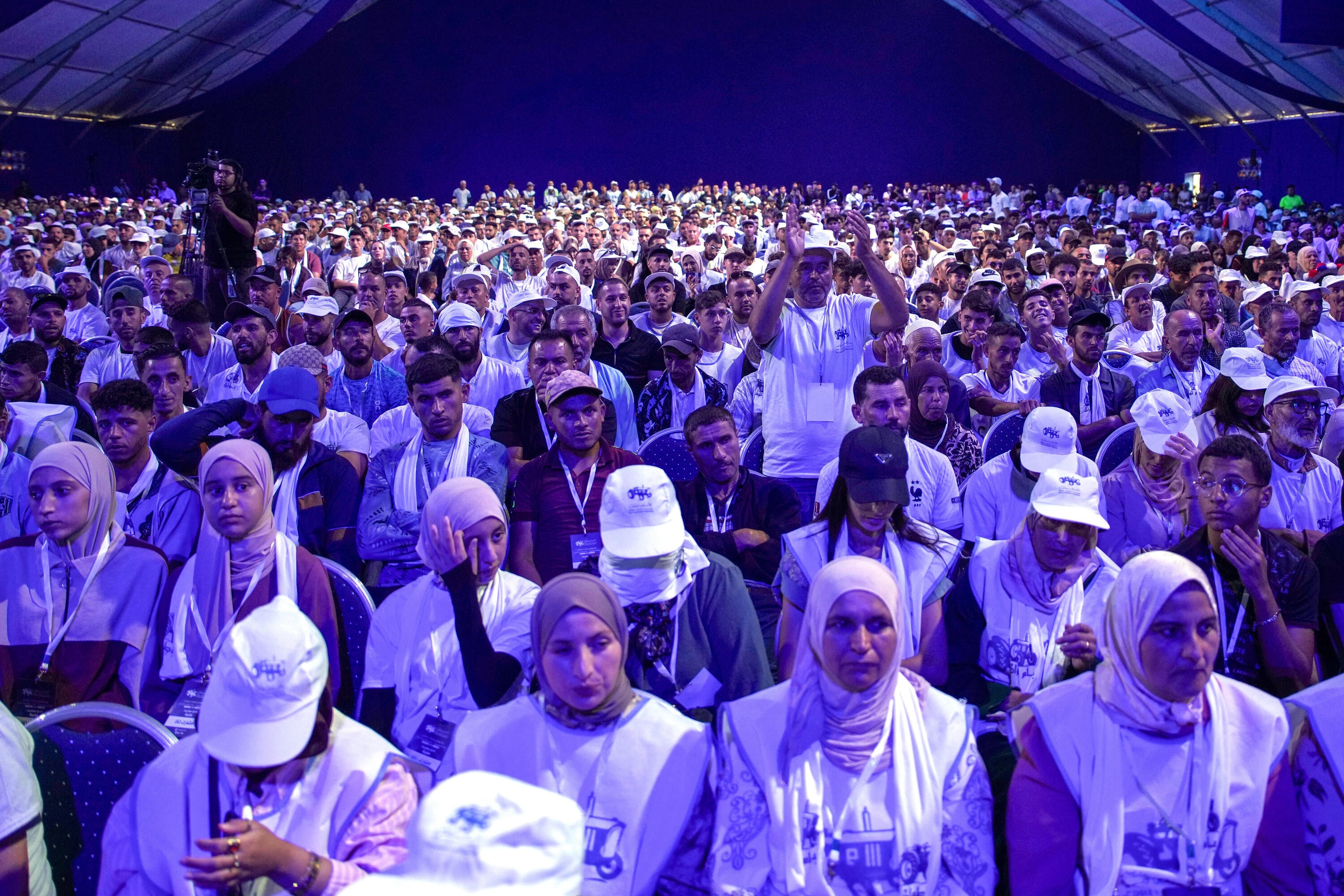
Turnout, meanwhile, told a starker story about the health of Morocco's electoral democracy. At 38.08%, participation fell below the 2016 level of 42.27% and far short of the 50.86% recorded in 2021, landing just above the record low of 37% set in 2007. Participation varied sharply by region: the southern Laayoune-Sakia El Hamra area, where questions of Western Sahara sovereignty give elections added political weight, recorded turnout as high as 77%, while many urban constituencies elsewhere recorded far weaker engagement — evidence, analysts say, of deepening public disillusionment with a political class widely seen as disconnected from everyday economic concerns.
Background: a system built for managed competition
Morocco's political arrangement gives King Mohammed VI ultimate authority over the state, while a popularly elected House of Representatives selects a government that manages day-to-day policy. Under Article 47 of the 2011 constitution — adopted after Arab Spring protests pushed the monarchy toward limited reform — the king is required to appoint the head of government from the party that wins the most parliamentary seats. That rule makes PAM's first-place finish decisive procedurally, even though the party captured barely a quarter of the seats it would need to govern alone.
The PJD's arc over the past two election cycles illustrates how volatile that managed system can be. The party rode a wave of Islamist-leaning support to lead governing coalitions from 2011 through 2021, holding 125 seats heading into the 2021 vote, only to be routed by RNI and its allies that year, crashing to just 13 seats. The party itself attributed the collapse to "electoral corruption and disinformation" and unnamed actors working to undermine the results, but its own younger members have since acknowledged a deeper problem: years in government had separated the PJD from parts of its base, particularly younger voters who felt the party had drifted from the concerns that first drew them to it.
The rebuilding that followed centered on Benkirane's return to the party leadership and a deliberate shift away from ideological messaging toward bread-and-butter issues. Saad al-Sabahi, a PJD regional secretary in Casablanca-Settat, said the party "was able to overcome its crisis" through internal congresses and organizational renewal after Benkirane took over. The party's 2026 platform reflected that shift, built around 467 specific measures grouped into five policy areas focused on prices, jobs, schools, hospitals, and anti-corruption efforts rather than religious or ideological appeals. Younger PJD figures, including 37-year-old youth leader Imane Traifi, cautioned that rebuilding trust with a new generation of voters "cannot be reduced to electoral mobilisation" and would require sustained engagement well beyond campaign season — a caveat that tempers the scale of Wednesday's comeback even as the party celebrates it.
Key developments and the coalition puzzle
The most immediate question is not whether a coalition can be assembled — the arithmetic allows for several — but which one Morocco's parties are willing to build. PAM's leadership has already ruled out reconstituting a partnership with RNI on the terms of the outgoing government. Fatima Ezzahra El Mansouri, PAM's national coordinator, said that had RNI finished first, she "personally would not want to join another government led by the party," while stressing that any final coalition decision rests with PAM's National Council. Mohamed Mehdi Bensaid, a senior PAM figure, echoed that position, ruling out a renewed RNI-led arrangement.
Complicating matters further is the intra-party drama surrounding Fouzi Lekjaa, a powerful former finance official and PAM figure who has been floated as a potential prime ministerial candidate alongside Mansouri herself. Benkirane suggested Lekjaa's rise within PAM was partly a deliberate strategy to counter the PJD, though PJD parliamentary figure Abdellah Bouanou downplayed any personal animosity, describing his relationship with Lekjaa as "a good, professional, human relationship despite the political divide."
For its part, the PJD has signaled it wants to stay out of government altogether. Benkirane framed a PAM-led administration as "questionable," pointing to allegations of irregularities — including disputes over ballot-box handling in Tangier — that the party says taint the results. "Why would an opposition party exist," he said, "if it does not bring down a corrupt and corrupting government?" That posture would leave PAM to build a majority from RNI, Istiqlal, and smaller parties without the added legitimacy — or added seats — that PJD participation might have offered.

Stakes and the economic backdrop
Whoever ultimately leads the next government inherits an economy showing signs of strain. Morocco's central bank, Bank Al-Maghrib, held its benchmark interest rate at 2.25% on September 22, a day before results were announced, while projecting growth would slow to 4.4% in 2026 from 4.9% the year before. That deceleration, combined with the record-low turnout, points to a disconnect between Morocco's political institutions and a public more preoccupied with cost-of-living pressures than with parliamentary maneuvering — a dynamic that has fueled periodic protest movements in Moroccan cities in recent years.
The government-formation process now moves to the palace and to negotiating rooms in Rabat, where PAM will need to court coalition partners while managing internal disputes over who should serve as prime minister. Analysts tracking the process have noted that a three-party continuation of PAM, RNI, and Istiqlal remains the most arithmetically straightforward outcome, but PAM's public rejection of an RNI-led framework — as opposed to an RNI-junior-partner framework — suggests talks could stretch on as parties jockey over the top job and cabinet portfolios.
What to watch next
Three threads will determine how this plays out. First is the timeline and outcome of the king's consultations: constitutionally bound to nominate PAM's candidate, Mohammed VI's choice of whether that is Mansouri, Lekjaa, or another figure will shape the tone of the next government from the outset. Second is whether the PJD's opposition stance holds, or whether the pull of proximity to power — as has happened with Islamist parties elsewhere in the region — eventually draws it back toward negotiations. Third, and perhaps most consequential in the medium term, is whether the incoming coalition treats record-low turnout as a warning to be addressed through economic and political reform, or as a routine feature of a system where the outcome is ultimately guaranteed by the palace regardless of who shows up to vote. With growth slowing and prices still a daily concern for Moroccan households, the next government's ability to translate a fragmented mandate into credible economic policy will be watched closely both at home and by Morocco's international partners.
Published By | News Editor