KINSHASA
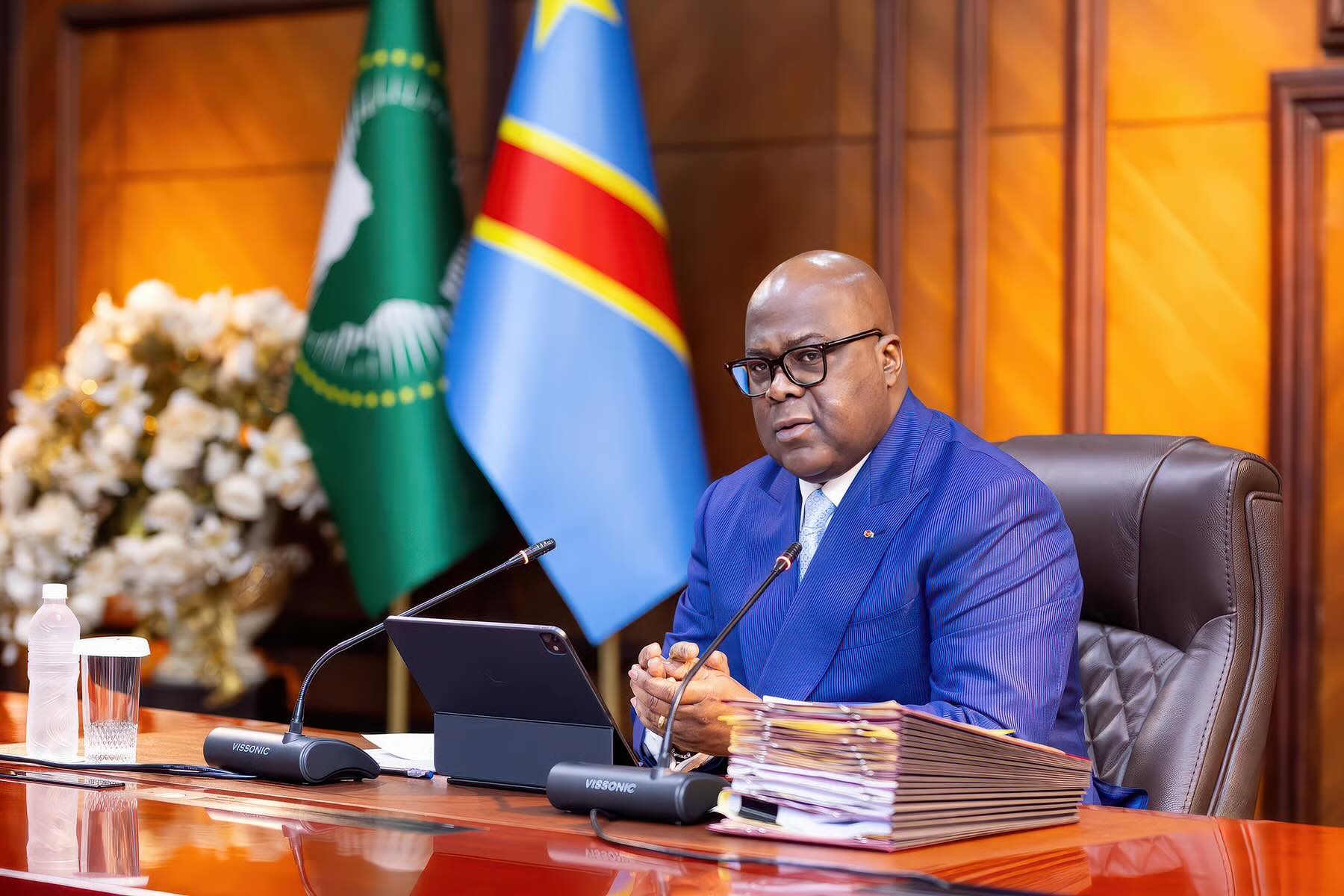
Two days after President Félix Tshisekedi signed an ordinance creating the body that will organize his long-promised national dialogue, opposition supporters assembled across the Democratic Republic of Congo on Tuesday to reject it, converging on the capital on the same morning that lawmakers returned to the Palais du Peuple for the September session of Parliament.
The choreography was not accidental. The Coalition Article 64, an opposition alliance that takes its name from the constitutional clause obliging Congolese citizens to thwart any seizure or exercise of power in violation of the constitution, chose Sept. 15 precisely because it is the day deputies and senators reconvene. Their demand is a single one: that no revision or change of the 2006 constitution be attempted, and above all that no path be opened to a third term for Tshisekedi, who was re-elected in December 2023 and is constitutionally barred from standing again.
What makes Tuesday consequential is the collision of the two events. The president has offered dialogue as the remedy for a country fighting a war in its east, and the opposition has answered that the dialogue as designed is not a negotiation but an instrument. The terms of the ordinance gave them their argument.
What the Ordinance Does
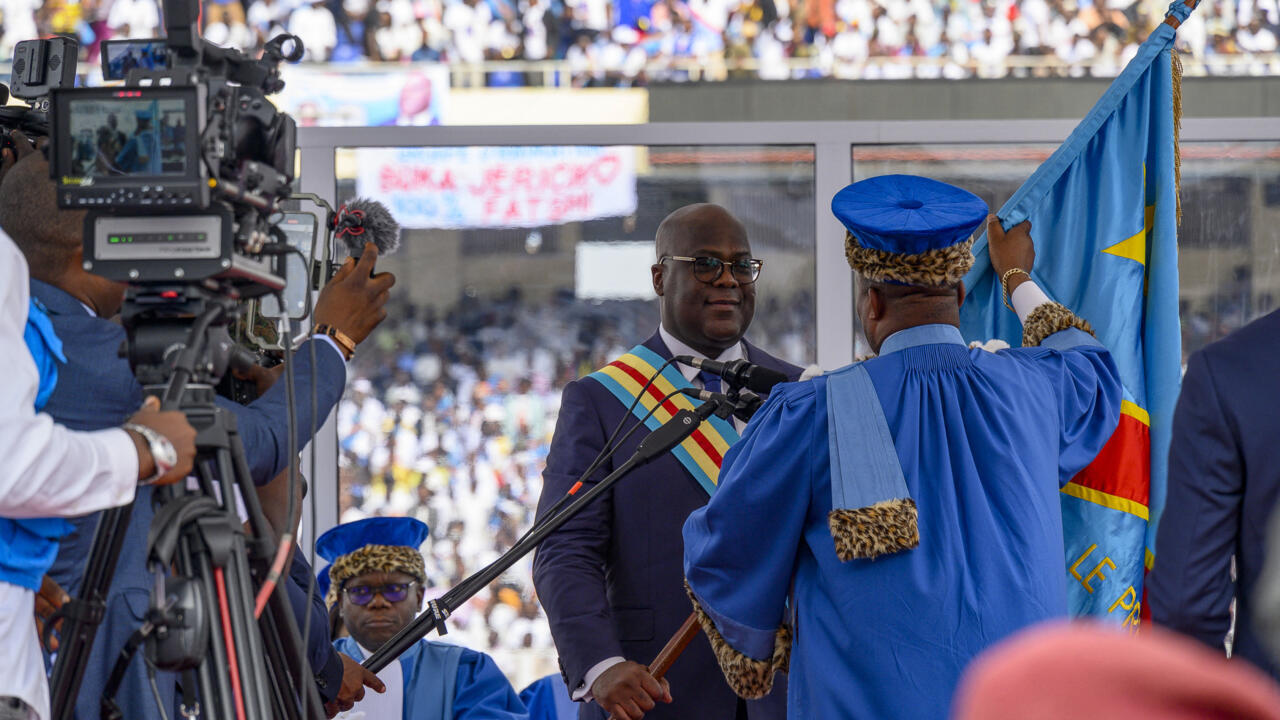
The text, read on Sunday, Sept. 13, by presidential spokeswoman Tina Salama, establishes a Preliminary Organizing Committee for the National Dialogue for Peace, Cohesion and the Refoundation of the State. It is not the dialogue itself, nor even its preparatory commission. It is the body that will assemble the conditions under which that commission can later be created — a first step before the first step.
The committee is placed under the direct authority of the president. It comprises a coordinator, a deputy coordinator and members, all designated by Tshisekedi, who may also terminate their functions. The ordinance further provides that he may add to it "any person or personality whose expertise is judged necessary." A technical secretariat of 11 experts, likewise appointed by the president, is attached to the committee and charged with drafting the terms of reference and road map, producing studies and analyses, centralizing contributions from consultations and writing up the minutes of meetings.
"The committee exercises its mission under the direct authority of the president of the republic and regularly reports to him on the progress of its work through his chief of staff," Salama said in reading the text.
The committee's tasks include organizing preliminary meetings with the country's various constituencies, identifying the material, financial, technical, security, logistical, communications and protocol needs of the dialogue, and establishing contacts with national and international partners — in each case, the ordinance specifies, in accordance with the orientations of the president. Its membership had not been made public as of Tuesday.
The Reaction
Opposition and civil-society figures moved within hours to attack the structure rather than the principle.
Emery Okundji, secretary general of the opposition party FONUS and a member of the Coalition Article 64, put the objection in a sentence on Monday. "A dialogue intended to pull the DRC out of its deep crisis cannot be organized, composed and controlled by a single party, even if that party is the institution of the president of the republic," he told Radio Okapi.
Jean-Claude Katende, president of the African Association for the Defense of Human Rights, known by its French acronym ASADHO, said the arrangement announced by Tshisekedi indicated that "we are going in a bad direction." He said he would wait for the committee's members to be named before judging the orientation the process would take.
The sharpest response came from Sauvons la RDC, the political and social platform built around former president Joseph Kabila. In a communiqué, it said the ordinance made Tshisekedi "the alpha and the omega of the so-called national dialogue."
"From the beginning to the end of the process, from the choice of the members of the Organizing Committee to the ultimate fate of the resolutions issuing from this pseudo-dialogue, everything, absolutely everything, is subject to his will and falls within his sole discretionary power," the platform said. It described the ordinance as enshrining an "absolutist conception of power," accused the government of a "tyranny concerned only with its own preservation," and concluded that "Article 64 of the constitution is the only option for the salvation of the DRC." It called on those it termed resistors to tyranny to choose a "revolutionary" rather than a "reformist" struggle.
Several opposition figures have proposed that the Catholic Church, which has convening authority and a long record of mediating Congolese political crises, should arbitrate the process instead. The government's plan envisages consultations across all 26 provinces before the dialogue proper — a sequence the Coalition Article 64 has shown no sign of joining.
A March Permitted in One City, Banned in Others
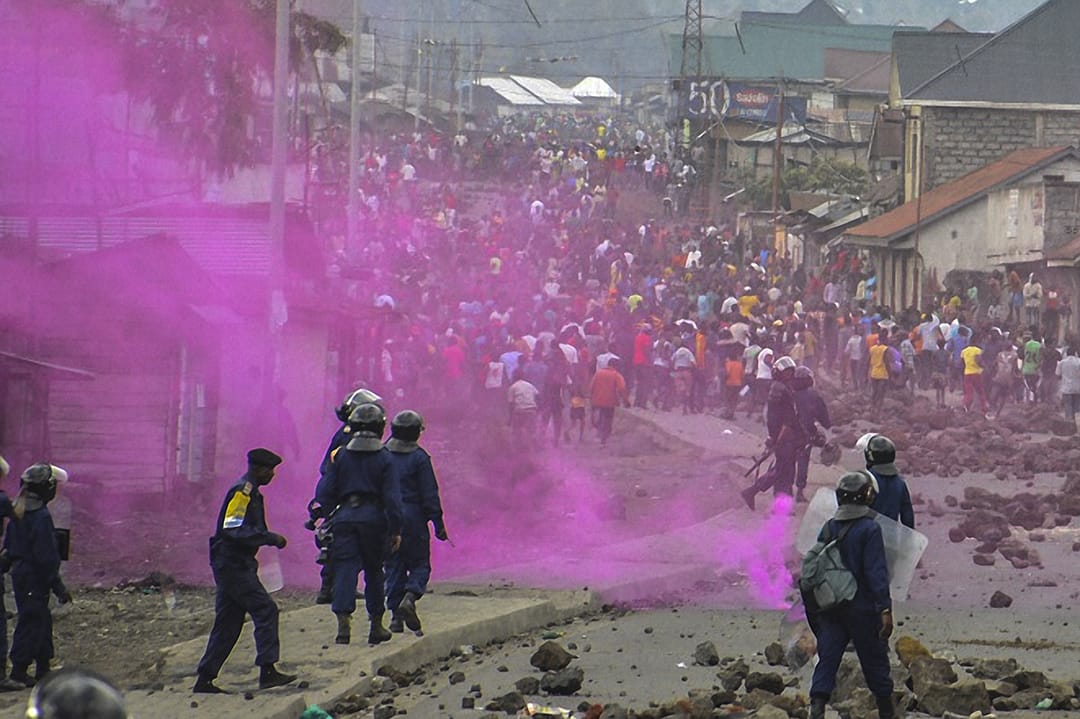
The right to assemble became its own test on Tuesday. In Kinshasa, the provincial government authorized the demonstration on condition that the route and the end point be changed, placing the Palais du Peuple — where Parliament was reconvening — out of reach. Radio Okapi reported an agreement between the opposition and the city administration on the itinerary. Actualite.cd reported the capital calm on Tuesday morning, with police deployed along the approved routes, and said that by 10:30 a.m. no Coalition Article 64 leader had yet reached the Limete interchange, where supporters were still gathering.
Elsewhere the answer was no. In Lubumbashi, interim mayor Joyce Tunda banned the march on Friday, Sept. 11, citing the need to preserve public order, and the provincial police commissioner for Haut-Katanga, Gen. Blaise Kilimbalimba, reiterated the prohibition on Monday during a joint parade of police and army units at the Kibasa Maliba stadium.
"We warn anyone who, in his method, in his behavior, in his attitude, seeks to disturb public order and tranquility," Kilimbalimba said, urging residents to go about their business normally. The coalition refused to comply, citing Article 26 of the constitution, which guarantees freedom of peaceful assembly on public thoroughfares, and noting that it had formally notified the mayor's office of the march on Sept. 7. Actualite.cd reported on Tuesday that the Lubumbashi march was prevented, with arrests and injuries alleged.
The provincial government of Kwango banned all demonstrations on Sept. 15. In Tshopo, the march was prohibited on public-health grounds, a reference to the Ebola outbreak. In Kananga, the coalition said it would march despite a suspension of political demonstrations, and in Kindu it demanded the release of members arrested on Sept. 13; Radio Okapi carried two separate reports that day giving the number of detainees as 12 and as four, a discrepancy that had not been resolved. The national human rights commission, the CNDH, appealed on Monday for civility and respect for human rights on all sides.
What Parliament Actually Has to Decide
The session that opened Tuesday carries three files that will define the coming months. The first is money. The 2027 finance bill, adopted in the Council of Ministers last Friday, is balanced at 57,500 billion Congolese francs, roughly $24.8 billion — an increase of 12 percent over the 2026 budget. It allocates funds for security and defense, infrastructure, basic education, universal health coverage and military and police programs.
The second is the dialogue itself, which now enters the legislature's field of vision as a political question rather than a presidential announcement.
The third is the most combustible: a bill setting the conditions for organizing a referendum. Both chambers have already examined it, and it has returned for a further deliberation intended to give the text greater clarity and legal security. To the opposition, a referendum law is the machinery a constitutional revision would require, which is why the Coalition Article 64 treats the two questions as one.
The Stakes
Tshisekedi's case for a dialogue rests on the state of the east, where the March 23 Movement, or M23, holds Goma and Bukavu and has built a parallel administration that taxes businesses, transporters, cross-border trade and humanitarian organizations. Progress in the Qatari-mediated Doha process has stalled: of the eight protocols set out in the November 2025 Doha Framework for Peace, the government and M23 have signed two, covering ceasefire verification and the release of detainees. Fifteen detainees were handed over on Aug. 7 under that second protocol. Rwanda, for its part, has called Kinshasa's July 28 protocol with the FDLR militia a delaying tactic inconsistent with the December 2025 Washington Accords.
A president fighting a war has a genuine argument for national cohesion. But the same war cuts the other way: it makes the constitutional question urgent for an opposition that suspects the emergency will be used to extend a mandate, and it deprives Tshisekedi of the authority he would need to convene a process on his own terms.
What to Watch
Three things will show whether Tuesday was a turning point or a rehearsal. The first is the committee's membership, which Tshisekedi has yet to announce and which will reveal whether he intends to buy in opponents or govern the process alone. The second is the fate of the referendum bill in this session — its passage would harden the opposition's reading of the president's intentions. The third is whether the Coalition Article 64 can sustain mobilization beyond a single day in a country where its marches were permitted in the capital and blocked almost everywhere else.
Published By | News Editor