Written By |
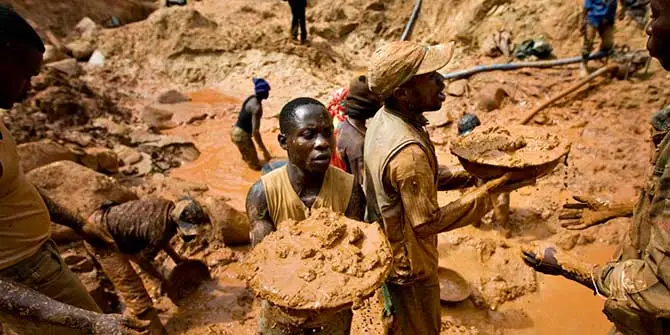
Gold mining in Congo
PARIS/WASHINGTON – Rwanda and the Democratic Republic of Congo (DRC) are set to commit to working with the United States and other international partners to overhaul their mineral supply chains and introduce reforms, according to a draft economic framework seen by Reuters. The initiative follows a peace agreement reached in Washington in June.
The two countries agreed on the draft framework, which is now under discussion with stakeholders including the private sector, multilateral banks, and donor agencies, a source familiar with the matter said. A final framework is expected to be concluded in early October and signed later by the heads of state.
The 17-page draft builds on an August outline and details implementation measures and coordination mechanisms. It aims to end decades of conflict that have killed thousands while unlocking billions of dollars in Western investment in a region rich in tantalum, gold, cobalt, copper, and lithium.
Regulatory Initiatives and Transparency
Under the framework, Kinshasa and Kigali would work with the U.S. and other partners to develop regulatory initiatives designed to “de-risk” private sector investment, curb illicit trade, and boost transparency.
The countries would adopt international transparency standards, including guidance from the Organisation for Economic Co-operation and Development (OECD), and commit to third-party inspections of mine sites. The draft also proposes cross-border special economic zones developed in partnership with private companies.
The framework sets out timelines for annual high-level summits on regional economic integration, as well as regular steering committee and technical working group meetings.
Security Tensions
The framework is part of a broader June deal under which Rwanda agreed to withdraw troops from eastern Congo within 90 days, while Congolese operations against the Democratic Forces for the Liberation of Rwanda (FDLR) were to conclude in the same timeframe. But Western diplomats warn the process is facing setbacks. “One of the main obstacles to finalizing and signing this regional agreement is the fact that the other peace processes have stalled,” one diplomat said, citing Rwanda’s failure to withdraw troops and the lack of operations against the FDLR.
The Doha process, intended to mediate between Kinshasa and the Rwanda-backed M23 rebels, has also struggled to advance. Earlier this year, M23 seized eastern Congo’s two largest cities and valuable mining zones in a rapid offensive. “Without progress on security, the partners — and even the actors themselves — will find it difficult to commit to economic cooperation,” the diplomat added.
A Congolese official told Reuters: “Kinshasa cannot consider economic cooperation with Rwanda as long as its army occupies part of our territory.”
Sovereignty Over Resources
In last month’s outline, Rwanda and Congo reaffirmed “full, sovereign control” over the exploitation, processing, and export of their natural resources. Both sides recognized the importance of building local mineral processing capacity and pledged to prevent mineral revenues from funding armed groups.
The agreement also seeks to create a world-class mining sector in the region and to improve cross-border cooperation on mineral supply chains.
Source: Reuters
Read full story here Exclusive: Congo-Rwanda draft deal outlines role of US, others in revamp of minerals sector



