Written By | International News Agencies
Albertans have voted decisively to remain part of Canad
World Politics
Overview
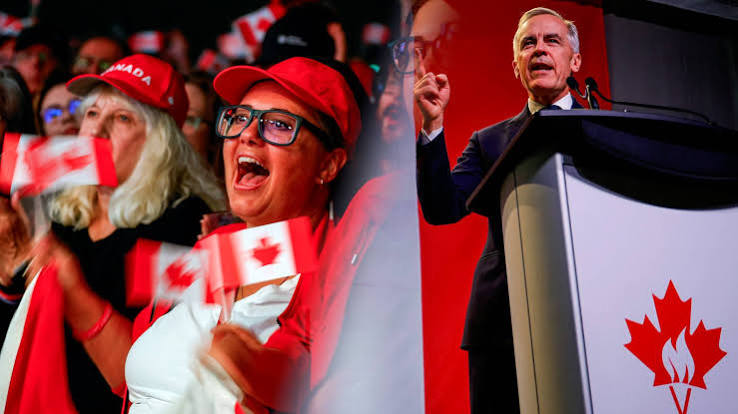
Albertans have voted decisively to remain part of Canada. In a nonbinding provincial referendum held on Monday, October 19, early and unofficial results from Elections Alberta showed roughly 77 percent of voters choosing to stay in the country and roughly 23 percent backing the start of a process that could eventually lead to separation. With more than one million ballots counted by early Tuesday, the margin was wide enough that Canadian broadcasters, including the CBC, projected the outcome well before the count was complete.
The result is a significant political win for Prime Minister Mark Carney, who campaigned personally in the province in the final days, and a relief for Premier Danielle Smith, who called the vote under pressure from separatists inside her own governing party even though she opposes independence. It is also a setback, though not necessarily a final one, for the activists who have spent the past two years trying to turn long-standing western grievances into a mass movement. Their leaders said within hours that the campaign for an independent Alberta would continue.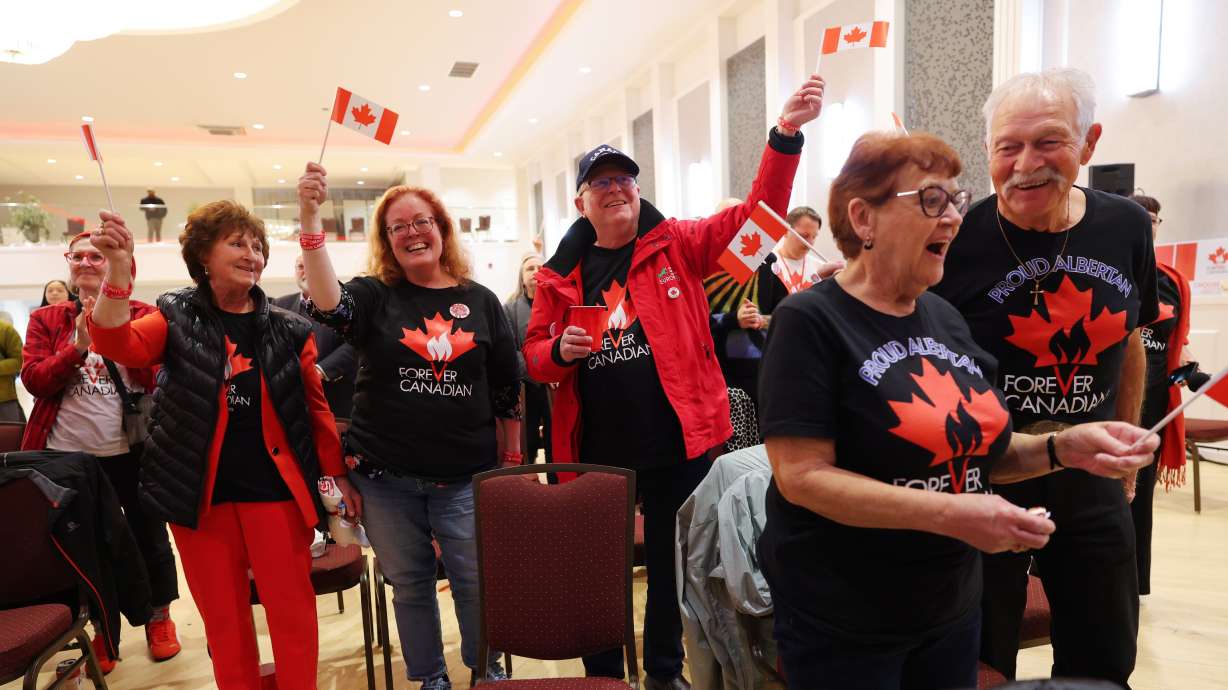
Background: A Question Short of Independence
The ballot did not ask Albertans whether they wanted to leave Canada outright. Reporting from several outlets describes it as a vote on whether Alberta should remain in the country or begin a legal process that could lead to a second, separate vote on separation. The precise wording is described differently across outlets: Al Jazeera and the Associated Press characterize it as a choice between staying and starting a process toward a later referendum, while Newsweek's early report framed it as a choice between remaining in Canada and holding a binding referendum on separation. Either way, all of the coverage agrees that the vote itself was nonbinding and that a yes to separation would have opened a door rather than walked through it.
Premier Smith agreed to hold the vote after separatist pressure inside the United Conservative Party grew. She has said she opposes independence, and she pointed to polling that put support for separation at about 22 percent, a figure she described as still too high. Her stated hope was that a federalist victory would settle the question and take it off the table. Whether it does so is the central uncertainty now.
The roots of the movement lie in Alberta's relationship with Ottawa. The province holds the fourth-largest proven oil reserves in the world, and its economy and identity are closely tied to the energy industry. Resentment of federal policy, especially on oil and gas and climate regulation, has been a staple of Alberta politics for decades. Smith has blamed former prime minister Justin Trudeau for inflaming the issue, accusing his government of trying to crush oil production for the sake of a climate agenda. But as former Alberta premier Jason Kenney noted, separatist parties have historically won only one to two percent of the vote in the province. He has linked the recent surge of activism in part to anger over COVID-19 restrictions, which radicalized some activists who later embraced the independence cause.
The international backdrop also mattered. President Donald Trump's trade war with Canada and his repeated suggestions that Canada could become the 51st American state have, according to the Associated Press, helped Carney build support in a province where Liberal prime ministers have traditionally been deeply unpopular. At the same time, some figures in Trump's orbit expressed sympathy for the Alberta independence push: Treasury Secretary Scott Bessent called Alberta Washington's "natural partner," and Elon Musk posted on X that Alberta "should separate." Those remarks became part of the debate, with federalists arguing that outside admirers were treating Alberta as a prize.
Key Developments: The Campaign and the Count
Carney, who grew up in Alberta, made the vote a personal cause. At a "Forever Canadian" rally in Edmonton on the Friday before the vote, he urged residents to "vote like Canada's future depends on it because it does," according to the Associated Press. Newsweek reported that he also described a vote against Canada as "a dangerous bluff" and insisted the stakes were not a game. His appearance carried risk. A Liberal prime minister campaigning in the heart of conservative Alberta could easily have backfired, and the fact that it apparently did not is part of what makes the result politically notable.
Over the past year Carney has worked to repair relations between Ottawa and Edmonton, including by partnering with Smith on a new pipeline intended to carry more Alberta bitumen to overseas markets. That cooperation gave the federal government something concrete to point to when arguing that Alberta's economic interests could be served within Canada.
Turnout appears to have been strong. The Associated Press reported that more than 1.35 million Albertans, or about 43 percent of eligible voters, cast advance or special ballots alone. The Anadolu Agency's morning briefing cited preliminary results of 76.2 percent to remain and 23.8 percent for beginning separation, based on roughly 1.36 million ballots, while Al Jazeera and Newsweek reported about 77 percent and 23 percent with more than one million votes counted. These figures differ slightly because they reflect different stages of an incomplete count, and Al Jazeera's own subtitle and body text round the winning share differently. Official final results had not yet been published at the time of writing. The count was also delayed on election night because late openings forced more than 100 polling stations to extend their hours.
On the morning after, Carney issued a statement on X saying that Albertans had made a "clear choice" and "chose unity, to build together, and to take care of each other." Smith, who said she voted against independence, had not been quoted at length in the early coverage reviewed for this article.
Reactions
The most notable reaction from the losing side was defiance rather than concession. Jeffrey Rath, a lawyer and leading figure in the Alberta Prosperity Project, told reporters the push for an independent Alberta would "absolutely" continue and that separatists had "learned a lot of lessons from this fight." Before the result, Rath had said he would be thrilled if 30 percent of Albertans backed starting the process, a benchmark the movement did not reach on the early numbers. He has also said he wants Smith removed as leader of the United Conservative Party and has suggested that the party could splinter, perhaps giving rise to a new pro-independence political party.
Among ordinary voters, the Associated Press found a mix of emotions that illustrates the ground the movement has to cover. One voter, Dustin Degenhardt, said Albertans have been treated like a colony by Ottawa. Another, Taylor MacIsaac, said she backed separation because it would be good for the province. But others were exasperated by the exercise itself: Dave Malka criticized the spending of public money on what he called a "referendum on a referendum" while health care needed attention, and Jake Graham said he hoped the result would "squash this for a long time to come."
The reaction from Washington had not been reported in the sources reviewed, and no statement from the White House or from the Alberta government's opposition parties appeared in the early coverage. Given the earlier comments from Bessent and Musk, any American response will be watched closely in Ottawa.
Analysis: A Mandate, With Caveats
A margin of roughly three to one is difficult to dismiss. Even the most optimistic separatists privately hoped for something near 30 percent, and the early count suggests they fell short of it. For Carney, the vote functions as a validation of a strategy of conciliation with Alberta's conservative government, combined with a nationalist message sharpened by confrontation with Trump. The Liberal leader has in effect used American pressure to strengthen the case for Canadian unity, even in a province that has often been the most skeptical of the federal government.
For Smith, the picture is more complicated. She gambled that a referendum would defuse the separatist threat, and the first-round returns suggest the gamble paid off. But she also lent institutional legitimacy to a movement that, on Kenney's account, had historically been a fringe. If the separatist faction within the UCP stays organized and angry, she may face internal challenges, particularly if economic conditions worsen or if the pipeline project encounters delays. The party that she leads is now a coalition of people who voted overwhelmingly to stay in Canada and a vocal minority who did not.
It is also worth remembering what the vote measured. A vote not to begin a separation process is not the same as satisfaction with Ottawa. Alberta voters can reject independence and still demand changes to equalization, resource regulation, and federal environmental policy. How Carney responds to those grievances in the coming months may determine whether the 23 percent shrinks or grows.
What's Next
The immediate steps are procedural. Elections Alberta must complete the count and certify results, a step that could slightly adjust the percentages cited here. The Alberta government is expected to treat the outcome as closing the secession question for the current term, in line with Smith's earlier statements, though the sources reviewed do not describe a formal timeline for any follow-up.
Politically, the more important question is whether separatism returns as an organized electoral force. Rath's call to remove Smith and his talk of a new party suggest that the next phase may play out inside Alberta's conservative politics rather than in another referendum. Meanwhile, Carney will be under pressure to convert goodwill into policy, with the pipeline project and the broader trade dispute with the United States likely to be the main tests. The result gives him room to move, but it is not a permanent settlement of Alberta's place in the federation. As one voter put it, the hope is that this ends the matter for a long time. The separatists' leaders say it will not.



