Written By | Evan Sande Ndahura
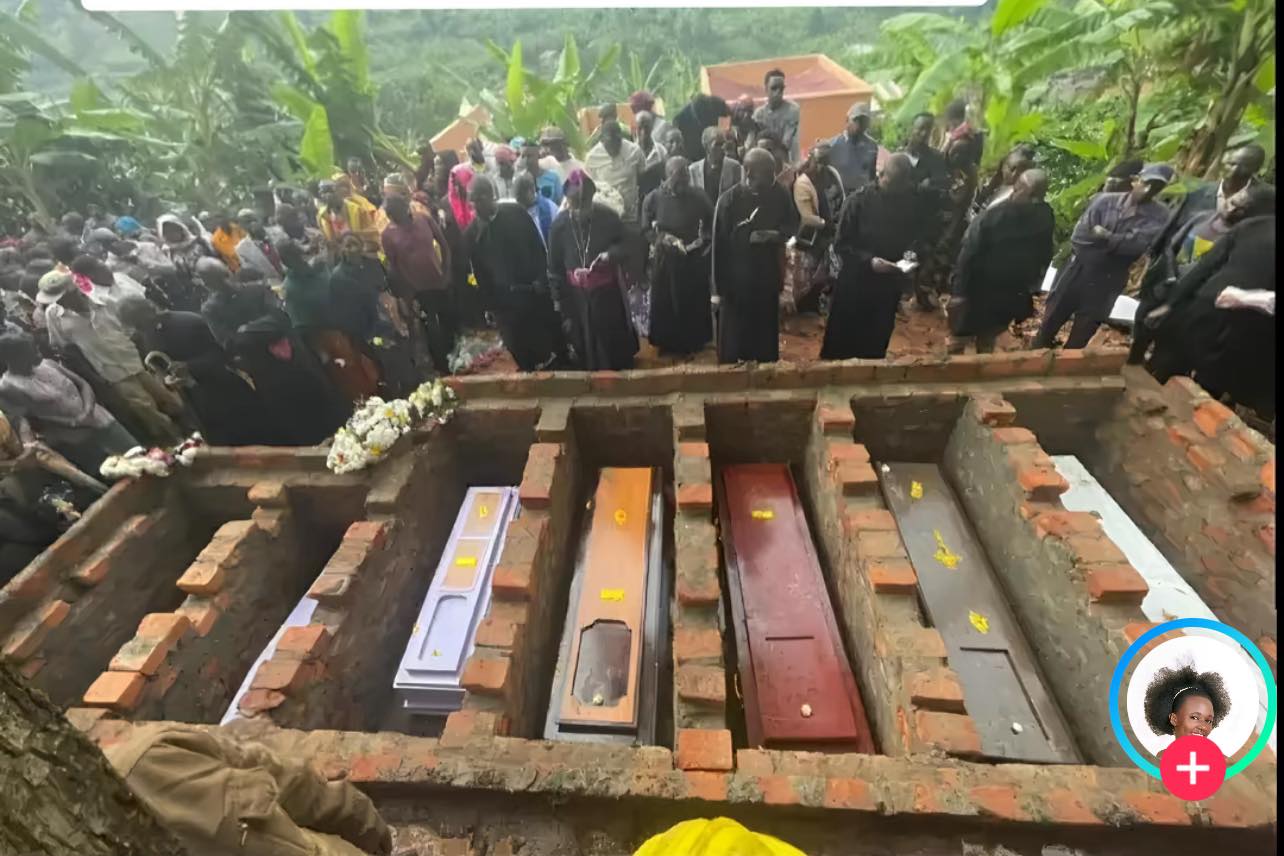
Th grave of seven family members that perished in an accident on December, 27, along Kampala-Mbarara High way
Travel is often celebrated as a symbol of unity. A family setting off in one car, boarding a bus together, or fastening seatbelts on the same flight carries with it joy, laughter, and anticipation. Yet history repeatedly delivers a harsh lesson: the same togetherness that warms the heart can, in a single moment, produce irreversible loss.
When accidents occur, they do not merely take lives. They erase family lines, silence homes, and leave communities with grief too heavy to carry.
The Kampala–Masaka Tragedy: A National Wake-Up Call
On December 27, along the Kampala–Masaka Highway, Uganda was reminded of this danger in the most painful way. A single road crash claimed seven members of one family. Two days later, at Kyoogo Church of Uganda in Kamwezi Sub-county, Rukiga District, seven caskets lay side by side—parents, children, and a cousin—lost in one journey, one vehicle, one instant.
That image must remain at the centre of this conversation. It is not just a family tragedy; it is a national interrogation of our travel habits, safety culture, and policy choices.
A family of seven perished
A Global Pattern, Not an Isolated Incident
The Kampala–Masaka crash fits into a disturbing global pattern. According to the World Health Organization, about 1.19 million people die annually from road traffic accidents worldwide, with millions more injured. A significant proportion of these deaths occurs in single crashes involving multiple occupants, often families travelling together.
In India, police and media records frequently document crashes where six to ten members of one family die while travelling to weddings, funerals, or religious festivals. In the United States, highway safety authorities have recorded numerous incidents where parents and children perish together in minivan or SUV crashes, especially during night travel and holiday seasons.
Across Kenya and Nigeria, entire families have been wiped out in single bus or private-vehicle crashes, commonly linked to speeding, fatigue, and poor road conditions. The recurring phrase in such reports is chillingly familiar: no immediate family survivors. 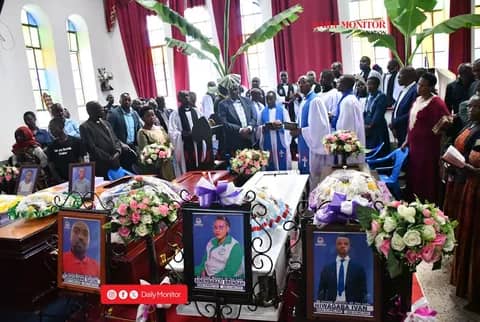
When One Vessel Means Total Loss
The danger extends beyond roads. In aviation, although statistically safer, accidents are absolute when they occur. History records air crashes in which entire families died on the same flight, sometimes eliminating multiple generations at once. On water, the risk is even more visible. The MV Bukoba disaster on Lake Victoria in 2018, which claimed over 200 lives, included families travelling together. Similar ferry and boat accidents across Africa and Asia—often caused by overloading, storms, and lack of safety equipment—have erased entire households in minutes. Across road, water, and air travel, the lesson is consistent: concentrating family members in one vessel multiplies loss.
The Hidden Risk of Moving as One
When families travel together in one means of transport, several dangers emerge:
The Kampala–Masaka tragedy forces a difficult question:
Why do we continue to place all our loved ones in one carrier, knowing the consequences of failure?
Government Responsibility: From Condolences to Prevention
Governments have a duty not only to mourn citizens but to prevent predictable loss. Beyond enforcing speed limits and vehicle inspections, states should consider stronger traffic and road safety policies that discourage or restrict multiple immediate family members from travelling together in one vehicle, particularly on long-distance journeys. This principle already exists informally in aviation, security, and disaster-risk planning, where risk distribution is prioritized over convenience. Public policy must aim to separate risk rather than concentrate it. A society that repeatedly buries entire families without reform quietly accepts avoidable tragedy as normal.
Worship Places: A Moral Voice That Can Save Lives
Churches, mosques, and other worship spaces hold enormous influence over daily behaviour. They gather people more consistently than any government institution. Yet this power is often underused.
Too often, sermons focus solely on spiritual salvation, prosperity messages, or financial contributions, while practical teachings that preserve life are neglected. Teaching road safety and responsible travel does not undermine faith—it fulfills it.
Religious leaders should openly caution congregants about:
Prayer does not cancel speed. Faith does not replace seatbelts. Offerings do not substitute wisdom. A sermon that saves lives is as sacred as one that saves souls.
A Word to Families: Love Must Travel Wisely
Families themselves must take responsibility:
Conclusion: Let Tragedy Become Teaching
The events of December 27 on the Kampala–Masaka Highway must not fade into statistics. They should become a moral and policy turning point. How many families must be buried together before habits change?
How many mass funerals must worship places conduct before prevention becomes part of preaching?
How many condolences must governments issue before policy becomes protective?
Togetherness is precious. But preservation is wiser than proximity.
Love must learn not only how to travel—but how to survive.
About the Writer.
Evan Sande Ndahura is a Ugandan writer, poet, and public affairs commentator known for morally grounded, socially conscious, and historically informed writing. His work spans political analysis, road safety advocacy, Pan-African thought, and reflective poetry that interrogates power, memory, and responsibility. Through articles and poems published across various platforms, he consistently uses the pen as a tool for awakening conscience, promoting justice, and safeguarding human life.
Torch Media Africa



