Written By |

The non-hormonal drug called YCT529 works by inhibiting a protein important for the normal development of sperm. Pictured, existing oral contraceptive pills
Health Agencies -
The decades-long quest for a reliable male contraceptive pill is edging closer to reality. Scientists in the United States have begun human trials of a hormone-free oral contraceptive known as YCT-529, marking a major milestone in reproductive health.
Unlike female birth control pills that rely on hormones, YCT-529 functions by blocking vitamin A access in the testes, which is essential for sperm production. Importantly, the drug does not interfere with testosterone levels, meaning libido and other hormonal functions remain unaffected.
Initial pre-clinical trials in mice showed 99% effectiveness in preventing pregnancies, putting it on par with the most effective female contraceptives. In tests on cynomolgus monkeys, YCT-529 significantly reduced sperm counts within two weeks. Fertility in both species was fully restored after stopping the drug—with no observed side effects.
Human trials underway
Phase 1 clinical trials in men have already been completed, confirming that the drug is safe for human use. The ongoing Phase 2 trial, now underway in New Zealand, is progressing well, according to researchers, with full results expected in late 2025.
Developed through a collaboration between the University of Minnesota College of Pharmacy, Columbia University, and YourChoice Therapeutics—a San Francisco-based biotech firm—YCT-529 is currently the only hormone-free male birth control pill undergoing human trials.
“This pill could offer a more equitable way of sharing the responsibility for family planning,” said Professor Gunda Georg, a chemist and pharmacist at the University of Minnesota. “It would also provide reproductive autonomy for men.”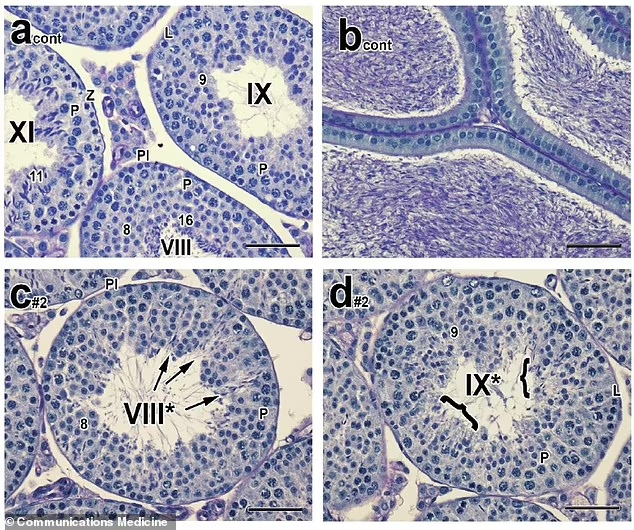
YCT-529 causes infertility in mice after four weeks of oral administration and is fully reversible within six weeks after dosing ended. Pictured, male mice testes under the microscope
A long-overdue innovation
Currently, men's contraceptive options are limited to condoms and vasectomy, the latter being a permanent and sometimes irreversible procedure. Condoms, though accessible, are prone to slippage and manufacturing defects, and have relatively high failure rates.
“It’s hard to think of another area in medicine where innovation has stalled for nearly 200 years,” said Akash Bakshi, CEO of YourChoice Therapeutics. “We need more male contraceptive options—and we need them urgently.” The last significant advancement in male contraception dates back to 1839, with the invention of vulcanized rubber, which led to the mass production of condoms. Since then, despite multiple attempts to develop male pills, injections, and gels, none have been approved.
How YCT-529 works
The science behind YCT-529 is rooted in the role of vitamin A in male fertility. The drug is a retinoic acid receptor-alpha (RAR-α) inhibitor, which blocks sperm production by disrupting the vitamin A signaling pathway critical for sperm cell development. Researchers have long understood that vitamin A is vital for sperm formation. By specifically targeting RAR-α—one of the three receptors that bind retinoic acid—the pill halts sperm production and release without broader hormonal disruption.
Contraceptive landscape: A gender gap
While women have access to a wide range of contraceptive options—including pills, patches, implants, IUDs, and diaphragms—men have remained largely limited to barrier or surgical methods. Around 25% of women who use contraception rely on oral pills, yet there is still no approved oral equivalent for men.
If successful, YCT-529 would become the first oral contraceptive for men, offering a reversible, convenient, and hormone-free method of birth control. Experts hope it could reach the market before the end of the decade.
Torch Media Africa



