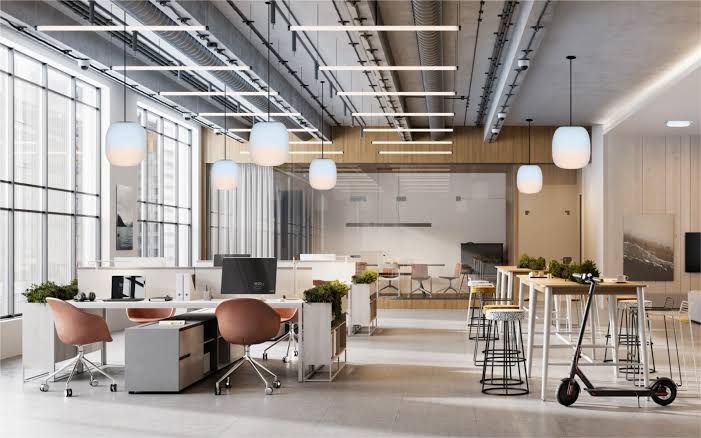
A record-breaking Chicago trade show — and the highlight reel just published from it — show an industry swapping slick minimalism for texture, repair, and warmth.
CHICAGO
Architectural Record's newly published roundup of standout products from NeoCon 2026 is doing something unusual for a trade-show recap: making the case, weeks after the show floor emptied out, that this was the year commercial interior design quietly changed direction. The 57th edition of NeoCon, held at Chicago's The Mart under the theme “Where Design Connects,” drew more than 50,000 design professionals from 88 countries and 450 exhibiting brands — attendance up 9% over the previous year — and the products singled out from the show point toward an industry moving away from the seamless, ultra-polished look that has defined offices for the past decade.
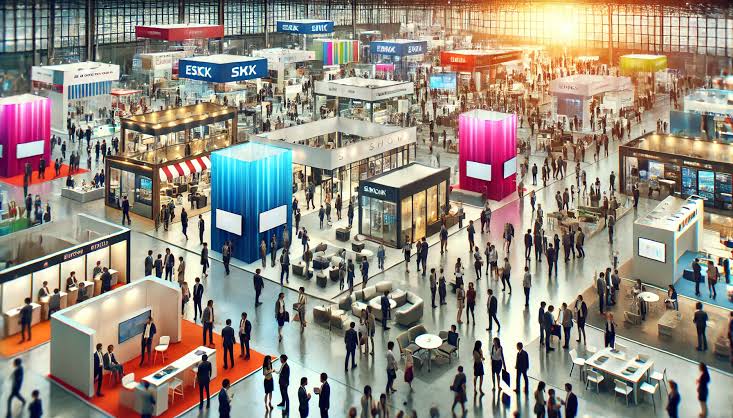
The Numbers Behind 'Where Design Connects'
NeoCon's scale alone makes it the commercial design world's biggest annual barometer. This year's edition packed 450 brands into roughly a million square feet of exhibition space, spanning new spaces from Formica Group, Haskell Education, Nevers Industries, Slalom, and Workrite alongside major reinvestments from established players like Keilhauer, Division Twelve, and Calyx by Claridge. The show's newest addition, a dedicated lighting pavilion called Illuminate at NeoCon, debuted on the seventh floor and drew more than 60 global and emerging lighting exhibitors — a strong enough showing that organizers are already treating it as a permanent fixture rather than a one-year experiment.
Furniture Built to Be Fixed, Not Replaced
Among the products Architectural Record highlighted, a recurring theme was longevity by design rather than by accident. Scandinavian Spaces' Able chair puts its repairability on full display: the bolts holding it together are left visibly exposed rather than hidden, and its upholstery is designed to be removed via zippers so panels can be replaced or repaired without discarding the whole piece. It's a small design decision with a large implication — furniture built explicitly around the assumption that it will need fixing, not just eventually replacing.
Materials With Memory
Several of the show's standout products leaned into raw, unpolished materials with their own history. The ALMA Wall Panel Collection from WVH combines wood with lava stone, obsidian, and copper, drawing on sacred architecture and traditional adornment for inspiration rather than the glass-and-steel vocabulary that has dominated commercial interiors for years. Elsewhere on the floor, Division12's latest lounge chair, designed by Studio Marion, paired a powder-coated tubular steel frame with a rounded wooden palm rest and plush upholstery — an explicit mixing of industrial and organic materials in a single seat. Ruelo, a rippled, mirror-finished stainless-steel ceiling panel designed to mount to standard suspension grids, offered a more understated take on the same idea: taking a utilitarian building material and giving it texture and reflectivity instead of a flat, forgettable finish.
The Workplace as a Kit of Parts
Perhaps the most ambitious product on display was Kettal Workplace, which transforms the iconic Eames Pavilion System into a complete, modular office environment — folding acoustics, lighting, furniture, and architecture into a single integrated kit of parts. Hem, a freestanding partition system made from powder-coated aluminum framing and a lightweight, translucent textile screen manufactured from recycled materials, offered a lighter-touch version of the same logic: office environments increasingly built from swappable, sustainable components rather than fixed architecture.
That modularity has practical roots. Commercial tenants have spent the past several years renegotiating leases around hybrid work schedules, and few want to sign a multi-year buildout for a floor plan that might need to shrink, expand, or reconfigure entirely within eighteen months. Products like Kettal Workplace and Hem are, in effect, hedges against that uncertainty — office environments designed to be disassembled and rebuilt rather than gutted and replaced, which explains why so many of this year's most talked-about launches came from furniture and partition makers rather than architecture firms proposing entirely new buildings.

An Industry-Wide Shift, According to the Trend Data
Design trade press covering the show converged on a consistent read of what tied these products together. Coverage of NeoCon 2026's broader trends described material choices carrying real cultural and emotional weight this year, tactile surfaces supporting sensory comfort and inclusion, circularity showing up through repair and reuse rather than slogans, and biophilic surfaces designed to invite slower, more deliberate use of a space. Taken together, it's less a single trend than a coordinated retreat from the frictionless, infinitely-scalable office aesthetic that defined the 2010s tech-campus look.
What This Means for Anyone Redesigning a Space
You don't need to be furnishing a Fortune 500 headquarters to feel the effects of this shift. The same instincts showing up at NeoCon — visible repairability, raw and tactile materials, modular components that can be reconfigured rather than torn out — are increasingly filtering down into home office furniture, co-working spaces, and even hospitality design. For anyone planning a renovation or furniture purchase in the next year, it's worth treating repairability and material honesty as real considerations, not just aesthetic preferences: the commercial design world's biggest annual show just spent a week arguing that they're becoming the industry standard, not the exception.
Conclusion
NeoCon's 57th edition drew its largest crowd in years, but the more lasting story is what those 50,000-plus visitors saw on the floor: a workplace design industry stepping back from disposable minimalism toward furniture and materials built to age, get fixed, and be reconfigured. If the products singled out from this year's show are any indication, the sleek, seamless office of the past decade is giving way to something with more texture — literally and otherwise.
Published By | Features Editor