Written By | Staff Writer
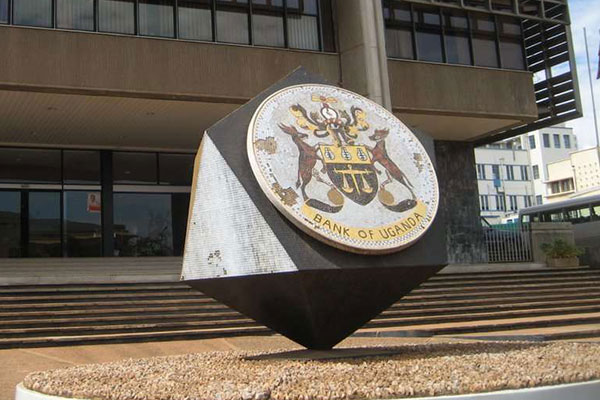
An emergency rate rise to 12% and a fresh round of dollar sales have not stopped the shilling from setting record lows, and a public disagreement over using reserves has put policy credibility in question.
Uganda’s currency has become the central economic story of October. After repeated record lows, the Bank of Uganda (BoU) raised its policy rate by 2.25 percentage points at an emergency meeting on 14 October. It then sold dollars again on 22 October, a day after the President and a senior finance official publicly argued against spending reserves to support the shilling. The dollar mid-rate closed that day at Shs4,301.90, up from Shs4,208.10 the previous day, according to Uganda Business News.
The episode shows how an external shock is feeding into the cost of money, the government’s borrowing costs and ordinary prices, and how the central bank and the political leadership are not always speaking with one voice.
The emergency hike
The BoU’s Monetary Policy Committee met on 14 October, earlier than its scheduled November meeting, and lifted the Central Bank Rate from 9.75% to 12%, according to Reuters reporting carried by BusinessDay and to the Daily Monitor. The Monitor described it as the largest monthly increase since October 2011 and the highest rate since December 2016. Governor Michael Atingi-Ego announced the decision at an online press conference from Thailand, where he was attending the IMF and World Bank annual meetings.
The bank also raised the cash reserve requirement for commercial banks from 11% to 13.5%, effective 24 September. Inflation was 4.6% in September, up from 4.1% in August, but still below the central bank’s 5% target. Mr Atingi-Ego said it could rise soon, which is why action was needed.
Before the hike the shilling had fallen about 12% against the dollar this year and touched Shs4,143, its weakest level since 1993, the Monitor reported, citing Bloomberg data that ranked it the worst performer among 144 currencies tracked that month. On the day of the decision it rallied by more than 6% at one point, according to LSEG data, and was still around 8% weaker for the year.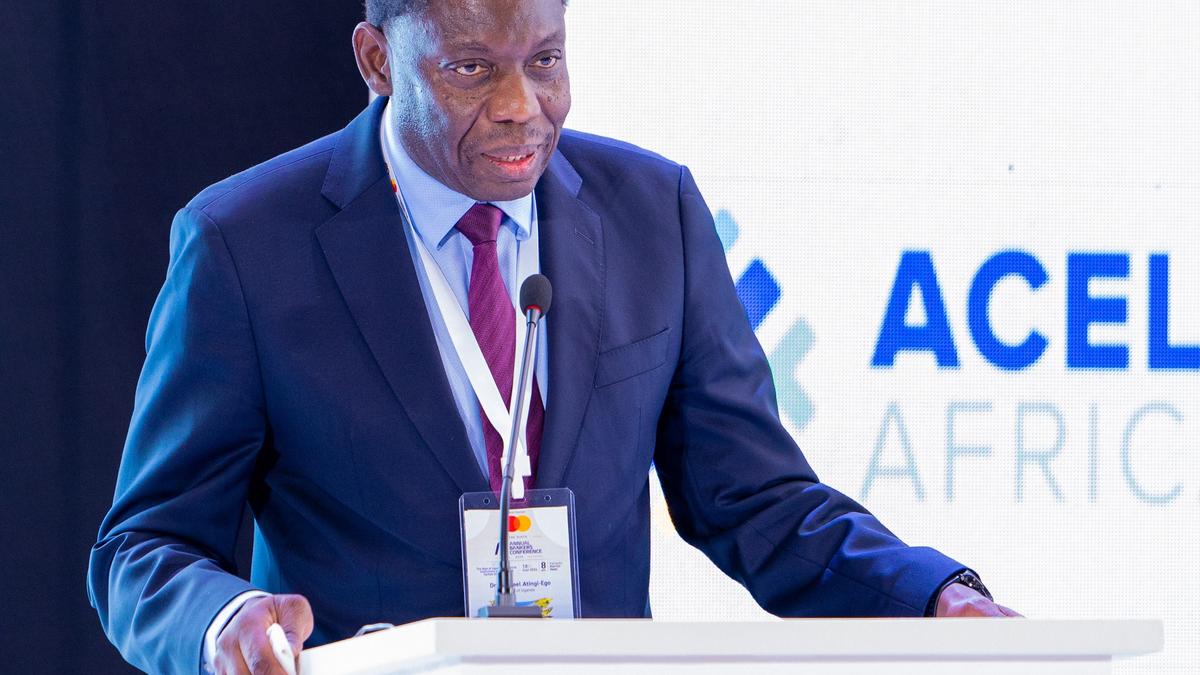
Why the shilling is weak
The central bank frames the pressure as a balance-of-payments problem. The current-account deficit widened by $1.4 billion to $4.6 billion in the 12 months to August. The Ministry of Finance separately reported that the trade deficit widened by 151% to $817.03 million in August 2026, from $325.53 million a year earlier.
Economist John Walugembe pointed to several drivers. High global oil prices, linked to the war involving Iran, raise demand for hard currency in a net fuel importer. Portfolio investors have pulled money from Ugandan securities since the US Federal Reserve raised its own rate last month. Weak exports and a large import bill widen the gap, while disrupted remittances from the Middle East and lower tourism receipts after Ebola cases in May and June have added to it. Citigroup estimated that more than $200 million left the domestic market in two weeks as offshore investors moved out of local government bonds, the Monitor reported.
Stephen Kaboyo of Alpha Capital Partners said the primary driver was the large exposure of portfolio investors to the local bond market. The BoU’s latest published reserve figure is $6.7 billion at the end of June, equal to 3.7 months of import cover.
A public disagreement over reserves
The sharpest turn came this week. President Yoweri Museveni publicly urged the central bank to avoid dollar sales, arguing that a weaker shilling raises exporters’ earnings in local currency while importers bear the cost. On Wednesday night, 21 October, Finance Ministry permanent secretary Ramathan Ggoobi made a similar case on UBC. The ministry’s social media account quoted him urging the bank not to “donate our reserves to speculators”. He also praised monetary tightening and said government had cut planned spending by almost Shs3 trillion in the second quarter.
On Thursday the BoU told commercial banks it was operating on the sell side. It did not disclose the amount or whether it would repeat the operation. The bank had said after its rate decision that it does not target a specific exchange rate and that intervention aims to reduce excessive volatility, and the governor said direct sales remained an option. Uganda Business News noted that the official statements do not necessarily rule out limited sales meant to calm markets.
The bank’s first direct intervention in the current episode came on 14 October, when it sold about $30 million (Shs120 billion), the Monitor reported. That was its first direct forex intervention since June 2022. The sale briefly halted eight sessions of losses and the shilling gained over 2% that day, but the gains faded in later sessions. The BoU has not confirmed the amounts sold.
Who pays
Analysts quoted by the Monitor were divided on the remedy. Uthman Mayanja of PwC Uganda said tightening is aimed at curbing inflation from costlier imports and that higher yields could attract demand for shilling bonds and bills. Dr Fred Muhumuza of Makerere University said rate hikes are an inadequate response to external supply shocks such as imported fuel inflation and forex shortages. Dr Susan Kavuma warned that commercial banks would pass higher rates on quickly, noting that the average lending rate of 17.3% in July was already above Kenya’s. Jane Nalunga of SEATINI Uganda said the cost of the hike will fall on vulnerable households and small businesses.
The government’s own borrowing is also affected. Ten-year borrowing costs have risen to 17%, which suggests markets expect more rate increases, BusinessDay reported. Before the hike, Fitch estimated the country would spend about one-third of its government revenue on interest payments alone.
The official line: resilience
The Ministry of Finance, Planning and Economic Development took a more upbeat view in its September Performance of the Economy Report, reported by Xinhua on 21 October. It said the economy “continues to show resilience amid global economic shocks and geopolitical uncertainties.” The Purchasing Managers’ Index was 53.0 in September, and the Business Tendency Index reached 55.80, both above the 50-point expansion threshold. The Composite Index of Economic Activity rose 0.3% to 193.87 in August.
The ministry said it would respond to the widening trade gap through economic and commercial diplomacy, investment promotion, and value addition in agro-processing and minerals. Those measures are medium-term in nature and do not directly address foreign-exchange demand now.
Why it matters and what to watch
A weak shilling raises the cost of fuel, imported inputs and dollar-denominated debt, and it reaches households through transport and food prices. The question for policymakers is how to defend the currency without exhausting a reserve cushion of under four months of imports. The public difference between the President, the Finance Ministry and the central bank matters because markets read the signals. If investors believe reserves will be rationed, they may sell shillings sooner. If they believe the central bank will defend a level, it may invite speculation.
Several markers are worth following in the coming weeks. One is the next BoU Monetary Policy Committee meeting, and whether further hikes follow as JPMorgan has said is possible if currency and inflation pressures persist. Another is the next published reserves figure, which will show how much the interventions have cost. Also important are the October inflation reading, bond-market flows, and whether the weak shilling lifts export earnings in the way the President has argued. Until the external pressures ease, the shilling is likely to remain volatile.



