Written By | Joshua Nahamya
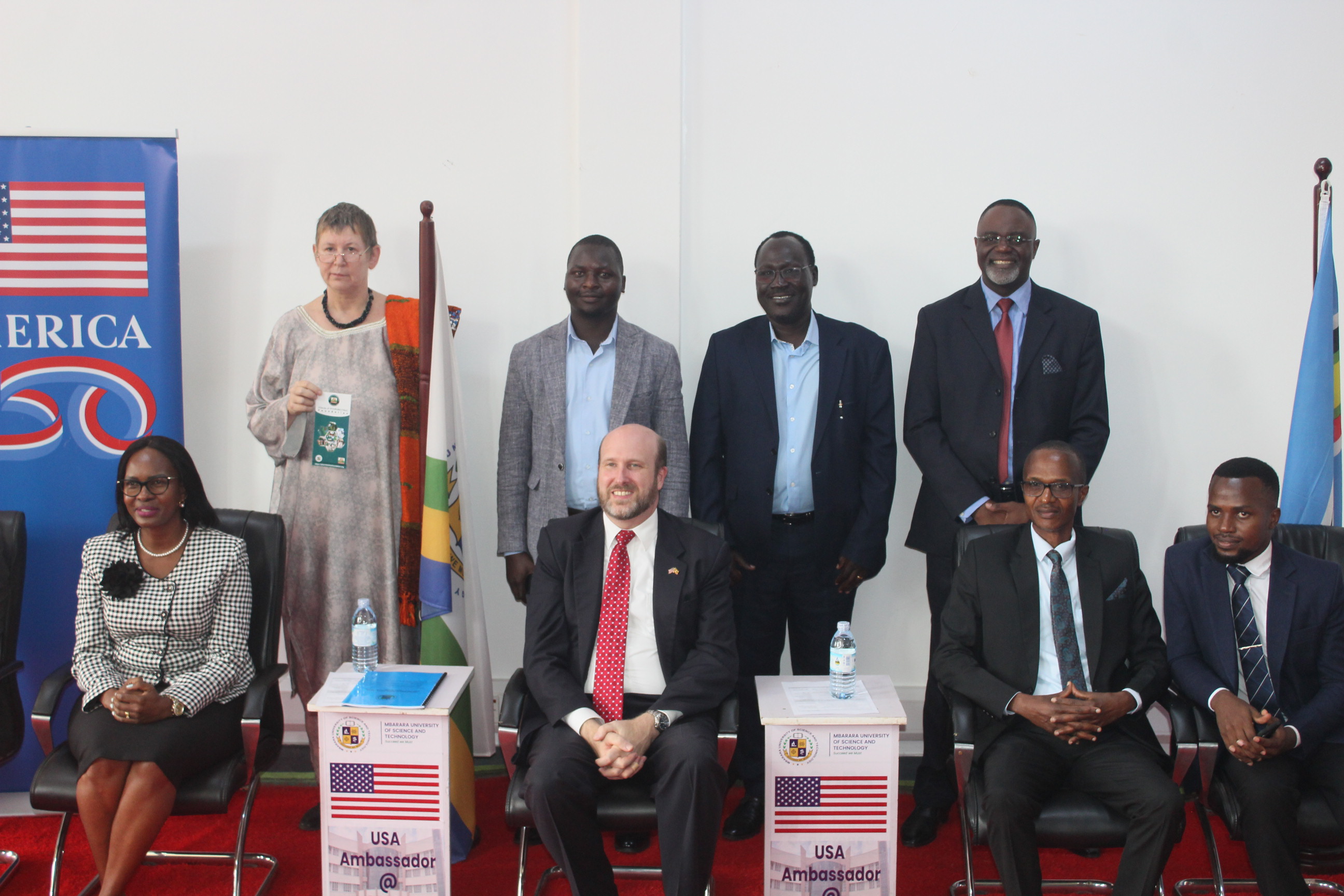
Ambassador with MUST staff. [Pictures by Joshua Nahamya]
Mbarara City
Mbarara University of Science and Technology (MUST) has hosted the United States Ambassador, H.E. William W. Popp, on a strategic mission to strengthen the long-standing partnership between the institution and the American government in the fields of technology, innovation, and public health.
The visit featured an extensive tour of scientific exhibitions, where the Ambassador inspected cutting-edge projects and long-term research initiatives funded by U.S. agencies. The engagement focused on critical support areas, including public health infrastructure, innovation grants, and the expansion of the university's Kihumuro main campus.
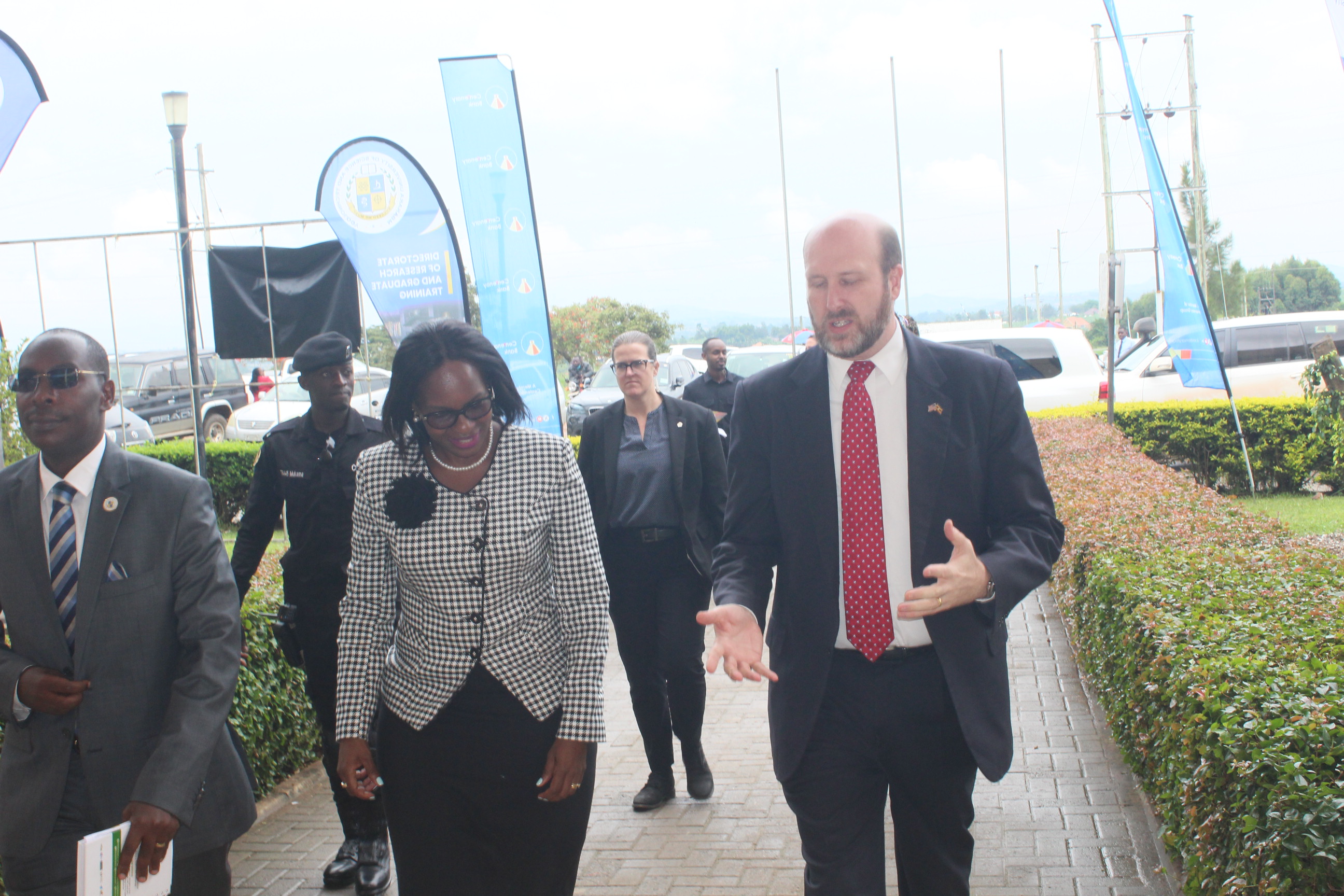
Arrival of US Ambassador at Kihumuro for a courtesy visit on Thursday afternoon
A Legacy of Strategic Investment
Professor Pauline Byakika-Kibwika, the Vice Chancellor of MUST, hailed Ambassador Popp for reinforcing a collaboration that has been foundational to the university since its inception.
“Today, we celebrate not only your presence, but also the enduring partnership between the United States and MUST,” Professor Kibwika noted. She highlighted that of the 93 active projects currently being implemented at the university, 65 are funded by the United States, representing a staggering total investment of $36,353,904.
“You have consistently reaffirmed the importance of strong, mutually respectful partnerships that build resilience and prosperity. At MUST, we share this conviction and have worked to translate research into real-world impact,” the Vice Chancellor explained. She added that major U.S. institutions, including Harvard, Yale, and Columbia University, remain integral to MUST’s capacity to improve HIV/AIDS care and interdisciplinary research across East Africa.
The Vice Chancellor also noted that the “largest share” of this support—over 50%—comes from the National Institutes of Health (NIH), alongside significant contributions from USAID and the Massachusetts General Hospital.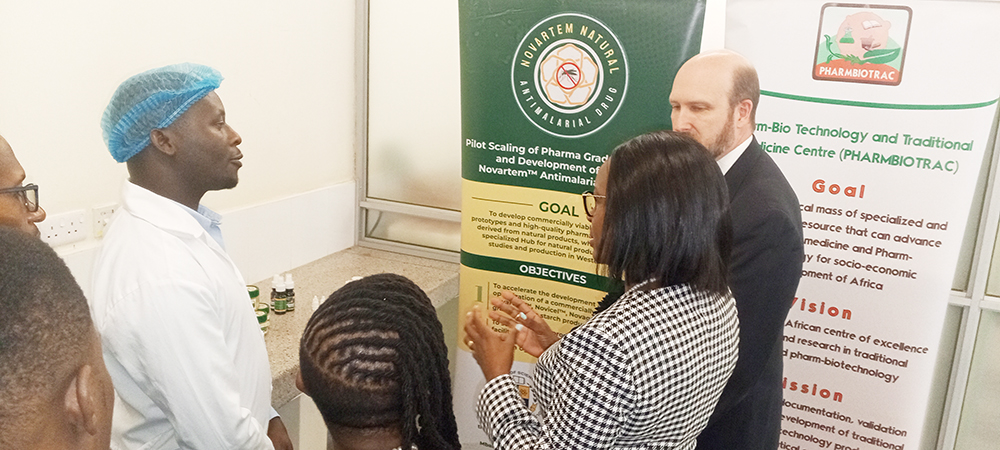
Ambassador William being taken through what MUST scientists are apparently doing
A $2.3 Billion Commitment to Global Health
In his remarks, Ambassador William Popp pledged continued support to help Uganda confront pressing demographic and health challenges, ranging from drug resistance to climate variability. He revealed that a landmark $2.3 billion agreement signed in December 2025 would carry this partnership forward over the next five years.
According to Popp, the five-year Health MOU is one of the largest bilateral health commitments in the region, focusing on HIV, TB, malaria, and global health security.
"It is a testament to the work that we're doing together. This agreement is going to be protecting Americans and Ugandans alike by preventing disease outbreaks, strengthening surveillance, and building resilient health systems,” Ambassador Popp stated.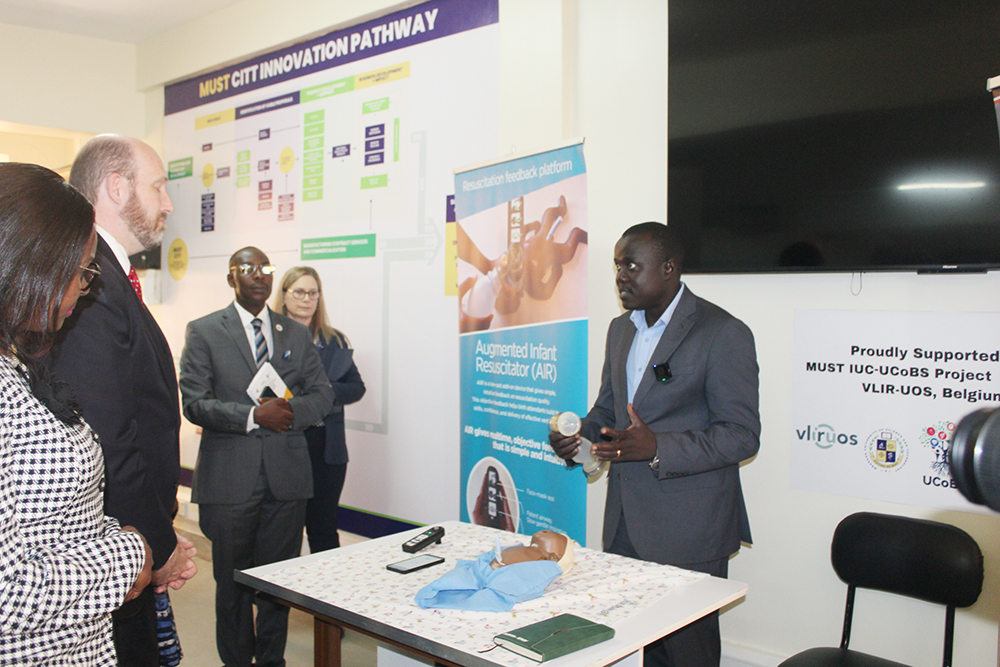
Dr Data Santorino, Senior lecturer in the dDepartment of Pediatrics at MUST expalining recerstation of new borns on breathing mechanism
The Ambassador specifically addressed the persistent challenge of HIV in Western Uganda, asserting that the partnership would continue to tackle the virus through direct research and efficient treatment delivery. “We see MUST as a hub of excellence, not just for Uganda, but for East Africa and beyond. Your graduates are the scientists, doctors, and innovators who are going to shape the future,” he added.
Addressing the students directly, Popp urged them to look beyond local boundaries. “Your degree from MUST is a passport and a stepping stone to achieving great impact for the world. My challenge to you is to dream big. Do not limit yourself by the challenge of the moment—create what we haven't even imagined yet,” the Ambassador challenged.
“The America First Global Health Strategy isn’t just about aid; it’s about building self-reliance so Uganda can eventually manage its own health system and security independently.” he added
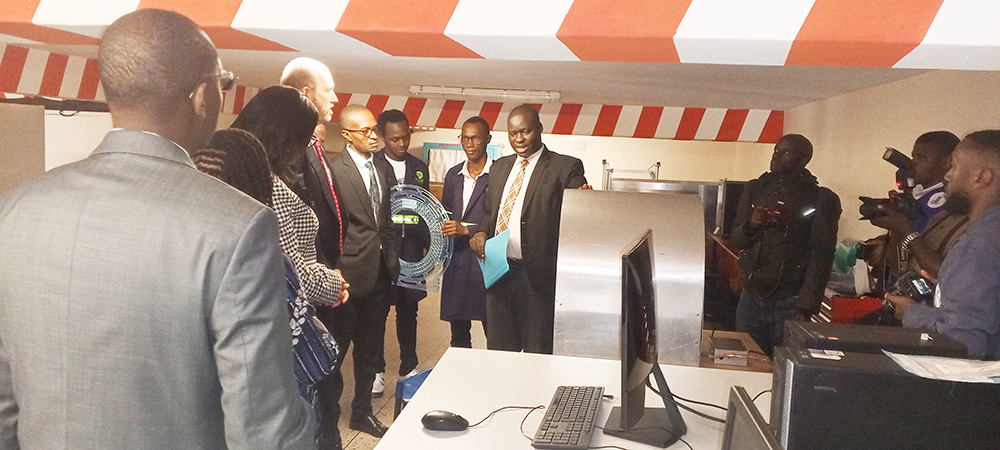
Ambassador looking at MRI machine being manufactured at MUST
Overcoming the Funding Gap for Commercialization
While the university has excelled in scientific output, Dr. Medard Twinamatsiko Katonera, the Director of Innovation and Technology Transfer, pointed out that funding for commercialization remains a significant hurdle.
“One of the critical challenges is funding. We still have limited resources to take these products to the market so that they can impact society,” Dr. Twinamatsiko explained. He noted that the university has established the MUST Holdings Company Limited as a commercial arm to help students and staff transition their prototypes into viable businesses.
To protect these innovations, the university has integrated strict non-disclosure agreements and intellectual property policies. “We jointly file for these intellectual properties to ensure our researchers are safe. Life after school means these innovations should not stop here; they should go to the communities and play a role,” Twinamatsiko added.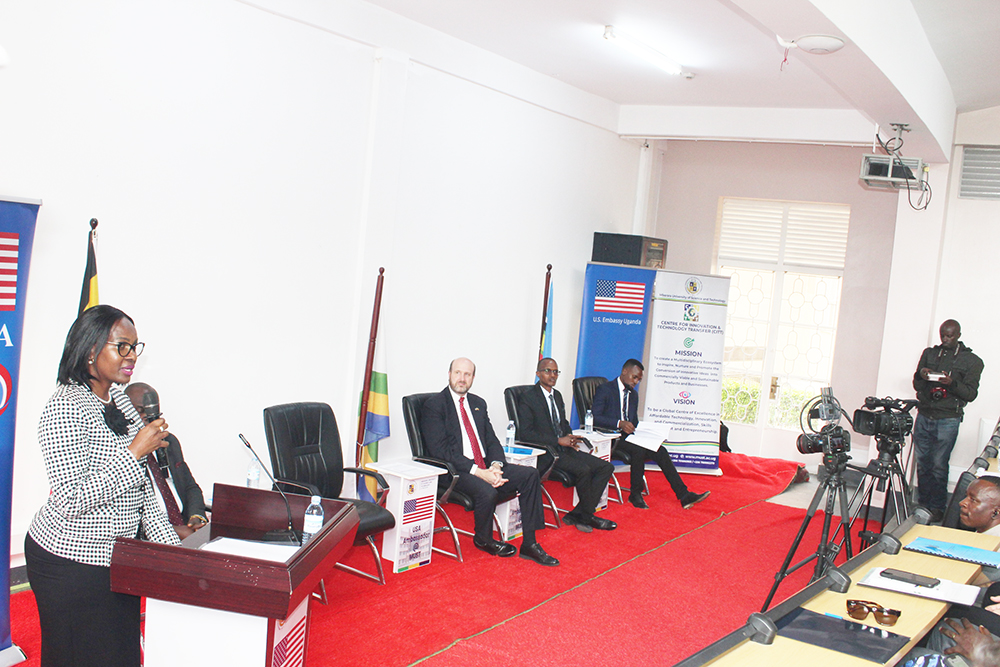
MUST VC Prof Pauline Byakika Kibwika delivering her speech
Celebrating Literacy
Beyond the university, Ambassador Popp visited St. Theresa Mitala Maria Primary School to mark Uganda’s 12th National “Drop Everything and Read” (D.E.A.R) day. Accompanied by U.S. Peace Corps volunteers, the Ambassador emphasized the link between literacy and national prosperity.
“As America celebrates 250 years of independence, one of the greatest lessons from our history is that education and reading empower people to build strong, free, and prosperous nations,” he stated.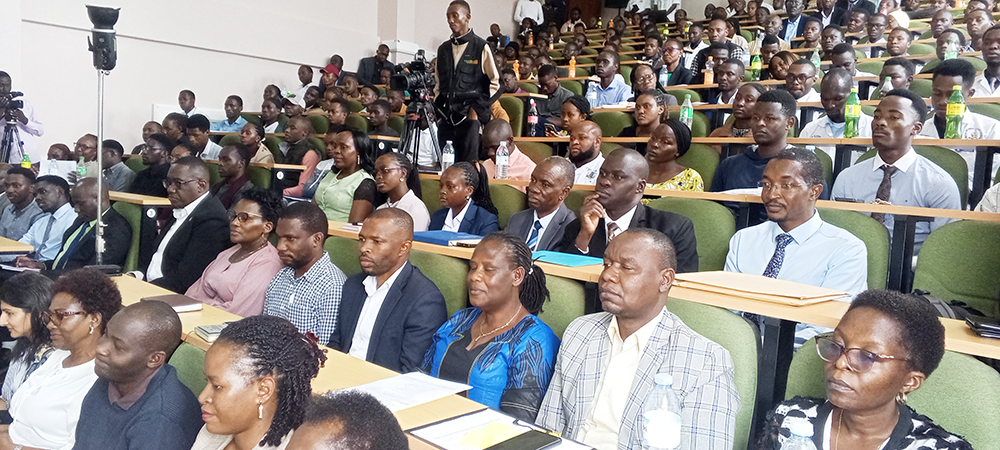
MUST students and lecturers listening to US Ambassador
Since its humble beginnings in 1989 with just 43 medical students, MUST has grown into a premier institution with over 6,697 students and 603 staff, standing today as a beacon of science and technology in the region.
Torch Media Africa



