Written By |
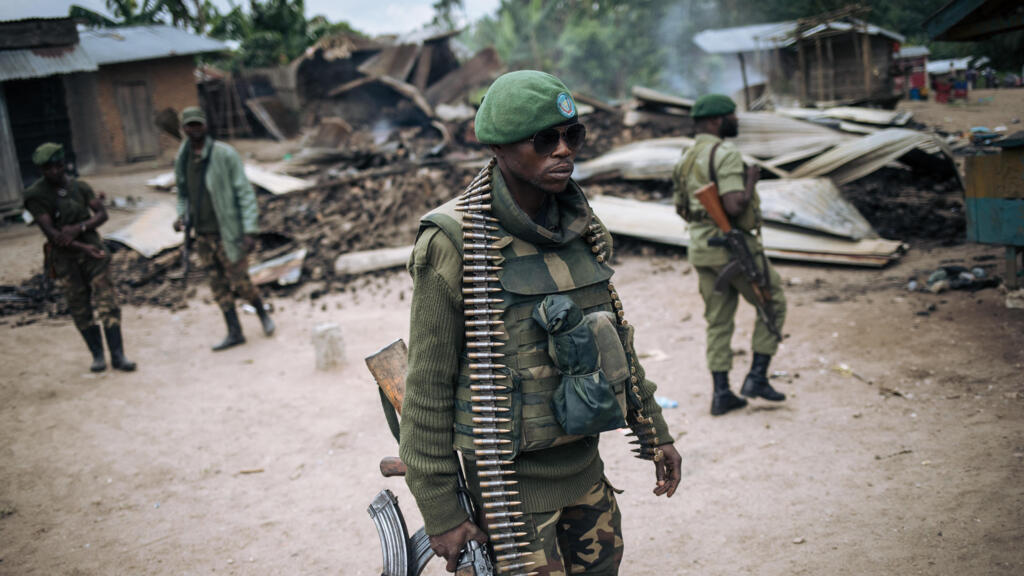
The assault was carried out by the Allied Democratic Forces (ADF) in Ntoyo, Lubero territory, North Kivu province
At least 60 people have been killed in eastern Democratic Republic of the Congo (DRC) after an ISIL (ISIS)-affiliated group attacked mourners at a funeral, local officials said. The assault was carried out by the Allied Democratic Forces (ADF) in Ntoyo, Lubero territory, North Kivu province.
“The ADF attack caused around 60 deaths, but the final toll will be given later this evening because services have just been deployed to the area to count the number of beheaded people,” said Col. Alain Kiwewa, the local administrator, in comments to the press.
Another local official, Macaire Sivikunula, said the victims were “caught off guard at a mourning ceremony” on Monday night. He noted that most were hacked to death with machetes, while others were shot.
The mineral-rich Kivu region has been a flashpoint for decades, with dozens of armed groups operating there. The DRC and allied forces have been battling the Rwanda-backed M23 rebel group, a conflict that has provided cover for the ADF to expand its operations.
The ADF has carried out a series of deadly attacks this year. In late July, it attacked a Catholic church, killing more than 40 people and abducting up to 14 others. In August, the group killed 52 people in a separate assault that involved kidnappings, looting, arson, and widespread destruction of property, according to the UN peacekeeping mission.
Last week, UN investigators said gross rights violations—including possible war crimes and crimes against humanity—had been committed by both the Rwanda-backed M23 militia and the Congolese army and its affiliates. Their fact-finding mission documented summary executions and rampant sexual violence in North and South Kivu provinces since late 2024.
The ADF, estimated by UN experts to have 1,000 to 1,500 members including foreign fighters, relies on light weapons, machetes, mortars, and improvised explosive devices (IEDs).
“They aren’t strong enough to hold territory, but they are strong enough to survive,” said Stig Jarle Hansen, an expert on al-Qaeda and ISIL in Africa. He explained that the group “tends to be mobile,” attacking villages to recruit fighters, establish dominance, and forcibly conscript children.
The ADF originated in the 1990s as the Ugandan Muslim Freedom Fighters, aiming to overthrow the Ugandan government. Pushed into the DRC, the group operated near the border until its founder, Jamil Mukulu, was arrested in Tanzania in 2015. His successor, Musa Seka Baluku, pledged allegiance to ISIL in 2017, linking the ADF to the group’s Central Africa Province, alongside ISIL affiliates in Mozambique. The U.S. designated the ADF a terrorist organization in 2021.
Earlier this year, Uganda deployed troops to the DRC’s Ituri and North Kivu provinces under Operation Shujaa to combat the ADF. Two Ugandan soldiers were killed in clashes with the group last week.
Torch Media Africa



