Written By | Business Experts
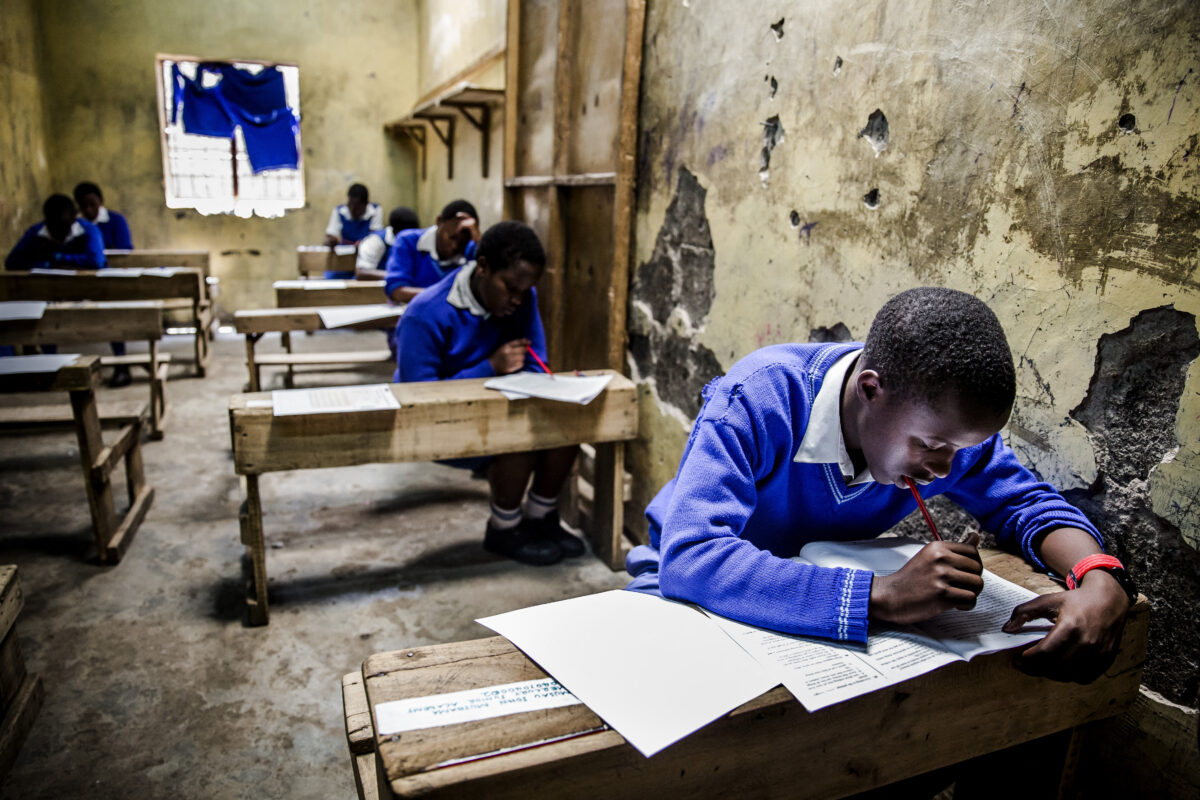
Tens of millions more children in classrooms, gender gaps at primary level narrowing, fee abolition spreading from Malawi and Uganda to Sierra Leone and Ghana
Economic & Social Transformation
For two decades Africa's education story was told in enrolment numbers, and those numbers were genuinely impressive: tens of millions more children in classrooms, gender gaps at primary level narrowing, fee abolition spreading from Malawi and Uganda to Sierra Leone and Ghana. The harder question — whether children in those classrooms are actually learning to read and count — has now moved to the centre of policy. In 2026 it is being asked under two simultaneous pressures: a sharper evidence base showing how deep the problem runs, and a contraction in donor money that has historically paid for much of the reform effort. How governments respond will shape the productivity of the continent's labour force well into the 2050s.
The size of the gap
The most authoritative recent measurement comes from the second continental Spotlight report on basic education completion and foundational learning, Lead for Foundational Learning, produced by the African Union, UNESCO's Global Education Monitoring (GEM) Report team and the Association for the Development of Education in Africa (ADEA), and launched at the ADEA Triennale in Accra on 29 October 2025. Its headline finding is stark: once completion rates are combined with learning outcomes, only about 10.8% of African children reach minimum proficiency in both reading and mathematics by the end of primary school. Among children who actually reach the end of primary, the figure is roughly 14%; because about one in five children never complete primary, the share of the whole cohort falls to around 11%.
The national numbers are equally sobering. South Africa, the continent's richest large economy and the SADC leader on early-grade literacy policy, records 17%. Zambia records 8%. Early-grade reading data cited in the report show that by Grade 3 most pupils in the Democratic Republic of Congo, Nigeria and Zambia could not read a single word of a simple text. The World Bank's learning-poverty measure — the share of 10-year-olds unable to read and understand a simple text — has long put sub-Saharan Africa at close to nine in ten.
The report also identifies structural causes that are more mundane than dramatic. More than half of African countries still do not provide textbooks in children's home languages, even though children learn to decode far faster in a language they already speak. Some 81% of countries run school-meal programmes, but on average those programmes reach only 43% of primary pupils. And education's share of total public spending has drifted down, from 17.1% in 2012 to 15% in 2023 — the opposite of what a continent with the world's youngest population would be expected to do.
Why this is an economic question, not only a social one
Foundational literacy and numeracy are the base layer of human capital. A worker who cannot read instructions, keep simple accounts or follow written safety rules is harder to employ in manufacturing, logistics, digital services or modern agriculture — the very sectors that African industrial strategies and the African Continental Free Trade Area are meant to grow. The World Bank's October 2026 Africa Economic Update (the renamed Africa's Pulse) raised its 2026 growth forecast for sub-Saharan Africa to 4.3%, up from 4.1% in 2025, and devoted attention to artificial-intelligence readiness. Yet the same body of work repeatedly warns that growth at this pace is too slow to reduce poverty or absorb the roughly 12 million young people entering African labour markets each year. AI readiness, in particular, presupposes a population that can read and reason with text; a 10% proficiency rate is a ceiling on any digital-economy ambition.
The cost argument also runs the other way. The interventions with the strongest evidence behind them are cheap relative to school construction or teacher-salary expansion: structured lesson plans, teacher coaching, assessment-based grouping of pupils, and mother-tongue materials. That makes foundational learning one of the few areas where a fiscally constrained government can buy large gains with modest money — if it is willing to manage implementation closely.
What is working: evidence that made it into policy
The third Africa Foundational Learning Exchange (FLEX2026), held in Lilongwe, Malawi, in mid-July 2026 under the theme "From commitments to results", was designed as an accountability exercise rather than a showcase. Delegations from more than 40 countries reported against the five commitments made at FLEX2024 in Kigali — cross-country collaboration, scaling evidence-based approaches, stronger data and accountability systems, efficient use of resources and better partner coordination. The meeting closed with 42 governments recommitting to end learning poverty by 2035, pledging more domestic education financing and stronger accountability. Several country cases stand out.

The aid squeeze
These gains arrive just as external money retreats. UNICEF's analysis of donor plans projects global education aid falling by US$3.2 billion — 24% below 2023 levels — with three donor governments responsible for nearly 80% of the cut. It estimates that the cuts could push about six million more children out of school by the end of 2026, around 3.1 million of them in sub-Saharan Africa and 1.9 million in West and Central Africa alone. At least 28 countries stand to lose a quarter or more of their education aid; 19 of them are African. Côte d'Ivoire and Mali face potential enrolment declines of around 4%, equivalent to roughly 340,000 and 180,000 pupils respectively. These are projections, not measured outcomes, but the direction is clear.
The squeeze changes the politics of reform. Many foundational-learning programmes were incubated with donor money, external technical staff and NGO delivery partners. Gates Foundation staff and others at FLEX2026 noted that governments are increasingly leading the agenda precisely because external funding is shrinking. That is healthy in principle — programmes run by ministries with civil-service teachers, like Zambia's, are the ones that survive — but it means the bill for textbooks, coaching visits, assessments and data systems now lands on domestic budgets already stretched by debt service.
The binding constraints
Three constraints recur across countries. The first is teachers. FLEX2026 participants singled out Nigeria, where low and irregular pay outside major cities undermines morale and retention even where strong lesson plans exist. Foundational learning is as much a public-sector management problem as a pedagogical one: payroll reliability, deployment to rural schools and in-classroom coaching matter more than new curricula.
The second is materials in the right language. Mother-tongue policies in Ghana and elsewhere are only as good as the supply of decodable readers and teacher guides in each language — a procurement and publishing task that ministries frequently underestimate.
The third is conflict. Sudan's education system, after more than three years of war, has millions of children out of school and many school buildings damaged or used as shelters. Across the Sahel, insecurity has closed thousands of schools. Foundational-learning gains are fragile wherever displacement takes hold.
What to watch
The test for 2027 budgets is whether governments that recommitted in Lilongwe protect line items for foundational learning — textbooks, structured-pedagogy materials, Grade 3 assessments — when donor co-financing falls away. Useful indicators include the share of education spending going to primary rather than tertiary levels, the number of countries publishing regular early-grade assessment results, and whether successful pilots follow Senegal's and Zambia's path into the official timetable. FLEX moves to Abidjan in 2028, hosted in ADEA's home country, which should bring francophone systems — including those most exposed to aid cuts, such as Côte d'Ivoire and Mali — more firmly into the accountability spotlight.
Africa's demographic dividend is often discussed as a matter of numbers: how many young people will enter the workforce. The foundational-learning data suggest the more important variable is what those young people can do when they arrive. On current evidence, the most cost-effective growth policy available to many African finance ministries is not a new industrial park but a reading book, in the right language, in the hands of a well-paid teacher who knows how to use it.



