Background
The latest violence in southern Lebanon is the sharpest test yet of a ceasefire architecture that has been built, unraveled and rebuilt several times since fighting between Israel and Hezbollah reignited in March 2026. A previous ceasefire, reached in November 2024 after more than a year of war, was fragile from the start: Hezbollah never disarmed as the agreement required, and Israel continued to strike targets in Lebanon almost daily throughout the truce, killing roughly 139 civilians by early March 2026 even before full-scale fighting resumed. That earlier truce collapsed in early March 2026 amid the outbreak of the broader Iran war: in the early hours of March 2, Hezbollah launched a barrage of rockets and drones at Israel, which it said was retaliation both for the assassination of Iranian Supreme Leader Ali Khamenei days earlier and for Israel's continued strikes inside Lebanon during the supposed ceasefire. Israel responded with a massive retaliation, striking more than 500 targets within days and issuing mass evacuation orders across southern Lebanon.
That renewed war displaced hundreds of thousands of people from southern Lebanon on top of the more than one million displaced at the peak of the earlier 2023–2024 conflict. It saw Israeli forces occupy roughly 20 percent of southern Lebanese territory and killed more than 4,000 people before a fresh temporary cessation of hostilities was reached on April 16, 2026. That truce was extended twice — a three-week extension on April 23, then a 45-day extension on May 15 — as negotiators worked toward a more durable arrangement than the one that had just failed.

Hezbollah initially rejected a ceasefire proposal on June 4, but after four days of marathon, US-brokered talks in Washington, Israel and Lebanon reached a new framework agreement on June 27. That framework ties an eventual Israeli withdrawal from southern Lebanon to the disarmament of Hezbollah, envisioning a gradual, sequential process built around "pilot zones": areas where Hezbollah would disarm, Israeli forces would withdraw, and the Lebanese army would deploy to take over security, moving zone by zone rather than through a single comprehensive handover. Crucially, the framework does not set an unconditional withdrawal timeline — it conditions Israeli withdrawal on disarmament that Hezbollah has repeatedly refused to accept, including rejecting the Lebanese government's own four-month disarmament timeline.
Since June, negotiators have held seven rounds of talks across Rome, Beirut, Jerusalem and Washington to implement the framework, with an eighth round scheduled for early September in Rome. Those talks have been intended to expand the pilot-zone process, resolve outstanding border disputes, and move toward what US officials describe as a comprehensive peace and security agreement — but they have proceeded against a backdrop of continuing, if lower-intensity, Israeli strikes that Israel says target Hezbollah military infrastructure and personnel, and that Lebanon has periodically said kill civilians.

Key Developments
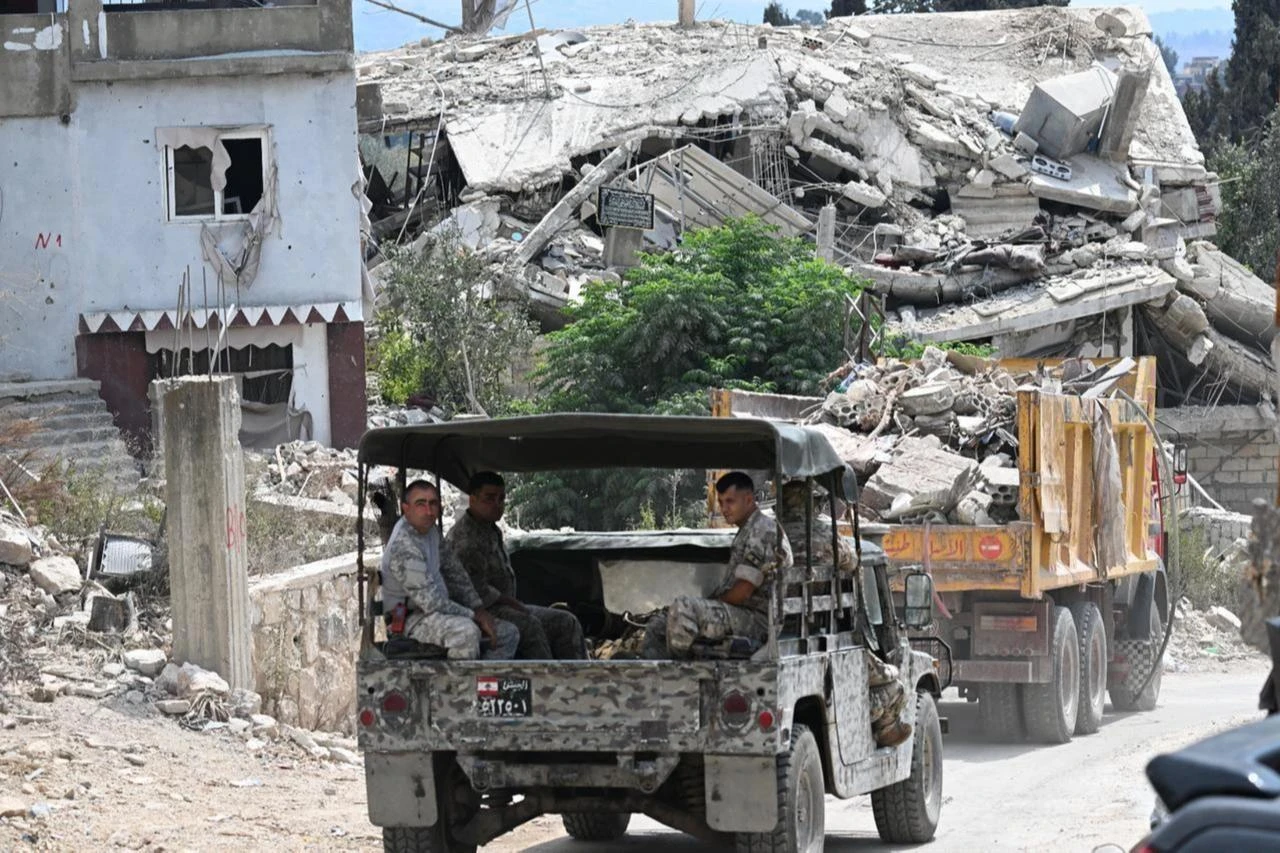
On August 15, Israeli warplanes struck the villages of Ansar and Deir el-Zahrani in southern Lebanon, killing at least 11 people, including three children, and wounding roughly 19 others, according to Lebanon's health ministry. Seven people died when a strike hit a house in Ansar; four more were killed in the Deir el-Zahrani strike. Lebanese and international outlets, including Al Jazeera, France 24, the Times of Israel and Reuters-sourced reporting, described the attacks as the deadliest since the June truce took hold, marking a sharp escalation after months of comparatively contained strikes.
The Israeli military said the strikes were retaliation for a Hezbollah attack that seriously wounded at least three Israeli soldiers inside what Israel described as an agreed-upon security zone, characterizing that Hezbollah action as a ceasefire violation. Israel said the Ansar strike specifically targeted Ali Samir Al-Haj Hassan, described as a commander in Hezbollah's elite Radwan Force; the military acknowledged reports that his family was present in the house at the time but said they were not the intended target.
The strikes occurred at a particularly sensitive moment in the broader diplomatic process. They came roughly a month after the seventh round of Rome talks in July, and weeks before the eighth round is due to convene there in September to discuss expanding the pilot-zone withdrawal process and resolving outstanding border issues. Lebanese officials and analysts noted the timing raises questions about whether the strikes reflect a deliberate Israeli signal ahead of those talks, an escalation driven by domestic Israeli politics, or primarily a response to the specific Hezbollah attack on Israeli soldiers that Israel cited as justification.

Reactions
Lebanese Prime Minister Nawaf Salam condemned the strikes, stating that civilians — not military targets — had been killed, and urged Israel to halt what he called an "extremely dangerous" escalation. His comments reflected the Lebanese government's broader position throughout the post-truce period: that it continues to pursue the US-mediated negotiating track even as it maintains almost no leverage to stop strikes it deems ceasefire violations.
Hezbollah's response was considerably more combative. The group condemned the strikes as a "massacre" and vowed an "appropriate response," while directly attributing the escalation to Israeli Prime Minister Benjamin Netanyahu's domestic political calculations — accusing him of trying "to escalate the war in order to bolster his domestic political standing, serve his electoral objectives, and satisfy the far right." Hezbollah went further, calling on the Lebanese government to abandon what it termed "humiliating" direct negotiations with Israel and to stop relying on US mediation, arguing that Washington backs Israeli interests over Lebanese sovereignty — a position that, if adopted by Beirut, would effectively collapse the negotiating framework built since June.
Israeli officials have continued to frame their military posture in southern Lebanon as enforcement of the ceasefire's terms rather than a departure from it, arguing that continued Hezbollah military activity — including attacks on Israeli soldiers inside the security zone — necessitates ongoing strikes even as the broader diplomatic track continues. That framing has been a persistent point of friction throughout the post-June period, with Lebanon and international monitors periodically disputing Israeli characterizations of who initiated specific incidents.
The dispute extends to Washington as well. Just a day before the strikes, Israeli Defense Minister Israel Katz, visiting southern Lebanon, declared that Israeli forces would not withdraw from areas under their control until Hezbollah was fully disarmed — an open-ended position that a US State Department official pushed back on, saying a permanent Israeli military presence in southern Lebanon was not consistent with the commitments Israel made under the framework agreement with Lebanon's government. That daylight between Washington and Jerusalem over the meaning and pace of withdrawal underscores how unresolved the framework's central bargain — disarmament in exchange for withdrawal — remains, even as both governments continue to describe the Rome process as the operative diplomatic track.
What's Next
The most immediate question is whether Hezbollah's promised "appropriate response" will take the form of a strike on Israeli forces or territory, which could trigger a further escalatory cycle just weeks before the scheduled September talks in Rome, or whether the group will limit itself to rhetorical condemnation while the Lebanese government tries to preserve the negotiating track. Hezbollah's explicit call for Beirut to abandon direct talks with Israel and US mediation, if acted upon, would represent one of the more serious threats to the framework agreement since it was reached in June, given that the entire pilot-zone withdrawal mechanism depends on continued negotiation rather than unilateral steps by either side.
For the September Rome talks to proceed meaningfully, negotiators will need to address not only the technical questions of expanding pilot zones and resolving border disputes, but also the credibility of the ceasefire itself in the wake of the deadliest strikes since it took effect. Lebanon's ability to secure a genuine, sequenced Israeli withdrawal remains contingent on Hezbollah's disarmament — a condition the group has consistently rejected — leaving the core structural tension of the framework unresolved even as both sides claim to remain committed to the broader diplomatic process. Whether the August 15 strikes prove to be an isolated, if severe, incident or the start of a renewed escalation will likely become clearer in the days ahead, based on whether Hezbollah retaliates militarily and how Israel responds in turn.
Published By | News Editor