Written By | Fashion and Design Desk
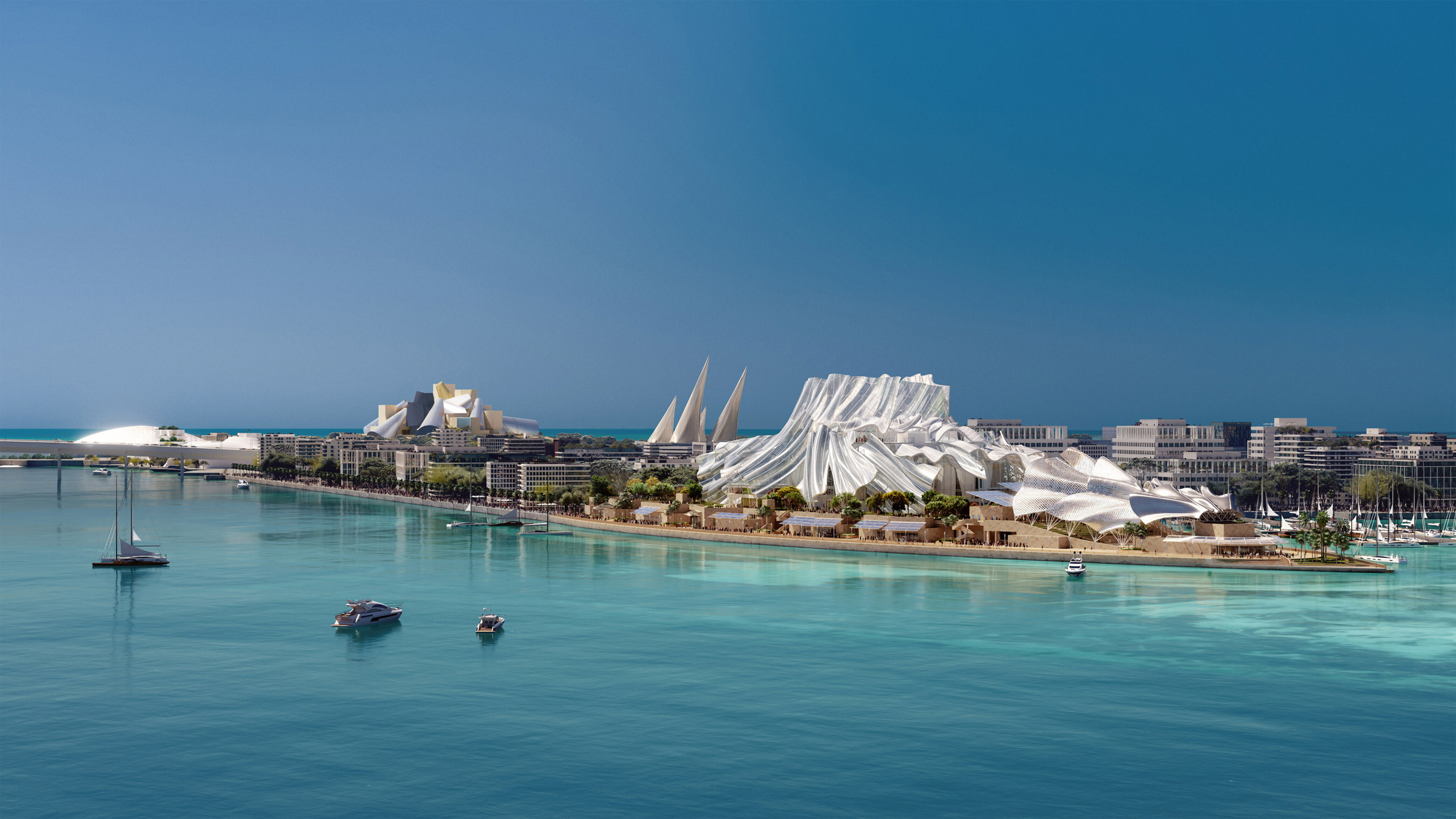
Dar al Funoon, an Arabic phrase that translates to "House of the Arts," now rising on Abu Dhabi's Saadiyat Island
ABU DHABI
Six months after Frank Gehry's death at age 96, ground has officially broken on what may be remembered as his last major statement: Dar al Funoon, an Arabic phrase that translates to "House of the Arts," now rising on Abu Dhabi's Saadiyat Island. Authorities confirmed this week that construction has begun in earnest on the performing-arts venue, with a planned opening in 2030 that would arrive a full decade after Gehry first began conceptualizing it.
For an architect whose six-decade career redefined what a cultural building could look like — and, in the case of his Guggenheim Museum Bilbao, what a struggling industrial city could become — Dar al Funoon offers something rare: a posthumous landmark, designed with full intention by its creator, that the public will watch rise without him.
A Building Shaped Like Music
Renderings and planning documents describe Dar al Funoon as a "living expression of music and performance," built around a billowing, fabric-like exterior that cascades over the site rather than standing rigidly above it — the kind of sculptural, deconstructivist move that became Gehry's signature after Bilbao made his name globally in the late 1990s. Officials overseeing the project have described the building's transparent façade as intentionally designed to feel welcoming, drawing visitors into the performance spaces rather than presenting culture as something separated behind monumental walls.
The scale is significant even by Saadiyat Island's already ambitious standards. The completed complex will house a 2,000-seat main performance hall suited to opera and ballet, a sprawling 3,500-seat open-air amphitheater, a more intimate 400-seat theater for smaller productions, and a 250-seat jazz venue — a programming range that suggests Abu Dhabi intends the building to function less as a single-purpose concert hall and more as a year-round cultural engine, with activity scheduled across all 365 days rather than concentrated around a handful of marquee seasons.
The Last of a Late-Career Burst
Gehry was, by any measure, still working at the time of his death. Dar al Funoon joins a small cluster of projects he had in development during his final years, but its scale and prominence place it among the most significant. Architecture critics and historians, in tributes published in the days following the groundbreaking announcement, have pointed to the building's rippling exterior as a kind of summation of techniques Gehry spent decades refining — from the crumpled-metal forms of the Walt Disney Concert Hall in Los Angeles to the titanium curves of Bilbao to the looser, more sail-like gestures of his later commercial and cultural work. One feature in The National, surveying six prior Gehry buildings as "clues" to what Dar al Funoon will become, suggested the new building synthesizes lessons from across that entire body of work rather than introducing an entirely new visual language — fitting, perhaps, for a project understood from the outset to be among its architect's last.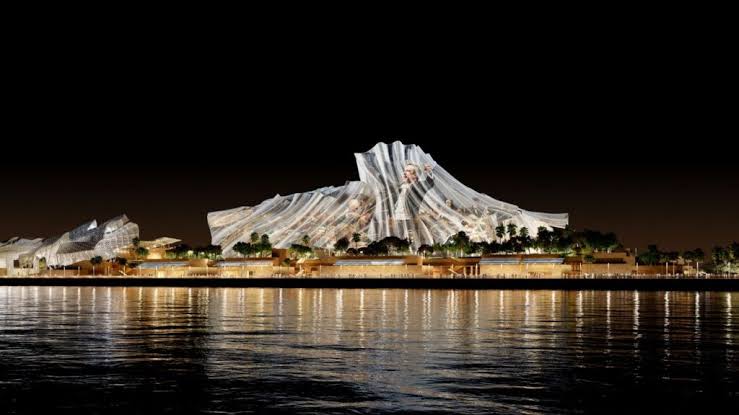
It is also, notably, not Gehry's only mark on this particular stretch of coastline. Dar al Funoon will rise within view of the long-delayed Guggenheim Abu Dhabi, another Gehry design that has been under construction on the same island for years. Together, the two buildings will give Saadiyat Island the rare distinction of hosting two major completed Gehry works within walking distance of one another — a pairing that local officials are clearly positioning as a centerpiece of the island's identity as a purpose-built cultural district, alongside the already-open Louvre Abu Dhabi and Zayed National Museum.
Why Abu Dhabi Is Betting Big on Culture
Officials overseeing the emirate's culture and tourism strategy have been explicit about the ambition behind the project. The head of Abu Dhabi's Department of Culture and Tourism described Dar al Funoon as a building that is "going to connect us all" — language that frames the project not just as a venue but as civic infrastructure, intended to anchor a sense of shared identity in a city actively constructing its global cultural reputation from the ground up over the past two decades.
That strategy has been underway since the mid-2000s, when Abu Dhabi first announced its intention to build Saadiyat Island into a dense cluster of internationally significant museums and performance venues, partnering with institutions like the Louvre and the Guggenheim Foundation to lend instant credibility to a cultural district built largely from scratch. Dar al Funoon represents the latest, and in some ways most personal, chapter of that strategy — a building whose primary creative author is no longer alive to see it completed, placing unusual weight on the construction and curatorial teams who will need to honor his intent without his direct involvement for the first time on a project of this scale.
What This Means Beyond Abu Dhabi
For design enthusiasts and casual museum-goers alike, Dar al Funoon is a reminder of how long the gap can be between an architect's vision and a public's ability to experience it. A 2030 opening means audiences will wait roughly five years from groundbreaking to opening night — typical for a project of this complexity, but a useful corrective to the idea that architecture moves at the speed of a press release. It's also a case study in how cultural institutions plan for legacy: Gehry's involvement ended with his death, but the design itself, and the intent behind it, now has to carry the project across years of construction decisions that he will have no hand in making.
More broadly, Dar al Funoon adds to a string of recent announcements suggesting the Gulf region's appetite for architecturally ambitious cultural buildings shows no sign of slowing, even as questions persist globally about the costs and labor conditions tied to such large-scale developments. Whatever the building ultimately becomes once doors open in 2030, its groundbreaking this week guarantees it a permanent place in the conversation about how — and whether — an architect's most personal ideas can outlive them. For Gehry, whose career was built on turning ambitious, occasionally improbable shapes into beloved civic landmarks, Dar al Funoon may turn out to be the most fitting kind of farewell: a building that asks visitors to walk inside one more idea its author never got to see finished.



