Written By | Health News Agencies
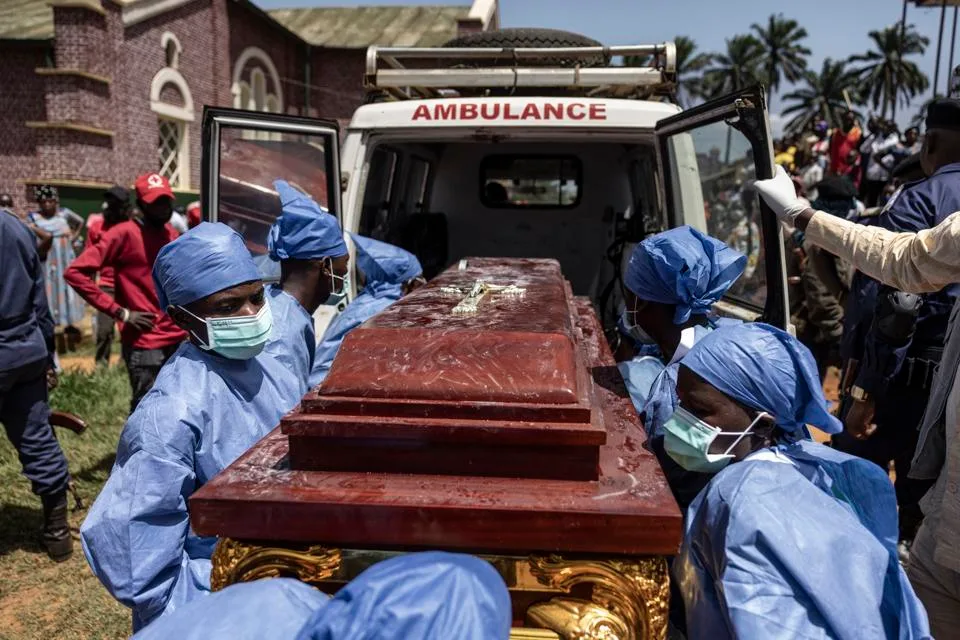
Three confirmed cases, 127 contacts in quarantine and three people still missing as the world's largest-ever Congo outbreak — now past 9,000 cases — has no approved vaccine and no approved cure.
Three confirmed cases, 127 contacts in quarantine and three people still missing as the world's largest-ever Congo outbreak — now past 9,000 cases — has no approved vaccine and no approved cure.
NAIROBI / GOMA
It began with a man on a plane. On 3 October, a Congolese-based patient who had been sick for roughly a month climbed aboard a flight from Kampala to Nairobi, carrying a virus for which the world still has no licensed vaccine and no approved treatment. Two days after landing, he was dead. Two weeks later, the Bundibugyo strain of Ebola has now claimed a place in Kenya's headlines, its hospitals and, most worryingly, one family's quarantine ward.
On Friday, Kenyan health officials confirmed a third case: a 65-year-old woman, a close relative of the first two patients, who developed fever, a sore throat and weakness while already under quarantine, where she had been since 6 October. She is now in an infectious disease unit receiving supportive care. Kenya's Director-General for Health, Patrick Amoth, offered a rare note of reassurance: because she was already isolated at home when symptoms struck, he said, "the fact that the woman was already in quarantine allowed health workers to identify the infection quickly."
It is a small win in a very large crisis. Behind Kenya's three cases lies an epidemic in the Democratic Republic of the Congo that the World Health Organization describes as the biggest Ebola outbreak ever recorded in that country, regardless of the virus species — and, by most counts, the second-largest in history.
The Case That Crossed the Border
According to the WHO's latest Disease Outbreak News bulletin, dated 8 October, the agency was told on 5 October of a laboratory-confirmed imported case in Kenya, and the Kenyan Ministry of Health announced it publicly the following day. The patient was an adult who had been living in the DRC. He travelled by road through Kampala, Uganda, and flew to Nairobi on 3 October. He was isolated at Nairobi Hospital, tested positive on 5 October and died the same day.
The WHO believes the man was probably infected while seeking care for another illness, either inside a health facility or in his community. He had been unwell for about a month and had been treated at several hospitals in the DRC before he made the journey. That timeline is exactly what keeps outbreak experts awake at night: a seriously ill traveller moving through two countries, an international airport and at least one commercial flight before anyone knew what he had.
A safe and dignified burial, a key control measure because the bodies of Ebola victims remain highly infectious, was carried out. Then came the contact tracing. Kenyan authorities have identified about 130 people who may have been exposed — relatives, friends, health workers and fellow passengers. As of Saturday, 127 have been traced and placed in quarantine. Three remain unaccounted for.
The second case, a 39-year-old man from the same family, tested positive on 14 October after developing symptoms under quarantine. He is reported to be stable and responding to treatment. Both the second and third patients were already known contacts, and Kenyan officials say there is currently no evidence of community transmission. Airport and land-border screening has been stepped up, particularly for travellers from higher-risk countries.
A Record-Breaking Epidemic Next Door
To understand why a single imported case triggers such alarm, you have to look at what is happening in the DRC. The outbreak was first detected in May 2026, and the WHO declared it a Public Health Emergency of International Concern on 17 May. By the agency's 6 October reporting cut-off, there were 8,728 confirmed cases, 4,205 confirmed deaths and 2,269 recoveries — a crude fatality ratio of 48.2 percent. Later figures cited by the US Centers for Disease Control and reported by CIDRAP put the total at 9,235 cases and 4,444 deaths, and other outlets say the count has passed 9,000 cases and 4,300 deaths. Different agencies are counting on different dates, but the direction of travel is the same.
The virus is spreading. Cases are now reported from 64 health zones across seven of the DRC's 26 provinces, according to the WHO's 8 October update, and further reporting indicates two cases in North Ubangi, near the Central African Republic, which would make an eighth province. Ituri remains the epicentre with 6,480 cases and 2,989 deaths. North Kivu has 1,755 cases and 1,013 deaths — and the highest provincial fatality rate in the country at 57.7 percent. A newly affected zone, Alimbongo in North Kivu, had four confirmed cases and two deaths in the latest bulletin.
The WHO describes transmission as intense but uneven: slowing in some areas while growing in others. New weekly cases rose 2.5 percent, from 475 to 487, in the most recent reporting period, while weekly deaths held steady at around 224. Since the previous bulletin in late September, 775 confirmed cases and 379 deaths have been added.
The Hidden Danger: Dying at Home
One statistic in the WHO report deserves attention. Of 372 deaths recorded since the previous update, 264 happened in the community and only 108 in treatment centres. In plain language, most people who died never made it to — or never reached in time — a place that could treat them. The WHO links this to delays in recognising illness and getting patients to care. People who die at home are also a transmission risk, because grieving relatives who wash and bury the body are in direct contact with infectious fluids.
Contact tracing, the foundation of any Ebola response, is also falling short. The WHO's target is to follow up at least 85 percent of contacts; the latest figure is 80.4 percent, with 23,741 of 29,535 contacts reached as of 4 October. Every contact who slips through the net is a potential new chain of infection.
Children are paying a terrible price. Save the Children has reported around seven child deaths a day and 961 in total since the outbreak was detected in May. In Ituri, 25 schoolchildren have confirmed infections and 10 students have died, according to CIDRAP, with seven survivors still in treatment.
No Vaccine. No Cure.
The brutal fact at the heart of this story is that Bundibugyo virus is not the Ebola most people have heard of. The Zaire strain, responsible for the 2014–2016 West African epidemic, has licensed vaccines and approved antibody treatments. Bundibugyo, first identified in Uganda in 2007 and seen in a previous DRC outbreak in 2012, has neither. The WHO states plainly that there are no approved vaccines or specific therapeutics for it. Care is supportive: fluids, managing symptoms and treating complications.
Scientists are racing to change that. In Masaka City, Uganda, a phase 1 trial of an Oxford-developed candidate vaccine began this week, with the first dose administered. It uses the same viral-vector platform as the Oxford/AstraZeneca COVID-19 vaccine. The team plans to enrol 110 volunteers by November and follow each for 12 months. Researcher Eugene Ruzagira said the first question is "whether the vaccine is safe, first and foremost," adding that the platform's "strong safety record and proven large-scale manufacturing give us a head start on both safety and supply." Moderna is separately developing an mRNA candidate.
In the DRC itself, the WHO says a larger human trial is due to start within weeks. It will test whether Merck's Ervebo — licensed against the Zaire strain — also protects against Bundibugyo, with Bundibugyo-specific vaccines to be added later. There is a glimmer of hope: German researchers have found that Ervebo triggers cross-reactive T-cell responses against Bundibugyo. Whether that translates into real-world protection is, for now, unknown.
The World Braces
The WHO is not waiting for the virus to knock. According to a UN News report published this week, the agency is scaling up Ebola readiness in 22 countries across three continents. The WHO's risk assessment, last reviewed in August, rates the risk as very high in the DRC, high for neighbouring countries that share a land border, and low for the rest of Africa and globally. A detailed rapid risk assessment for Kenya is under way.
Nigeria's Centre for Disease Control issued a statement on 6 October rating the risk of importation as high and has run a national preparedness tabletop simulation. No confirmed case has been reported there. Somalia and other nations in the region are watching Kenya's experience closely. In the Netherlands, a health worker deployed to the DRC response tested positive and was medically evacuated on 1 October; the case is counted as an evacuation, not local transmission.
There is one genuinely good-news data point. Uganda, which suffered its own Bundibugyo outbreak this year, has now officially ended it after completing a 42-day countdown with no new cases — proof that the virus can be stopped when detection, isolation and tracing work.
What the Experts Say
The WHO's position is firm and, to some travellers, counterintuitive: it advises against travel or trade restrictions on affected countries, arguing they push people toward unofficial crossings and make outbreaks harder to track. It issued Temporary Recommendations on 24 August urging coordinated control, cross-border collaboration and sustained surveillance, and says it is monitoring any measures countries adopt. The agency also stresses an urgent need for funding to close gaps across surveillance, laboratory testing, infection prevention, clinical care, community engagement and safe burials.
Kenya's early experience offers a model of what works. The country's reference laboratories confirmed the second and third cases quickly, and the fact that both patients were already quarantined means they were spotted at the first sign of fever rather than days later in a crowded household or clinic. The three unaccounted contacts, though, are the loose thread that could unravel that success.
What This Means For You
For the overwhelming majority of readers outside central and eastern Africa, the risk remains low. Ebola does not spread through the air like flu or measles. It passes through direct contact with the blood or body fluids of a person who is sick or has died, or with contaminated materials. Early symptoms — fever, severe weakness, muscle pain, a sore throat, vomiting and diarrhoea — can look like many other illnesses, which is why travel history matters.
If you are planning travel to the DRC or neighbouring countries, check your national health agency's current advice, avoid contact with the sick and with funeral gatherings, avoid bushmeat and unnecessary hospital visits, and wash hands frequently. If you have returned from an affected area and develop fever or other symptoms within 21 days, call ahead to a healthcare provider or national hotline before showing up in person so staff can protect themselves and others. Do not rely on rumours or social-media remedies; follow your local health ministry and the WHO.
Anyone with relatives in the affected region should be aware that official guidance discourages travel bans but encourages screening and responsible reporting of symptoms. And if you are in Kenya and have been in contact with the first patient or flew on his flight, the Ministry of Health wants to hear from you immediately.
The Bottom Line
Kenya's three cases do not yet amount to a second outbreak. They amount to a warning shot. The virus that has killed more than 4,000 people in the DRC this year has demonstrated it can travel by road and air, and it is doing so in a region where health systems are already stretched. What happens next depends on three things: whether the three missing contacts are found, whether the DRC can lift contact follow-up above the 85 percent target, and whether the first Bundibugyo vaccine trials deliver safe, effective candidates quickly.
Until then, the public-health playbook is old-fashioned and unglamorous: find the sick, isolate them, trace everyone they touched, bury the dead safely and keep people informed. It worked in Uganda. The world is now watching to see whether it can work in Nairobi — and in the forests and towns of eastern Congo, where the clock is still ticking.



