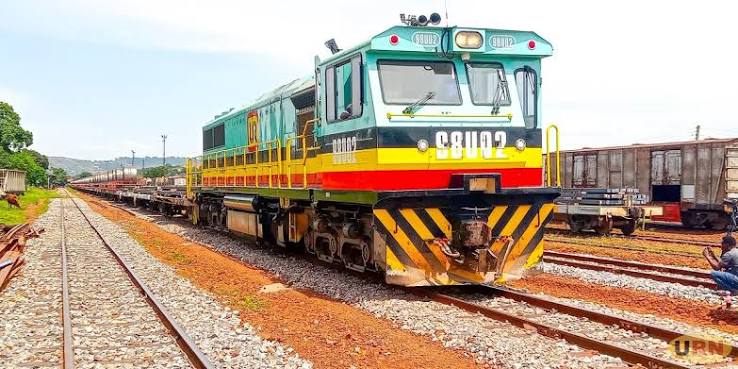
Kampala
Uganda's Parliament last week adopted one of the most damning oversight reports it has produced in years, accusing the state-owned Uganda Railways Corporation of losing track of its wagons, its land titles and, in the committee's telling, a substantial share of the donor money meant to rebuild the country's railway.
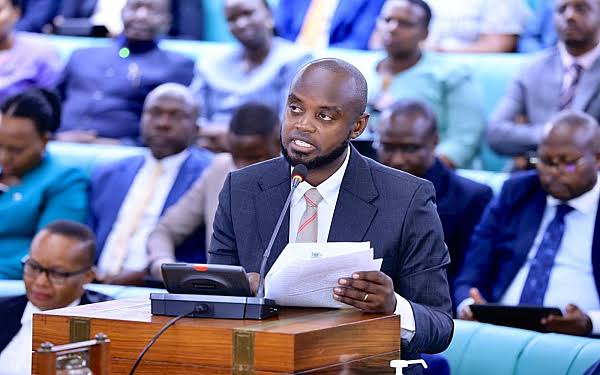
The report, tabled by the chairperson of the Committee on Physical Infrastructure, Mwine Mpaka, was adopted on Thursday 3 September during a sitting chaired by Speaker Jacob Marksons Oboth. It centres on a Shs 125 billion Spanish-funded railway rehabilitation project — roughly EUR 28.96 million — of which Shs 20.8 billion was earmarked for building technical capacity inside URC itself.
Mpaka's summary of what the committee found was blunt. "We have established a systematic failure where public funds meant to build local railway capacity and rehabilitate critical transport infrastructure were instead deployed to enrich individual consultants and foreign firms under the guise of technical expertise," he told the House.
WHAT THE COMMITTEE FOUND
The capacity-building component is where the report bites hardest. According to the committee, almost 90 per cent of those funds — about EUR 4.33 million — went to five foreign experts. Some were paid as much as EUR 32,500 a month, roughly Shs 140 million. For context, the committee noted that URC's own local staff salaries sat at around Shs 6.5 million a month.
More awkwardly still, the committee found that some URC employees were allegedly listed as foreign experts in order to access the higher payments while continuing to draw their ordinary local salaries. If substantiated, that is not an accounting irregularity; it is fraud.
The procurement chain drew equally sharp criticism. The Spanish firm Consultrans S.A.U., which designed the project's feasibility study and assessed URC's capacity needs in the first place, subsequently awarded the works contract to its sister company, Imathia Construction, through direct procurement. A consultant assessing what a client needs and then steering the resulting contract to an affiliate is the textbook definition of a conflict of interest, and MPs treated it as such.
Smaller line items fill out the picture. Multi-day training workshops were compressed into one-day refresher courses. EUR 79,500 was claimed for overseas back-office travel. Project-funded second-hand pickup trucks were sold to staff. EUR 60,000 intended for office furniture was instead used to equip offices occupied by the Spanish consultants themselves.
THE ASSETS NOBODY CAN FIND
If the consultancy findings are the report's moral centre, the asset findings are its most quantifiable. URC, the committee established, cannot fully account for its rolling stock. One hundred and twelve wagons remain unaccounted for after being routed to what the report calls a "virtual station" in Nyahururu, Kenya, under the tracking system inherited from the former Rift Valley Railways concession.
Separately, URC sold 152 wagons domestically as scrap and another 28 in Tanzania. Official records could not account for 82 of those scrap wagons, producing what the committee put at a direct financial loss of Shs 2.4 billion.
Land is the other running sore. URC holds 20,848 acres. Of that, 1,983 acres remain untitled and are affected by more than 24,653 recorded cases of encroachment. Sixty-two railway land titles were misplaced by the Ministry of Finance, Planning and Economic Development during office relocations and have never been returned, despite reminders dating back to 2016 — a decade of unanswered correspondence about the paperwork underpinning a national strategic asset.
"URC cannot account for its own land, its land titles or its rolling stock," Mpaka said, warning that the disappearance and disposal of wagons raised questions of criminal liability.
The operational numbers explain why any of this matters beyond the ledger. Only 269 kilometres of URC's 1,266-kilometre network is operational. Fleet availability stands at 22 per cent for locomotives, 36 per cent for coaches and 30 per cent for wagons. A railway running roughly a fifth of its network with roughly a fifth of its locomotives is not a transport system; it is a caretaker operation.
WHO IS INVOLVED
The report does not stop at description. It directs the Inspectorate of Government to investigate and prosecute members of URC's Ad Hoc Board of Survey, its Contracts Committee and its Procurement and Disposal Unit over the irregular disposal of scrap wagons and the resulting losses.
The IGG was also directed to investigate former URC Managing Director David Musoke Bulega, along with contract managers and members of management, over payments for unexecuted services, questionable travel claims, unprocured software, vehicle misappropriation, and contractual terms that resulted in URC losing ownership of its concrete sleeper plant. None of the named individuals has been convicted of anything; a parliamentary committee recommendation is a referral, not a verdict.
The committee further ordered the Ministries of Lands and of Works and Transport to submit a joint railway-land recovery strategy within 30 days, including measures — with police and military support where necessary — to remove 1,698 identified encroachers.
On the government benches, the response was conciliatory rather than defensive. The Minister of State for Transport, Julius Maganda, acknowledged the scale of the decline. "Completely everything went down... Government is beginning to uplift Uganda Railways. Look at the report but support the agency because we are now moving in the right direction," he said. Kalungu West MP Joseph Ssewungu urged openness in the debate on rehabilitation. Speaker Oboth, characteristically, made the point domestically: "Replace those old coaches. I want to use that train to come to Parliament. We need some coaches. I have a stage just by my house."
The Minister of State for Industry, David Bahati, confirmed the Executive would respond formally through a Treasury Memorandum — the constitutional mechanism by which government replies to an adopted parliamentary report.
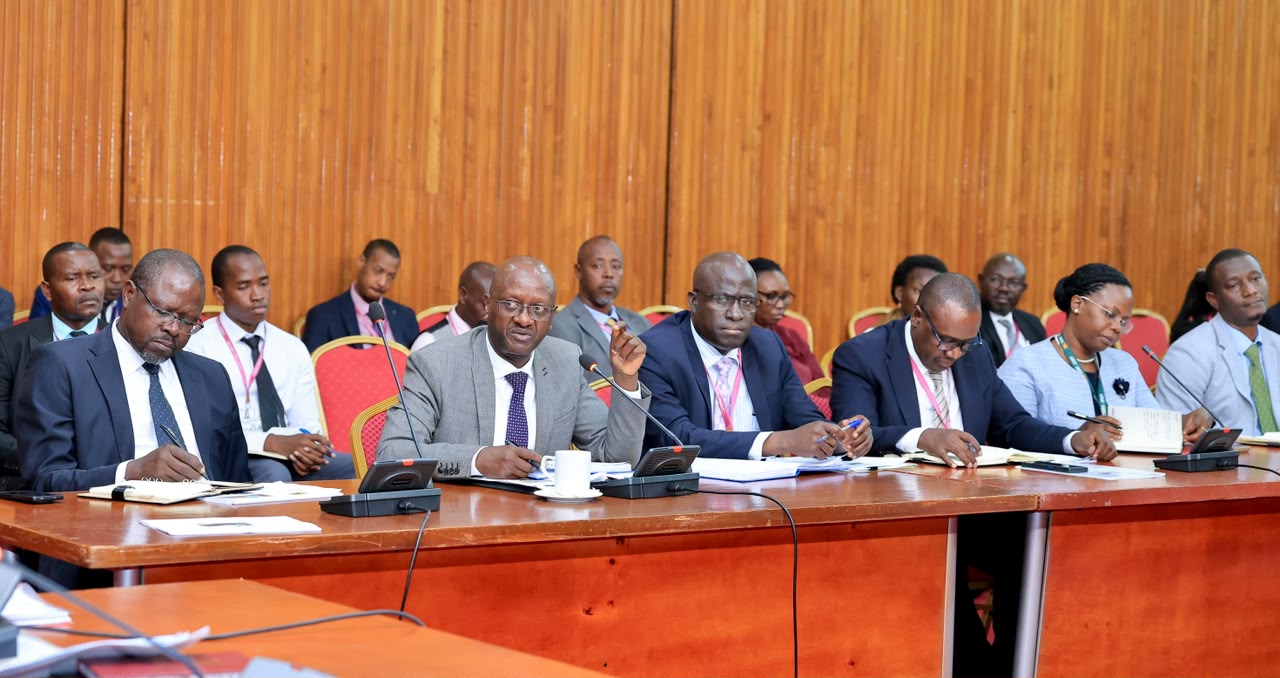
Uganda Railways Corporation officials before Parlaiments committee on Phyiscal Infrastructure
WHY IT MATTERS
Three things make this more than a routine oversight exercise.
First, it is a test of the new Parliament's appetite. This House was seated after the January 2026 general election, in which President Yoweri Museveni was returned with 71.65 per cent of the vote amid a disputed count and post-election violence. A legislature dominated by the ruling party has a standing credibility problem on accountability. Adopting a report that names a former parastatal chief executive and refers a foreign contractor's procurement conduct to the IGG is a data point in the other direction — provided it is followed through.
Second, it lands squarely on the country's freight economics. Uganda is a landlocked economy whose competitiveness is determined largely by the cost of moving goods to and from the Indian Ocean. Every tonne that cannot go by rail goes by road, at higher cost, with heavier damage to the highway network. With oil production due to begin and industrial ambitions expanding, a railway operating at a fifth of its footprint is a structural drag, not a legacy nuisance.
Third, it is a signal to development partners. The money at issue was Spanish-financed. Concessional lenders and bilateral donors read parliamentary reports; findings that a capacity-building envelope was consumed largely by the consultants delivering it will inform how future facilities are designed and supervised.
WHAT TO WATCH
Four markers will show whether this report has teeth. The first is the Treasury Memorandum — its timing, and whether it accepts or contests the committee's central findings. The second is the 30-day land recovery strategy: a deadline that falls in early October and that will be easy to check.
The third is the Inspectorate of Government. Referrals to the IGG are common in Ugandan parliamentary practice; prosecutions arising from them are considerably rarer. Whether a file is opened on the scrap-wagon disposals, and whether it moves, is the clearest test of consequence.
The fourth is recovery of the money. Nothing in the adopted report compels repayment by the consultants or the contracting firms, and cross-border recovery from a Spanish company would require avenues Uganda has rarely used. The Shs 2.4 billion wagon loss is quantified; the EUR 4.33 million consultancy spend is characterised as misdirected rather than formally established as recoverable. Absent civil action or contractual clawback, the practical outcome may be reform of future procurement rather than restitution of past losses.
For now, the report has done what oversight reports can do: it has put numbers on a decline that was widely understood but poorly documented, and it has handed the Executive a document it must answer in writing.
Published By | Political News Editor