Written By | Business Experts
From Lagos to Accra, Nairobi and Johannesburg, utilities are betting that connected meters can plug the revenue leaks that generation investment alone never fixed
Technological Transformation
For two decades the debate about African electricity centred on megawatts: new dams, gas plants, solar parks and interconnectors. The quieter lesson of the 2020s is that a power system is only as solvent as its last metre of cable. Electricity that is generated but not measured, billed and paid for drains utilities, which then cannot pay generators, which then cannot run their plants. Across the continent, the device at the edge of that chain — the meter — is being rebuilt as a piece of digital infrastructure: networked, remotely readable, tamper-alerting and wired into mobile money.
This piece looks at four markets where that shift is under way in 2026, each pursuing a different model: Nigeria's sprawling multi-programme push to close a metering gap, Ghana's plan to hand billing and metering to private concessionaires, Kenya Power's utility-led move to smart-only procurement, and South Africa's split-meter and municipal programmes aimed at theft and arrears.
What a smart meter actually changes
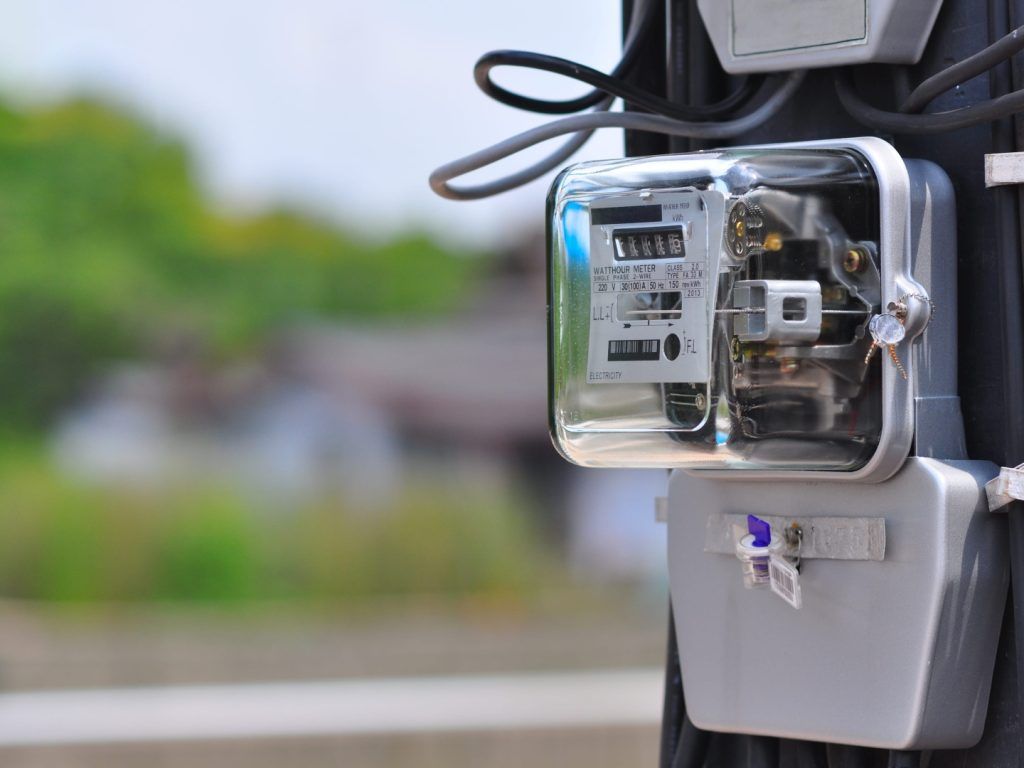
The first generation of African prepaid meters, largely built on the open Standard Transfer Specification (STS), already changed the economics of retail electricity: customers pay before they consume, and token sales can be made through banks, agents and mobile wallets. Smart meters add a two-way communications layer. Utilities can read consumption remotely, detect tampering or bypasses in near real time, disconnect and reconnect without a truck roll, and collect granular load data that feeds network planning and loss analysis. Split designs — with the metering unit sealed on a pole and only a display inside the home — make physical interference harder. In effect, the meter becomes an IoT endpoint, a payments terminal and a data source all at once.
Nigeria: four programmes, one stubborn gap
Nigeria has the largest metering deficit in absolute terms. The Nigerian Electricity Regulatory Commission's factsheet for May–June 2026 shows 12.59 million active customers, of whom 7,743,839 were metered by the end of June — a rate of 61.51%, leaving about 4.85 million active customers without meters. The distribution companies delivered roughly 308,106 meters in those two months. Performance varies widely: Eko DisCo reported an 88.70% metering rate, Ikeja Electric 87.91% and Abuja 81.38%, while other franchise areas lag far behind. Daily Trust, citing NERC, put the rate at 63.10% by August.
The headline numbers understate the problem. Many multi-occupancy buildings are recorded as a single customer, and the World Bank's restructuring paper for its US$500 million Distribution Sector Recovery Programme (DISREP) counts more than seven million unmetered customers plus about three million 'cascading' connections — a shortfall of around ten million. DISREP itself has struggled: reports based on programme data indicate only about 6.8% of its target had been achieved after the first quarter of 2026, with roughly US$69 million of the US$500 million loan disbursed. In January, THISDAY attributed the slow pace to poor installer remuneration and the absence of clean data on unmetered customers. The Bureau of Public Enterprises said in September that of 1,033,000 meters delivered under the Presidential Metering Initiative, 668,000 had been installed on customer premises.
NERC has noted that four metering programmes are running in parallel — DISREP, a federal initiative, the DisCo-funded Meter Acquisition Fund, and an Advanced Metering Infrastructure framework — and has urged a unified push. The fragmentation matters technologically as well as administratively: meters from different programmes and vendors must interoperate with each DisCo's head-end and vending systems, and a smart meter without a working data link is just an expensive prepaid meter. With electricity regulation now devolved to 16 state commissions, the risk of incompatible standards is rising, not falling.
Ghana: outsourcing the meter-to-cash chain
Ghana is attempting something more structural. An IMF paper puts the Electricity Company of Ghana's distribution losses at 27.1% in 2024, with the utility collecting only about 86% of what it bills. Rather than sell ECG, the government has opted for a concession model in which private operators run specific functions — billing, metering and revenue collection are the ones most often named — while the state retains the network. A transaction adviser has been appointed, and the IMF's latest programme review expects concessions to be awarded by June 2027.
The pitch draws on a local pilot: President John Mahama has cited Enclave Power, which meters and bills companies in the Free Zones Enclave, as achieving 99% revenue collection — a government claim not independently verified. The stakes are high. Ghana's energy-sector shortfall has fallen to about US$1.4 billion and net payables to independent power producers and fuel suppliers to US$1.7 billion in March 2026, down from US$2.1 billion at the end of 2024, but the gains depend on collections continuing to improve. History is a warning: Power Distribution Services took over ECG's network in 2018 under a 20-year concession linked to the US Millennium Challenge compact, only for the arrangement to be terminated the following year at the cost of roughly US$190 million in forfeited funding. The Trades Union Congress has again threatened legal action. On the customer side, ECG has been rolling out smart prepaid meters that can be topped up via its ECG Power app or the *226# USSD code — the technological base a concessionaire would inherit.
Kenya: smart-only procurement and the end of the cash counter
Kenya Power, which serves more than ten million customers, has taken a utility-led route. In June 2026 it said that all new meters being deployed are smart meters, and in late June it moved to procure 19,103 smart meters, including 18,000 three-phase units, mostly for large commercial and industrial customers — the segment where each unbilled kilowatt-hour costs the most. The utility has also targeted more than one million prepaid customers for smart meter replacement by the end of 2026, prioritising high-density areas and places with frequent tampering, though no official progress figure has been published. In parallel, it is phasing out physical payment counters, with closures staged through 2027, pushing virtually all payments onto M-PESA and other digital channels. Kenya's approach shows the payment rail and the meter converging: when every token is bought on a phone and every meter reports back, the utility's revenue cycle becomes almost fully digital.
South Africa: theft, arrears and the politics of remote control
South Africa's problem is less access than non-payment and illegal connections, compounded by municipal debts to Eskom. Eskom's smart prepaid split-meter programme began in Sandton and Midrand and is being extended beyond Gauteng between 2025 and 2027. Installation is free, and Eskom stresses that tariffs are set by the regulator, NERSA, not by the meters. Separately, National Treasury has funded a roughly R1.1 billion smart-meter programme for municipalities heavily indebted to Eskom; in April 2026 Godongwana said 78% of participating municipalities were now paying Eskom every month.
Resistance is real. Residents in Orange Farm have called for the rollout to be halted, and the union federation SAFTU has condemned smart meters as a tool to enforce automatic disconnection of the poor. Eskom has also had to warn communities about scammers posing as officials and charging for installations. The South African experience underlines that remote disconnection is not a neutral technical feature: it shifts the moment of enforcement from a negotiation at the door to an algorithm, and without free basic electricity allocations and hardship protocols it can deepen energy poverty.
The risks beneath the upgrade
What to watch
Key milestones over the next year include NERC's next metering factsheets and any consolidation of Nigeria's four programmes; the shortlist and award of Ghana's ECG concessions ahead of the June 2027 target; Kenya Power's first published smart-meter installation figures against its one-million target; and whether Treasury's municipal programme in South Africa is scaled beyond its first cohort. If those milestones are met, the continent's next big electricity gains may come not from new power stations but from the small grey boxes on walls and poles — and from the data and payments flowing through them.



