Written By | Sports Desk
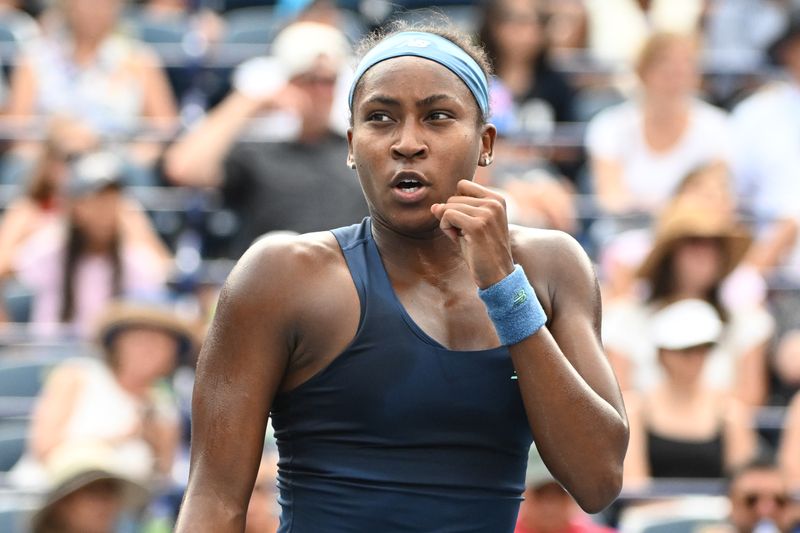
A walkover, an upset, and a milestone: inside a wild quarterfinal day at the National Bank Open that reshaped the women's hard-court summer
TORONTO
A Quarterfinal Day Nobody Scripted
The National Bank Open in Toronto has a habit of rewriting its own storylines overnight, and this week's quarterfinal round was no exception. On Tuesday, twelfth seed Belinda Bencic withdrew from her much-anticipated showdown with Coco Gauff just thirty minutes before first serve, citing a pinching hip injury that left her unable to move freely on court. The walkover sent Gauff through to her first-ever National Bank Open semifinal without hitting a competitive ball — a strange, almost anticlimactic way to advance, but a milestone all the same for the American star, who will now play Wednesday for a place in Thursday's final.
Just a day earlier, the tournament had delivered fireworks of a different kind. Elena Rybakina, the powerful Kazakh with one of the most feared serves on tour, outlasted four-time Grand Slam champion Naomi Osaka 4-6, 7-6(5), 6-4 in a three-set battle that swung on razor-thin margins. Osaka, playing her third match in as many days after cruising through her earlier rounds in straight sets, looked the fresher of the two on paper. Rybakina, who had needed three tough sets just to reach the quarterfinal, found another gear when it mattered, closing out the second-set tiebreak and riding the momentum into a decisive third.
Elena Rybakina
Gauff's Quiet Milestone
Lost slightly in the drama of Bencic's withdrawal was the scale of what Gauff had already accomplished just to reach the quarterfinal stage. Her straight-sets dismissal of Russian qualifier Alina Korneeva, 6-3, 6-1, in the previous round marked her 25th career appearance in a WTA 1000 or Tier I quarterfinal — a number that, since record-keeping of that tier began in 1990, only one other woman has reached before her 23rd birthday: Martina Hingis, the Swiss prodigy who racked up 39 such appearances by the same age on her way to a Hall of Fame career.
It is the kind of statistic that tends to underline just how early and how consistently Gauff has performed at the sport's highest non-major level. At 22, she has now gone unbeaten in sets at this year's Canadian Open, and her advance to the last four arrives without her having to survive a five-setter or claw back from a break down — the tournament has, in a sense, come to her.
Speaking after her win over Korneeva, Gauff reflected on just how unforgiving the current WTA field has become. "I think the depth of the WTA tour is quite strong," she said. "I feel like anyone can win any day. It's tough, it makes every match challenging." It's a notably humble read on a run that has, so far, looked anything but difficult for the American — but it also captures why Bencic's late scratch felt less like an easy pass and more like a reminder of how fragile even top-12 form can be deep into a hard-court season.
The Rybakina Factor
For Rybakina, the win over Osaka is the latest data point in what has become one of the most physically imposing games on tour. Her serve — routinely clocked among the tour's fastest — and her flat, deep groundstrokes give her a puncher's chance against anyone, but her Toronto run has also shown a willingness to grind through longer rallies rather than rely purely on power. Having needed three sets in the previous round as well, Rybakina's ability to recover and raise her level again against Osaka speaks to a level of physical conditioning that has occasionally been questioned earlier in her career.
She now awaits the winner of the tournament's other quarterfinal in the semifinals, arriving there as arguably the form player of the week — the only woman left in the draw to have beaten a Grand Slam champion outright, rather than advanced via injury or walkover.
What This Means for Fans
For tennis fans, the week's results reinforce a narrative that has quietly built across 2026: the gap between the WTA's top five and the next tier of contenders has narrowed to almost nothing. Osaka's exit, despite a resurgent season that has seen her return to deep runs at hard-court events, shows that even top form isn't insulation against an in-form Rybakina. Bencic's late withdrawal, meanwhile, is a reminder of how thin the margins are physically for players competing week after week on the sport's punishing hard-court swing heading into the US Open.
For casual viewers tuning in ahead of the Open, Gauff's continued consistency at the WTA 1000 level — even via an unglamorous walkover — keeps her firmly in the conversation as a favorite for the final Slam of the summer. Toronto has, once again, proven itself one of the most unpredictable tune-up events on the calendar.
Looking Ahead
Gauff's semifinal opponent will be determined by Tuesday's late matches, setting up a Wednesday session that could produce a final between two of the tour's most dangerous hard-court competitors. Whatever happens, Toronto's 2026 edition will be remembered as much for who didn't get to finish their matches as for who did — a quarterfinal round that swung on an upset and an injury, and a semifinal field that looks nothing like it did a week ago.
There is also a broader stakes conversation building underneath the individual results. The Canadian Open has long served as a proving ground ahead of the US Open, and this year's edition — with its mix of walkovers, upsets, and marathon three-setters — has been unusually chaotic even by the standards of a tune-up event. Coaches and analysts following the tour have pointed to the compressed post-Wimbledon hard-court calendar as a factor, with players given little recovery time between grass, the Olympics cycle, and the North American swing before New York.
For Bencic, the withdrawal raises fresh questions about her health heading into the final major of the season. Hip injuries have a way of lingering, and with the US Open just weeks away, her team will face a familiar late-summer dilemma: rest now to be ready in New York, or push through discomfort to keep ranking points and match rhythm intact. Osaka, for her part, leaves Toronto with more questions than answers despite an otherwise encouraging week, having again shown she can compete deep into a WTA 1000 draw but not yet close one out against the tour's in-form players.



