Written By | Joshua Nahamya
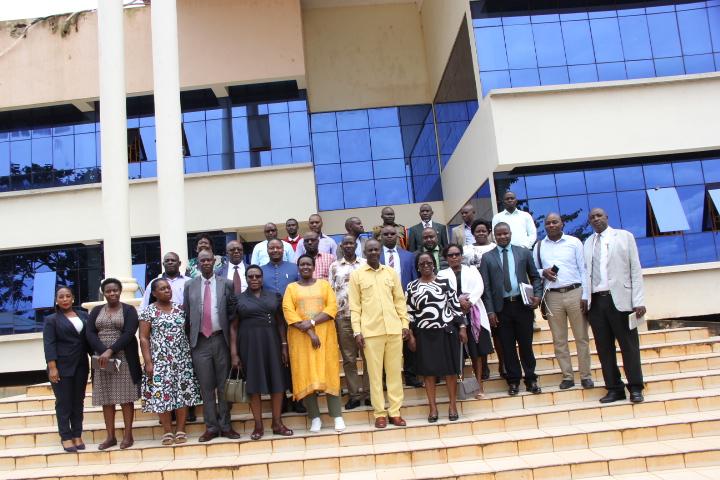
Mbarara City Councillors and Technocrats at Kalangala district headquarters.
KALANGALA
In a historic departure from tradition, Mbarara City Council successfully approved its Shs 61.4 billion budget for the 2026/2027 financial year during a high-profile legislative session held at the Kalangala District Council Hall. The city leadership, including the Resident City Commissioner (RCC), Mayor, and technical staff, crossed Lake Victoria for a two-day study tour and benchmarking exercise in the island district, a move that sparked intense discussion on social media regarding expenditure.
The approved budget reflects a significant increase from the Shs 49.3 billion allocated for the 2025/2026 financial year. The resource envelope is comprised of Shs 11.3 billion in local revenue (18.43%) and Shs 50.1 billion from central government transfers and external financing (81.57%).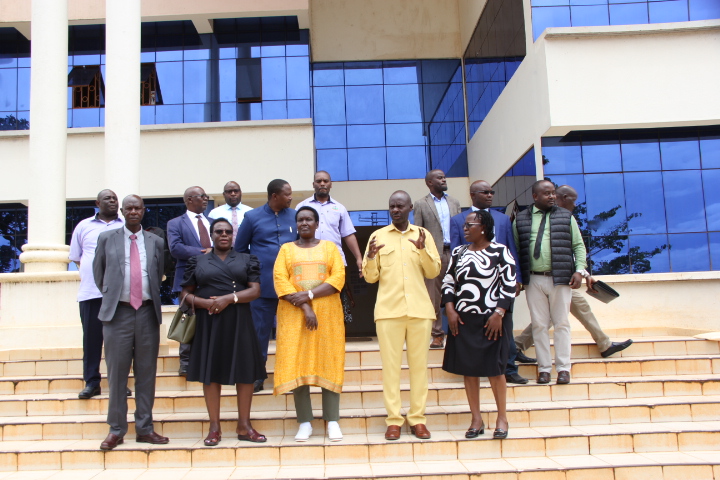
Mbarara City leadership at Kalangala district ready to pass their budget
John Kavigi, the Chairperson of the Social Services Committee, presented the revised estimates, which rose from an initial projection of Shs 56.98 billion after joint committee deliberations. “Upon thorough analysis and deliberation, the committee is satisfied that the budget has been properly prepared in accordance with the relevant laws, policies, and guidelines. It is well-structured, realistic, and responsive to the priority needs of the institution,” Kavigi noted.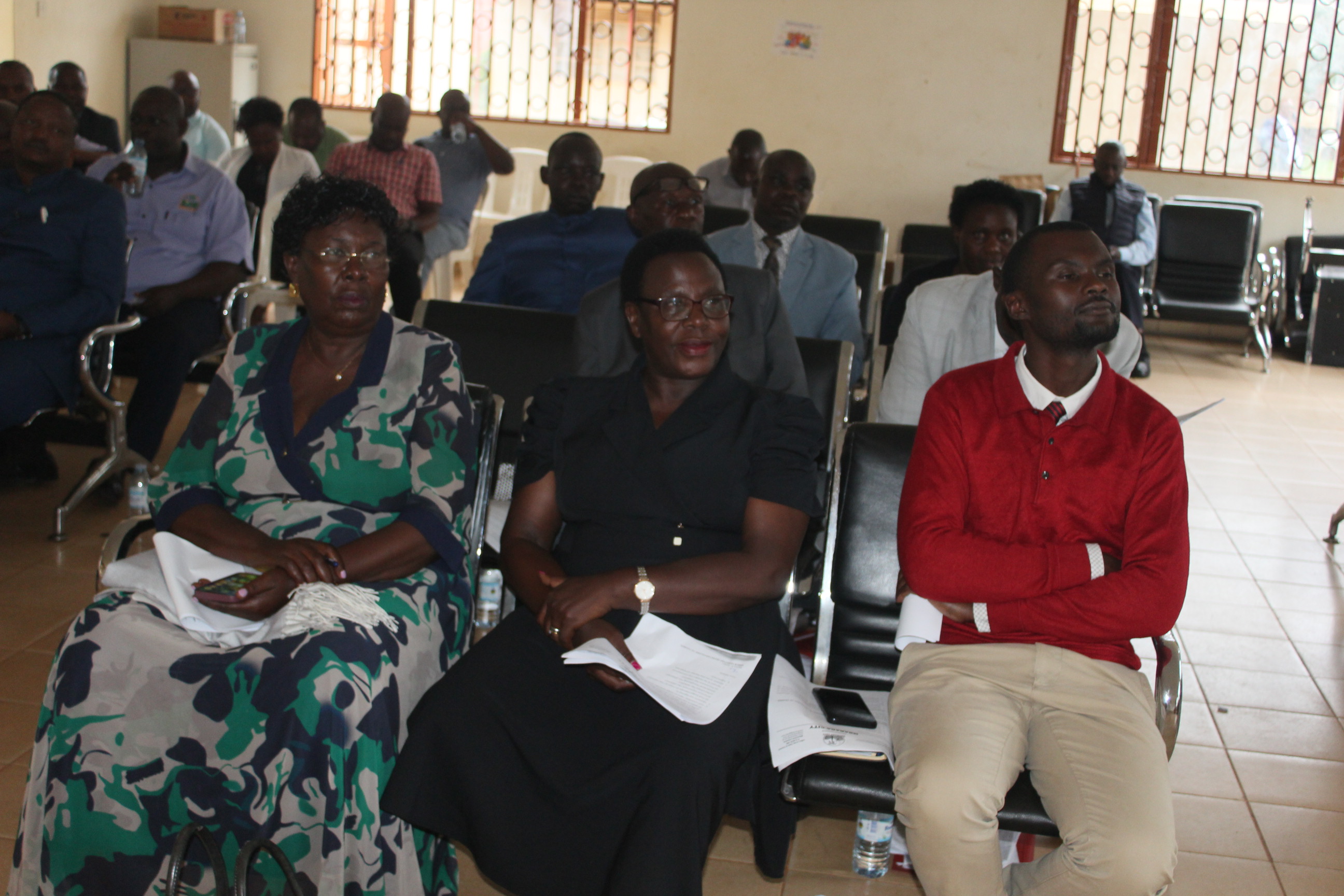
Mbarara city leadership touring Kalangala islands
National Economic Context
The city’s financial planning comes amidst a significant expansion of the national fiscal framework. Uganda’s proposed national budget for the 2026/27 financial year has been revised upward to Shs 84.39 trillion, representing a 16% increase from the initial Shs 69.39 trillion projection. This national budget, slated for official presentation on June 11, 2026, prioritizes massive infrastructure development including the Standard Gauge Railway (SGR), the Kampala-Jinja Expressway, and the completion of the East African Crude Oil Pipeline (EACOP). With 52% of the national budget financed through domestic revenue, the focus remains on energy, transport, and industrial park development.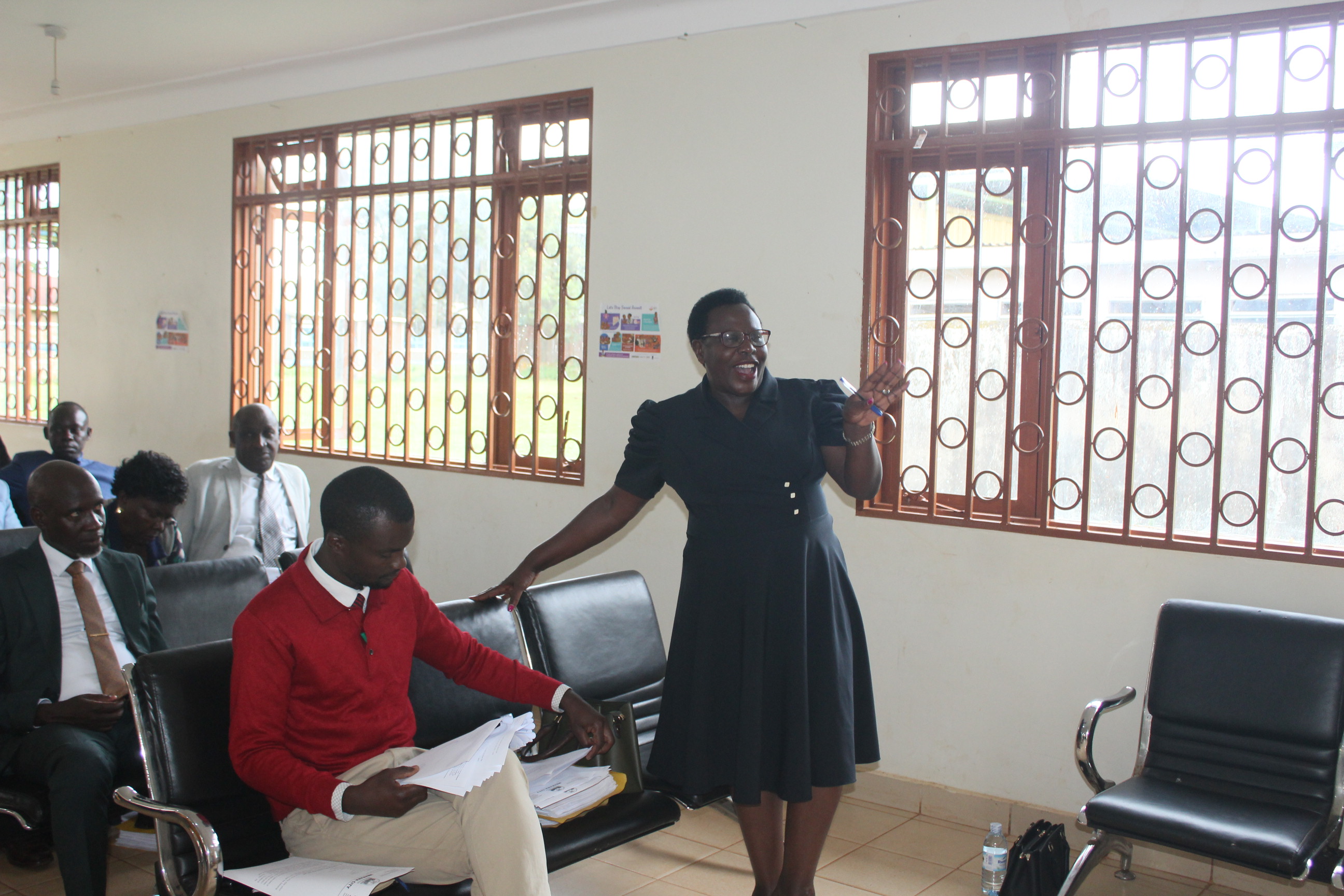
Eunice Asiimwe, councillor representing female PWDs making some submission
A Focus on Monetization and Absorption
Ronald Taremwa, the Secretary for Finance, explained that Mbarara’s budget aligns with this national strategy for the “full monetization of Uganda’s economy,” aiming to transition 39% of households from subsistence to the money economy. Addressing the controversy surrounding the retreat’s cost—alleged by some to be Shs 150 million—City Mayor Robert Mugabe Kakyebezi defended the decision as an "intentional" strategy to refresh the leadership and learn from other local governments.
“Already fake news is going around on social media that we went to Kalangala to eat money... We are here for a purpose. We have actually killed two birds with one stone,” Kakyebezi stated. He challenged his technical team to ensure every shilling is absorbed. “It will be bad for us when they tell us that this money we have not fully utilized and is returned back to the treasury. I know we shall absorb the money; I trust the Town Clerk, Justin Barekye, to address it.”
He added that the city council is authorized to go for tour studies to benchmark and learn from one another to be able to improve on local government service delivery. “It is our mandate to have a study tour, we have it in council, we pass it and there is a budget for it, so coming to Kalangala it’s not just that we are here to eat money but also to pass a budget and we have studied and toured around.”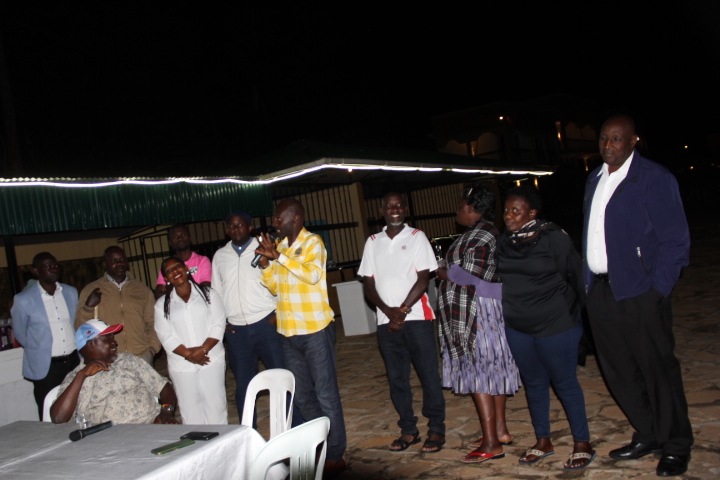
Mayor Robert Kakyebezi thanking his fellow politicians for the good work done towards the successful end of 5 year term dedicated to service delivery
Technical Commitment and Revenue Growth
City Town Clerk Justin Barekye commended her planning unit, led by Patrick Kanamugira, for their work since September. She dismissed critics of the retreat's budget, saying, “I saw some people complaining that Mbarara city leaders have gone to Kalangala to spend Shs 150m. So what’s wrong with that? Even if we spent Shs 200m, haven’t we done a lot for Mbarara City? Don’t we need time off to sit together and deliberate?”
Barekye pledged total commitment to implementing the passed resolutions starting July 2026, noting that Mbarara has become a "school" for other cities due to its success in local revenue mobilization, which has grown from Shs 2.3 billion to over Shs 11 billion.
Speaker Bonny Tashobya added that this was the final budget of the current five-year term and called for a joint celebratory party for all staff. “We have approved budgets, we have laid and approved many of them, we have discussed a lot and we have implemented a lot. I want to thank the technical team; they have really tried their best to implement our resolutions,” Tashobya said.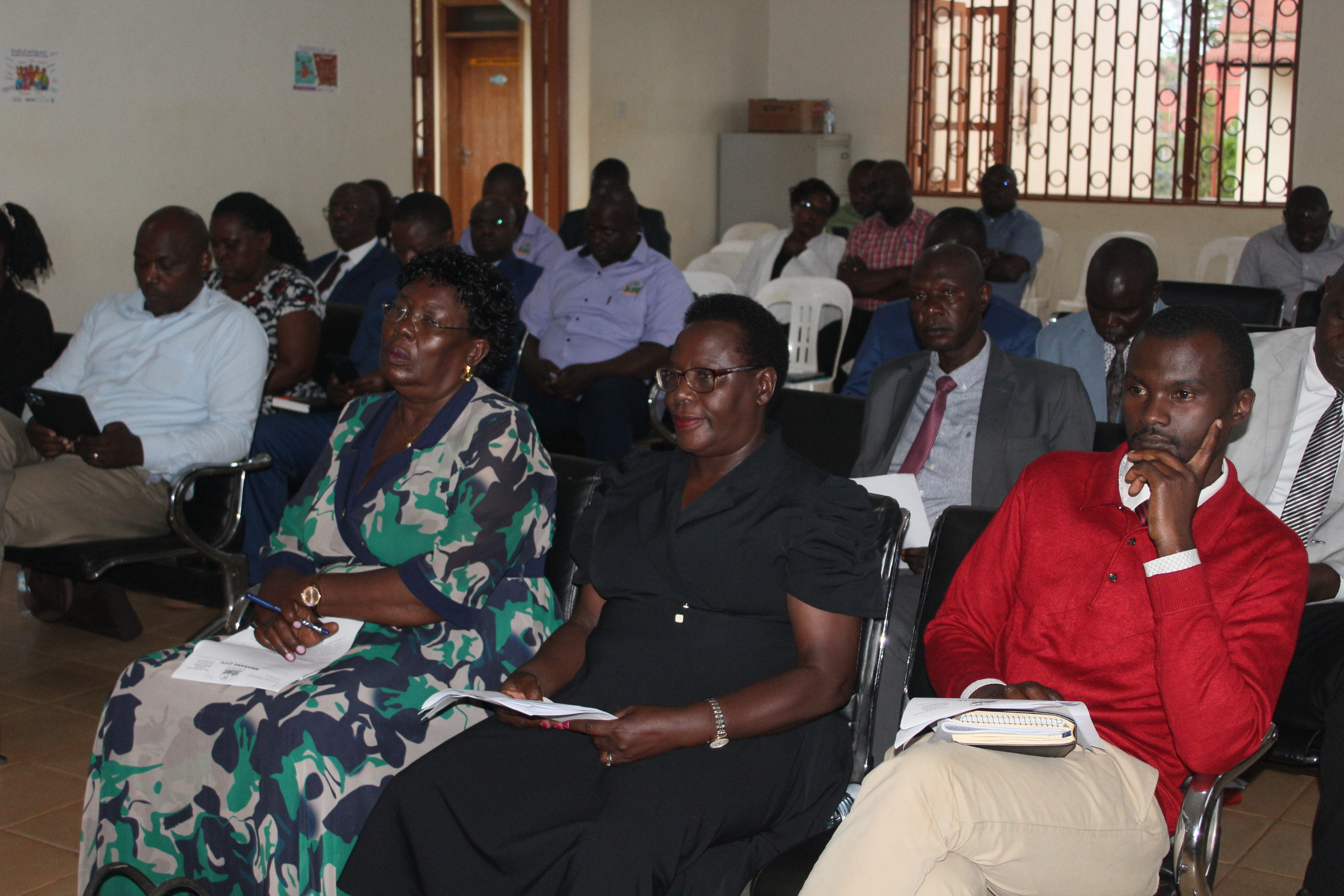
Mbarara City Councillors and technocrats attending council meeting in Kalangala
A Landmark for Networking
Richard Ssebandeke, the Chief Administrative Officer of Kalangala District, described Mbarara’s decision to pass their budget at the island headquarters as a landmark event for inter-district networking.
“I want to thank you for choosing to come to Kalangala. Whenever we get visitors, they advise us and we learn from them... information is always power, so whenever you interact with people of your caliber, you get all sorts of information that will help us to grow,” Ssebandeke noted. He expressed admiration for the "unique style" of the session, suggesting that Kalangala might follow suit in the future to encourage domestic tourism and administrative learning.
Kalangala, historically known as Ssese District during the 1970s before being merged with Masaka and later reclaimed in 1986, provided a symbolic backdrop for the city’s legislative business.
Guidance and Future Outlook
Resident City Commissioner (RCC) Catherine Kamwine Helen urged the leadership to "think big" and encouraged the Mbarara business community to explore untapped opportunities in the Kalangala islands. She also offered words of reconciliation for the outgoing council.
“To the honorable members of council who lost the elections, you did not lose it all... don’t lose hope. Losing an election is like losing a game; you prepare yourself for the next one,” Kamwine noted. She further emphasized the importance of financial independence, stating, “When you are in a district which is poor in local revenue... it will be hard to manage council because they also want finances.”
Torch Media Africa



