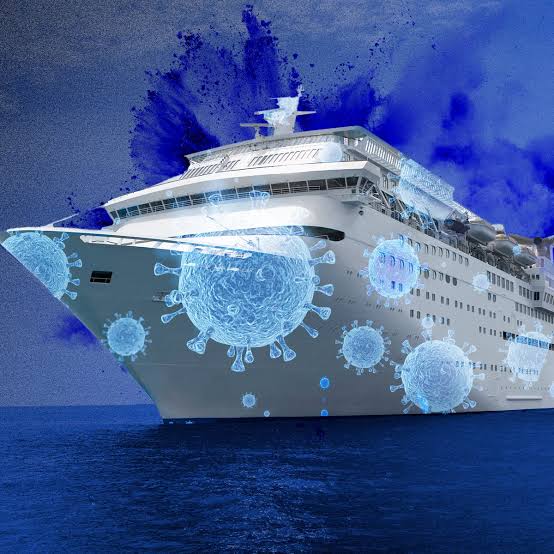
A birdwatching trip through South America's rat-infested backcountry ended with three passengers dead, 317 people quarantined across 33 countries, and the World Health Organization racing to stop a virus that isn't supposed to spread between humans at all
GENEVA/ROTTERDAM
They went looking for condors and flamingos. They came home carrying something that would kill three people and trigger one of the strangest international manhunts in modern public health history.
The World Health Organization has just closed the book — for now — on one of 2026's most unsettling health scares: a cluster of Andes hantavirus infections that broke out aboard the Dutch-flagged expedition ship M/V Hondius, sickened 13 people, killed three, and forced health authorities on four continents to track down and quarantine hundreds of former passengers before they could become the next victims, or the next link in a chain of transmission nobody wanted to test.
The final Disease Outbreak News report, published by WHO on July 2 and still rippling through infectious disease circles this week, confirms what investigators suspected for months: this wasn't just bad luck. It was a virus doing something it almost never does — jumping from person to person, again and again, inside the sealed metal walls of a cruise ship in the middle of the Atlantic.
THE TRIP THAT WENT WRONG
The nightmare began, as far as anyone can tell, on land. Sometime before April 1, 2026, a group of passengers — including a Dutch couple on a birdwatching holiday through Argentina, Chile and Uruguay — passed through rural areas known to harbor the long-tailed pygmy rice rat, the rodent reservoir for Andes virus (ANDV), a member of the hantavirus family endemic to South America's Southern Cone.
Andes virus normally spends its life quietly circulating between rodents and the occasional unlucky farmer, hiker or cabin-cleaner who breathes in dust contaminated with rodent droppings or urine. Human cases are rare and, historically, almost never spread further than the person who caught it. Only one hantavirus on Earth — Andes — is known to move from human to human, and even that has usually required prolonged, close contact, like sharing a household with a sick relative for days.
What happened next on the Hondius broke that pattern.
By the time the ship's passengers boarded on April 1 for what was supposed to be a scenic voyage north, at least one of them was almost certainly incubating the virus. Within weeks, passengers and crew began falling ill with what looked at first like severe respiratory infections — fever, muscle aches, and a rapid, terrifying slide into fluid-filled lungs that is the hallmark of hantavirus pulmonary syndrome, a condition that kills more than one in five people who develop it.
On May 2, 2026, the United Kingdom's International Health Regulations focal point notified WHO of a cluster of severe acute respiratory illness aboard the vessel. Within days, health authorities in the Netherlands, South Africa, France, Switzerland and the remote South Atlantic island of Tristan da Cunha were all reporting cases or contacts linked to the same ship.
A DEATH AT 30,000 FEET OF ALTITUDE — AND IN MID-AIR
The most chilling case belonged to the Dutch woman whose birdwatching trip started it all. According to reporting from CBS News and NBC News, she disembarked the Hondius on April 24 when it docked at Saint Helena, already unwell. Her condition deteriorated so quickly that she died just two days later — not on land, but during medical evacuation, as she was being flown to a hospital in Johannesburg, South Africa. Blood tests later confirmed Andes virus in her system.
She was 69. The two other confirmed and probable deaths in the outbreak were a 70-year-old and a 79-year-old — a detail that undercut early fears the virus might behave unpredictably across age groups. In fact, WHO's epidemiological curve shows the median age of all 13 cases was 65, almost identical to the median age of passengers on the ship as a whole, suggesting the virus wasn't selectively targeting the vulnerable so much as simply finding whoever was closest.
Of the ten hospitalized cases, eight eventually recovered and were discharged. As of the final WHO report, two remained under treatment in South Africa and France. Nine of the 13 total cases were men; four were women.

THE 33-COUNTRY MANHUNT
What followed was a logistical operation that read more like a spy thriller than a public health bulletin. As passengers and crew scattered to their home countries after the voyage ended, health authorities in 33 countries and overseas territories launched contact tracing operations to find everyone who had been aboard, everyone who had flown home with them, and every healthcare worker or airport staffer who had come into contact with a sick traveler before the outbreak was even identified.
By the time the dust settled, 317 "high-risk" contacts had completed mandatory quarantine and monitoring under the supervision of local health authorities, while another 336 "low-risk" contacts completed self-monitoring at home. The ship itself was eventually diverted to Rotterdam, where it was disinfected before being allowed to sail again.
One case in particular illustrated just how far the virus's reach extended, and how easily it could have been missed. A passenger who disembarked at Tristan da Cunha — one of the most isolated inhabited islands on Earth, roughly 1,700 miles from the nearest continent — developed symptoms after leaving the ship. The island's limited laboratory capacity meant the sample had to be shipped all the way to the United Kingdom for confirmation, delaying the diagnosis but, crucially, not the isolation of the patient, who recovered.
"What we're hearing now, including from the doctors who were on the ship, is that at least a few people contracted it without that long, prolonged exposure that we've always assumed you needed," Dr. Ashish Jha, a senior fellow at Harvard University's Kennedy School and former White House COVID-19 response coordinator, told NBC's TODAY show as the outbreak was unfolding.
That single sentence is why infectious disease specialists around the world sat up and paid attention. Andes virus wasn't supposed to work this way outside of rare, intense superspreading events — like the notorious 2018 outbreak in Epuyén, Argentina, where a single symptomatic attendee at a birthday party seeded a chain of 34 cases and 11 deaths, according to a widely cited New England Journal of Medicine case study on "super-spreader" transmission of the virus.
WHY THIS ISN'T THE NEXT COVID — BUT ISN'T NOTHING, EITHER
To be clear: nobody at WHO, the CDC, or the European Centre for Disease Prevention and Control believes the world is looking at the start of a new pandemic. An HHS official told reporters at the height of the scare that the risk of the Andes strain to the general U.S. population was "very, very low." Unlike SARS-CoV-2, Andes virus does not appear capable of sustaining long, uncontrolled chains of transmission once people are no longer confined together in close quarters; every single one of the 653 contacts identified and monitored across 33 countries and territories completed their 42-day follow-up window without a single additional case turning up.
That completed follow-up period is exactly why WHO felt confident enough to formally close the outbreak on July 2, declaring that it "no longer poses a public health risk and no further related transmission is expected."
But the agency's own risk assessment stops well short of calling this a non-event. WHO's report is candid that "the confined maritime environment of this event likely facilitated transmission during the voyage" and that investigators still don't have a full picture of exactly how the virus passed between passengers — whether through contaminated surfaces, respiratory droplets at close range, or something resembling airborne spread in tight indoor spaces. Genomic sequencing of samples from Chile and Argentina is still underway to help pin down the source.
In the meantime, 21 countries have launched a coordinated Andes virus research initiative, announced by WHO on June 12, designed to study the virus's transmission dynamics, incubation period, and the biological determinants of who ends up merely sick and who ends up in a body bag. It's the kind of quiet, unglamorous infrastructure-building that rarely makes headlines — until the next ship, the next birthday party, or the next birdwatching trip goes wrong.
WHAT THIS MEANS FOR YOU
If you're booking a cruise this year, infectious disease experts aren't telling anyone to cancel their vacation. Andes virus remains geographically anchored to South America's Southern Cone — Argentina, Chile, and parts of Uruguay, Paraguay and southern Brazil — and the vast majority of human infections still come from contact with rodents or their droppings in rural, forested, or agricultural settings, not from other people.
The practical takeaway from public health officials is aimed less at tourists and more at travelers specifically visiting rural South America: avoid entering rodent-infested structures, don't sleep on the ground in areas with high rodent activity, air out closed-up buildings before cleaning them, and wear a mask when sweeping or vacuuming spaces that may have rodent droppings. If you develop fever, muscle aches, or breathing difficulty within six weeks of such travel, tell your doctor about the exposure specifically — early hantavirus pulmonary syndrome can look like ordinary flu until it suddenly isn't.
For the broader public, the real headline isn't that a pandemic was narrowly avoided. It's that a virus researchers thought they understood — one that "typically" requires prolonged household-style contact to spread between humans — found a way to jump between strangers on a ship in a matter of weeks. That single, uncomfortable fact is why 21 nations are now funding a joint investigation into a virus most people had never heard of before this spring, and why the next unusual respiratory cluster anywhere in the world, on a ship or otherwise, is going to get a much closer look than it might have a year ago.
CONCLUSION
The Hondius has been disinfected, its remaining passengers and crew released from monitoring, and WHO has formally closed the file. But the outbreak leaves behind an unsettling asterisk on decades of hantavirus research: the assumption that Andes virus needs intimate, sustained contact to spread from person to person no longer looks quite as solid as it did in April. Three families are grieving, hundreds of travelers spent weeks under medical watch, and scientists across 21 countries are now racing to answer a question with obvious implications far beyond this one voyage — if a virus this rare can behave this unpredictably once, what else might we be underestimating?
Published By | Features Editor