Written By | Sports Desk
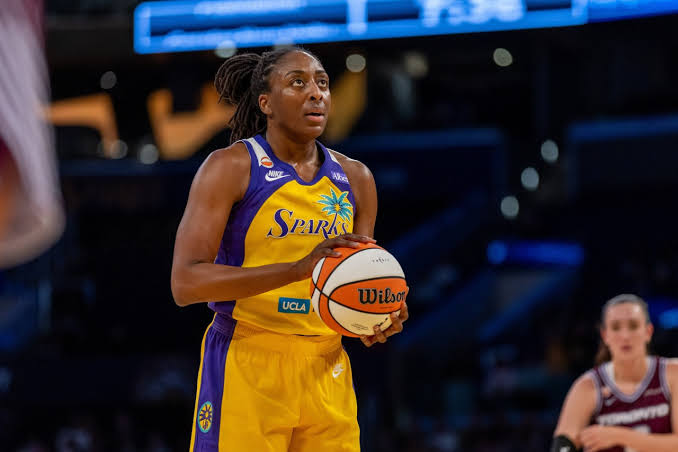
After 15 seasons, an MVP trophy, a championship-winning buzzer-beater, and a second act as the players' union president, the Los Angeles legend says she's walking away — on her own terms.
Los Angeles, CA
There is a particular kind of athlete who becomes inseparable from the sport itself, whose name you cannot say without also saying the word "legacy." Nneka Ogwumike has been that athlete for the Los Angeles Sparks and, by extension, for the WNBA, for a decade and a half. On Tuesday evening, in an interview with Taylor Rooks for Boardroom Talks, she confirmed what fans had quietly begun to brace for: the 2026 season will be her last.
"I've learned there's power in knowing when to walk away," Ogwumike said. "For so long, that strength meant finding a way to keep pushing. Now, it means recognizing when you feel complete. I find myself grateful, fulfilled, and at peace with everything this game has given me and everything I've poured into it."
It is a quietly radical statement in a sports culture that so often frames retirement as surrender rather than choice. Ogwumike, 35, is not being pushed out by injury, benched by a rebuilding front office, or fading into irrelevance. She is retiring while still one of the most respected players in the league, on her own clock, with her own words.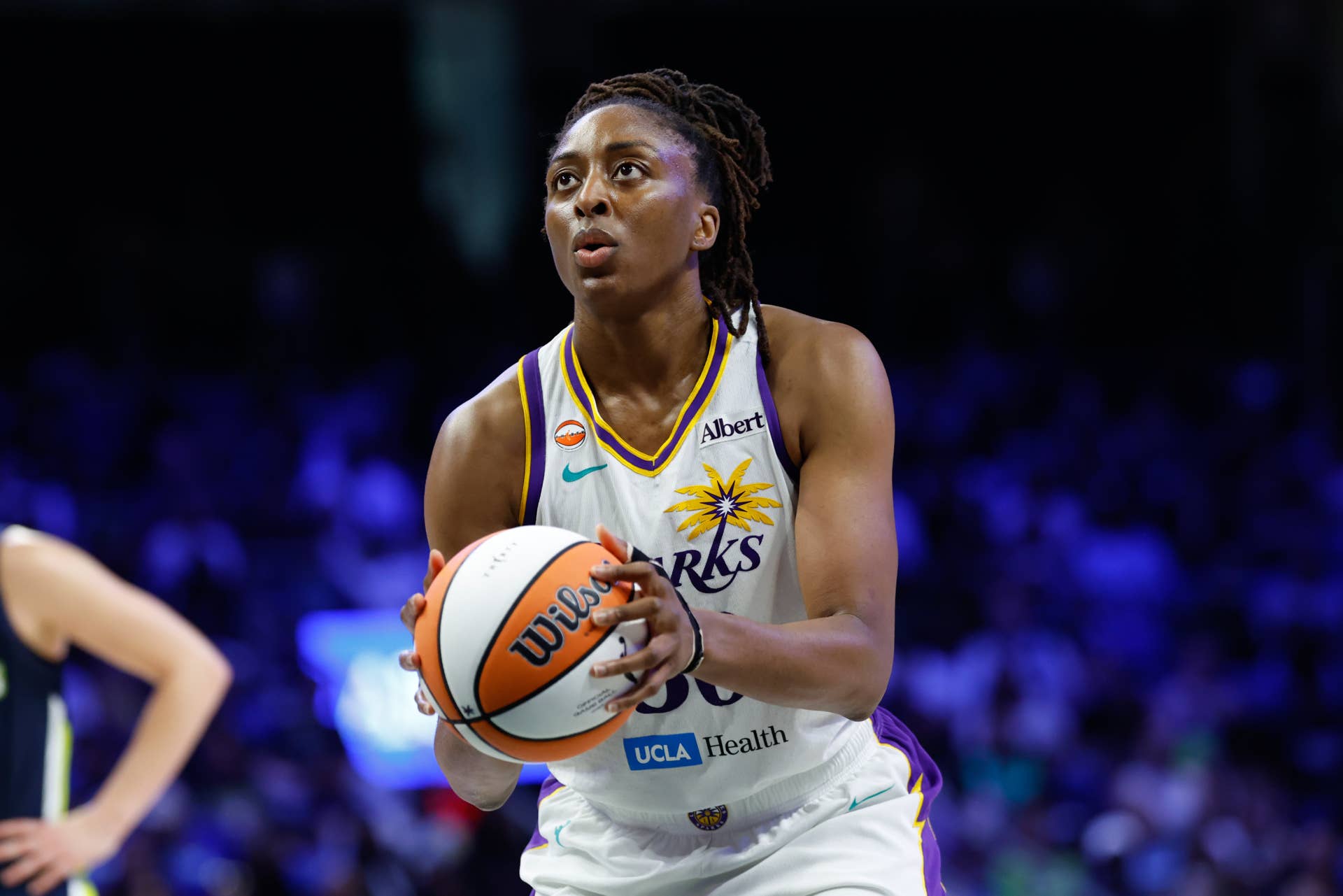
A Career Built on Firsts
Ogwumike's WNBA story begins where most superstar stories do: at the very top. Selected first overall by the Sparks in the 2012 draft out of Stanford, she won Rookie of the Year honors before she'd finished settling into Los Angeles. Four years later came the season that defined her: 2016, when she averaged a career-high 19.7 points, 9.1 rebounds, 3.1 assists and 1.2 blocks, shot a WNBA-best 66.5 percent from the field — the second-highest single-season mark in league history — and set records for consecutive made field goals (23) and most field goals in a game without a miss (12, against the Dallas Wings). She was named league MVP that year. Then, in Game 5 of the Finals against the Minnesota Lynx, she caught a loose ball off a scramble under the basket and put it in for a 77–76 win, delivering the Sparks their first championship in a decade.
Everything since has layered onto that foundation. Eleven All-Star selections. Eight All-WNBA team nods. Seven All-Defensive Team honors. A true shooting percentage of 73.7 that stands, by some measures, as the best in league history — a statistic that says less about volume than about pure, ruthless efficiency, the kind that doesn't need highlight reels to be devastating.
More Than a Player
What separates Ogwumike's retirement from a typical star's sunset lap is the second job she's held for years, often with less fanfare than her scoring average: president of the Women's National Basketball Players Association. In that role she has been at the center of the league's most consequential fights — the 2020 CBA negotiations that reshaped travel standards, prize money and maternity protections, and the ongoing push around charter flights and revenue sharing that has defined the WNBA's rapid commercial growth over the past several years. Teammates and rivals alike have described her as one of the rare athletes equally fluent in a post-game stat sheet and a collective bargaining term sheet.
That advocacy work isn't ending with her playing career. Ogwumike has said she intends to remain deeply involved in the business and governance side of women's basketball, and she's already lined up her next competitive chapter: she'll continue playing for Project B, the new global basketball league slated to launch in January, giving her a runway to keep playing at a high level on a different stage even after she closes the book on the WNBA.
The League Reacts
The WNBA issued a formal statement following her announcement, praising her as "one of the most decorated and consequential players of her generation" — language that undersells, if anything, how central Ogwumike has been to the league's identity during its transformation from a niche property into a genuine cultural and commercial force. Her sister, Chiney Ogwumike, a former WNBA player turned broadcaster, has spoken for years about the two of them being basketball "lifers" whose influence on the game extends well past the box score.
What This Means for Fans
For fans of the Sparks and the league more broadly, Ogwumike's final season is now appointment viewing in a different key — not just about wins and losses, but about savoring a farewell tour for someone who helped build the infrastructure that today's rookies benefit from without necessarily knowing her name is on the blueprint. Expect tribute nights across WNBA arenas as the Sparks travel this fall, culminating in what will likely be an emotional final home game. For the broader conversation about labor and equity in women's sports, her retirement also raises a pointed question: who steps into the union leadership vacuum she leaves behind, at a moment when the league is negotiating its next collective bargaining agreement amid record attendance, expansion talk, and television deals that would have been unthinkable when she entered the league in 2012.
The Bigger Picture
Ogwumike's exit lands at an inflection point for women's basketball. The WNBA she is leaving is unrecognizable from the one she joined — bigger arenas, richer television contracts, a genuine free-agency news cycle — and much of that transformation happened because players like her treated the fight for better conditions as seriously as the fight for championships. Her move to Project B also signals something else: veteran stars increasingly see their competitive lives extending beyond the WNBA calendar, in new leagues built explicitly around them rather than around a legacy structure.
As the Sparks close out the 2026 season, every game will carry a little more weight. Ogwumike has spent fifteen years proving that dominance and grace aren't mutually exclusive. Her final lap looks set to prove the same about knowing exactly when — and how — to leave.



