Kinshasa/Goma, DRC
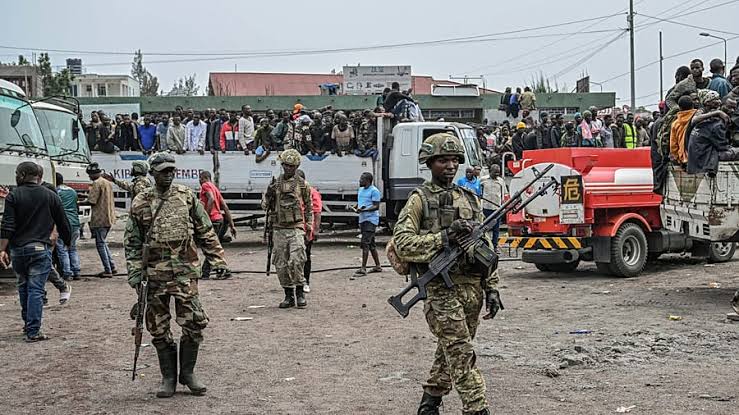
Nine days after the Democratic Republic of the Congo freed 15 prisoners to the Rwanda-backed M23 rebel alliance in the first confirmed exchange under last year's Qatar-mediated peace framework, pro-government militia fighters and M23 forces were still clashing north of Bukavu, near the strategic Kavumu airport — a juxtaposition that captures the contradictory state of eastern Congo's war. The Doha framework, signed in Qatar in November 2025, was supposed to chart a path out of a conflict that has displaced more than 7 million people. Instead, nearly a year later, confidence-building gestures and battlefield skirmishes are unfolding simultaneously, and most of the framework's substantive provisions remain unimplemented.
A War Rooted in the Kivus
The conflict pits the Congolese army and allied militia groups, collectively known as Wazalendo, against the March 23 Movement, or M23, a Congolese Tutsi-led rebel alliance that Kinshasa, the United Nations and Western governments say is armed, trained and reinforced by neighboring Rwanda. Rwanda has consistently denied direct military involvement, casting its position instead as defending ethnic Tutsi communities in eastern Congo and responding to the presence of Rwandan Hutu militia remnants tied to the 1994 genocide.
M23 has fought in various forms since 2012, when it first seized Goma before being driven out by a U.N.-backed offensive the following year. It reemerged in 2021 and 2022, and its current offensive, which escalated sharply through 2024, culminated in early 2025 when the group seized Goma a second time and shortly afterward captured Bukavu, the capital of South Kivu — the first time in the conflict's modern history that rebels had taken both provincial capitals simultaneously. Goma alone is normally home to more than 1 million residents and, at the time of its capture, also sheltered several hundred thousand people who had already been displaced by earlier fighting. According to the United Nations, the battle for Goma killed nearly 3,000 people. The fall of both cities forced the international community, and eventually Kinshasa itself, to treat the conflict as a full-scale regional crisis rather than a contained insurgency, prompting the diplomatic track that led to Doha.
The Doha Framework and Its Limits
Facing that reality, the Congolese government and AFC/M23 — the broader Congo River Alliance that encompasses M23 — signed a framework agreement for peace in Doha, Qatar, in November 2025, with Qatar, the United States and the African Union serving as mediators. The framework outlined eight separate protocols covering issues from a permanent ceasefire to the disarmament and reintegration of combatants to the eventual restoration of Congolese state authority in rebel-held territory. Analysts who have studied the deal, including those at Doha-based and New York-based research institutions, have repeatedly cautioned that most of those protocols remain unresolved on paper, let alone in practice.
One of the framework's few concrete deliverables arrived on Aug. 7, when the International Committee of the Red Cross announced it had facilitated the transfer of 15 prisoners from Congolese government custody to AFC/M23. The handover, one of the conditions specified in the September 2025 iteration of the Doha-mediated agreement, began Thursday evening, Aug. 6, when the detainees left the government-held eastern city of Beni in a convoy. The convoy traveled through neighboring Uganda before arriving in Rutshuru territory, part of M23-controlled North Kivu, where the prisoners were formally handed over on Friday, Aug. 7.
"We hope that this operation will help bring relief to families who have been separated from their loved ones for a long time," said Stephanie Eller, head of ICRC operations in the Congolese capital, Kinshasa, in a statement announcing the release. Qatar's Ministry of Foreign Affairs welcomed the handover the same day, calling it "an important step towards enhancing confidence between the parties and creating favourable conditions for further progress towards reaching peaceful and sustainable solutions." Qatari officials added that they hoped the release would "serve as an impetus for further measures that enhance confidence-building between the parties and meet the aspirations of the Congolese people for peace, development and prosperity."
Fighting Continues Regardless
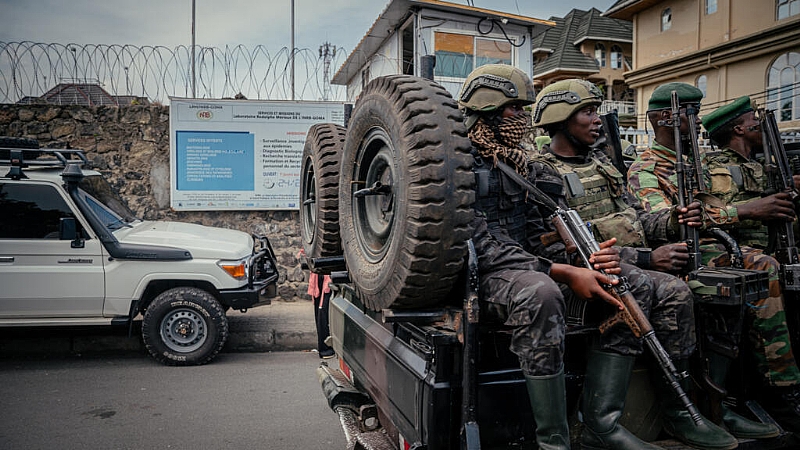
Yet even as that handover was being finalized, fighting continued in South Kivu. Security monitors tracking the conflict reported that Wazalendo fighters clashed with M23 forces north of Bukavu near Kavumu airport, in the Bugorhe grouping roughly six miles from the airfield on the outskirts of Katana. Kavumu airport itself has changed hands multiple times since M23's 2025 offensive and remains one of the most strategically significant sites in South Kivu because of its proximity to Bukavu, the provincial capital M23 seized last year. Congolese officials and independent monitors have also reported that M23 expelled a member of the Congolese government from the joint mechanism set up under the Doha framework to verify ceasefire compliance — a sign of how fragile the arrangement's institutional machinery remains even as prisoner exchanges proceed on a separate track.
The coexistence of a functioning humanitarian confidence-building measure with ongoing combat operations is, according to analysts who follow the talks, characteristic of the Doha process as a whole. The framework has produced periodic diplomatic milestones — including an earlier economic framework outline between Congo and Rwanda — without producing a durable ceasefire on the ground. Rwandan troops are widely reported, including by U.N. experts, to remain deployed inside Congolese territory more than a year after Washington helped broker a separate, parallel peace agreement between Kinshasa and Kigali; key provisions of that deal, including troop withdrawal timelines, remain unimplemented.

The Human Toll
The humanitarian consequences of the conflict remain severe. The United Nations refugee agency, UNHCR, has estimated that more than 7 million people are internally displaced across the Democratic Republic of the Congo, with the heaviest concentrations in North and South Kivu — among the highest displacement totals of any country in the world. Some projections from humanitarian coordination bodies suggest the total could approach 9 million by the end of 2026 if fighting continues at its current pace. Aid organizations operating in the region have repeatedly warned that access to displaced communities in M23-controlled territory remains inconsistent, complicating efforts to deliver food, medical care and shelter.
Analysis: Confidence-Building Without a Ceasefire
The prisoner exchange represents genuine, if modest, progress: it is the first tangible sign that the Doha framework's confidence-building provisions can be implemented on the ground, and both Qatari mediators and the ICRC have signaled hope that further releases will follow. But the near-simultaneous clash near Kavumu airport illustrates the central weakness of the process to date — Kinshasa and AFC/M23 have proven capable of executing narrow, symbolic steps while leaving the core military and political disputes that sustain the war largely untouched. Neither side has committed to a verifiable troop withdrawal timeline, and the expulsion of a Congolese official from the ceasefire verification mechanism suggests that even the institutions meant to monitor compliance are themselves contested.
For President Félix Tshisekedi's government, the political calculus is delicate: continuing to participate in Doha, even amid setbacks, allows Kinshasa to retain international support and avoid the appearance of having abandoned diplomacy, while resuming full-scale military operations risks further territorial losses given M23's demonstrated battlefield strength. For M23 and its alleged Rwandan backers, the incentive structure runs the other way — continued control of Goma, Bukavu and surrounding territory gives the alliance leverage in negotiations that a premature ceasefire could squander.
The involvement of Qatar, the United States and the African Union as co-mediators also reflects how internationalized the conflict has become. Washington separately brokered a state-to-state peace agreement between Congo and Rwanda, distinct from the Doha track between Kinshasa and M23, that was meant to address Rwandan troop presence directly. More than a year after that agreement, independent monitors and U.N. experts say Rwandan forces remain active inside Congolese territory, illustrating the gap between diplomatic announcements and verified conditions on the ground — a gap that mirrors the disconnect between this month's prisoner release and the continued fighting near Kavumu.
What to Watch
The coming weeks will test whether the Aug. 7 prisoner release becomes the first of a sustained series, as the ICRC has said it hopes, or remains an isolated gesture. Analysts are also watching whether the joint ceasefire verification mechanism can be restored to full function after M23's expulsion of a Congolese representative, and whether the eight protocols outlined in the Doha framework — particularly those governing troop disengagement — see any concrete movement before the one-year anniversary of the framework's signing in November. Absent progress on those fronts, the pattern of the past two weeks — diplomatic gestures paired with continued combat — appears likely to persist.
Published By | News Editor