BARCELONA
There is no obvious reason it should work. A Los Angeles Lakers shooting guard, a Catalan football institution, a signature basketball silhouette from 2008, and a colour palette — Field Purple and Metallic Gold — lifted wholesale from a team that plays a different sport on a different continent.
And yet the Kobe x FC Barcelona partnership has become one of the most quietly influential things in sportswear, and today it enters its second season with two footwear releases that will be gone within minutes.
What drops today
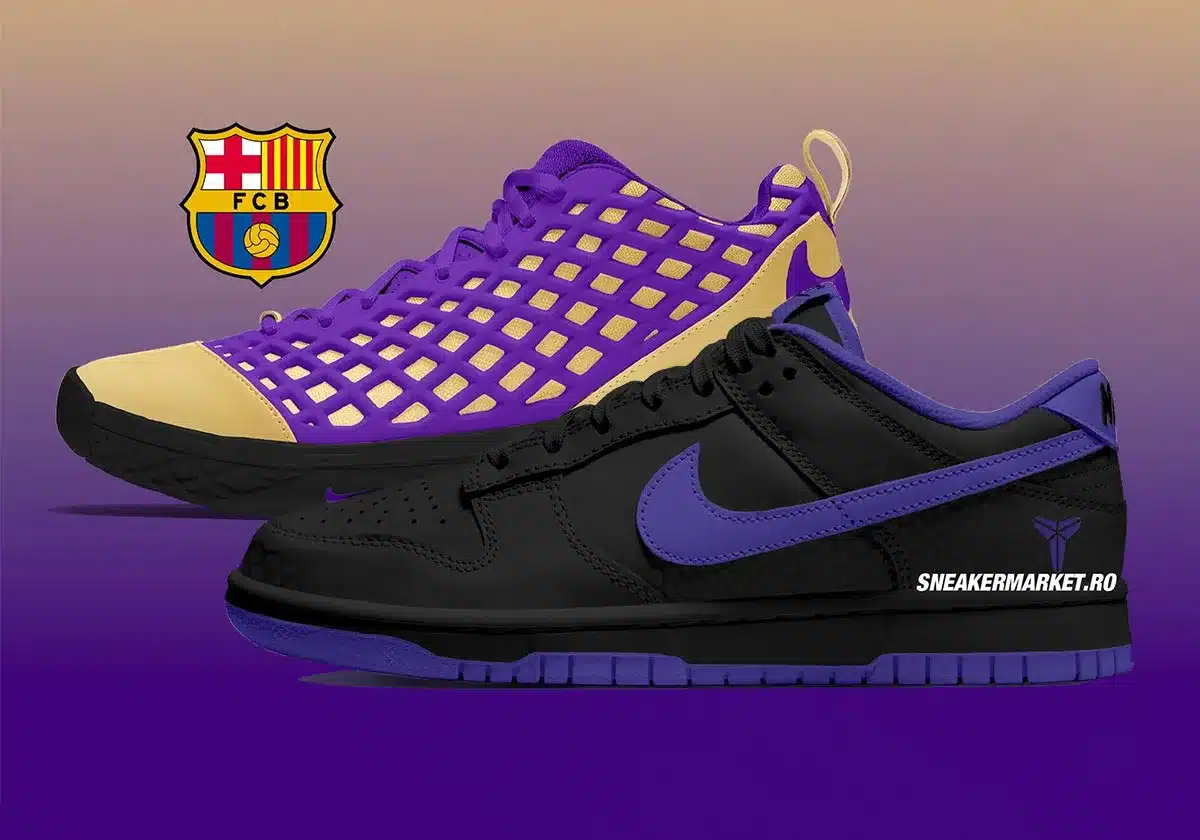
Nike releases the FC Barcelona x Kobe 3 Low Protro this morning at a retail price of $190 in the United States, alongside the FC Barcelona x Kobe Dunk Low Protro in a Black and Field Purple colourway at $135. Both are available through Nike and select retailers, online and in-store.
The Kobe 3 Low arrives in black and electric purple with metallic gold detailing. Purple runs across most of the upper and continues through the net-like exterior structure, the tongue and the outsole, with gold used sparingly as accent. Underneath the styling is genuine performance hardware: full-length Zoom Strobel, Cushlon 3.0 foam and reworked traction. This is not a lifestyle shoe wearing a basketball costume.
They join a wider collection released across the summer — training apparel, sportswear and the 2026–27 Barcelona away kit itself, which went on sale globally in late July.
How a basketball brand ended up on a football shirt
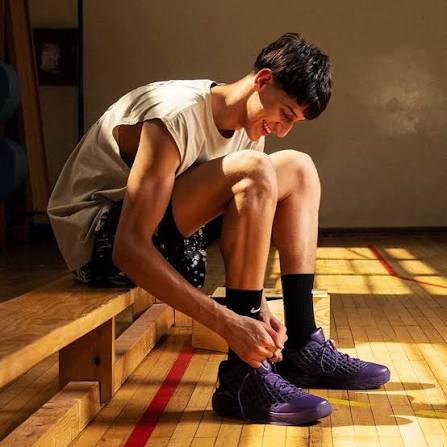
Nike introduced the partnership in 2025 with Barcelona's away uniform, a Kobe 4 Protro, an Air Force 1 Protro, post-match slides and co-branded apparel. It was an experiment. It is now a franchise.
The logic is less arbitrary than it first appears. Bryant grew up partly in Italy, spoke fluent Spanish and Italian, and was an unusually visible football fan among American athletes — a genuine Barcelona supporter rather than a brand-managed one. The connection was real before it was commercial, which is more than can be said for most crossovers of this kind.
The 2026–27 away kit builds on that. It carries a black mamba texture across a Field Purple base — the same purple associated with the Lakers — with gold accents, an iridescent club crest and, inside the collar, a Bryant line: "Leave the game better than you found it. And when it comes time for you to leave, leave a legend."
Nike's own framing for the collection leans on the idea of a club that plays without fear, positioning Mamba Mentality as a set of design details meant to be seen and felt rather than a slogan printed on a hangtag.
The kit as fashion object
What makes this collaboration significant beyond its own sales figures is what it confirms about the football shirt.
For most of the sport's history, a kit was a uniform with a sponsor on it. The third shirt existed to solve colour clashes. Over the last decade, that has inverted: alternate kits are now designed first as merchandise and only incidentally as playing strips, and clubs have discovered that a well-designed away shirt outsells the home one to people who have never attended a match.
Barcelona's Kobe kits accelerate this because they are barely legible as football garments at all. Purple and gold have no relationship to Barça's blaugrana identity. The design references a dead basketball player. Worn on the street with anything other than shorts and socks, it reads as streetwear — which is precisely the point, and precisely why it moves.
The footwear does the same work in reverse. A Kobe 3 Low in Barcelona colours is a basketball shoe sold on football equity, aimed at a consumer who may follow neither sport closely but recognises both logos.
The uncomfortable questions
None of this is uncomplicated. Building a commercial platform on the legacy of an athlete who died in 2020 invites obvious scrutiny about whose story is being told and who benefits. The Kobe brand has been carefully managed since Bryant's death, and its expansion into football is a deliberate widening of that estate rather than an accident.
There is also a fairness question that the sneaker industry has never resolved. A $190 shoe that sells out in minutes and resells for multiples is functionally a lottery, not a purchase. Limited drops build heat; they also mean the people who most want the product are least likely to get it at retail.
And for Barcelona supporters, there is a legitimate grumble buried in all of this: a club whose visual identity is one of the most recognisable in world sport is now selling shirts that deliberately abandon it.
What this means for you
If you want either shoe, the practical advice is unglamorous. Both release through Nike's own channels and select retailers today; entry is typically by draw rather than first-come, and inventory on collaborations of this profile is measured in minutes. Historic FC Barcelona Kobe releases have resold well above retail, so patience is expensive here.
If you are buying to wear rather than to flip, the Kobe 3 Low at $190 is the more interesting object — a genuinely capable basketball shoe with a colourway that works off-court. The Dunk Low at $135 is the safer, easier, more wearable purchase and will look at home with almost anything.
And if you have no interest in either, the collection is still worth watching as a signal. This is what the top end of sportswear now looks like: cross-sport, cross-cultural, memorial, and designed for a customer who thinks of a football shirt as an outfit rather than a uniform.
Season two
Partnerships in sportswear rarely survive their first year. Most are one-off capsules dressed up as long-term relationships. That Nike, Barcelona and the Kobe brand have returned for a second full season — with kit, apparel and two separate footwear releases — suggests the first one worked commercially and creatively.
Purple and gold on a Catalan crest still should not make sense. Today, for the second September running, it will sell out anyway.
Published By | FASHION