Economic & Social Transformation
A Model Economy Meets Its Concentration Risk
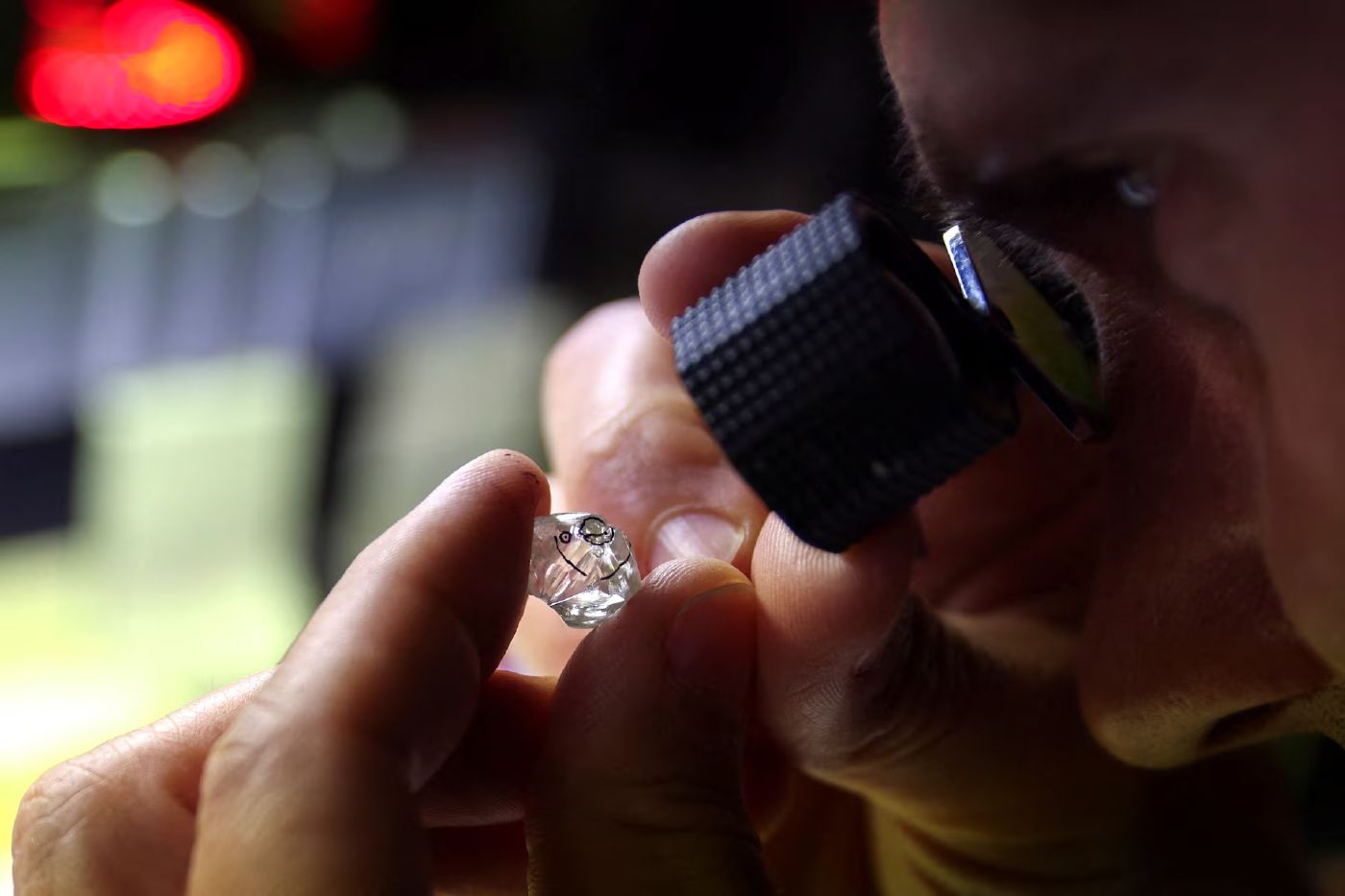
For half a century Botswana has been the textbook case of African resource management. Diamonds discovered at independence were channelled into roads, schools, clinics and a sovereign savings cushion, and the country grew from one of the poorest in the world to an upper-middle-income economy with a GDP of roughly US$19.9 billion and about US$7,800 per capita. That success was built on a single stone. Diamonds have made up around 70 to 85 percent of goods exports depending on the year measured, roughly a quarter to a third of GDP at the peak, and about a third of fiscal revenue. When the global diamond market weakened, there was no second engine ready to take over.
The past three years have exposed that dependence in full. The economy shrank by roughly 3 percent in 2024, according to the IMF's 2025 assessment, with national estimates putting the contraction at 2.8 percent. For 2025 the contraction was smaller but still negative, reported variously between 0.4 and 1 percent depending on the source and the vintage of the data. Early 2026 brought a recovery, with first-quarter output up 3.5 percent year on year. The question for Botswana in October 2026 is whether this rebound marks the end of a shock or merely a pause before a harder adjustment.
This article examines how the diamond downturn became a fiscal, monetary and social stress test; how the government has responded through budget revision, tax changes and a renegotiated relationship with De Beers; and what the country's second-economy ambitions realistically require.
The Anatomy of the Downturn
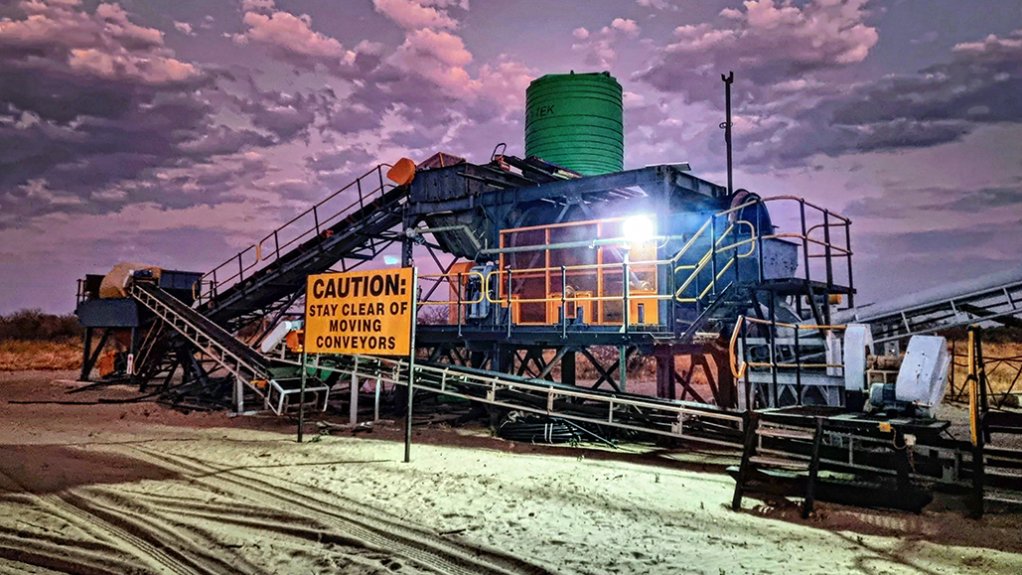
The shock has two components: collapsing demand and collapsing prices. Lab-grown diamonds have taken a rising share of the market, estimated at around 20 percent of global value and about half of United States engagement ring sales according to Ecofin Agency's summary of industry data. Natural-stone prices fell sharply, and Debswana, the 50-50 joint venture between the government and De Beers, cut output by 27 percent in 2024 to 17.9 million carats, then to 15.1 million carats in 2025, about 40 percent below 2023 levels. The IMF recorded a 24 percent fall in mining output in 2024 alone.
The external accounts swung accordingly. The IMF's 2025 Article IV mission noted that a current account surplus of 1.5 percent of GDP in 2023 turned into a deficit of 4.2 percent of GDP in 2024. Foreign-exchange reserves, which stood at about five months of import cover in the Fund's assessment, were drawn down as the central bank defended the pegged-and-crawling pula. In July 2025 the authorities adjusted the exchange-rate path; by late September 2025 the pula had depreciated about 6 percent against the dollar and 8.6 percent against the South African rand. Under the current crawling regime, the currency is managed to weaken by about 2.76 percent a year against a 50:50 rand and SDR basket.
Production data for 2026 offer a partial reprieve in volume but not in value. Output in the first half of 2026 reached 10.3 million carats against 7.2 million a year earlier, yet the average realised price fell 32 percent to roughly US$105 per carat. More stones at lower prices do not repair a budget built on high-value rough diamond sales.
From Savings Cushion to Fiscal Squeeze
Botswana entered the shock as a net creditor, with public debt of only about 6 percent of GDP in 2023 in net terms and large government savings. Those buffers have been consumed quickly. The Government Investment Account, a key savings pool, fell from 5.4 billion pula (about US$396 million) in mid-2024 to 846 million pula by the end of 2025. Treasury bill yields rose from 3.43 percent in early 2025 to around 10.5 percent by March 2026 as the government turned to domestic borrowing.
The deficit path has been volatile. The IMF put the 2024/25 fiscal deficit at 7.1 percent of GDP. In February 2026, the budget projected a 2026/27 deficit of 8.9 percent of GDP, or about P26.4 billion. In late September 2026 the finance minister announced a sharply improved forecast of P9.3 billion, or 3.1 percent of GDP, an improvement of roughly P17.1 billion, attributed to a rebound in diamond revenues and new tax measures. Analysts will want to see how much of that is durable, because diamond receipts remain highly price-sensitive. In March 2026 parliament also raised the statutory debt ceiling from 40 percent to 60 percent of GDP, a signal that borrowing, not drawdown of savings, is now the main financing route. Moody's projects debt near 50 percent of GDP by 2030.
Tax policy has tightened in parallel. From 1 July 2026 the top personal income tax rate rose from 25 to 27.5 percent on income above P400,000 (about US$30,200), the corporate rate rose from 22 to 24.5 percent, and VAT was extended to foreign digital services. These changes broaden the revenue base beyond mining but add pressure on a middle class already feeling inflation.
Ratings, Interest Rates and Inflation
Markets have noticed. S&P Global lowered Botswana from BBB to BBB- on 13 March 2026 with a negative outlook, leaving the sovereign a single notch above speculative grade. In late September 2026 Moody's downgraded the country to Baa2 on 25 September while moving the outlook to stable, according to the Rio Times summary of rating actions. Earlier in 2025 Moody's had cut the rating to Baa1. Each downgrade raises the cost of the external borrowing the government increasingly needs.
Monetary conditions have turned restrictive. The Bank of Botswana raised its policy rate by 2 percentage points to 5.5 percent on 30 April 2026 and has held it through August. Inflation climbed to 10.7 percent in June, well above the 3 to 6 percent target band, before easing to 9.3 percent by August. For households, higher fuel, food and borrowing costs have arrived at the same time as slower public hiring and tax increases.
Social Pressure: Jobs and Inequality
The social ledger is as important as the fiscal one. Unemployment is high, with national estimates around 21 percent in some sources and a 27.6 percent figure cited for the first quarter of 2024 in others, and youth unemployment near 29 percent. The mining sector, for all its fiscal weight, employs only about 2.3 percent of the workforce, which means the diamond slump damaged public finances far more than it directly cost jobs, but it has hit the supplier ecosystem and government spending that sustain urban employment. Income inequality remains among the highest in the world, and the benefits of the diamond era have been unevenly shared between Gaborone and rural districts.
An additional shock came from agriculture. A foot-and-mouth disease outbreak in January 2026 led the European Union to suspend beef imports, striking one of the few established non-mineral export lines, and vaccination was still under way in September. Tourism, centred on the Okavango Delta, a UNESCO World Heritage Site since 2014, remains a high-value, low-volume bright spot, but it is too small to offset mining's weight.
Renegotiating the Diamond Bargain
The government has not waited for prices to recover. Anglo American announced in May 2024 that it would sell its 85 percent stake in De Beers, opening the door for Gaborone to deepen its role. In December 2025 President Duma Boko said Botswana wished to become the true owner of its diamonds, and Angola's Endiama also signalled interest in De Beers. By September 2026 the state had indicated it wanted a holding of more than the 15 percent it currently owns.
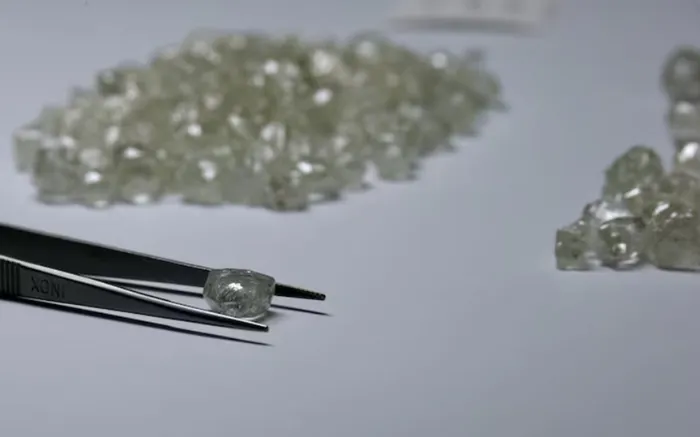
Meanwhile new commercial arrangements are in place. The Okavango Diamond Company, the state-owned seller, now markets 30 percent of Debswana's output, a share due to rise to 40 percent within five years and 50 percent if the agreement is extended. Debswana's mining licences have been extended to 2054, and De Beers has contributed P1 billion (about US$75 million) to a Diamonds for Development Fund. These steps give Botswana more control over marketing and a larger share of value, but they do not alter the underlying demand problem.
Reset Agenda and the Second Economy
The government's answer is the Reset Agenda and National Development Plan 12, which target economic diversification and high-income status by 2036. The five-year programme is estimated to cost about US$27 billion, with roughly 90 percent coming from the state budget, a heavy ask given the fiscal squeeze. The IMF's 2025 recommendations, delivered by mission chief Édouard Martin, are consistent with this direction: stronger private-sector participation and export diversification, better domestic revenue mobilisation, wage-bill control, better-targeted social assistance, stronger state-owned enterprise governance, deeper financial markets and less bureaucracy.
The practical challenge is sequencing. Diversification requires investment in power, water, logistics, skills and a more predictable business environment, but the same fiscal tightening that stabilises the budget can crowd out the capital spending that new sectors need. Botswana's candidate sectors include beef and leather value chains once disease controls are restored, tourism, solar and other energy, regional services such as finance and logistics, and downstream diamond cutting and polishing, where Okavango Diamond Company's expanded role could help. Each is real, but none is large enough yet to replace diamond revenue within the plan period.
What to Watch
Four indicators will show whether Botswana is stabilising or sliding. The first is the credibility of the P9.3 billion deficit forecast as diamond prices are tested in the coming months. The second is the exchange-rate and reserve path, because import cover shapes both inflation and investor confidence. The third is the outcome of De Beers ownership talks and the rise of the Okavango Diamond Company's share. The fourth is employment, especially for young graduates, because social tolerance for austerity is limited.
Botswana still has major strengths: stable institutions, strong governance by regional standards and investment-grade ratings. The risk is not an imminent crisis but a slow erosion of buffers that the country spent decades building. Handled well, the diamond downturn could be the push that finally delivers the diversified economy planners have promised since the 1990s. Handled poorly, it could turn a model of resource management into a cautionary tale about concentration.
Published By | News Editor