Written By | International News Agencies
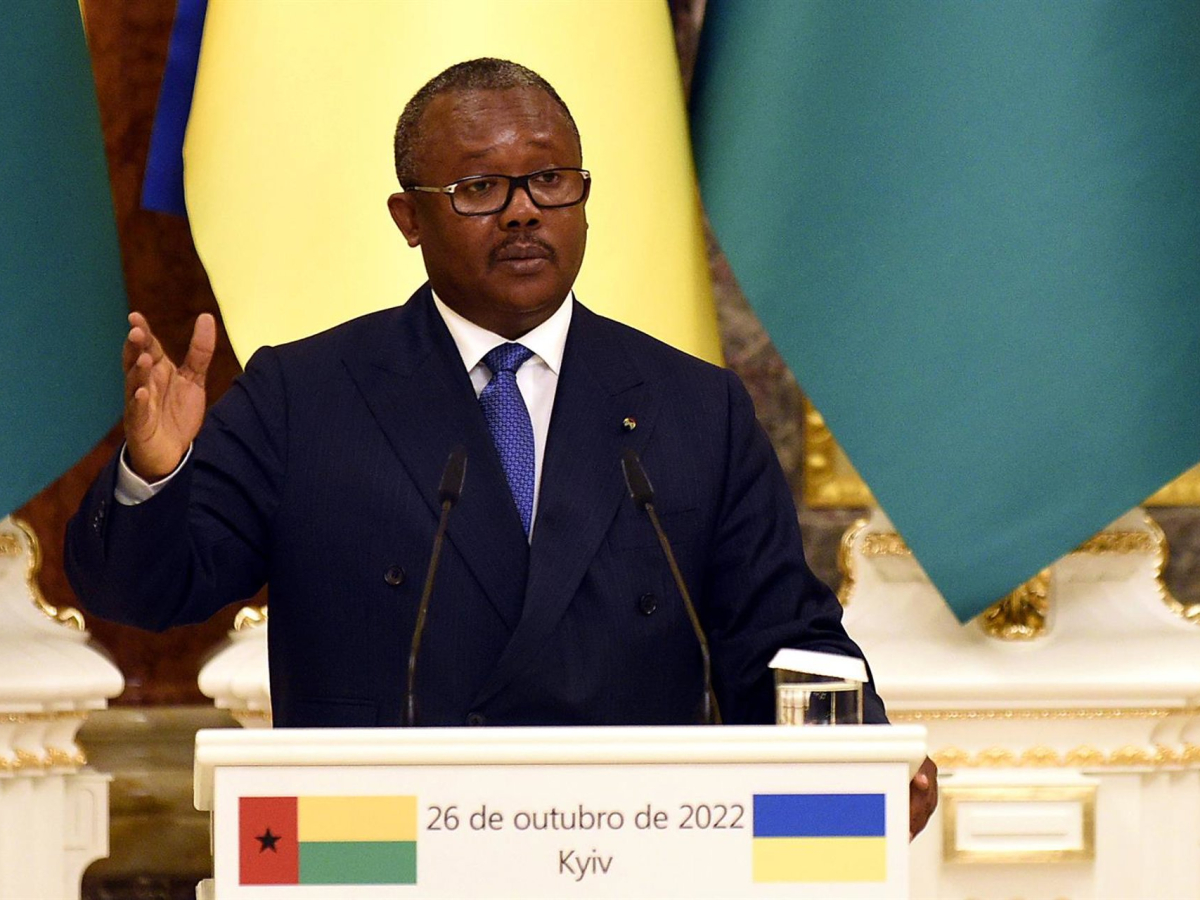
Embaló announced on September 28 that he would run in December and return on October 4
BISSAU
Guinea-Bissau's military leadership has blocked the return of deposed President Umaro Sissoco Embaló, who had said he would fly home from exile in Morocco on Sunday, October 4, to run in the country's December 6 presidential election. The decision, announced in the days before his planned arrival, raises a pointed question about a vote that the junta says will restore civilian rule: who is allowed to compete in it.
What happened
According to Africanews, the High Military Command said "the necessary security conditions were not in place" for Embaló's return and cited "national security, public order and the need to preserve social stability." The same report said restrictions on political demonstrations and gatherings remain in force and that the decision followed reports of unrest within the presidential guard earlier in the week. Reuters-sourced summaries published by the Rio Times place the blocking decision on October 1-2.
The move reverses the tone struck only days earlier. Embaló announced on September 28 that he would run in December and return on October 4, according to Rio Times. The report said military-led authorities had reportedly assured him he was "welcome" to come back, and the junta's leader, General Horta N'Tam, was quoted as saying that "every Guinean is free to return" if he has nothing to hide. Africa Briefing reported that the National Transitional Council had earlier affirmed that Embaló could run if he met the legal requirements. A security-based bar on entering the country is not formally a ban on candidacy, but in practice it can serve the same purpose, leaving his eligibility uncertain without any ruling being issued.
Background: a coup one day before the results
The dispute has its roots in the events of November 2025. Guinea-Bissau's military seized power on November 26, 2025, one day before provisional results of a presidential election were due, the Rio Times reported. The junta said it had uncovered a plot involving drug lords to destabilize the country. Many observers, the same report said, suspect that Embaló himself orchestrated the takeover to halt an election he appeared to be losing. General N'Tam, who leads the transitional government, is described as a close associate of Embaló. The paradox is hard to miss: the officer widely seen as the former president's ally is now the one keeping him out.
Embaló's own position is that he never left office voluntarily. A political analyst, Malam Cisse, told Africanews that "legally, nothing stands in the way of Umaro Sissoco Embalo's return to Guinea-Bissau. He was ousted from power by a coup d'etat." The government has never been far from military intervention. Africanews notes that the country has experienced five coups and numerous attempted takeovers since independence from Portugal in 1974, compounded by poverty, instability, corruption and drug trafficking.
The residency rule
A key obstacle is constitutional. Voters approved a referendum in August 2026 that expanded presidential powers, which the junta says will stabilize institutions, though the opposition called for a boycott, Africanews reported. The new constitution requires presidential candidates to have lived continuously in Guinea-Bissau for five years, Africa Briefing reported. Because Embaló has lived abroad since the coup, he may be disqualified under that provision, although no official ruling has been made. The transitional charter also bars General N'Tam himself from running, according to the Rio Times, so the rule does not single out one man. But it falls hardest on the person who is, at present, the most prominent potential challenger from outside the junta's orbit.
Embaló's campaign organization is incomplete, the Rio Times reported, which means that even if he were admitted, his path would be difficult. That said, the dispute goes beyond one candidacy. It tests whether the transition rules are neutral or are being applied selectively.
The opposition's position
The country's historic opposition force, the African Party for the Independence of Guinea and Cape Verde (PAIGC), opposes Embaló's candidacy. Party leader Domingos Simões Pereira, a former prime minister, called the prospect "shocking," according to the Rio Times. The party's own treatment under the junta, however, complicates any suggestion that the transition favors it. Pereira was detained after the coup, was ordered back to jail in July 2026 and was later allowed to travel abroad for medical reasons, the Rio Times reported. In September, security forces occupied the PAIGC headquarters after a military order requiring parties located within 500 meters of state buildings to relocate.
The upshot is a political field in which the former president is barred at the airport, the main opposition leader has been jailed and later allowed to travel abroad for medical reasons, and the party headquarters has been occupied. The junta can argue that each action rests on a security rationale. Critics can argue that the cumulative effect is to narrow the field to candidates the military is comfortable with. The available reporting does not establish intent, and the junta has offered security and public order as its stated reasons.
What the junta wants from December
The government describes the December 6 vote, a combined presidential and legislative election, as the mechanism to restore civilian rule. That commitment matters beyond Bissau. West Africa has seen a run of military takeovers in recent years, and regional bodies have struggled to turn transition promises into credible elections. A vote that excludes the deposed incumbent without a legal process would hand the junta a legitimacy problem. A vote that includes him could reopen a contest the military interrupted in November 2025.
There is also the question of the guard. The Africanews report links the decision to unrest within the presidential guard earlier in the week, though it does not describe the unrest. If the guard is divided, the junta's fear that Embaló's return could trigger instability may be sincere. It is also possible that the cited security risk and the political calculation are the same thing.
Analysis: three possible paths
The first path is that Embaló stays abroad, perhaps trying to register through representatives, while the junta lets the residency rule do its work. This would be the cleanest for the military legally, but also the most likely to draw criticism that the election is managed.
The second is a negotiated return, in which security guarantees are offered and the electoral authorities rule transparently on his eligibility. That would make the process more credible but carries the risk of the very unrest the junta cites.
The third is escalation: a defiant attempt to return, protests despite the ban on demonstrations, or a split inside the security forces. Given the five coups in the country's history, this last scenario cannot be dismissed, though nothing in current reporting indicates that it is imminent.
The most consequential variable may be the electoral timetable. Africanews noted that uncertainty remains about whether the dispute will affect the schedule. If the legal question of residency is decided in a way that is seen as political, pressure for postponement or boycott could grow, particularly since the opposition already called for a boycott of the August referendum.
What to watch
Readers should watch for four things. First, any formal ruling on Embaló's eligibility under the five-year residency rule. Second, whether the junta publishes a list of approved candidates and a campaign calendar, and whether demonstration restrictions are eased. Third, the status of Domingos Simões Pereira and the PAIGC, including whether the party's headquarters is returned. Fourth, statements from regional organizations and the African Union on whether the December vote is on track. Embaló's own next move, whether to challenge the decision, wait it out or stay silent, will indicate how seriously he regards his candidacy.
The facts are limited for now. A former president has been told he cannot come home, the military cites security, and a new constitutional rule may make his candidacy impossible in any case. Whether this is a protective measure or a political one will be judged by what follows on December 6.



