Written By | Sports Desk
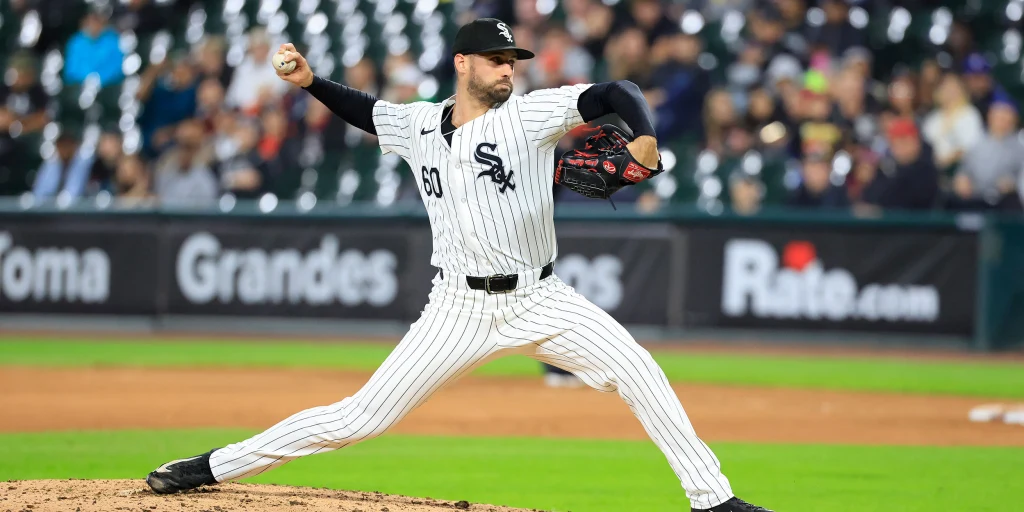
Two years ago the Chicago White Sox lost 121 games — more than any team in the modern era
CHICAGO
There is a particular kind of quiet that settles over a clubhouse in late September when a team is winning games it has no business winning. It is not celebration. It is closer to disbelief, held carefully in both hands. The Chicago White Sox have been carrying it for about a month.
With five days left in the regular season, the franchise that lost 121 games in 2024 — the most any team has lost in a single season since baseball's modern era began in 1901 — occupies the sixth and final playoff seed in the American League. Their magic number is four. FanGraphs gives them a 95.9 percent chance of playing October baseball. The regular season ends Sunday, September 27; the postseason begins two days later.
To understand how absurd that sentence is, you have to remember how bad it got.
A Number Nobody Thought Was Reachable
The 1962 New York Mets lost 120 games in their expansion season and spent six decades as baseball's punchline of record — a team so hopeless that Casey Stengel's exasperated "Can't anybody here play this game?" became a permanent entry in the American idiom. For sixty-two years, that 120 stood as the floor beneath which no major league team could sink.
The 2024 White Sox went one lower, finishing 41-121. And then, crucially, they did not bounce. The following year, under rookie manager Will Venable, they went 60-102 — a 19-win improvement that still made 2025 their third consecutive season losing at least 100 games.
Three straight 100-loss seasons is not a bad patch. It is an institutional condition.
The Projection Everybody Believed
Before this season, the projection systems returned a verdict that surprised no one: 67 wins, 95 losses, worst record in the American League by nearly five full games. Playoff odds of 1.1 percent.
That 1.1 percent was generous — the model politely acknowledging that baseball is chaotic, while making clear that in this case it almost certainly would not be.
General manager Chris Getz spent the spring repeating a phrase that sounded, at the time, like a hedge: the club wanted to take "another meaningful step forward." Nobody in Chicago heard that as a playoff promise. It was the language of an organization asking for one more year of patience.
By late August they were 66-60 and leading the AL Central. They have since clinched their first 80-win season since 2022 and currently hold a three-game cushion over Toronto for the last wild card berth.
Where the Wins Actually Came From
Turnarounds this steep are rarely one thing. But two names come up in every conversation about this one.
Miguel Vargas arrived in Chicago in 2024 as a 24-year-old throw-in, the kind of player a rebuilding team accumulates by the dozen hoping one sticks. This summer he made his first All-Star team and is carrying an .847 OPS — production that would be valuable on a contender and is transformative on a roster that had almost none of it.
Then there is Munetaka Murakami, who arrived from Japan holding the single-season home run record in Nippon Professional Baseball and has hit close to 30 home runs as a rookie despite losing a significant chunk of the season to injury.
Around them, Venable's second season has looked genuinely different from his first. The mistakes are still there — a mid-game pitching-change fiasco in the spring produced a rare public admission of an "inexcusable" error — but the team stopped beating itself in the small ways that had defined the previous three seasons.
The Company They Are Keeping
Twenty-one teams in the modern era have lost 110 or more games in a season and gone on to play a completed second season afterward. Only four finished above .500 in that second year. Chicago's winning percentage in year two currently ranks third-best in that entire group — and unlike most of it, they are contending rather than merely achieving respectability.
Baseball's economics are supposed to make this impossible on this timeline. The standard rebuild arc runs five to seven years: strip the roster, accumulate draft capital, wait for the prospects, spend when the window opens. The White Sox are attempting to skip three of those steps.
The Skeptic's Case
Not everyone believes this is real. The rotation remains the organization's most persistent question mark — a weakness that dogged them through the first half and that the front office has been criticized for failing to address across more than two years of rebuilding. The outfield has similar holes. A short playoff series is unforgiving to teams whose pitching depth is thin; should Chicago get there, the most likely outcome is a quick exit.
But that argument, however sound, misses what has actually happened. The question in March was not whether this team could win a playoff series. It was whether the last three years had permanently broken something.
What It Means If You Root for Somebody Bad
Here is the practical takeaway for anyone whose team spent this summer selling at the deadline and talking about the future in the abstract.
The received wisdom of the last decade — that a franchise must be terrible for a long time in order to be good later — has always contained an unexamined assumption: that the misery is productive. Chicago's 2026 season suggests the timeline is less fixed than the front offices selling it would like you to believe. Nineteen wins of improvement in year one, roughly twenty more in year two, and a team goes from historic ignominy to a playoff seed inside 24 months.
It also suggests the reverse, which is less comfortable: if a rebuild is still producing 100-loss seasons in year four, the problem is probably not the timeline.
Five days remain. Four wins, in some combination with Toronto losses, and a team that was the answer to a trivia question about futility plays in October.
Whatever happens in that series — the honest forecast is that it ends quickly — the season has already done the thing that mattered. Baseball's worst record in 123 years turned out to have a shelf life of two summers. In a sport that measures everything, that may be the most useful number the White Sox produce all year.



