BUSINESS FEATURE
On the same day Kampala's newsrooms were tracking half a dozen other headlines, Finance Minister Henry Musasizi was in a quieter meeting room, listening to sugar industry executives explain why one line item in next year's budget could hurt the very sector the government relies on for jobs and export earnings.
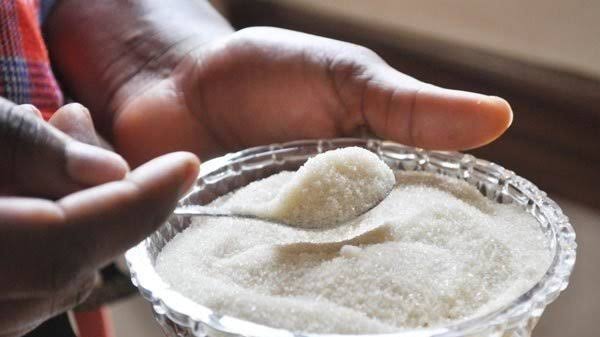
The Ministry of Finance, Planning and Economic Development has put under review a proposal to double the excise duty on sugar, from Shs100 to Shs200 per kilogram, as part of a package of revenue-enhancement and tax-compliance measures for the 2026/27 financial year. The proposal was one of several tax policy changes the ministry says are needed to raise an additional Shs1.74 trillion in domestic revenue next financial year. But after representatives of the Uganda Sugar Manufacturers Association (USMA) met Musasizi this week to lay out their objections, the minister agreed to give the plan a second look.
“Their concerns, especially on increasing excise duty, will be further studied by the Ministry within two weeks before a decision is made on the way forward which is favourable to both government and the sugar manufacturers,” Musasizi told the meeting. The ministry's review is expected to conclude within a fortnight, after which it will announce whether the Shs200 rate proceeds, is scaled back, or is dropped from the 2026/27 tax measures altogether.

An industry already under pressure
The manufacturers' case rests on a simple argument: this is the wrong moment to double the tax burden on sugar. USMA chairman Jim Mwine Kabeho, who signed the association's joint statement to government, told the ministry that domestic sugar prices have already fallen by close to 30 percent even as the industry's production capacity has roughly doubled — from about 400,000 metric tonnes to about 800,000 metric tonnes of installed capacity. That combination of falling prices and rising supply is a classic overcapacity problem, one that has been building in Uganda's sugar sector for years as the number of operating mills grew from three to seven and factories raced to expand crushing capacity faster than either domestic consumption or export markets could absorb.
Layered on top of that domestic overcapacity is a regional trade headache. Kabeho also used the meeting to press government on tariff and non-tariff barriers within the East African Community that he said were making it difficult for Ugandan producers to export their surplus sugar to neighbouring markets. The timing is pointed: earlier this year, Kenya's Finance Act 2026 raised the excise duty on imported sugar from about $58 to $308 per tonne, a move Ugandan producers and officials publicly protested as a direct threat to Uganda's sugar exports and to the East African Community's own common-market principles. With one major regional outlet effectively taxed out of reach, Ugandan millers argue they have even less room to absorb a second, domestic tax increase without cutting production, jobs or both.
Musasizi appeared to accept at least part of that argument. “I expressed dissatisfaction with the tariff and non-tariff barriers in the region, adding that this will be fast-tracked with the EAC partner states,” he said, positioning the government as sympathetic to manufacturers' complaints about regional market access even as it weighs its own domestic revenue needs.
Jobs, taxes and a sector that keeps landing in the headlines
Uganda's sugar industry is one of the country's largest agro-industrial employers, built on tens of thousands of outgrower farmers who supply cane to mills such as Kakira, Kinyara, Lugazi and SCOUL, alongside newer entrants that have driven the recent capacity expansion. Individual mills illustrate the scale involved: one major factory alone employs some 1,500 people directly and crushes roughly 2,500 tonnes of raw cane a day, while another long-established operator employs about 7,000 workers across its central-region operations. Export earnings have been a bright spot even amid the overcapacity concerns — sugar export revenue rose by more than 55 percent in the first quarter of the current financial year — which is precisely why manufacturers argue the sector deserves careful handling rather than a blunt tax increase.
This is not the first time in recent months that Uganda's sugar sector has generated friction between millers, farmers and government. In early August, the Uganda National Alliance of Sugarcane Growers' Organisations said mills in Busoga and central Uganda were still deducting an estimated Shs48 billion a year in cane “trash” charges despite a presidential directive from August 2025 ordering the practice stopped — with compliance reportedly uneven between Bunyoro-based mills, which growers said had largely complied, and Busoga-based mills, which had not. Separately, a parliamentary alliance on food and nutrition security has raised alarm over sugarcane's expansion into land historically used for food crops in Busoga, linking the crop's spread to some of the country's highest child stunting and anaemia rates. And on the very day the excise duty review was announced, a separate dispute was playing out over the licensing status of a newly built sugar plant, CN Sugar, which the Prime Minister was reportedly moving to commission even before its operational and licensing issues were fully settled.
Taken together, these episodes describe an industry that sits at an unusually tense intersection of Uganda's economic policy: a major source of rural employment and export revenue that is simultaneously blamed for squeezing farmers on cane payments, encroaching on food-crop land, and now facing government efforts to extract more tax revenue from it at a moment when its own economics — overcapacity, falling prices, closing regional export doors — are already strained.
What the review means for farmers and consumers
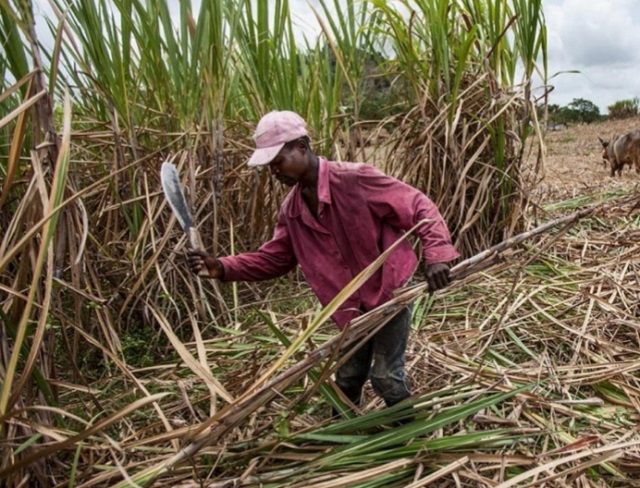
For sugarcane outgrowers, the excise duty itself is not a direct cost — it is levied on manufacturers, not on cane deliveries — but the industry's broader financial health matters enormously to the hundreds of thousands of farming households in Busoga, Bunyoro and other cane-growing areas who depend on mills to buy their crop at sustainable prices. An excise increase that manufacturers say could suppress domestic demand and squeeze margins raises the risk, growers fear, of downward pressure on farm-gate cane prices or renewed disputes over deductions, echoing the trash-charge dispute that has simmered for the past year.
For consumers, the direct arithmetic is straightforward: a doubling of excise duty from Shs100 to Shs200 per kilogram would, if fully passed through, add to the retail price of a commodity that touches nearly every Ugandan household and a wide swath of small food businesses, from tea kiosks to bakeries. Manufacturers argue that even a partial pass-through would dampen consumption at a time when the industry is already struggling to sell its expanded output domestically — a dynamic that, in their telling, could ultimately shrink rather than grow the tax base the increase was designed to expand.
For now, the two-week review buys time for both sides. Musasizi's ministry must weigh the certainty of additional excise revenue against manufacturers' warnings that the policy could prove self-defeating — and against a backdrop of regional competition, overcapacity and simmering disputes over how the industry treats the farmers who supply it. Whatever the ministry decides, the outcome will be watched closely well beyond the sugar sector, as a test case for how Uganda balances an urgent need for domestic revenue against the health of an agro-industry it has spent years encouraging to expand.
Published By | Features Editor