Four days after ministers unveiled 'Pearl Sweet' crude to global buyers in Singapore, officials told Parliament that commercial production has been pushed back once more — the latest in a twenty-year sequence of missed targets.
KAMPALA
Uganda has again pushed back the date on which it expects to produce its first commercial barrel of oil. Appearing before Parliament's finance committee this week, Finance minister Henry Musasizi and officials from the Petroleum Authority of Uganda (PAU), the Uganda National Oil Company (UNOC), the National Planning Authority and the Uganda Revenue Authority said commercial production is now expected before the end of June 2027, after the country failed to meet a July 2026 deadline set only months ago.
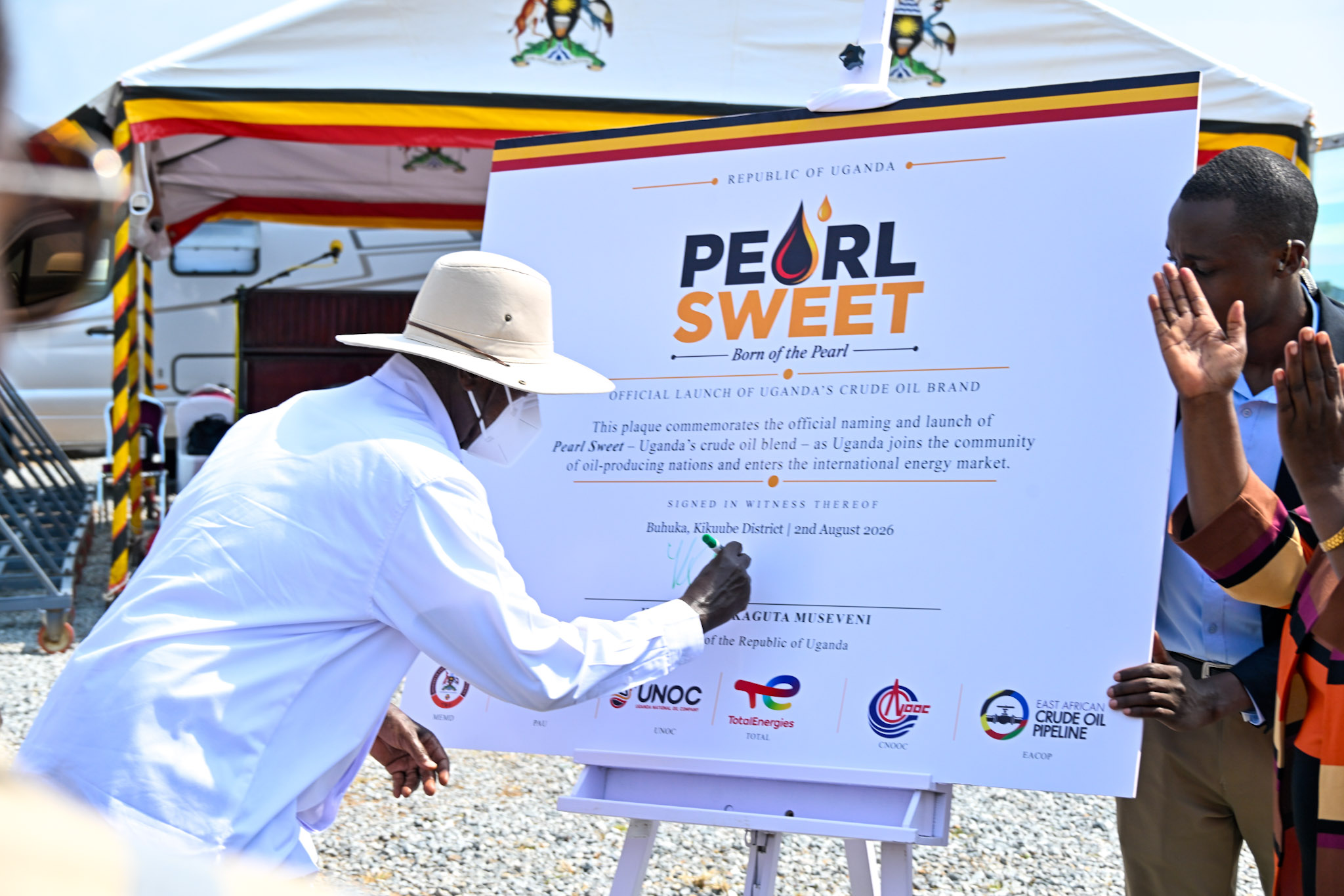
The timing is uncomfortable. On 8 September, at the Asia Pacific Petroleum Conference in Singapore, Energy and Mineral Development minister Dr Monica Musenero Masanza formally introduced Uganda's crude to international refiners, traders and investors under a new name: Pearl Sweet. "It is my great honour and privilege to be here at APPEC 2026 for this historic occasion, the unveiling of Uganda's crude oil to the global market," she told the conference. President Museveni had chosen the name during a visit to the Kingfisher Development Area the week before — "Pearl" for the country's long-standing description as the Pearl of Africa, "Sweet" for the crude's low sulphur content of 0.12 per cent.
Four days later, the country learned that the product being marketed will not be flowing for at least another nine months.
TWO DECADES OF MOVING DATES
The latest slip belongs to a long sequence. Commercially viable petroleum was confirmed in the Albertine Graben in the mid-2000s, and the government initially anticipated first oil around 2018. That target moved to 2020, then to 2025.
The Final Investment Decision for the Tilenga, Kingfisher and East African Crude Oil Pipeline projects was taken in February 2022. PAU's published timeline at the time indicated first oil within 36 to 45 months of FID, which placed production somewhere in 2025. In October 2023, then Energy minister Ruth Nankabirwa told Parliament that Uganda was "on track" for first oil by the end of 2025, and government budget documents for the 2024/25 financial year said the same. The Ministry of Finance had at one point projected commercial extraction beginning in the second quarter of 2025.
In May 2025, Nankabirwa moved the target to June 2026. In March 2026, PAU told Parliament's Public Accounts Committee that first oil was expected by the end of July 2026; at that point EACOP was reported to be 81 per cent complete, with Tilenga at 67 per cent and Kingfisher at 77 per cent. July came and went. June 2027 is now the working assumption.
WHAT IS ACTUALLY OUTSTANDING
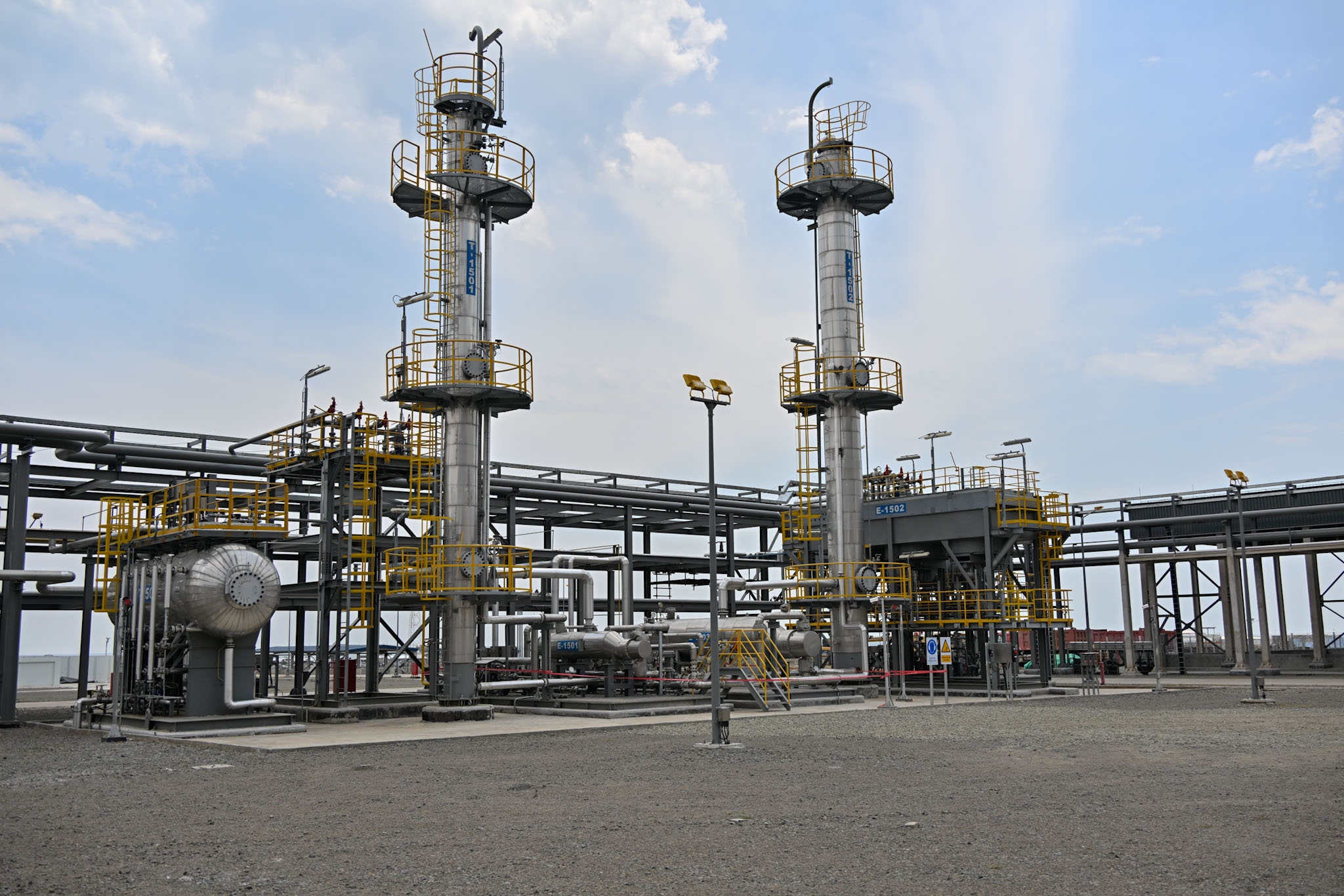
The physical picture is considerably more advanced than the repeated delays might suggest. PAU acting executive director Michael Ochan told MPs that 1,414 kilometres of the 1,443-kilometre pipeline have been completed and buried, with most associated facilities close to finished. The works still outstanding are pump stations three and four, together with electrical installation, instrumentation, telecommunications, ICT and security systems. Ochan said those should be complete by early December, allowing EACOP to be ready to receive crude by mid-December 2026.
That leaves a conspicuous gap. If the pipeline can accept crude in mid-December, why is production being dated to a financial year ending in June 2027? MP Patrick Oshabe Nsamba pressed exactly that point in committee, arguing that Ugandans are entitled to a month rather than a fiscal-year window. "So that Ugandans may know, is it in March when we have the first oil? Is it in April? Is it in January?" he asked.
Musasizi defended the use of financial-year timelines, saying government reports are written for investors and other users of official economic data, and cautioning that announcing a specific date prematurely could affect investment decisions if circumstances changed. It is a defensible position for a ministry that has been publicly wrong about this date at least four times. It is also, from the perspective of a legislator or a citizen, an answer that concedes the government does not know.
THE MONEY ALREADY MOVING
One of the more striking disclosures from the committee session is that petroleum money is already flowing through the state despite the absence of production. The Petroleum Fund stood at Shs 131.27 billion as of 30 June 2025, down from Shs 145.98 billion a year earlier after Shs 281.87 billion was appropriated and transferred to infrastructure and development projects. By December 2025 the fund had recovered to Shs 212.6 billion following an additional Shs 81 billion in receipts, with annual petroleum revenues rising to Shs 263.2 billion from Shs 184 billion the previous year.
Of the Shs 281.87 billion appropriated in 2024/25, Shs 166.5 billion was invested through UNOC and Shs 115.37 billion went towards constructing Hoima City Stadium for the 2027 Africa Cup of Nations. That is a notable allocation: roughly two-fifths of the appropriated petroleum revenue went to a football stadium.
UNOC itself has become substantially profitable without a single barrel of Ugandan crude reaching market, largely through its role in the government's sole-importer arrangement for petroleum products. The company imported 2.675 billion litres of fuel in 2024 and posted a net profit of Shs 247 billion for 2024/25. Unaudited figures for the following year put profit at Shs 334 billion, pending the Auditor General's review. UNOC remitted Shs 132 billion in taxes against a Shs 150 billion target.
MPs asked why those profits have not been returned to the Treasury as dividends to fund national priorities. Officials replied that the money stays within UNOC for future investment until shareholders decide otherwise. The committee was also told that Shs 3.1 billion in non-tax revenue from training and surface rental fees owed by oil companies remains outstanding, with PAU and the Energy ministry pursuing recovery.
WHY THE DELAY COSTS MORE THAN TIME
Uganda's macroeconomic forecasts have been built around oil. Growth projections in the range of 6.5 to 7 per cent for 2026, rising towards 8 per cent and beyond, assume extractive-sector output arriving on schedule. Each slip pushes revenue recognition into a later fiscal year while the debt taken on to build the infrastructure continues to accrue interest. Combined investment across Tilenga, Kingfisher, EACOP, the proposed refinery and associated infrastructure is estimated at around US$20 billion.
The Bank of Uganda has so far held the central bank rate at 9.75 per cent, with core inflation projected at 4.0 to 4.5 per cent and headline inflation at 5.5 to 6.0 per cent over the coming year. That stability gives the government room, but it does not remove the arithmetic problem: a budget that anticipates petroleum revenue in one year and receives it in the next must be financed somehow in the interval.
There is a commercial dimension too. The Singapore pitch was not ceremonial. Uganda is now competing for refinery slots against established grades on price, quality, transport cost and product yield. Pearl Sweet is described as a heavy, sweet, high-wax, low-acidity crude, which the government argues offers upgrading potential, lower corrosion and the possibility of producing Very Low Sulphur Fuel Oil meeting the IMO 2020 standard. Musenero told the conference it offers refiners in Asia, the Middle East and Europe "a reliable and competitive feedstock". Reliability, however, is precisely the attribute a twenty-year record of missed dates does not establish. Term contracts are written against delivery schedules, and a seller who cannot name the month is negotiating from a weaker position.
WHAT TO WATCH
Three markers matter over the next six months. First, whether pump stations three and four and the associated electrical, telecoms and security systems are genuinely complete by early December, making EACOP ready to receive crude by mid-December as Ochan promised. Second, whether the government converts the fiscal-year language into a named month once the pipeline is commissioned — Nsamba's question is the right test of confidence. Third, whether any offtake agreements emerge from the APPEC outreach, and on what terms.
Beyond that sits the larger question the government itself has raised. "The Government of Uganda is determined that our oil and gas sector must not operate as an enclave. It must be a catalyst for industrialisation, not simply an extractive activity," Musenero said in Singapore. Uganda is pursuing a 60,000-barrel-per-day refinery at Kabaale in Hoima, a 211-kilometre multi-products pipeline, a petroleum products storage terminal, continued exploration in the Moroto-Kadam, Lake Kyoga and Hoima basins, and a third licensing round. The country estimates 6.5 billion barrels in place, of which about 1.4 billion are considered recoverable, alongside roughly 500 billion cubic feet of natural gas — from less than 20 per cent of the Albertine Graben.
Peak production is planned at about 230,000 barrels a day, with Tilenga contributing 190,000 and Kingfisher 40,000. Whether that translates into broad economic benefit will be settled not by naming ceremonies but by contracts: who buys the crude, at what price, in what volumes, and how much of the value stays in Uganda.
Published By | Business News Editor