Written By |
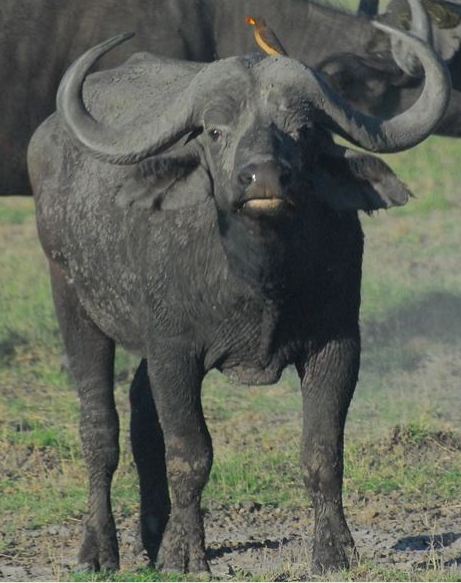
An Oxpecker on the head of young buffalo in Queen Elizabeth National Park
By Godfrey Kajumba
John Kayangire, a cattle farmer in Rutooma, Kashari, Mbarara district, Southwestern Uganda, watches helplessly as his animals continue to be infested with ticks. "The veterinary drugs on the market these days are fake; they do nothing to the blood-sucking parasites," he laments. At 98 years old, Kayangire, a former police officer and veterinary doctor, remains physically strong and has vivid memories of how they used to combat ticks during his childhood. "We used to hand-pick the ticks from the cattle, pin them on sticks, and roast them over a fire. As children, we would even eat some of the roasted ticks," he recalls.
Tom Kayangire a former veterinary showing some of the veterinary books used to sensitize farmers in the fight against ticks in the colonial days
"Our efforts were always greatly supplemented by birds we call 'Esasi' in our local language. These birds were all over the cattle—in the ears, on the udder, tail, and anus—picking ticks," Kayangire adds. These birds also helped control ticks on wild animals like buffaloes and bushbucks, which often interacted with cattle as there was little separation between grazing areas and what are now protected wildlife areas.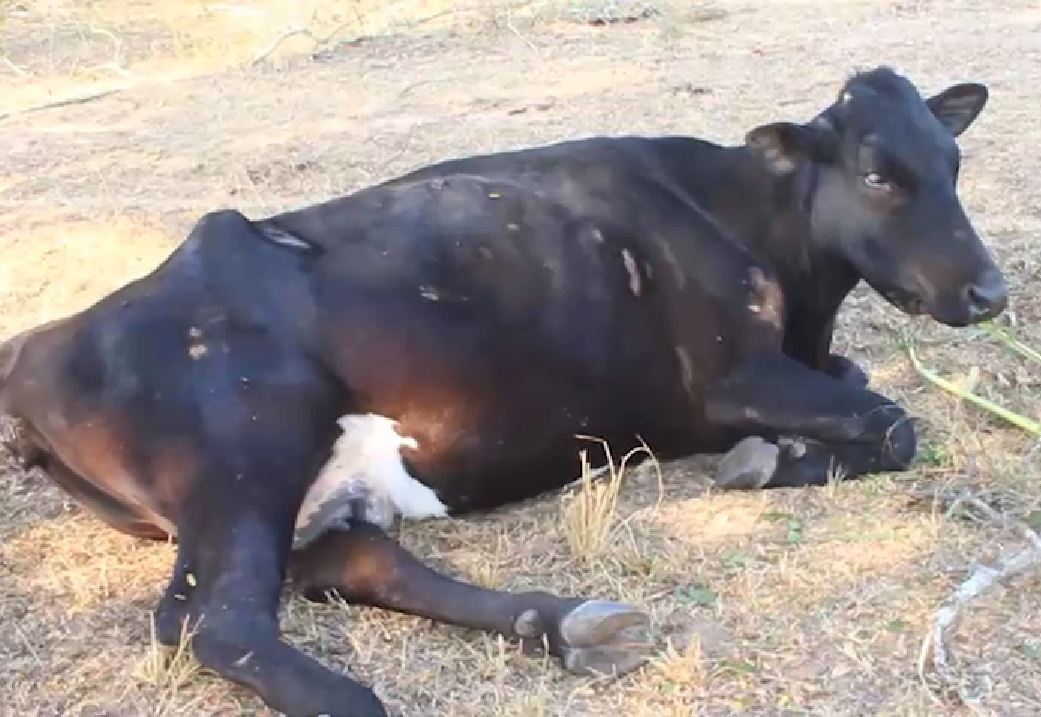
A tick infested cow that turned blind after the farmer applied a concoction of drugs on it to get rid of the ticks
"Esasi," commonly known as oxpeckers and scientifically referred to as Buphagus, were effective in controlling ticks in local cattle breeds before the introduction of foreign cattle breeds in the country.
Kayangire explains that the introduction of foreign cattle breeds brought the use of veterinary drugs to control ticks, which had started becoming a problem for the new breeds. "The government mobilized livestock farmers to set up cattle dips and distributed livestock drugs based on zones. In Western Uganda, where Mbarara district is located, the first livestock drug we received was Gamatox, before other drugs were later introduced," he says. This led to the death of many oxpeckers that ate the contaminated ticks, while others migrated from the cattle corridor to nearby game parks like Queen Elizabeth National Park and Lake Mburo National Park.
"These birds are still in the game reserves, picking ticks from buffaloes and bushbucks. They left the cattle corridor after many of them died when we started using livestock drugs to fight ticks," Kayangire narrates.
The National Drug Authority (NDA), the government agency mandated to regulate drugs in Uganda, including their manufacture, importation, distribution, and licensing, asserts that all veterinary drugs on the market are safe for animals and the environment.
Abiaz Rwamiwiri, the NDA spokesperson, says, "The drugs allowed on the market are well tested. When the drugs are being manufactured, they go through various stages and testing to ensure that they are not harmful to animals, humans, and the ecosystem, including birds, bees, crops, grass, water, and other ecosystem organisms."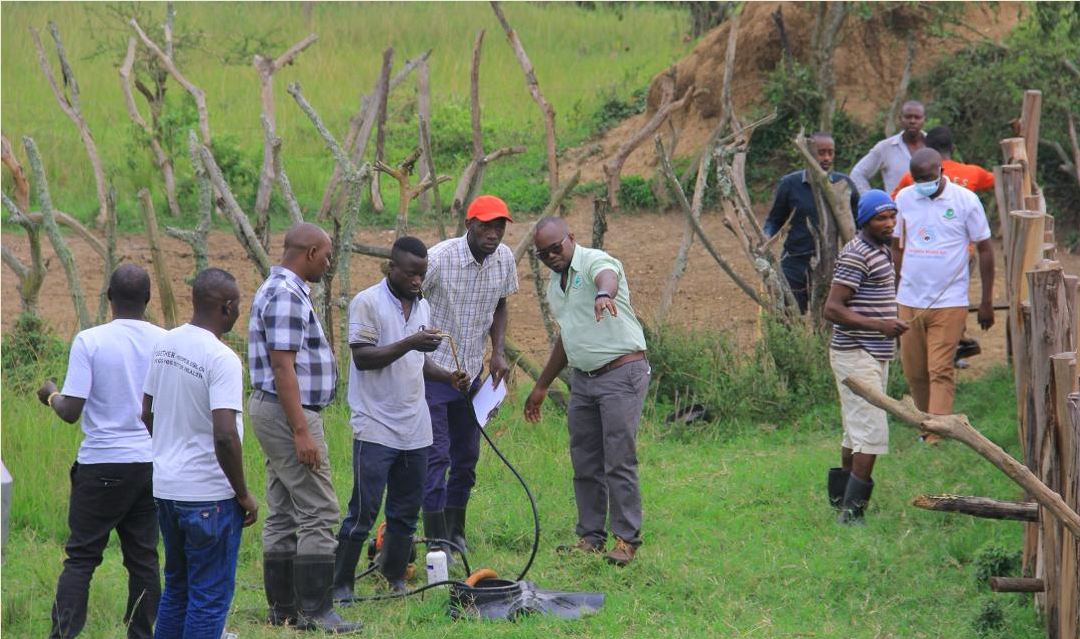
Abiaz Rwamwiri - the NDA Spokeprson (in a green shirt) at a farm with other NDA staff taking a famer through how best to use his spray pump
He, however, attributes the threat to the Western cattle corridor's ecosystem to the misuse of these drugs by farmers. "It's true some animal species are no longer seen in the Western cattle corridor, animals are going blind, and farmers and farm workers are contracting strange diseases—all due to farmers' attempts to get rid of ticks," Rwamiwiri discloses. He explains that problems began with the introduction of foreign cattle breeds. "The local Ankole cattle were not greatly affected by ticks but were not commercially viable. This led to the introduction of Friesians that produce a lot of milk, mature fast, and also provide more beef. However, they are susceptible to ticks and tick-borne diseases." Over time, ticks became resistant to drugs after evolving, leaving farmers stranded. "Their Friesian cattle started dying, and the farmers panicked, resorting to a cocktail of veterinary drugs and, in extreme situations, mixing veterinary drugs with pesticides," Rwamiwiri narrates.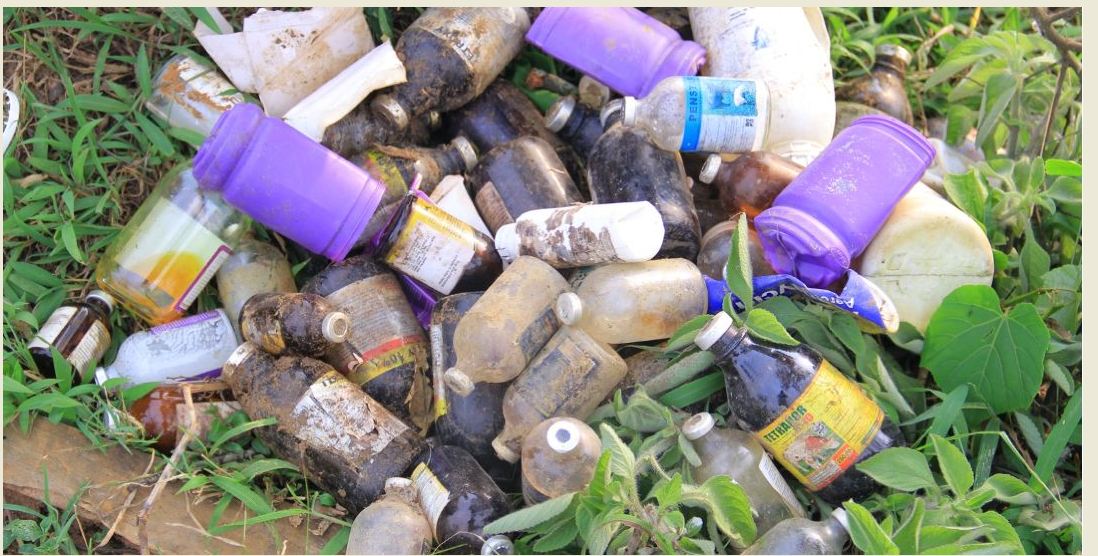
Bottles of used veterinary drugs found at one of the farms
The NDA spokesperson says these cocktails and concoctions have turned out to be dangerous to animals, farmers, their workers, the ecosystem, and the markets where they sell their products. "The animals have gone blind when these mixtures are applied to them. The oxpecker is now extinct in the Western cattle corridor, and pollinators like bees are also at risk."
Jeconious Musingwire, a retired environmentalist, explains that ticks are the major food source for oxpeckers. "The ticks would be on the cattle, and the birds would pick them off for food," he says.
Musingwire adds that these indigenous birds had grown in numbers in the cattle corridor until the introduction of veterinary drugs to combat ticks on the newly introduced Friesian breeds.
"The oxpeckers ran out of food, and many migrated to protected areas, searching for food from animals similar to cattle, like buffaloes and bushbucks."
He notes that even in the wild, where these birds fled, they remain threatened due to residues of veterinary drugs they ingested in the cattle corridor.
"They continue to die in the game reserves from veterinary drug residues and limited food supply."
According to research by experts in animal health published by ScienceDirect and the National Library of Medicine, Uganda suffers an aggregated annual loss—direct and indirect—of over 1.1 billion US dollars due to ticks and tick-borne diseases. Rwamiwiri points to the lack of enough extension staff as the major reason farmers have taken the role of medicating their animals into their own hands. According to a 2019 media release from the Ministry of Agriculture, Animal Industry, and Fisheries, the current extension worker to farming household ratio is about 1:1,800, which is still too high compared to the internationally accepted ratio of 1:500.
"Farmers have ended up mixing and creating these environmentally dangerous compounds as they try to find solutions to the ill health of their animals and get rid of the ticks," Rwamiwiri explains.
He notes that the shortage of extension staff has left farmers desperate, leading to misuse or abuse of otherwise safe veterinary drugs. "It's recommended that farmers change their veterinary drugs on a farm after at least a year. However, with most farmers dipping or spraying their cattle weekly, some use different drugs every week, while others change every month—sometimes overdosing or underdosing," he observes.
With no professional advice from extension staff, cases of drug-resistant ticks have been recorded, leaving farmers with few options to save their livelihoods. They resort to harmful veterinary drug cocktails and pesticide concoctions.
Jeconious Musingwire, who worked for several years at Uganda's National Environment Management Authority (NEMA), says that beyond veterinary drugs, rampant deforestation in the cattle corridor and the destruction of neighboring wetlands have greatly contributed to the extinction of oxpeckers. The cattle corridor once had large trees where the birds would set their breeding nests, while others moved to the banks of wetlands. "The destruction of their breeding places has affected their multiplication, and like the Uganda Crane, they are near extinction."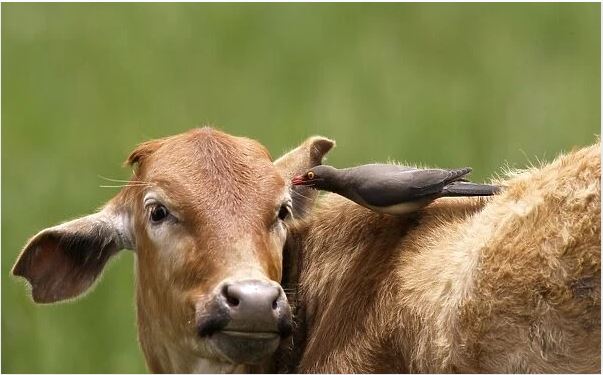
Oxpecker picking ticks from the cows ears
Musingwire calls on nature conservationists to place oxpeckers on the "Red List." According to The International Union for Conservation of Nature, species on the Red List are at risk of extinction.
"We need to elevate them from the level we have been seeing them and place them under the Red List to save them from total extinction by addressing issues like veterinary drugs and the destruction of breeding grounds," he urges.
Abiaz Rwamwiri, the NDA spokesperson, insists that veterinary drugs on the market are safe if handled and used properly. "The drugs on the market can effectively fight ticks without harming the ecology. If farmers don't revise their ways of handling these drugs, we are going to lose more, especially in farming, as pollinators like bees are also likely to get extinct."
The State Minister for Animal Husbandry, Lt. Col (Rtd) Bright Rwamirama, says the government is currently working on two tick vaccines. "The vaccines are in the final trial stages. People should be patient as we ensure that the vaccines are not harmful to animals, humans, or the environment," he states.
Torch Media Africa



