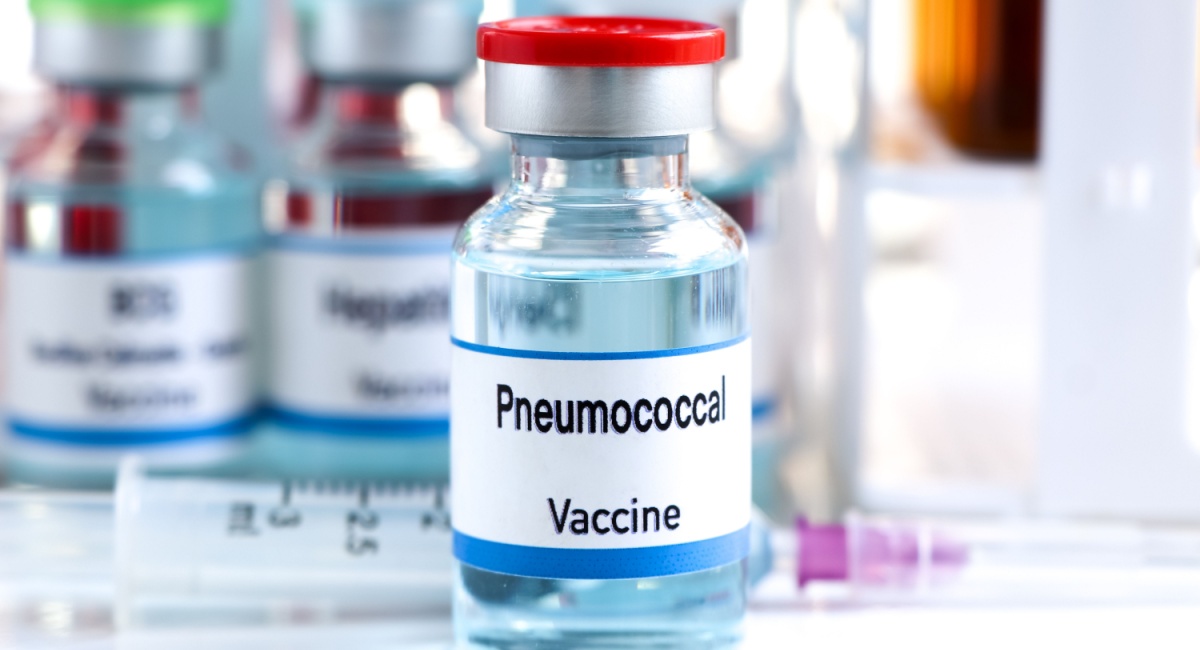
Californian biotech Vaxcyte says its next-generation shot matched Pfizer's and Merck's best-sellers in a 4,047-person trial — while covering more strains of the germ behind pneumonia, meningitis and deadly blood infections. But there are catches
SAN CARLOS, CALIFORNIA
It is the bacterium that lurks at the back of millions of throats, harmless most of the time — until it isn't. When Streptococcus pneumoniae breaks loose, it can flood the lungs, poison the blood or inflame the lining of the brain. In the United States alone, pneumococcal pneumonia is estimated to put around 225,000 adults in hospital every year.
This morning, a little-known Californian company announced that its bid to build the broadest vaccine ever made against the bug has cleared its biggest hurdle so far.
Vaxcyte said its experimental shot, VAX-31 — designed to protect against 31 different strains of the pneumococcus bacterium in a single jab — met every one of its main goals in OPUS-1, a pivotal Phase 3 trial of 4,047 American adults. The vaccine was tested head-to-head against the two leading adult pneumococcal vaccines on the market: Pfizer's Prevnar 20 and Merck's Capvaxive.
"VAX-31 met all prespecified primary immunogenicity endpoints across all age groups studied in this pivotal Phase 3 trial, providing the clinical cornerstone for our planned Biologics License Application," said Grant Pickering, Vaxcyte's chief executive and co-founder.

Meet the bug with 100 disguises
To understand why a 31-strain vaccine is a big deal, you need to know what makes the pneumococcus so slippery.
The bacterium wraps itself in a sugary outer coat called a capsule. That coat comes in more than 100 different chemical varieties, known as serotypes. The immune system learns to recognise each coat separately, so a vaccine that protects against one serotype does little against another.
For decades, vaccine makers have been in an arms race. Each time a vaccine knocks out the most common serotypes, others move in to fill the gap — a phenomenon scientists call serotype replacement. Vaccines have grown from 7 strains, to 13, to 15, to 20 and 21 to keep up.
The result today is an awkward trade-off. Pfizer's Prevnar 20 covers 20 serotypes, including several older ones that caused the most disease in the past. Merck's Capvaxive covers 21, chosen to target the strains that are causing most adult disease now — but it leaves out some of the older ones. No single shot covers both.
"Today's adult PCVs differ in the serotypes they cover, requiring tradeoffs between coverage of currently circulating disease-causing serotypes and preserving coverage of historically important serotypes," said Luis Jodar, Vaxcyte's chief medical officer, who previously led vaccine medical work at Pfizer. "VAX-31 is designed to bring both into a single 31-valent vaccine."
What the trial found
OPUS-1 enrolled healthy adults at around 30 sites across the US who had never had a pneumococcal vaccine or a serious pneumococcal infection.
The 3,572 volunteers aged 50 and over were randomly assigned to get one dose of either VAX-31, Prevnar 20 or Capvaxive. A separate group of 475 adults aged 18 to 49 got either VAX-31 or Prevnar 20. One month later, researchers measured how well each person's antibodies could help immune cells kill each strain of the bacterium in the lab — a standard test known as opsonophagocytic activity, or OPA.
The headline results, according to the company:
For all 28 strains that VAX-31 shares with Prevnar 20 and/or Capvaxive, its immune response was judged "noninferior" — in other words, not meaningfully worse — under a stricter yardstick than has been used in the past.
For the three strains found only in VAX-31, plus a related strain called 20B, the new vaccine produced responses that were clearly superior, as you would expect when the comparison vaccines do not contain them at all.
In younger adults aged 18 to 49, responses to VAX-31 were at least as good as in adults aged 50 to 64 across all 32 strain comparisons, which could allow the company to seek approval for all adults.
On safety, the company said VAX-31 was well tolerated, with a side-effect profile similar to the two existing vaccines. The most common reactions — such as a sore arm, tiredness or aches — were generally mild to moderate and mostly cleared up within 48 hours. No serious side effects were judged to be caused by any of the vaccines, and nobody dropped out of the study because of side effects. Safety monitoring continues for six months after the jab.
The fine print
Before anyone books an appointment, there are important caveats.
First, the vaccine is not approved, and it will not be for a while. Vaxcyte says results from two more Phase 3 trials, OPUS-2 and OPUS-3, are due in the first half of 2027, followed by a manufacturing consistency study. It does not expect to file its application with the US Food and Drug Administration until the first half of 2028.
Second, these are "topline" results announced in a company press release. The full data have not yet been published in a peer-reviewed journal or scrutinised by independent experts or regulators.
Third, the trial measured immune responses, not whether people actually avoided pneumonia. That is standard for pneumococcal vaccines — regulators have long accepted antibody comparisons against approved vaccines — but it means the real-world protection still has to be shown after approval.
Fourth, the result was not perfect on every strain. When VAX-31 was compared directly with Merck's Capvaxive one strain at a time, it met the strict benchmark for 17 of 19 shared strains. Two — serotypes 3 and 12F — fell short of that stricter bar, though they did pass the older, more lenient threshold historically used for vaccine approvals. Serotype 3 is notoriously hard for every vaccine to tackle and remains a major cause of adult disease.
Vaxcyte's own scientists flagged where the regulators will look hardest. "Given current U.S. epidemiology, with the serotypes unique to PCV21 accounting for a larger share of adult disease, we expect the comparison of VAX-31 to PCV21 to be a particular focus of FDA review," said James Wassil, the company's chief scientific and operating officer.

The secret sauce
Why hasn't anyone just stuffed 31 strains into one jab before? Because more is not automatically better.
Pneumococcal conjugate vaccines work by chemically bolting each sugar coat onto a carrier protein, which helps the immune system — especially in young children and older adults — mount a strong, lasting response. Pile on too many sugar-protein combinations and the extra carrier protein can start to blunt the response to every strain. Scientists call this carrier suppression.
Vaxcyte claims to have found a way around it. Using a cell-free protein-making system called XpressCF, licensed from Sutro Biopharma, it attaches the sugars at precise sites on the carrier — what it calls a "carrier-sparing" design — so less carrier protein is needed for each strain. Today's results, the company says, are the strongest evidence yet that the approach works at scale.
By Vaxcyte's estimates, based on US surveillance data, VAX-31 would cover around 95% of invasive pneumococcal disease and around 88% of pneumococcal pneumonia in American adults aged 50 and over. That would be an extra 13 to 36% of invasive disease and 19 to 31% of pneumonia compared with the vaccines available today. The company is also testing VAX-31 in infants, with results expected by mid-2027.
Expert perspective: a big win, with a long road ahead
For Vaxcyte, a company that has never sold a product, this was a make-or-break readout. The pneumococcal vaccine market is worth billions of dollars a year and has long been dominated by Pfizer's Prevnar family, with Merck's Capvaxive gaining ground since its 2024 approval. Wall Street analysts had been watching OPUS-1 closely; before today, published price targets on the company's shares ranged widely, reflecting how much hinged on the result.
Independent experts have not yet had the chance to examine the full data, and no outside researchers had commented publicly at the time of writing. But the shape of the results tells an important story. Meeting a tougher noninferiority standard than earlier vaccines faced — on all 28 shared strains under the trial's main analysis — is a strong showing. The two misses against Capvaxive on individual comparisons, especially serotype 3, are exactly the kind of detail regulators and vaccine advisory committees will probe.
Even if VAX-31 wins approval, it would then need to be recommended by US vaccine advisers and persuade doctors, pharmacies and insurers to switch from vaccines made by two of the world's biggest drug companies.
Pneumococcus is also a growing antibiotic-resistance threat. The World Health Organization lists Streptococcus pneumoniae among its priority antibiotic-resistant bacteria, and the US Centers for Disease Control and Prevention lists drug-resistant pneumococcus as a "serious threat". Preventing infections in the first place, rather than treating them, is increasingly seen as essential.
What this means for you
Do not wait for VAX-31. It is years from pharmacy shelves, and pneumococcal disease is a risk right now — especially heading into autumn and winter, when flu and other respiratory viruses can open the door to bacterial pneumonia.
In the US, the CDC recommends a pneumococcal conjugate vaccine for all adults aged 50 and over, and for younger adults with certain conditions such as diabetes, heart, lung or kidney disease, a weakened immune system, or who smoke. For most people who have never had one, a single dose of Prevnar 20 or Capvaxive is all that is needed. Many pharmacies give them, and most insurance plans cover them.
If you are unsure whether you have had one, check your records or ask your doctor or pharmacist — it can usually be given at the same visit as a flu or COVID-19 shot.
Know the warning signs of pneumonia: a cough with fever, chills, chest pain when breathing and shortness of breath. Older adults may instead become suddenly confused or unusually drowsy. Seek medical help quickly, especially if symptoms worsen.
Children are routinely vaccinated against pneumococcus as babies, which also reduces spread to grandparents and other older adults. Make sure little ones are up to date.
The bottom line
For a germ with more than 100 disguises, a vaccine covering 31 of them in a single shot would be a genuine leap. Today's results suggest Vaxcyte's super-jab can protect against far more strains without sacrificing strength against the ones existing vaccines already cover — at least on the immune measures that regulators use.
But two more trials, a mountain of manufacturing checks and an FDA review still stand between this announcement and your arm. The company itself is looking to 2028 for its application. Until then, the best protection is the vaccine you can already get.
Published By | Health News Editor