LUSAKA, Zambia
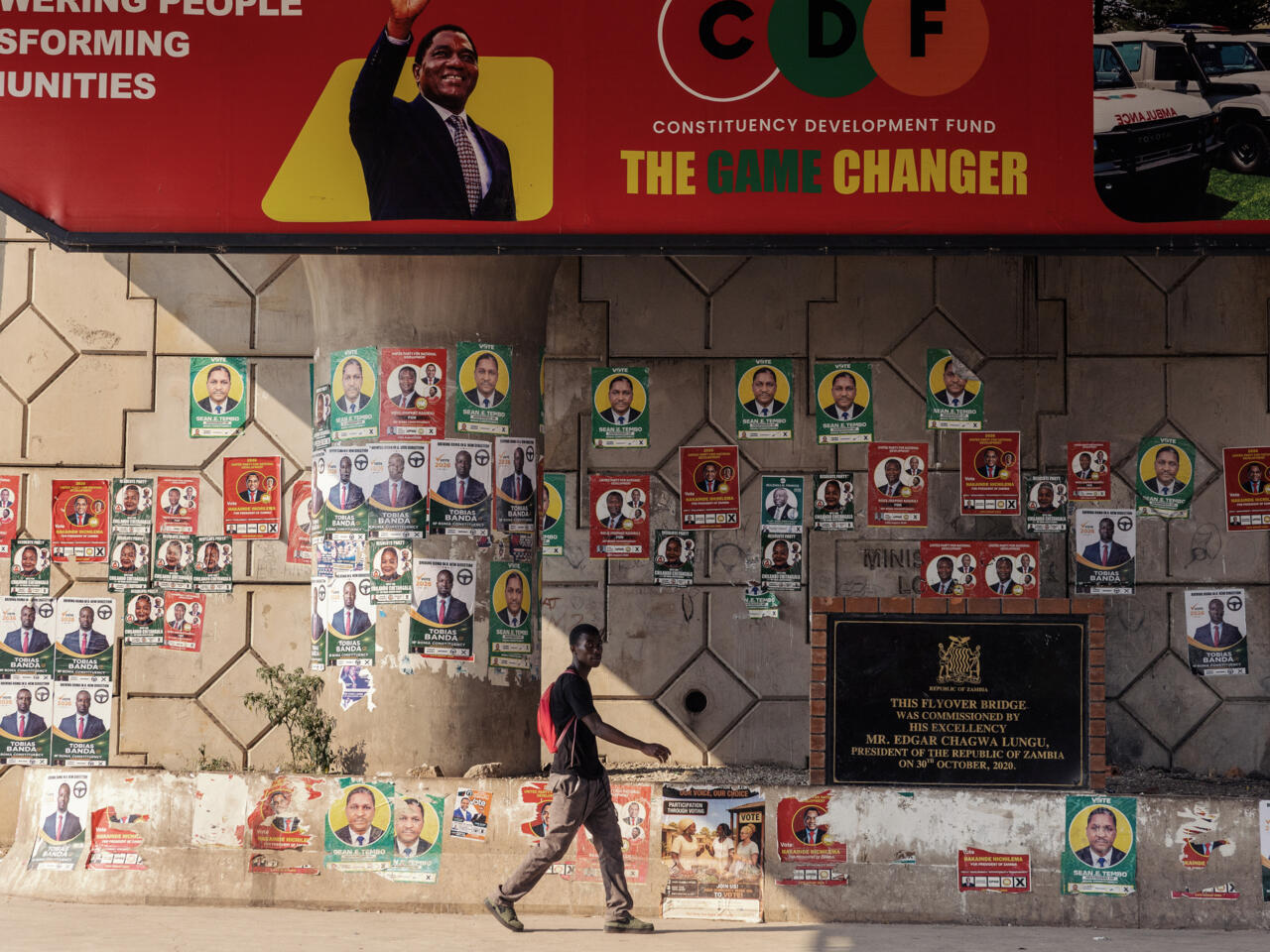
Zambians lined up before dawn at polling stations across the country Thursday to cast ballots in a presidential election that has become a referendum on President Hakainde Hichilema's five years of economic restructuring, with a resurgent opposition alliance mounting the most serious challenge to his rule since he took office in 2021.
Voting opened at 6 a.m. and closed at 6 p.m. local time at stations from the capital to the Copperbelt, with news outlets reporting enthusiastic turnout and queues forming well before polls opened. Roughly 8.79 million people were registered to vote in the one-day election, according to the Electoral Commission of Zambia, out of a national population of about 22 million. Of those registered voters, 4,665,431 are women, 4,120,869 are men, and more than 4 million are between the ages of 18 and 35. Results are expected to be announced Monday, the commission said. In the 2021 election, turnout reached 70.61%, and officials and observers will be watching closely to see whether this year's contest matches that figure.
Hichilema, who leads the United Party for National Development, faces 13 other candidates, but the race has narrowed to a two-man contest between the incumbent and Brian Mundubile, a former Patriotic Front lawmaker who now heads the Tonse-Pamodzi Alliance. Mundubile is running under the banner of the National Reconciliation Party for Unity and Prosperity after his candidacy was formalized in May, fronting an alliance that stitches together the remnants of the Patriotic Front — the party that governed Zambia from 2011 to 2021 — with smaller opposition parties and political structures. Two other candidates, Fred M'membe of the left-wing People's Pact and Harry Kalaba of the Citizens First party, are also considered contenders, with Kalaba making his second bid for the presidency after placing third in 2021.
A referendum on reform
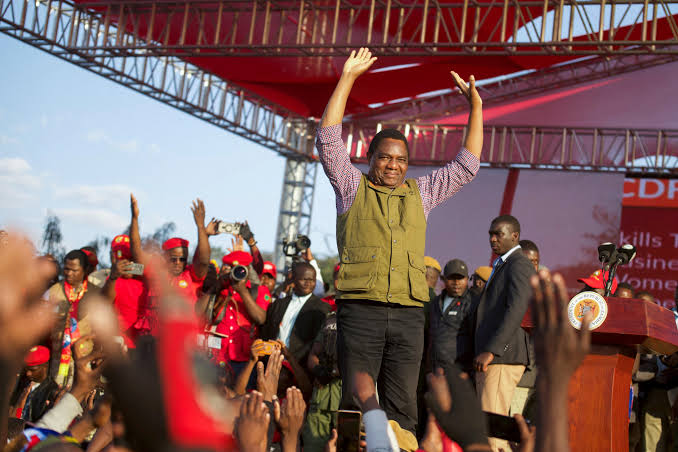
Hichilema came to power in August 2021 by defeating then-President Edgar Lungu in a landslide, winning 57.5% of the vote to Lungu's 37.7%. It was Zambia's third peaceful transfer of power to an opposition candidate since multiparty democracy was restored in 1991, and it followed a campaign in which Hichilema himself had once spent four months in jail on treason charges under Lungu's government.
Since taking office, Hichilema has pursued an ambitious economic reform agenda. His government negotiated a debt restructuring deal with the International Monetary Fund and international creditors after Zambia became the first African country to default on its sovereign debt during the COVID-19 pandemic, under Lungu. Inflation, which stood at roughly 24% in August 2021, had fallen to 6.5% year-over-year by June 2026, according to Trading Economics data cited by election analysts. The economy has also returned to growth, and Hichilema has courted foreign investment aggressively, positioning Zambia — already Africa's second-largest copper producer — as a critical player in the global supply chain for electric vehicles and renewable energy. He has set a target of lifting national copper production to 3 million metric tons annually by 2031, more than double recent output levels, and has courted investment from both China, Zambia's largest foreign investor with extensive mining interests, and the United States, which is seeking to diversify critical mineral supply chains away from Beijing.
But the macroeconomic turnaround has not translated into a widely felt improvement in living standards, and that gap is the central fault line of the election. Copper still accounts for roughly 70% of Zambia's total export value, leaving the economy exposed to commodity price swings and doing little to diversify job creation. Many Zambians say they have not felt the benefits of the reforms as unemployment, high food prices and an unreliable electricity supply continue to strain household budgets — grievances that opposition candidates have seized on throughout the campaign. Hichilema has countered by arguing that he inherited an economy in crisis and needs a second five-year term to convert macroeconomic stability into jobs, infrastructure and expanded public services.
A fragmented but energized opposition
The 2026 election is also the first to be held under a significantly overhauled electoral system. A constitutional amendment passed in 2025 expanded the National Assembly from 167 to 280 seats. Under the new system, 226 members are elected by first-past-the-post in single-member districts, while an additional 40 are chosen from nationwide party lists using proportional representation — 20 reserved for women, 15 for youth and five for persons with disabilities. The number of presidentially appointed seats also grew, from eight to 11. Critics, including analysts writing for the Mail & Guardian, argued the redrawn districts could favor the ruling UPND, while Hichilema's government has defended the changes as a move toward greater inclusivity. As of this week, the formal vote-share threshold parties must clear to win proportional seats had still not been finalized, leaving open the question of how fragmented the incoming Parliament might be.
That fragmentation looms largest for the opposition. Mundubile's Tonse-Pamodzi Alliance represents an unusual, if fragile, unification of Zambia's opposition landscape, bringing Tonse and the Patriotic Front-aligned Pamodzi structures together behind a single presidential ticket even as M'membe's People's Pact and Kalaba's Citizens First compete separately for anti-incumbent votes. Analysts at Africa Elects, an independent elections-monitoring outlet, concluded ahead of polling day that Hichilema was likely to win the first round outright or come close to it, given the opposition's fragmentation, but cautioned that Zambia's two-round system — requiring more than 50% of the vote to avoid a runoff — leaves open the possibility that a fractured opposition could still coalesce behind a single candidate if the race goes to a second round.
Looming over the campaign has been the shadow of Lungu himself. Zambia's Constitutional Court ruled that Lungu, who governed from 2015 to 2021, had already served two full terms and was ineligible to run again in 2026 — a reversal of the court's own 2021 ruling that had allowed him to seek re-election that year. Lungu died in 2025 while living in South Africa, and a prolonged, bitter dispute between his family and the Zambian government over the location and handling of his funeral and burial added fresh tension to an already polarized political environment in the months leading up to the vote.
Tensions and accusations in the campaign's final days
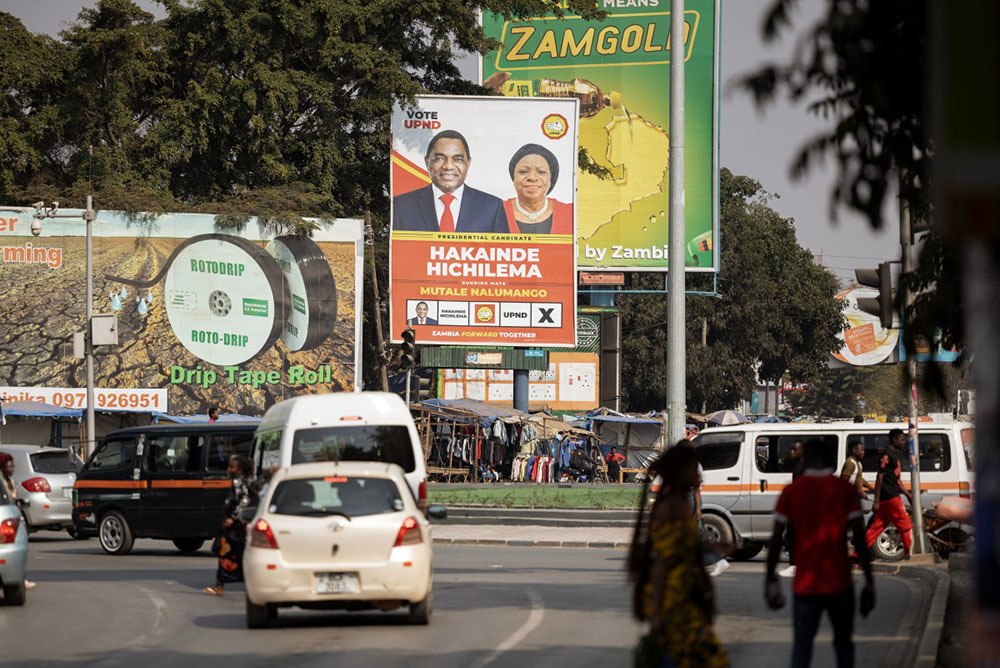
The closing days of the campaign were marked by escalating accusations of state harassment of the opposition. The Tonse-Pamodzi Alliance said Zambia's Drug Enforcement Commission raided the law offices of its spokesperson, George Chisanga, less than 48 hours before polls opened, seizing vehicles, communications equipment and campaign funds that Chisanga said had been raised from well-wishers — a total of 7,398,500 kwacha, of which 5.5 million kwacha had already been spent on polling agents and monitors, with the remainder earmarked for rallies in the Southern Province towns of Mazabuka, Choma and Livingstone. Separately, Tonse-Pamodzi running mate Makebi Zulu alleged that heavily armed men in plain clothes, claiming to be police officers, raided his property in Lusaka's Ibex Hill neighborhood, where the alliance had set up a media command center, in what he said was a search for parallel vote-tabulation equipment.
The government has rejected accusations that it used state institutions to target political rivals. Authorities also announced they had detained three former government officials on election day itself over an alleged plot to disrupt the vote, according to local reporting, underscoring the heightened security posture around the poll. Police deployed additional officers nationwide in the campaign's final stretch and warned against violence, disruptions at polling stations and the circulation of false results — a signal of how seriously officials are treating the risk of post-election unrest in a country that has, unlike several of its regional neighbors, largely avoided the coups and constitutional crises that have destabilized parts of West and Central Africa in recent years.
What to watch next
With results due Monday, the immediate question is whether Hichilema can cross the 50%-plus-one threshold outright or whether Zambia will be headed to a runoff against Mundubile. A first-round victory would hand Hichilema a strong mandate to continue his reform program and could stabilize investor confidence in Zambia's copper-driven growth strategy. A runoff, by contrast, would test whether Mundubile can consolidate the votes of M'membe's and Kalaba's supporters — a coalition-building exercise that failed to fully materialize during the campaign itself.
Beyond the presidential race, the composition of the newly expanded 280-seat Parliament will shape how much room Hichilema has to govern even if he wins a second term, particularly given uncertainty over how the new proportional-representation seats will be allocated. And the conduct of the vote count itself — amid opposition allegations of raids, seized equipment and intimidation — will determine whether Zambia's reputation as one of southern Africa's more durable multiparty democracies survives this election intact, or whether the tensions of the campaign's final days spill into a contested aftermath. International observers, mining investors and Western governments courting Zambia's copper will all be watching the same numbers on Monday, for different reasons: a democratic outcome that Zambians themselves accept as legitimate, and a president with a clear enough mandate to keep the country's economic overhaul on track.
Published By | News Editor