World Politics
Overview
Canada is seven days from one of the most consequential votes in its modern federal history. On October 19, 2026, Albertans will answer a ballot question, one of ten put to voters that day, asking whether the province should remain a part of Canada or whether the provincial government should begin the constitutional legal process needed to hold a binding referendum on separation. The result is not binding, and a vote to leave would not by itself take Alberta out of Confederation. But it would open a door that no Canadian province other than Quebec has ever approached, and it arrives only days after Quebec's own election returned the separatist Parti Québécois to power.
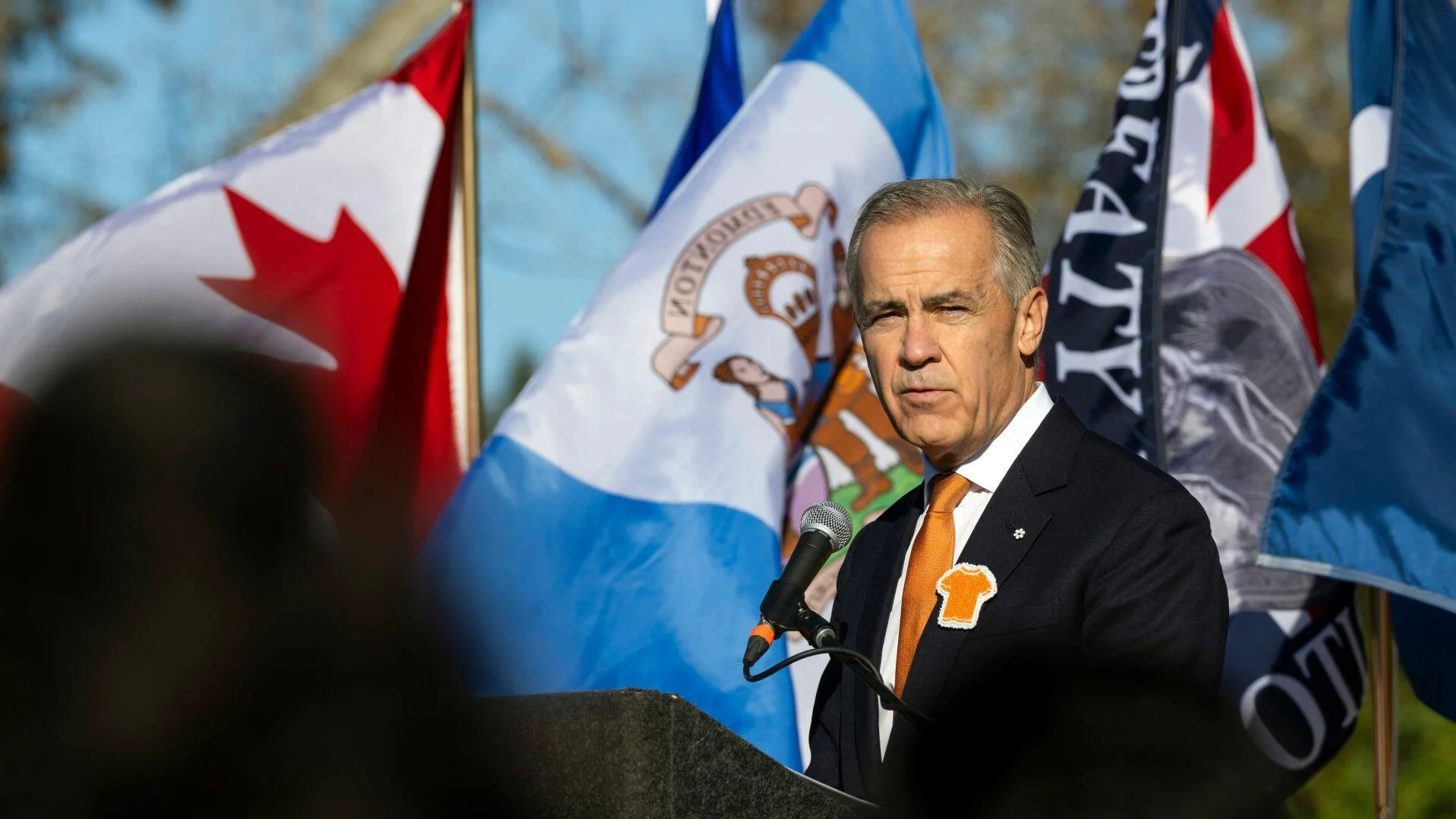
On Monday, October 12, Prime Minister Mark Carney used the Thanksgiving holiday to deliver a direct appeal for unity from a classroom at St. Francis Xavier High School in Edmonton, the school he attended as a boy, exactly one week before the vote. Advance voting opened on Tuesday, October 13. Polling has consistently shown that most Albertans prefer to stay in Canada, but the margin differs sharply depending on the pollster, and the unusual design of the question has left even its supporters uneasy about what a result will actually mean.
Background: How the Question Reached the Ballot
The road to the referendum runs through a change in provincial law and a long-simmering sense of grievance. A May 2025 amendment to Alberta's Citizen Initiative Act sharply lowered the signature threshold needed for citizens to force a referendum. Separatist organizers, led by a group called Stay Free Alberta, then collected signatures for a petition on independence. The group claimed roughly 300,000 signatures, but after a judge ordered verification, Elections Alberta confirmed almost 223,000, according to the summary of the referendum compiled on Wikipedia. Questions were also raised about the integrity of the effort after voter data from the Elections Alberta list of electors appeared in an online database associated with a group called the Centurion Project, prompting allegations that the information may have been misused to forge signatures.
A competing petition, organized by former Edmonton politician Thomas Lukaszuk under the banner of Alberta Forever Canada, was verified with more than 400,000 signatures. On May 13, 2026, the Court of King's Bench of Alberta struck down the separatist petition, finding that Indigenous peoples had not been properly consulted, a constitutional requirement given the implications for treaty rights. Premier Danielle Smith called the ruling undemocratic and said her government could consider the notwithstanding clause, although the same reference work notes that the clause does not apply to the particular sections the court found had been violated.
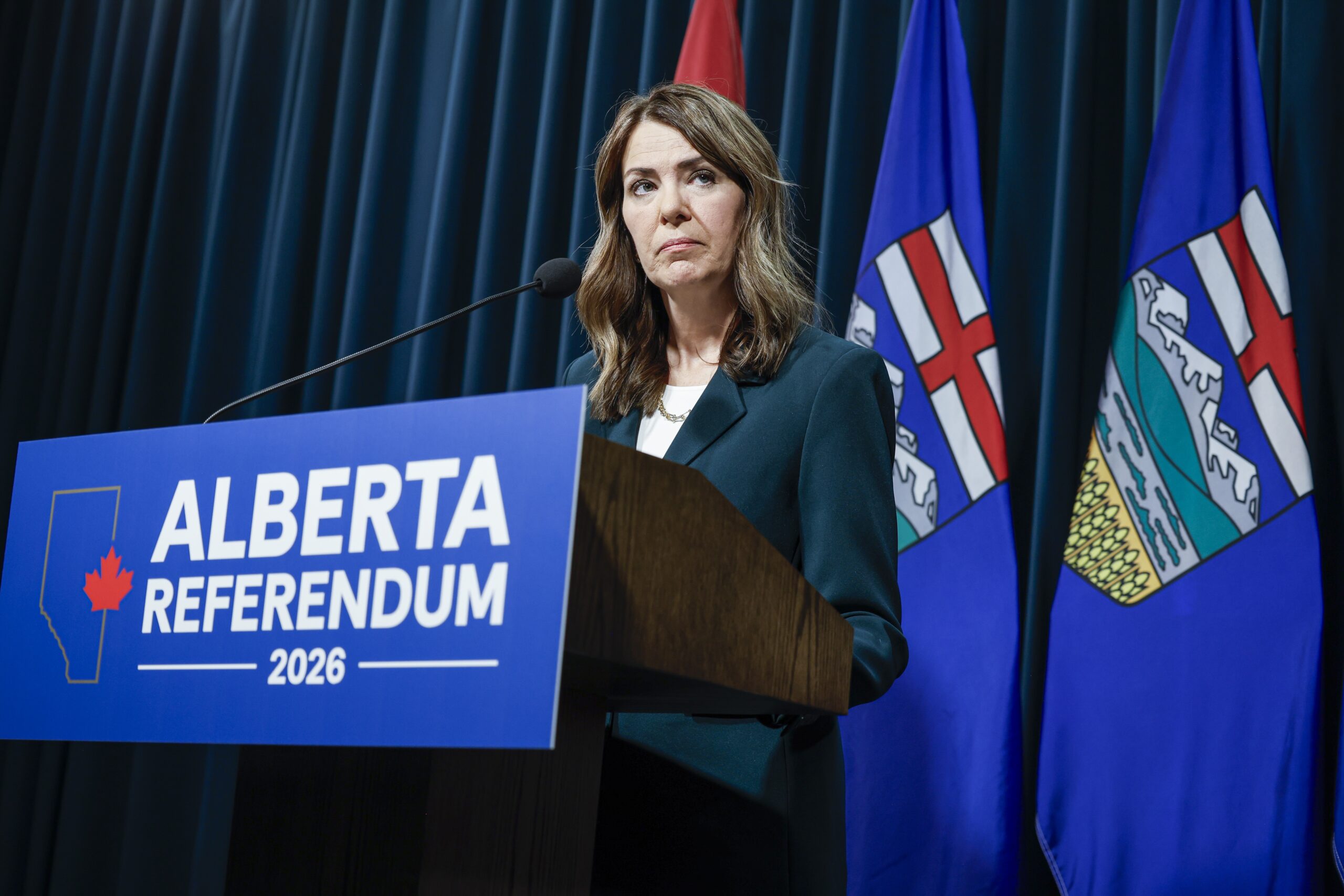
On May 21, Smith's government instead added its own question to the October ballot, folding in the language of the Alberta Forever Canada petition. The result is a two-option question: remain a province of Canada, or direct the government to begin the constitutional process toward a binding separation vote. Critics on both sides have said the format is confusing. A vote to leave would not require the government to seek separation; it would only authorize the legal groundwork for a later, binding referendum. An organizer for the Lukaszuk camp has publicly called on Smith to postpone the vote.
Behind the legal maneuvering lies a political story. Separatist organizers argue that federal energy and environmental policies unfairly target Alberta's oil and gas industry, the cornerstone of the provincial economy. The CBC has examined how separatist sentiment took hold within the governing United Conservative Party itself, a dynamic that helps explain why a premier who says she wants Alberta to stay in Canada nonetheless sponsored a question that opens the path out.
Key Developments in the Final Week
Carney's Thanksgiving address was the centerpiece of the federal government's closing argument. Speaking in Edmonton, he said the country's fault lines threaten its economy, security and way of life, and told Canadians, "We can't build big things on fault lines." He pointed to federal investments in the province, including thousands of new homes, a high-speed rail route, and a new pipeline to the West Coast, and stressed that he grew up in Alberta and returns often as major federal projects advance. The choice of venue was deliberate: Lori Williams, a political scientist at Mount Royal University, told reporters that Carney is viewed as a popular figure in Alberta and that his message may resonate as advance polls open.
The prime minister is not alone. Conservative Leader Pierre Poilievre has said all Conservatives will campaign for Alberta to remain in Canada and was scheduled to travel to the province this week. The Wikipedia summary of the campaign lists a broad coalition on the remain side, including former Alberta premier Jason Kenney, former NDP premier Rachel Notley, former prime minister Stephen Harper, and Lukaszuk. On the other side are Stay Free Alberta, the Alberta Prosperity Project, and several small parties, including the Independence Party of Alberta, the Republican Party of Alberta and the Wildrose Independence Party. Parti Québécois leader Paul St-Pierre Plamondon has also expressed support for the separatist cause, a link that Canadian commentators have noted given the PQ's recent victory in Quebec.
Premier Smith has occupied an awkward middle position. Her office has said her caucus supports Alberta remaining in Canada, and on September 28 she said that polling showing roughly 22 percent backing for independence was "still too high for my comfort." Earlier in September she was reported to have fought back tears while making the case for staying in the country. Yet her government placed the question on the ballot, and reporting from the Western Standard indicates that her United Conservative Party has said it will hold discussions about respecting the referendum result. What "respecting" an advisory result would mean in practice remains unclear.
A further complication emerged earlier this month. The Globe and Mail reported that U.S. Republican operatives met with Alberta secession organizers to discuss campaign strategy, and that separatist leaders allegedly offered access to Alberta's water and oil royalties in exchange for American support. Separatist leaders dispute the account. The allegation has nonetheless fed a broader debate about foreign interest in the vote, at a time when Canada and the United States are locked in a trade dispute and Canada has imposed counter-tariffs.
Outside Alberta, neighboring leaders have weighed in. British Columbia's NDP premier David Eby urged Albertans to vote for unity, saying the provinces share deep family, friendship and business ties and are stronger together. The interim leader of the B.C. Conservatives, Lorne Doerkson, marked the holiday with campaign volunteers in Vancouver.

What the Polls Say, and Where They Disagree
Every public poll cited in the reference compilation shows "remain" ahead, by margins ranging from 25 to 53 points. A Pollara survey conducted from late June to early July found 70 percent for remaining and 23 percent for a separation referendum. Leger, in late August, found 65 percent to 23 percent, and Research Co. in the same period found 74 percent to 22 percent. The outlier is an Angus Reid survey from mid-August, which found 61 percent for remaining and 33 percent for a separation referendum. A Business in Vancouver column by pollster Mario Canseco also found that Smith is trusted less than Carney on the question of separation.
These numbers should be read with caution. They predate the final campaign week, and they measure a question that may differ from the one on the ballot. Respondents asked about independence in the abstract may behave differently when asked whether the government should begin a legal process, and some who oppose separation might still vote to open that process as a protest against Ottawa. The confusing ballot wording, which both camps have criticized, adds uncertainty about turnout and about how many voters will understand precisely what a given choice authorizes.
Reactions and Stakes
For federalists, the central worry is less the outcome than the margin. A comfortable win for remaining would likely be treated as a closing of the question for now. A result in which a third or more of Albertans vote to start the separation process, however, would give the movement a mandate-like talking point and, in the view of some analysts, a template for repeated votes. Quebec's experience, in which two referendums narrowed the gap before the second failed by a hair in 1995, looms over the discussion even though Alberta begins from a much lower level of support.
For separatists, the vote is a chance to demonstrate organizing strength after a court setback and a signature-verification dispute that cut their claimed total by roughly a quarter. They argue that Ottawa's energy and climate policies leave Alberta bearing costs without sufficient benefit, and they will point to any substantial showing as proof that the grievance is real.
Constitutionally, the stakes are bounded but not trivial. The Constitution contains no provision for a province to separate unilaterally, and any exit would require a negotiated constitutional amendment under the framework associated with the federal Clarity Act. Indigenous nations, whose treaty rights were the basis of the court ruling against the earlier petition, would be central to any such process. Even a non-binding vote that opens the legal path would therefore raise questions about consultation that the courts have already shown they take seriously.
What Comes Next
Advance voting runs through the week, with polls closing on October 19. The first thing to watch is the margin and turnout, which will determine whether the result is read as a decisive rejection of separation or as a warning. The second is how Smith responds: whether the government treats a remain victory as the end of the matter, or moves quickly toward the legal steps a leave vote would authorize. The third is the federal response. Carney has bet considerable personal credibility on the unity message and has tied it to concrete projects in the province, and Poilievre's party has joined the effort, an unusual alignment between the prime minister and the opposition leader.
Whatever the outcome, the vote has already changed the national conversation. Within the span of two weeks, Canada has seen a separatist party win power in Quebec and Alberta prepare to vote on a path toward its own exit. How Canadians and their leaders manage the result of October 19 will help determine whether those events are isolated episodes or the beginning of a prolonged constitutional struggle. This account relies on secondary reporting of several items, including the Globe and Mail allegation and the signature counts, and some figures may be revised as official results and further reporting emerge.
Published By | News Editor