In a landmark decision, regulators have opened the door to a one-time gene-editing therapy for toddlers with sickle cell disease — a move that could rewrite childhood for thousands, if families can find their way past a $2.2 million price tag.
WASHINGTON, D.C.
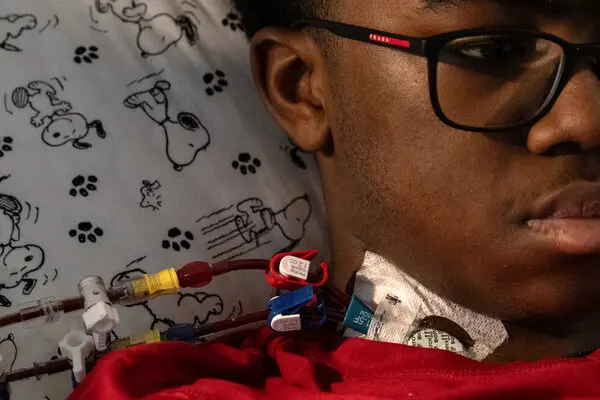
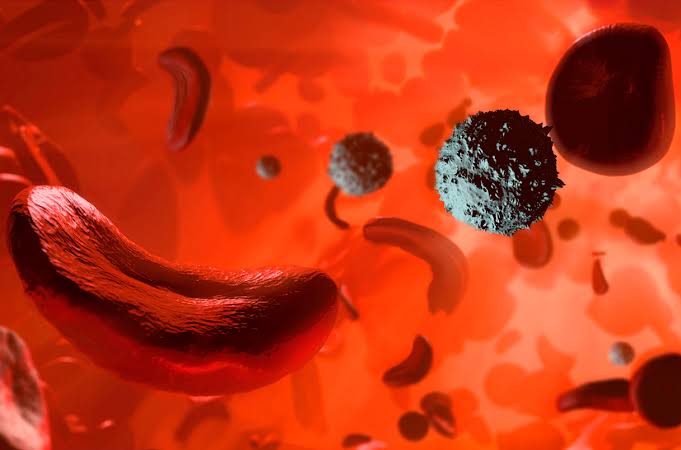
For a child born with sickle cell disease, the pain arrives without warning. It begins as a deep, gnawing ache — in the arms, the back, the chest — as misshapen red blood cells jam together like broken gears and grind to a halt inside tiny blood vessels. Doctors call these episodes vaso-occlusive crises. Parents call them the reason they have memorized the fastest route to the emergency room. For generations, there was little to offer these children beyond painkillers, blood transfusions, and a lifetime of hoping the next crisis would not be the one that took an organ, a limb, or a life.
This week, that grim arithmetic changed. On July 1, 2026, the U.S. Food and Drug Administration granted a supplemental approval that expands Casgevy — the world's first CRISPR-based gene-editing medicine — down to children as young as two years old. It is the first time a gene therapy of any kind has been cleared for sickle cell patients this young, and the first time a CRISPR gene-editing treatment has ever been approved for such small children in any disease. For the families who have spent years watching helplessly as their toddlers writhed in pain, it is nothing short of a miracle with a molecular name: exagamglogene autotemcel.

A cure written in the language of the genome
To understand why scientists are calling this a turning point, you have to understand what Casgevy actually does — because it does not treat sickle cell disease so much as it reprograms the patient's own body to stop producing it. Sickle cell disease is caused by a single misspelling in the gene for hemoglobin, the protein that carries oxygen inside red blood cells. That one error makes the cells stiff, sticky, and crescent-shaped, and everything that follows — the pain, the strokes, the organ damage — flows from it.
Casgevy does not fix the misspelling directly. Instead, it performs a kind of biological bank shot. Developed by Vertex Pharmaceuticals and CRISPR Therapeutics, the therapy uses the Nobel Prize-winning CRISPR/Cas9 gene-editing tool to switch off a gene called BCL11A inside the patient's blood-forming stem cells. BCL11A is the genetic switch that, shortly after birth, tells the body to stop making fetal hemoglobin — the special oxygen-carrying protein that babies produce in the womb. Fetal hemoglobin has a superpower: because it lacks the flaw that causes sickling, it keeps red blood cells round and flowing. By silencing BCL11A, Casgevy tricks the body into switching fetal hemoglobin production back on, flooding the bloodstream with cells that simply refuse to sickle.
The process is grueling. Doctors first harvest the child's own stem cells. Those cells are shipped to a laboratory, where CRISPR makes its precise cut. Meanwhile, the child must undergo myeloablative conditioning — high-dose busulfan chemotherapy that wipes out the existing bone marrow to make room for the edited cells. Only then are the reprogrammed cells infused back in, where they engraft and begin manufacturing healthy blood for, researchers hope, the rest of the patient's life. The whole ordeal can require months in and out of the hospital. But it is a one-time treatment — not a pill to be swallowed forever, but a single, permanent rewrite.
The data that convinced the FDA
The expansion to younger children rests on hard clinical evidence. In the Phase 3 trial studying children — including the first-ever cohort of patients ages five to eleven — the results were striking. Every child in the study who had sufficient follow-up hit the trial's primary target: freedom from severe vaso-occlusive crises for at least twelve consecutive months. Many remained crisis-free for up to two years after their single infusion. In a disease defined by the relentless return of pain, a full year — let alone two — without a single crisis is a result that borders on the astonishing.
Casgevy was first approved in the United States in December 2023 for patients age twelve and up. Since then, Vertex has steadily pushed to bring the therapy to younger and younger patients, arguing that the earlier a child is treated, the more organ damage can be prevented before it becomes permanent. Sickle cell disease begins its silent destruction in the first years of life; by the time many patients reach their teens, the cumulative toll on the brain, kidneys, spleen, and lungs is already done. Treating a two-year-old, in theory, means intercepting the disease before it can carve its damage into a growing body.
The same July 1 approval also covers young children with transfusion-dependent beta thalassemia, a related inherited blood disorder in which patients cannot make enough functional hemoglobin and depend on regular, lifelong blood transfusions to survive. For those families, too, the promise is the same: a chance to break free from the transfusion treadmill that governs their children's lives.
A disease that has been overlooked for a century
Sickle cell disease is the most common inherited blood disorder in the United States, affecting an estimated 100,000 Americans — the overwhelming majority of them Black. Globally, it strikes millions, with the heaviest burden falling on sub-Saharan Africa and India. For decades, advocates have argued that the disease has been chronically underfunded and understudied precisely because of who it affects, a stark example of how medical attention has historically tracked along lines of race and wealth.
That history makes the arrival of a genuine, potentially curative therapy all the more emotionally charged. Sickle cell was the very first disease whose molecular cause was pinpointed, back in 1949, when Linus Pauling identified it as a 'molecular disease.' It took nearly 75 years from that discovery to the first therapy that could correct the problem at its genetic root. That the correction now reaches down to toddlers represents the closing of a very long and painful chapter.
Expert perspective
Hematologists who treat sickle cell disease have greeted the news with a mixture of jubilation and caution. The excitement is obvious: for the first time, doctors can look a parent in the eye and describe a treatment that has kept every child in a clinical trial free of the crises that would otherwise define their childhood. The therapy's mechanism — coaxing the body to resurrect its own fetal hemoglobin — is elegant, and its early durability is encouraging.
But specialists are also quick to temper expectations. The conditioning chemotherapy that precedes the infusion carries real risks, including infertility, which raises complex questions when the patient is a small child who cannot consent and whose parents must weigh a lifelong trade-off. The long-term consequences of CRISPR editing over a full human lifespan are still being monitored; the oldest treated patients have only a handful of years of follow-up. And because the therapy requires months of specialized hospital care, it can realistically be delivered only at a limited number of authorized treatment centers, most of them clustered in major cities. For a rural family, access may mean relocating for the better part of a year.
There is also the question of who, exactly, is the right candidate. Casgevy is approved for patients with recurrent vaso-occlusive crises — the most severe end of the disease spectrum. Not every child with sickle cell will qualify, and the decision to put a toddler through myeloablative chemotherapy is not one any physician takes lightly. Most experts frame the approval not as a universal cure but as a powerful new option for the sickest patients, to be weighed carefully against gentler standard treatments.

The elephant in the room: a $2.2 million price
If the science is dazzling, the economics are sobering. Casgevy carries a list price of roughly $2.2 million per patient — and that is before the real bill is tallied. Once the months of hospital conditioning, the stem-cell collection, and the intensive post-infusion monitoring are added in, insurers and state Medicaid programs can end up paying something closer to $3 million for a single course of treatment. For a disease that disproportionately affects lower-income families and relies heavily on Medicaid coverage, that number is not an abstraction; it is a barrier.
Public and private insurers have begun striking outcomes-based deals — arrangements in which manufacturers refund part of the cost if the therapy fails to deliver lasting benefit — and the federal government has launched a Medicaid-focused model to help states negotiate access to these ultra-expensive cell and gene therapies. But rollout has been slow. Analysts note that in the years since Casgevy first launched, only a fraction of eligible patients have actually received it, hampered by the sheer logistical complexity, the limited number of treatment centers, and the daunting cost. Expanding eligibility to toddlers widens the pool of children who could benefit — but it does nothing, on its own, to widen the narrow doorway through which they must pass.
What this means for you
If your family is touched by sickle cell disease, the most important takeaway is this: a one-time treatment that has kept every child in its trial free of pain crises is now available for patients as young as two — but it is not a decision to be made overnight, and it is not right for everyone. Start the conversation with your child's hematologist. Ask whether your child meets the criteria of recurrent severe crises, where the nearest authorized treatment center is located, and what the process would demand of your family in terms of time, travel, and the risks of conditioning chemotherapy, including its effect on future fertility.
Ask hard questions about coverage, too. Find out whether your insurer or Medicaid program has an agreement in place for gene therapies, what out-of-pocket costs might remain, and whether patient-assistance or travel-support programs exist. Because the therapy is delivered at only a handful of centers, families should also plan for the practical realities — extended time away from work and school, housing near the hospital, and support for siblings left at home. For families without a personal stake in sickle cell, the broader lesson is a hopeful one: the same gene-editing toolkit that just reached toddlers with sickle cell is now being tested against dozens of other genetic diseases, from beta thalassemia to inherited forms of high cholesterol and blindness. Medicine is entering an era in which some diseases may be corrected at their source, once, and for good.
A cautious kind of hope
For all the caveats — the price, the chemotherapy, the limited access — it is worth pausing on what just happened. A disease that was identified as the very first 'molecular disease' more than seven decades ago, that has caused untold suffering and been overlooked for generations, can now, in principle, be corrected in a child barely old enough to talk. The tools that made it possible were the stuff of science fiction a decade ago: molecular scissors, guided by a strand of RNA, snipping a single gene to awaken a protein the body abandoned in infancy.
The road ahead is not simple. Thousands of families will still face impossible choices, insurmountable costs, and unanswered questions about the long game of editing a human genome. But for the first time, the youngest patients — the toddlers whose parents have measured their lives in crises and hospital visits — have a genuine shot at a childhood defined by something other than pain. In the long, hard history of sickle cell disease, that is a headline worth celebrating, even as the work of making it reachable for everyone has only just begun.
Published By | Features Editor