Written By | Health Agencies
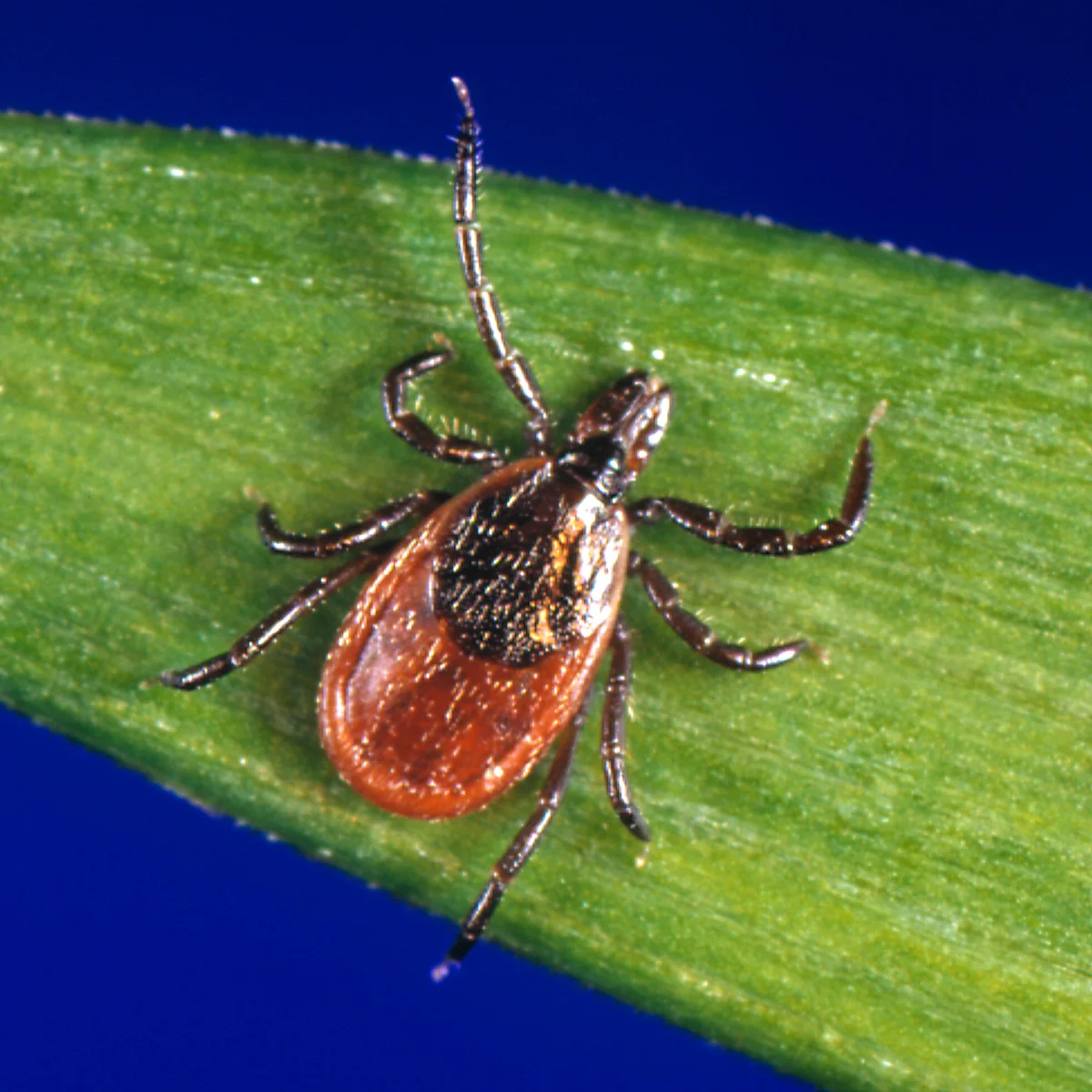
For years, thousands of patients across rural China turned up at hospital burning with fever, wiped out, platelets crashing — and every test came back negative.
For years, thousands of patients across rural China turned up at hospital burning with fever, wiped out, platelets crashing — and every test came back negative. Now scientists in Beijing have named the culprit. The catch: the tick that carries it clones itself, lays thousands of eggs without ever meeting a male, and has already colonised more than 20 American states.
BEIJING / WASHINGTON — Sunday, 13 September 2026
It is one of the most unsettling sentences a doctor can say to a frightened patient: we know you are sick, but we do not know what you have.
In the tick-heavy countryside of eastern and central China, that sentence has been said thousands of times over the past decade. Farmers, herders and villagers would arrive at sentinel hospitals in the hot months with the unmistakable signature of a severe tick-borne infection — high fever, crushing fatigue, a stomach in revolt, a platelet count sliding down the chart, liver enzymes climbing. Clinicians knew exactly what to test for. They tested for it. And in roughly three out of every ten cases, the result came back stubbornly, inexplicably negative. This week that mystery has a name, and it is not a reassuring one.
Thirty per cent of the patients made no sense
A team led by researchers at the State Key Laboratory of Pathogen and Biosecurity in Beijing has identified a brand-new virus circulating in Chinese ticks and Chinese patients, and has christened it Asian longhorned tick nairovirus — ALTNV. Their findings were published as correspondence in the New England Journal of Medicine, and the news has torn through global infectious-disease circles over the past few days, with American doctors now openly asking a question that has no comfortable answer: is it here already?
To understand why the discovery matters, you have to understand what the researchers were originally chasing. The disease they were trying to explain is called severe fever with thrombocytopenia syndrome, or SFTS. It is caused by Dabie bandavirus — DBV — and it is not a minor illness. Depending on the outbreak and the population, SFTS kills somewhere between 10 and 30 per cent of the people it infects. The World Health Organization lists DBV as a priority pathogen for research, which is bureaucratic language for: this one could get away from us.
But the Beijing team kept running into the same wall. Around 30 per cent of the patients walking in with textbook SFTS symptoms did not have DBV. Something else was making them sick, and nobody had ever looked for it, because nobody knew it existed.
The hunt: RNA, cell lines and an electron microscope
So the researchers went fishing in the dark. They collected samples from patients who had been bitten by ticks and presented at sentinel hospitals across regions of China where tick-borne viruses are known to circulate. Then they ran RNA sequencing on those samples, looking for genetic material that did not belong to anything in the catalogue.
They found it. And then — crucially, because this is the step that separates a real pathogen from a laboratory curiosity — they grew it. Cells inoculated with ALTNV-positive human serum produced a living, replicating virus. Immunofluorescence confirmed the viral antigen. Electron microscopy showed the physical characteristics typical of orthonairoviruses. Viral replication was detected in multiple cell lines. This is not a genetic ghost. It is a virus that can be isolated, grown and photographed.
Phylogenomic analysis placed ALTNV in the genus Orthonairovirus, in the family Nairoviridae — a family that contains some genuinely fearsome members. What makes ALTNV a genuinely new species rather than a variant of something known is the genetic distance: it shares under 80 per cent of its amino acids with any other species in the genus. In virology terms, that is not a cousin. That is a stranger.
One in ten patients — and 15 per cent of the unexplained ones
The numbers are where the story stops being academic. Of 3,163 patients tested, 10.4 per cent were positive for ALTNV, based on detection of viral RNA or immunoglobulin M antibodies. That is one in every ten tick-bitten patients coming through those hospital doors.
Narrow it to the group that had been baffling doctors for years — the patients who looked like SFTS but tested negative for DBV — and the figure climbs to 15.1 per cent. Roughly one in seven of those medical mysteries was, it turns out, this virus all along.
Dr Tyler Evans, an infectious disease physician, public health expert and chief executive of the Wellness Equity Alliance, did not hedge when he assessed the finding. “This discovery is a wake-up call,” he told Newsweek. “Doctors had thousands of patients showing classic tick-borne symptoms — but testing negative for every virus we knew about. Finding this virus finally explains what was making these people sick.”
On its own it is grim. In company, it kills.
Here is the good news, and it is real: patients who had ALTNV and nothing else got better. All of them.
The clinical picture for ALTNV alone is miserable but survivable. Fatigue dominated, reported in 84 per cent of cases. Gastrointestinal problems — nausea, vomiting, diarrhoea, abdominal pain — showed up in 80 per cent. Thrombocytopenia, the dangerous drop in platelets that gives SFTS its name, appeared in 38 per cent. Elevated aminotransferase concentrations, a marker of inflammation or injury to the liver and other tissues, were found in 36 per cent. Every one of those patients recovered completely.
Now the bad news. ALTNV and DBV circulate in the same places, and they ride in on the same tick. That means a single bite can deliver both. The researchers identified 38 patients who were carrying both viruses at once, and in that group the illness changed character entirely.
Compared with DBV infection alone, co-infected patients had respiratory symptoms at a rate of 61 per cent versus 38 per cent, and kidney impairment at 84 per cent versus 66 per cent. Seven of the 38 died — a case fatality rate of 18.4 per cent.
“This is not just a mild bug,” Evans said. “It can cause severe fatigue, stomach problems, and a dangerous drop in platelet counts. Most people recover fine on their own, but the real danger is when it hits at the same time as another tick-borne virus.”
He was blunter still about the co-infection data. “What really worries doctors is when someone gets infected with both viruses at once. That is when we see the serious stuff — kidney failure, breathing problems. The death rate in those co-infection cases climbs, which is alarming.”
The study authors reached the same conclusion in more measured language. “The cocirculation of ALTNV and DBV in the same areas, coupled with their shared tick vector, underscores the need for improved differential diagnosis between infections with these viruses in regions where SFTS is endemic,” they wrote. Translated: if you only test for one, you will miss the patients who have both — and those are precisely the patients most likely to die.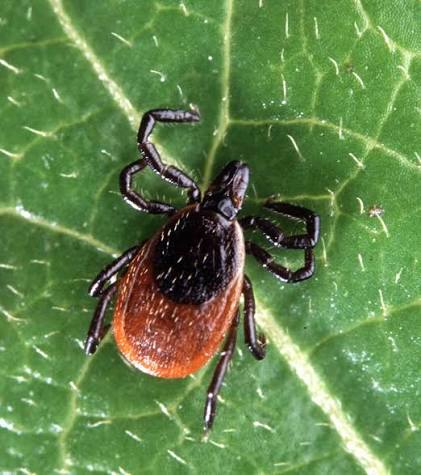
47,428 ticks, 15 provinces, one prime suspect
Finding a virus in patients is one thing. Finding out what is delivering it is another. So the team went after the ticks — on a scale that borders on obsessive.
They screened 47,428 ticks collected across 15 Chinese provinces. ALTNV RNA turned up in 1.3 per cent of them overall. But the prevalence was highest in one species in particular: Haemaphysalis longicornis, the Asian longhorned tick, at 1.8 per cent.
Then they closed the loop with a laboratory experiment. They showed that H. longicornis can actually transmit the virus to mice — which is the difference between a tick that happens to be carrying something and a tick that is a functioning vector. That single experiment is why this paper is being read in Atlanta and not just in Beijing.
The clone army in the hedgerow
Because the Asian longhorned tick is no longer an Asian problem.
In November 2017, public health officials in Hunterdon County, New Jersey, reported the first detection of H. longicornis in the United States outside a port-of-entry inspection site. It has not stopped since. Surveillance has now detected the tick in more than 20 states, including Washington DC. It has been found as far west as Arkansas and Oklahoma and as far south as Georgia, with Indiana logging its first detection in April 2023 as the nineteenth state on the list.
What makes this tick spread like a rumour rather than an insect is its reproductive biology. It does not need a mate. Parthenogenesis — asexual reproduction — means a single female arriving on a stray deer, a wandering dog or a cargo pallet can found an entire population by herself.
“A single female does not even need to mate — she can clone herself and lay thousands of eggs on her own,” Evans said. “That is how populations explode so fast.”
Anyone who has seen a longhorned tick infestation on livestock understands the consequences. The US Centers for Disease Control and Prevention has flagged this species for years precisely because it can cause massive infestations on animals, on people and across the landscape — and because in its native range it transmits a long list of pathogens to both animals and humans. Among them: Dabie bandavirus itself, the virus with the fatality rate of up to 30 per cent.
Expert perspective: the honest version
It would be easy, and wrong, to run this story as a plague warning. The experts consulted since the paper landed have been careful, and their caution deserves as much airtime as their alarm.
The central fact is this: ALTNV has not been detected in American ticks. Not once. The virus was found in China, in Chinese ticks and Chinese patients. The longhorned tick in a New Jersey hedgerow is not currently known to be carrying it.
More than that, the Asian longhorned tick in the United States has not yet been implicated in transmitting much of anything. It is, in the phrase specialists use, competent for pathogens — biologically capable of carrying and passing them on — but competence is a potential, not an event. And notably, it has not been found carrying the bacterium responsible for Lyme disease, the illness most Americans think of first when they see a tick. Without infected hosts in the environment for the tick to feed on, it cannot spread a disease it never picked up.
That is the genuine, unglamorous state of the risk: a capable vector, firmly established across a large chunk of the eastern United States, and a newly described virus that it demonstrably can transmit — sitting on the other side of the Pacific. The gap between those two facts is the whole story. Whether it closes, and how fast, is an empirical question that nobody can currently answer, because in most of the US nobody has been looking for ALTNV. You cannot find what you do not have a test for. That, after all, was the entire problem in China for years.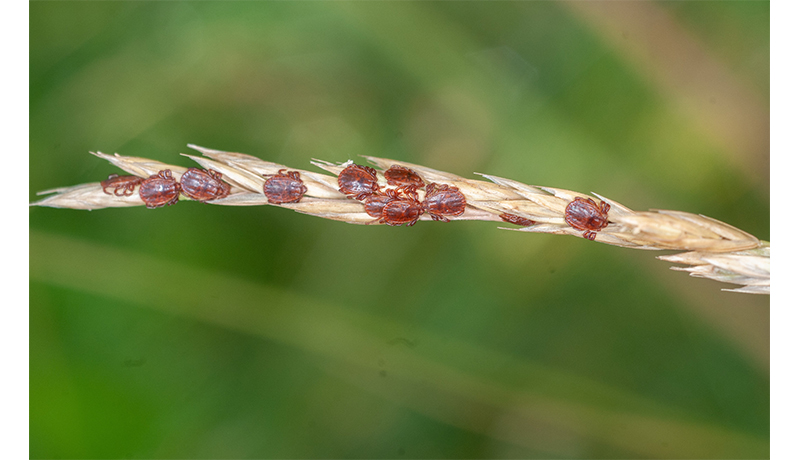
What this means for you
If you live in, work in, or walk through the eastern half of the United States — or anywhere with a tick population — the practical advice has not changed, which is either reassuring or frustrating depending on your temperament. It works, and it is the same advice as always.
Use an effective repellent. Wear long clothing in wooded or grassy areas, and tuck trousers into socks if you are going off-path. Do a proper tick check after you have been outdoors — armpits, groin, behind the knees, along the hairline, behind the ears. Check children and check pets. If you find a tick attached, remove it promptly and properly, with fine-tipped tweezers, gripping close to the skin and pulling steadily upward. For livestock and pets, the US Department of Agriculture notes that regular tick treatments are effective against the Asian longhorned tick.
And then there is the part most people get wrong, which has nothing to do with insects and everything to do with what you say in a consulting room.
“If you start to develop a fever, fatigue, gastrointestinal symptoms, or other signs of illness following a known tick bite or being outdoors, make sure to tell your healthcare provider,” said Dr Ayesha Bryant, clinical advisor of Alpas Wellness in Maryland. “Knowing about possible tick exposures or bites can help clinicians narrow their diagnostic testing and get you proper care as soon as possible.”
That sentence is the operational lesson of this entire paper. In China, thousands of people were sick with a virus nobody could name — and what eventually cracked it was that clinicians knew these were tick-bitten patients and kept looking. Mentioning a tick bite is not fussing. It is handing your doctor the single most useful clue you have.
The bottom line
ALTNV is not a pandemic. It is not, on the evidence so far, even a killer on its own — every patient who had it in isolation walked out of hospital. What it is, is a demonstration of how much we still do not know about what ticks are carrying, and how quickly a vector can cross an ocean and settle in while the pathogens it is capable of moving stay behind.
A team in Beijing has just filled in one blank on a very large map. Somewhere between 10 and 15 per cent of a group of patients who had been medical mysteries for years now have a diagnosis. Doctors in SFTS-endemic regions now know to test for two viruses instead of one, and they know that the patients carrying both are the ones in real danger.
And in back gardens from New Jersey to Oklahoma, a tick that reproduces without mating continues to quietly expand its territory, waiting to see what it will be asked to carry next.



