Written By | Sports Desk
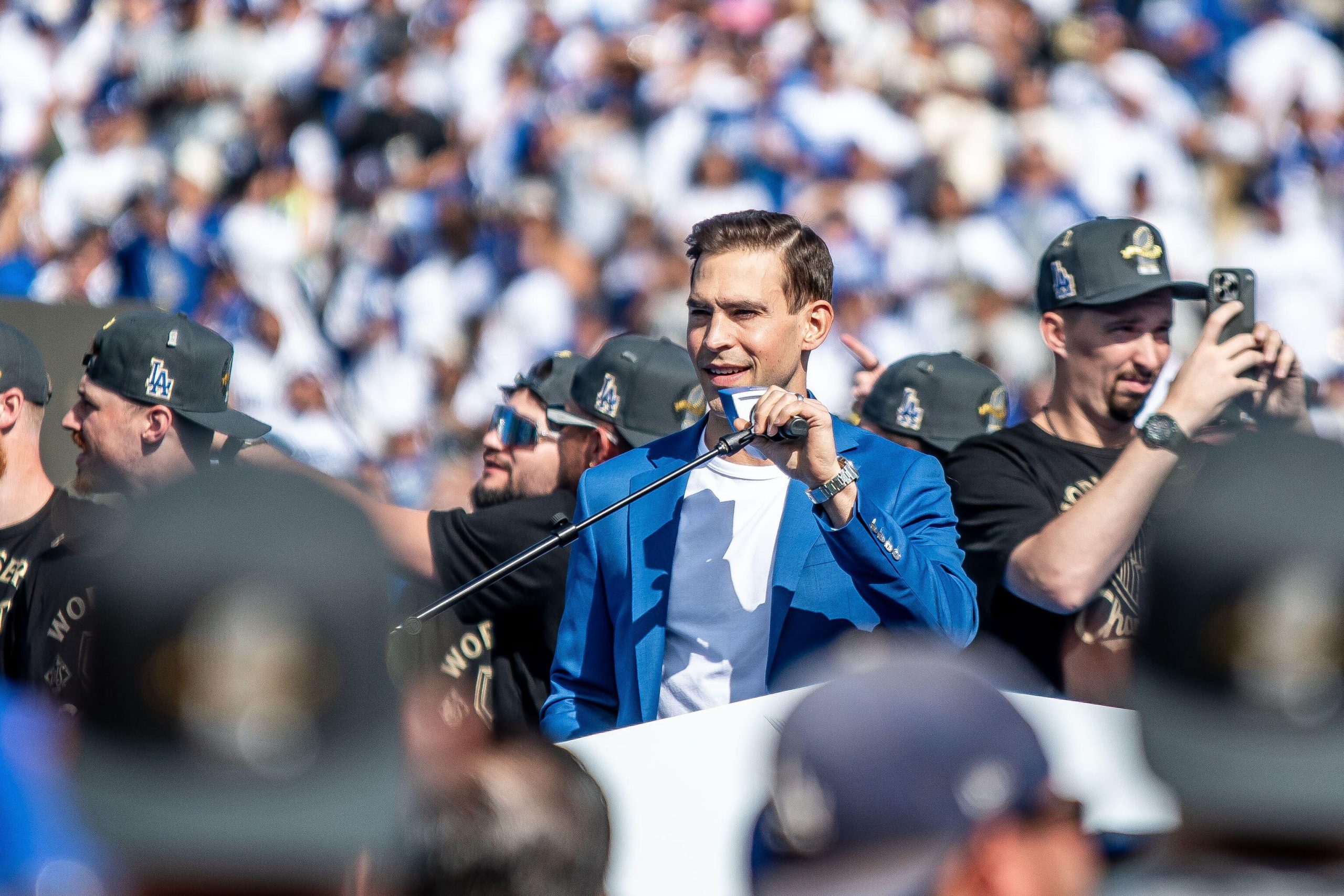
As the World Series opens without the Dodgers, a veteran broadcaster defends Fox's lead baseball voice against claims of home-team bias, and reopens the oldest argument in sports media.
NEW YORK
Every postseason, a second contest plays out beside the games themselves: the one fought in the replies, the group chats and the living rooms of fans convinced the person holding the microphone is rooting for the other side. This October, the target is Joe Davis, Fox Sports' lead voice for Major League Baseball. And the person who rode to his defense this week is someone who knows exactly how it feels.
Speaking on Monday, October 19, on ESPN's NBA preseason conference call, Mike Breen, the longtime voice of the NBA on ESPN and ABC, was asked about the criticism aimed at Davis. According to Sports Media Watch, which first reported his remarks, Breen said he is "such a Joe Davis fan" and that he hears no bias in the way Davis calls the Los Angeles Dodgers' plays versus their opponents'.
The timing matters. The Dodgers' run ended last week when the Milwaukee Brewers swept them in the National League Championship Series, with Game 4 finishing on October 15. Milwaukee now heads to its first World Series since 1982, and the Fall Classic is the first since 2023 without the Dodgers. Davis, who became Fox's lead MLB voice in 2022 after Joe Buck's departure, will call it for the fifth time.
What fans said
The complaints, which circulated mostly on social media, followed a familiar template. Critics argued that Davis sounded flatter on plays that helped Dodgers opponents and more electric on the Dodgers' best moments. The main exhibit was a Shohei Ohtani home run early in NLCS Game 4, hit while Los Angeles trailed the series three games to none. Clips of the call were cut, slowed and compared, and at least one video asked outright whether Davis is biased toward the Dodgers.
It is a charge that rarely has a clean answer. A broadcaster's energy is shaped by leverage, drama and the sheer improbability of a moment, and an Ohtani homer with a team facing elimination is, by any measure, a moment. Still, perception is its own kind of evidence, and the Dodgers' enormous national following means plenty of viewers were primed to hear any lift in Davis's voice as favoritism.
Breen's defense
Breen's answer leaned on both experience and personal stakes. A Mets fan, he pointed out that Davis called the 2024 Dodgers-Mets NLCS for Fox. Listening as a supporter of the team on the losing end, he said, he did not hear any tilt toward Los Angeles.
He also drew on his own battles. Breen said complaints about his work began during the Knicks' recent run to the NBA Finals, which ended with New York's first championship in 53 years. A lifelong Knicks fan, he has long faced the assumption that he cannot call a Knicks game evenly. He described the backlash as "part of the job" and said fans are, by nature, the least objective judges of bias, especially in the emotional heat of the postseason. He added that he tries to match his excitement for any team's big plays, citing the 2021 Bucks and 2023 Nuggets title runs as examples. Davis, he concluded, has been "amazing."
A long shadow: Buck and the 2006 call
The conversation sits inside a bigger story about how play-by-play announcers manage the line between enthusiasm and neutrality. Sports Media Watch drew a comparison to Davis's predecessor. Buck called the 2006 World Series for the St. Louis Cardinals, a team he had covered locally, and has since said he regrets a low-energy final call, made out of fear of appearing biased to a national audience.
That admission is revealing. The risk for a national broadcaster is not only being accused of bias; it is overcorrecting so hard that a championship moment loses its voltage. A call that is too cautious can feel as wrong as one that is too partisan. Viewers remember the final out of a World Series for a lifetime, and the announcer's few words become part of the memory.
The economics of attention
There is also a structural reason these disputes flare. Postseason baseball is one of the few events that still pulls enormous live audiences, and the Dodgers, with their global star power, drive a large share of them. Sports Media Watch has reported that the NLCS finished with a viewership high for the series after the sweep. More viewers means more scrutiny, and with every highlight now clipped and shared within minutes, a single inflection in a broadcaster's voice can travel further than the game itself.
For networks, that creates a quiet pressure. Announcers are hired for authority and warmth, yet are judged in the age of the viral clip by a standard no human voice can meet: identical intensity for every team, every inning, every outcome.
Why this matters to you
You do not have to work in sports media to recognize the dynamic. Most of us hear what we expect to hear. Fans of the team that loses tend to find bias in the call; fans of the team that wins rarely notice it. Breen's point, that emotional investment makes viewers poor judges of neutrality, is a useful reminder before you share the next clip with a caption declaring a broadcaster is against your team.
If you want to test your own perception, try this during the World Series: listen to a half-inning with the picture off, or compare how the same announcer handles a big play for each side. You may find the difference smaller than the replies suggest, or you may find a genuine pattern. Either way you will be listening more closely, which is the point.
What comes next
Davis now gets the biggest stage of his season in a World Series without the team at the center of the debate. If the bias argument was really about the Dodgers, it should quiet down. If it was about the pressure on any national voice, it will return with the next marquee game. Breen, for his part, has offered the veteran's view: the noise is part of the job, and the best response is to keep calling the game.
As the Brewers and their opponent take the field, the broadcast will once again be the soundtrack to a championship, and, inevitably, a subject of debate. For a sport built on tradition, that may be the most traditional October ritual of all.
Sourcing
This article draws on reporting by Sports Media Watch, including Breen's remarks on ESPN's October 19, 2026 NBA preseason conference call, and on the site's coverage of the Brewers' NLCS sweep. Quotes are limited to words attributed to Breen in that reporting; descriptions of fan criticism reflect that report's summary of social media reaction.



