SCIENCE & HEALTH
Somewhere in the brainstem of every person taking Ozempic, Wegovy, or a dozen other GLP-1 drugs flooding America's medicine cabinets, a group of neurons long considered the enemy of dieters everywhere has been quietly doing something scientists never expected — and it might be the actual reason these drugs work as well as they do.
For over a decade, the leading theory of how GLP-1 receptor agonists produce dramatic weight loss centered on suppression: the drugs were thought to calm the brain's hunger circuitry, muting the neurons that scream "EAT" when the body senses a calorie deficit. It was a tidy story. It was also, according to a new study out of Yale School of Medicine published in the Proceedings of the National Academy of Sciences, largely backwards.
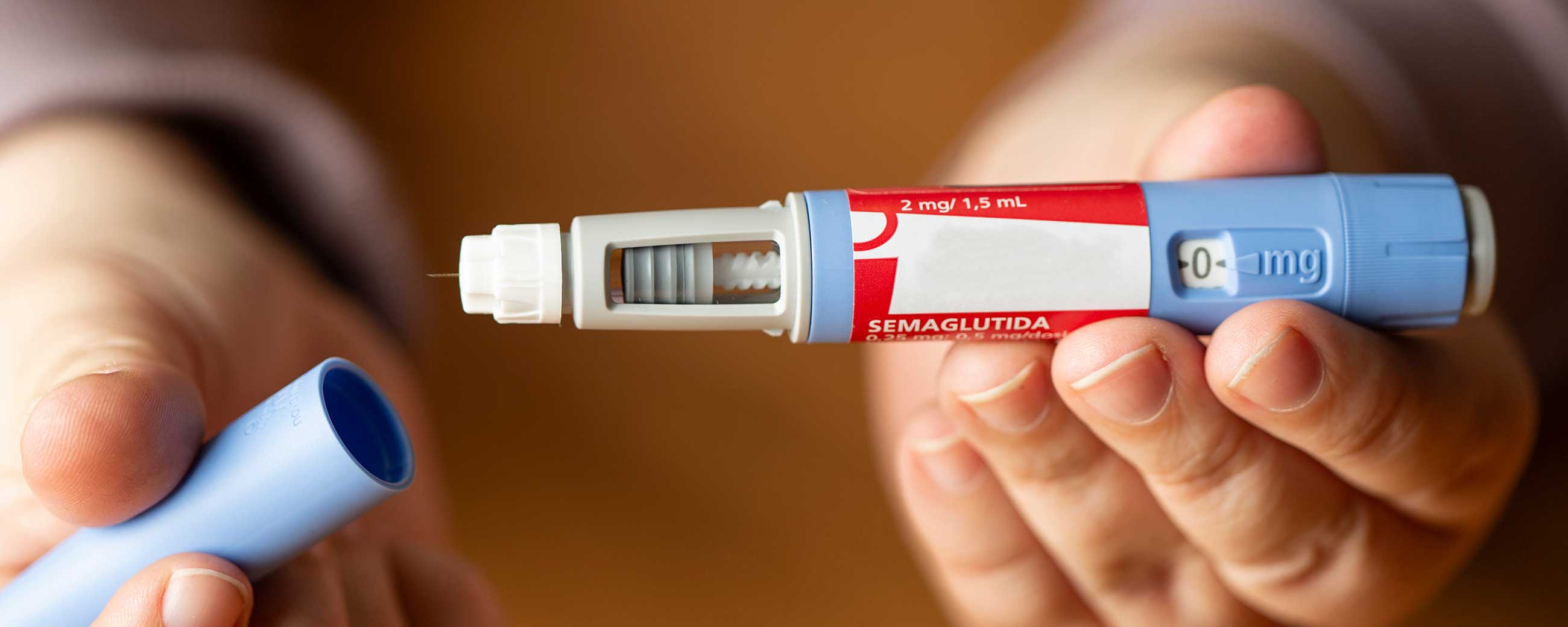
Researchers led by neuroscientist Tamas Horvath, with first author Mateus d'Ávila, a Ph.D. candidate in Yale's Department of Comparative Medicine, found that sustained semaglutide treatment — semaglutide being the active ingredient in both Ozempic and Wegovy — doesn't shut down the brain's so-called "hunger neurons." It recruits them.
THE NEURONS EVERYONE GOT WRONG
The neurons at the center of the discovery are called AgRP neurons, named for the agouti-related peptide they produce. Tucked in the hypothalamus, AgRP neurons have been studied for decades as the brain's built-in famine alarm: when the body senses it's burning more calories than it's taking in, these neurons fire, triggering intense hunger and driving the search for food. Silence them experimentally in a mouse, and the animal simply stops looking for food, even when it's starving. It's about as close to a biological "eat now" switch as neuroscience has found.
Because GLP-1 drugs so effectively suppress appetite, the assumption was straightforward: they must be turning that switch off.
The Yale team tested that assumption directly. When researchers removed or silenced AgRP neurons in mice receiving semaglutide, something counterintuitive happened — weight loss stalled. If semaglutide worked purely by shutting these neurons down, removing them entirely should have had little effect, or even helped the drug work better. Instead, the mice needed those neurons functioning in order for the drug to keep working.
Follow-up experiments using electron microscopy, molecular biology, and electrophysiology confirmed it: rather than being suppressed, AgRP neurons showed increased markers of neuronal activation, mitochondrial engagement, and synaptic remodeling during semaglutide treatment. The hunger circuitry wasn't going quiet. It was being rewired and co-opted — recruited into actively coordinating fat loss, essentially "helping" the body adapt to and sustain a calorie deficit the way it naturally would during a period of food scarcity, rather than fighting against it.
"This completely changes how we think about the mechanism involved in these medications and provides new insight into the biology underlying their long-term effects, opening an avenue for the development of more efficient drugs," d'Ávila said.

A SCIENTIFIC DEBATE, NOT YET A CONSENSUS
It's worth noting the Yale findings don't stand entirely unchallenged. A separate study out of Northwestern Medicine, published in the Journal of Clinical Investigation in August 2025, reached the opposite conclusion — that GLP-1 drugs do actively silence AgRP neurons rather than switch them on. The two labs used different experimental approaches, and untangling the discrepancy is likely to be a live scientific debate for the next several years, not a settled question after one paper.
Adding another layer, a related 2026 study published in Nature Metabolism, examining the brainstem's area postrema — considered the primary site where semaglutide acts in the brain — found the drug engages two distinct signaling pathways (called Gs- and Gq-dependent signaling) in GLP-1 receptor-expressing neurons there, suggesting the drug's brain effects are more biochemically complex than a simple on/off switch in any single neuron population.
There's also a wrinkle specific to the AgRP finding: other bioRxiv-posted research suggests the requirement for AgRP neuron involvement in weight loss may depend heavily on diet. In lean mice eating standard chow, AgRP neurons appear necessary for sustained semaglutide-driven weight loss — but that requirement disappears in obese mice, or in lean mice acutely switched to a high-fat diet. In other words, the brain's response to these drugs may not be a fixed circuit at all, but a context-dependent one that shifts based on what — and how much — a person or mouse has been eating.
WHY A DECADE-OLD ASSUMPTION MATTERS NOW
This might read like inside-baseball neuroscience, but the timing could hardly be higher-stakes. GLP-1 drugs have gone from a niche diabetes treatment to arguably the defining pharmaceutical story of the decade. As of 2026, roughly 15% of American adults report having ever tried a GLP-1 medication for weight loss, up from just 6% in 2024 — and according to Gallup polling conducted in May and June 2026, about 11% of U.S. adults are currently using one. Awareness has become near-universal: 91% of Americans say they've heard of these drugs, up from 80% just two years ago. Among current users, roughly two-thirds are on brand-name products like Wegovy (Novo Nordisk) or Zepbound (Eli Lilly), while nearly one in five are using compounded or custom-made versions.
That means tens of millions of Americans are, right now, running an experiment on their own AgRP neurons without necessarily knowing it — and the scientists studying the drugs they're taking are still actively arguing about what those neurons are doing in response.
Understanding the real mechanism isn't just an academic curiosity. If GLP-1 drugs work partly by recruiting and rewiring hunger circuitry rather than simply suppressing it, that has direct implications for two of the biggest open problems with this drug class: why weight tends to rebound quickly after people stop taking them, and why a meaningful share of users report side effects, plateaus, or diminishing returns over long-term use. A drug that's actively reprogramming a survival circuit rather than muting it might behave very differently once you stop taking it than a drug that was simply keeping an alarm bell switched off.

EXPERT PERSPECTIVE
Horvath's lab, which has spent years studying the neurobiology of metabolism and feeding behavior, frames the discovery as a foundation for better drugs rather than a reason to doubt current ones. The logic goes like this: if researchers can pin down exactly how AgRP neurons are being co-opted — which molecular pathways are being activated, and why that activation helps sustain fat loss instead of driving patients back to the fridge — drug developers could theoretically design next-generation GLP-1 therapies that recruit this mechanism more precisely, potentially preserving the weight-loss benefit while reducing the nausea, muscle loss, and rebound weight gain that plague a meaningful share of current users.
That's also the note of caution independent scientists are sounding: with Northwestern's competing findings still on the books and the diet-dependent wrinkle from the bioRxiv preprint unresolved, this is very much a live scientific question rather than a settled fact ready for a pharmacology textbook. Multiple labs studying the exact same neurons, using different techniques, are currently getting different answers — which is itself a sign of how quickly and messily this field is moving to catch up with a drug class that raced to market faster than the basic science explaining it.
WHAT THIS MEANS FOR YOU
If you're currently taking Ozempic, Wegovy, Zepbound, or a compounded semaglutide or tirzepatide product, this discovery doesn't change anything about how you should take your medication or what side effects to watch for — the clinical guidance from your prescriber remains the same. What it does change is the honest answer to the question "how does this drug actually work in my brain," which, as of this month, is genuinely more complicated and less settled than most patient-facing materials suggest.
It also offers a partial scientific explanation for something many patients already know from experience: these drugs don't feel like simply losing your appetite in the way skipping a meal does. If AgRP neurons are being actively recruited rather than silenced, that could help explain why hunger on these drugs sometimes feels present but manageable, rather than absent altogether — and why that feeling can shift over the course of treatment as the brain's circuitry adapts.
For anyone concerned about regaining weight after stopping a GLP-1 drug — one of the most common real-world complaints about this drug class — this research is a reminder that the rebound isn't simply "willpower failing." If these medications work partly by rewiring an ancient survival circuit rather than switching it off, it stands to reason that circuit might snap back toward its original programming once the drug is withdrawn, which is an active area the field still needs to study directly.
THE BOTTOM LINE
The blockbuster success of GLP-1 drugs was built, in large part, on a simplified story: these medications quiet the brain's hunger signals, and the pounds come off. That story sold hundreds of millions of prescriptions and made Ozempic a household name synonymous with modern weight loss. But according to Yale's new research, the actual biology may be closer to the drugs commandeering the hunger circuit rather than disabling it — turning what scientists thought was an obstacle into an unwitting accomplice. It's a more complicated story, backed by real disagreement in the scientific literature, and it may end up mattering enormously for the tens of millions of Americans whose brains are currently running this experiment in real time.
Published By | Features Editor