Written By | International News Agencies
Mali's transitional government announced the recapture on state television on Tuesday, Oct. 6.
BAMAKO
Mali's military government announced this week that its army, backed by Russia's Africa Corps, had retaken Kidal, the northern desert city that separatist rebels and an al-Qaeda-linked group seized five months ago in the most serious challenge yet to the junta. The recapture gives General Assimi Goita's government something it badly needed: a visible victory. Whether it amounts to anything more is a different question, and independent analysts are skeptical that it will.
The rebels say they withdrew without a fight. That account, together with the junta's emphasis on "air-ground" operations and the heavy role of Russian airpower, shapes how the episode should be read: less as a decisive battle than as a test of who controls the narrative in a war that Mali's rulers have struggled to win since they seized power in coups in 2020 and 2021.
What happened in Kidal
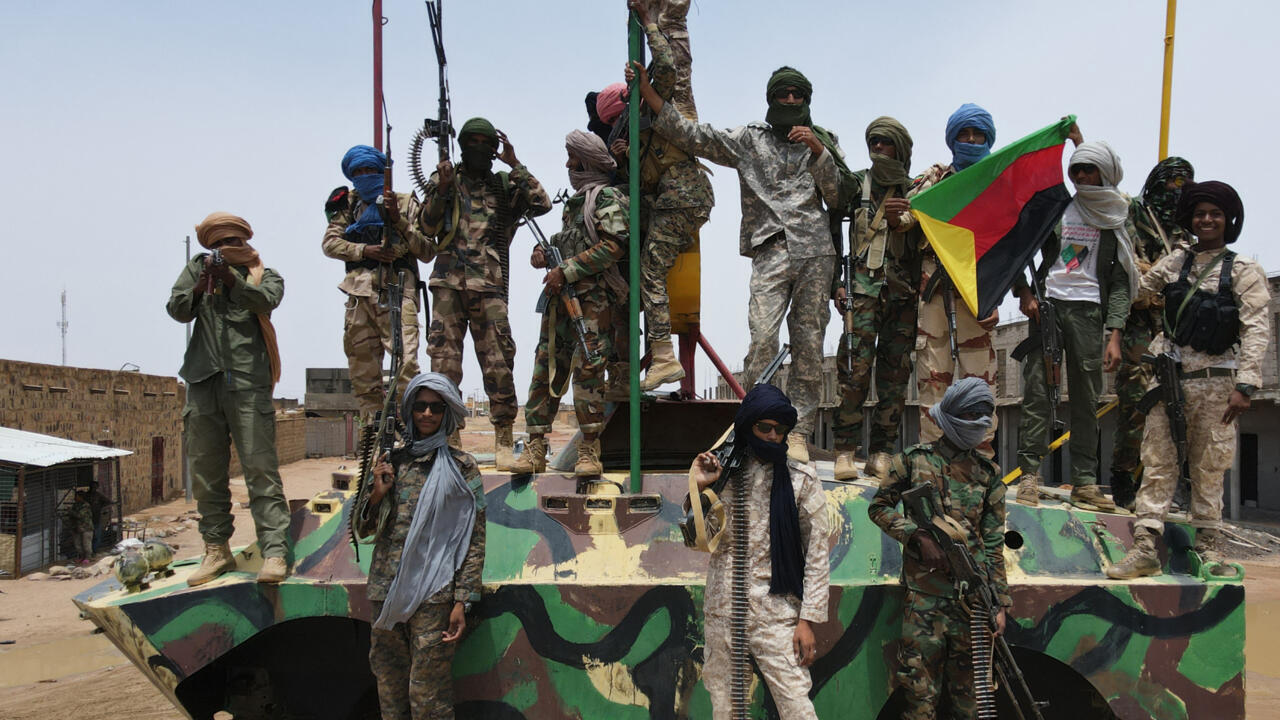
Mali's transitional government announced the recapture on state television on Tuesday, Oct. 6. The statement, read by government spokesman Brig. Gen. Issa Ousmane Coulibaly, said troops had "consolidated their positions" with Russian support, Al Jazeera reported, following what the army called "intense air-ground neutralization operations." The Associated Press said the operation used air and ground forces with help from the Africa Corps, the Russian paramilitary group.
The Azawad Liberation Front, known by its French initials FLA, described events differently. It said it carried out a "strategic and controlled withdrawal" from the city, which it said was meant to protect lives and was temporary. Mohamed Elmaouloud Ramadane, an FLA spokesperson, said in a news release that the group pulled out partly because of "the disproportionate use of aerial assets by Russian mercenaries from the Africa Corps," according to the AP. Armed groups that held the city said the army entered on Tuesday without a fight.
The AP identified the groups that had held Kidal as the FLA and Jama'at Nusrat al-Islam wal-Muslimin, or JNIM, which it described as linked to al-Qaeda. The coverage reviewed gave no casualty figures, troop numbers or independent confirmation of the account of the withdrawal.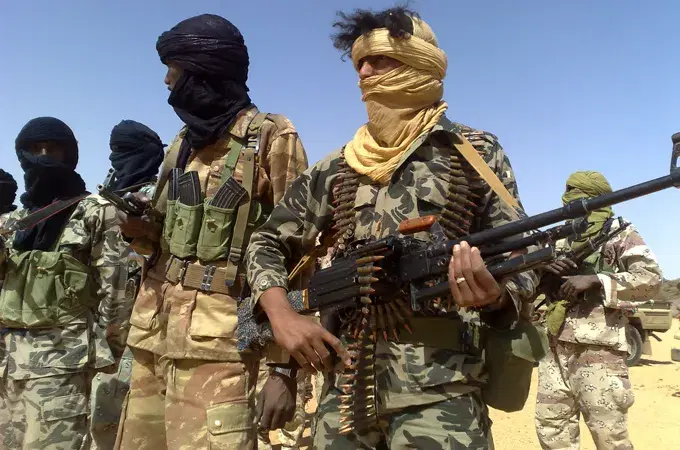
How Kidal was lost
Kidal has long been the symbolic capital of Tuareg separatism in Mali, and control of it has changed hands repeatedly. Malian troops and fighters from the Wagner Group retook the city in November 2023, according to Al Jazeera. They lost it again in April.
On April 25 and 26, JNIM and the FLA launched coordinated attacks that Al Jazeera described as striking Bamako, Kati, Gao, Kidal and Sevare at once. The assault on Kati, a garrison town about 15 kilometers northwest of the capital, killed Defense Minister Gen. Sadio Camara. Al Jazeera's Nicolas Haque reported that a suicide car bomber attacked his home, and AFP reported that his second wife and two of his grandchildren also died. Coulibaly confirmed Camara's death in a Sunday statement. Camara had been a central figure in the ruling military leadership, and some saw him as a possible future leader.
Goita, who lives in Kati, was moved to safety and remained in command, Haque reported. The attacks spanned roughly 1,500 kilometers from Bamako to Kidal, according to an analysis by Seth Appiah-Mensah in African Arguments, which argued that they were designed as a campaign of cumulative pressure rather than an attempt to hold territory. The FLA's spokesman told the BBC that the operation had been planned for a long time and carried out in alliance with JNIM, the same analysis said. The analyst Bulama Bukarti noted to Al Jazeera that the two groups, which had previously fought each other, had agreed to cooperate the year before.
According to African Arguments, JNIM announced a total siege of Bamako on April 28. France 24 reported on April 30 that a blockade of the capital had begun. The sources reviewed for this article do not describe the present state of the blockade, which makes it a key unanswered question.
The Russian factor
After the coups, Mali turned from France and other Western partners toward Moscow. Wagner was replaced by the Africa Corps, which operates under the direct control of Russia's Defense Ministry, in June 2025, according to Al Jazeera. Mali, Burkina Faso and Niger, all under military governments, have made the same turn, and the AP describes the Sahel as the world's deadliest region for extremism.
The Kidal operation is a chance for the Africa Corps to repair its reputation. Beverly Ochieng, an analyst at Control Risks, told Reuters that the recapture strengthens the government's authority and army morale after recent setbacks in the north and center, and gives the Africa Corps an opportunity to restore its image as Mali's security guarantor. Rida Lyammouri of the Policy Center for the New South, a Morocco-based research group, told the AP the recapture "represents a major symbolic victory to the central government."
But the same analysts caution against overreading it. Ochieng called the change in control largely "symbolic" rather than "decisive" in the wider campaign against armed groups. And the FLA's own framing, that it withdrew from the city in the face of air power and intends to return, is consistent with the pattern of a mobile insurgency that cedes ground it cannot hold against aircraft.
African Arguments, in an opinion analysis from May, offered a harsher view of the structural limits on the Russian partnership. It estimated Russian personnel in Mali at between 1,000 and 2,500, compared with roughly 20,000 international troops that had previously been deployed, and argued that the Russians depend on Malian units for perimeter security and intelligence. These are the author's estimates and assessments, not independently verified figures.
The human rights question
Neither the army nor its Russian partners have an unblemished record in the north. Rights groups have accused the Malian army and Russian paramilitaries of killing civilians during operations, and Deutsche Welle noted that all sides have been accused of war crimes. African Arguments argued that heavy-handed tactics feed recruitment into militant groups and said that reported fatalities linked to militant Islamist groups have roughly tripled under the junta, a claim attributed to the author's reading of data.
The pattern matters for Kidal in particular. Kidal is a Tuareg stronghold, and the return of the army and its Russian partners after months of rebel control may be experienced very differently by different communities. No independent reporting from inside the city on conditions for civilians was available at the time of writing. Aid access and the treatment of residents who lived under FLA and JNIM control will be early indicators.
The junta's political position
The recapture arrives at a politically delicate moment for Goita. The April attacks killed his defense minister, exposed the vulnerability of the capital's surroundings, and forced the army out of Kidal. Appiah-Mensah wrote in May that the shock "could mark the beginning of the end" for the junta, an assessment he offered as his own; the government's survival through the months since has not confirmed it. The government survived, has now regained a symbolic prize, and can credibly tell its citizens that its Russian partnership delivers.
The junta's regional partners, however, did little in April. The analysis noted no immediate, coordinated military response from the Alliance of Sahel States, which includes Mali, Burkina Faso and Niger, and said the alliance described the attacks as a "monstrous plot" by external enemies, a narrative the author argued cannot substitute for operational capability. The African Union, the United Nations secretary-general, the European Union, the Organization of Islamic Cooperation and the U.S. State Department's Africa bureau all condemned the April violence.
Analysis: reading a symbolic victory
Kidal matters for three reasons that have little to do with its size. It is the site of the previous rebel victory. It is the center of the Tuareg claim to an independent state in the north, a claim the FLA has pursued for years. And it was the city whose loss most visibly punctured the junta's claim that its turn away from Western partners and toward Russia had strengthened Mali's hand against its enemies.
Retaking it therefore delivers a propaganda dividend. But the rebel statement frames the recapture as a withdrawal rather than a defeat, preserving the FLA's forces and its claim to legitimacy among Tuareg communities. If the FLA's fighters remain intact and their alliance with JNIM holds, the same forces that took Kidal in April can try again. The government's reliance on air power can clear a city, but it does not by itself provide the governance, security and services that would keep one.
Nor does the Kidal operation address the primary jihadist threat in the center and south, where JNIM's reach and the status of the Bamako blockade are the better measures of the government's position. Ochieng's phrase, "symbolic" rather than "decisive," is likely to remain the best summary until those measures change.
What to watch next
Four things will show whether this is a turning point. The first is whether the FLA and JNIM contest Kidal in the coming weeks or concentrate elsewhere. The second is whether independent reporting emerges on civilian harm and conditions in the city. The third is the state of the siege around Bamako and the fuel and commercial traffic on which the capital depends. The fourth is the junta's political calendar: any move by Goita to consolidate power, replace his late defense minister's network, or deepen the Russian partnership will signal how secure he feels. For now, Mali's rulers have won a symbolic round, and what they do with it will matter more than the win itself.



