Written By | Fashion and Design Desk
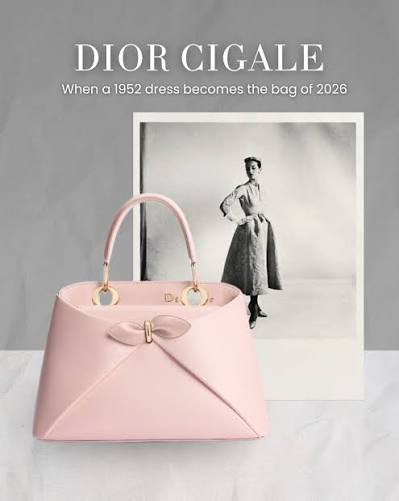
The Cigale, inspired by a 1952 couture gown, has quietly become the most photographed bag of the year — and it's telling the industry exactly what Anderson's Dior era is going to look like
PARIS
Every fashion house eventually produces an "it" bag — the accessory that becomes shorthand for a designer's entire creative vision, photographed on enough famous shoulders that it stops being merchandise and starts being cultural evidence. For Jonathan Anderson's Dior, that object has arrived faster than almost anyone predicted, and its name comes from somewhere unexpected: not a place, not a muse, but a 74-year-old couture dress that Anderson has called his "all-time favorite" garment in the house's history.
Meet the Dior Cigale — a bag currently doing more to define the post-Galliano, post-Chiuri era of Dior than any runway look, campaign, or store opening this year.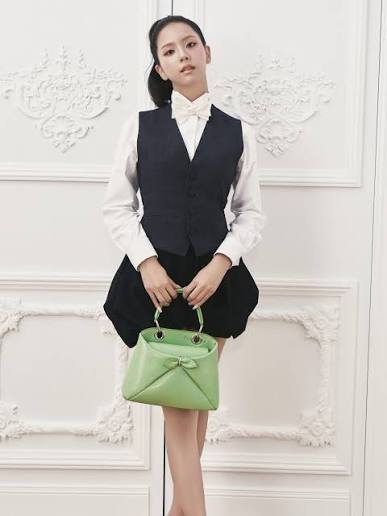
Born From a Dress, Not a Mood Board
The Cigale's origin story is unusually literal for a luxury accessory. It draws directly from La Cigale, the couture gown Christian Dior himself designed for the house's Autumn/Winter 1952 "Profile Line" collection — a dress defined by a fitted bodice, a voluminous moiré skirt, and sculptural pleating that made the fabric seem to move even while standing still. Anderson has been vocal about his reverence for the original piece, and rather than referencing it loosely, he distilled its architecture almost directly into bag form: a single top handle, a curved silhouette that folds and gathers the way fabric does, and — the detail collectors zero in on immediately — a structural bow that echoes the waist bow from the original 1952 dress.
The bag made its debut at Anderson's inaugural Spring/Summer 2026 show for Dior, presented in Paris on October 1, 2025, to what reporters described as a standing ovation — itself a notable moment, marking the arrival of the designer who'd previously built Loewe's viral "Puzzle" bag into one of the past decade's defining accessory hits. Expectations that he'd try to replicate that kind of cultural saturation at Dior were high. The Cigale suggests he's already succeeding.
From Runway Piece to Global Status Symbol
The Cigale became available in Dior stores on February 5, 2026, priced at $4,900 for the small size and $5,500 for the medium (roughly €4,200 in Europe) — solidly in flagship "it bag" territory, positioned to be aspirational without straying into the house's most stratospheric price tiers.
What's happened since has been a near-textbook celebrity adoption cascade. Rihanna was reportedly the first major star photographed carrying it, and from there the list reads like a Vanity Fair masthead: Anne Hathaway, Taylor Swift, Ariana Grande, Jennifer Lawrence, Jisoo of Blackpink, Sabrina Carpenter, Rosalía, Karlie Kloss, and Charli XCX have all been seen with the bag in the months since its release. That breadth matters — it's not confined to one aesthetic tribe. Pop stars, actresses, and the "quiet luxury" fashion set have all separately converged on the same object, which is precisely the kind of cross-audience momentum that turns a seasonal accessory into a genuine phenomenon.
For Fall 2026, Dior expanded the Cigale's palette beyond the initial neutrals into more expressive territory — powder blue crocodile, dark green lizard, and a pebbled polka-dotted leather among the new options — signaling the house's confidence that demand can sustain a broader, more playful rollout rather than staying confined to safe, easily wearable colorways.
Why This Bag Matters Beyond the Bag
It's tempting to treat "it bag" stories as simple consumer trivia, but the Cigale's rise is doing real work for Dior's brand narrative. Anderson inherited a house in transition — following Maria Grazia Chiuri's decade-plus tenure — and needed an early, legible signal that his creative direction would honor Dior's archive while still producing something that felt new and desirable to a contemporary audience. A bag succeeds at that job in a way a runway show alone cannot: it lives on the street, in paparazzi photos, on Instagram, circulating far beyond the relatively small audience that watches full fashion-week livestreams.
The strategy also mirrors what worked for Anderson at Loewe. The Puzzle bag wasn't just commercially successful — it became a piece of internet-era fashion literacy, something people who don't follow fashion closely still recognized on sight. The Cigale appears to be following the same trajectory, helped enormously by the fact that its story (a couture dress reborn as an accessory) gives editors and stylists a ready-made narrative hook every time they write about it.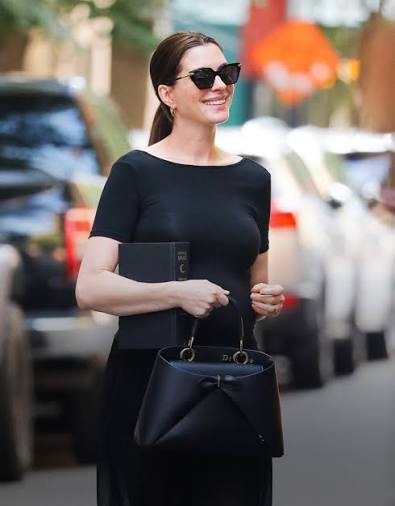
An Industry Watching Closely
Fashion insiders have noted that the Cigale's success arrives at a pivotal moment for the luxury sector broadly, which has spent much of 2026 navigating softer demand and more cautious consumer spending in key markets. A genuine hit accessory — one that moves inventory and drives foot traffic into boutiques — carries outsized importance right now, both for Dior specifically and as a signal to the wider industry about what still reliably captures shoppers' attention even in a more conservative spending climate.
There's also a talent-market subtext. Anderson's early success at Dior will be read by LVMH leadership, by rival houses, and by the broader industry as validation (or not) of the increasingly common strategy of importing a single visionary designer to revitalize a legacy house's entire aesthetic identity — the same bet Chanel, Gucci, and others have made in recent creative-director shuffles.
What This Means for Readers
You don't need a five-figure fashion budget to understand why this matters. The Cigale is a useful real-time case study in how a single well-executed object — grounded in genuine archival storytelling rather than pure trend-chasing — can reshape public perception of an entire brand within a single season. If you're shopping this fall, expect to see the Cigale's design language (structural bows, curved silhouettes, single top handles) trickle down into more accessible price points across other brands by early 2027, as the rest of the market moves to capture some of the same energy. And if you're simply a fashion-conscious observer, the Cigale is worth watching as the clearest available proof point of whether Anderson's Dior tenure will live up to the anticipation that greeted his arrival.
The Bottom Line
A bag named after a 74-year-old dress has become 2026's most unlikely fashion headline generator — proof that Jonathan Anderson's instinct for turning archival reverence into viral desirability has followed him from Loewe to one of the most storied names in fashion. Dior spent decades building La Cigale's legend as a couture masterpiece worn by almost no one. Anderson just turned it into something nearly everyone wants to carry.



