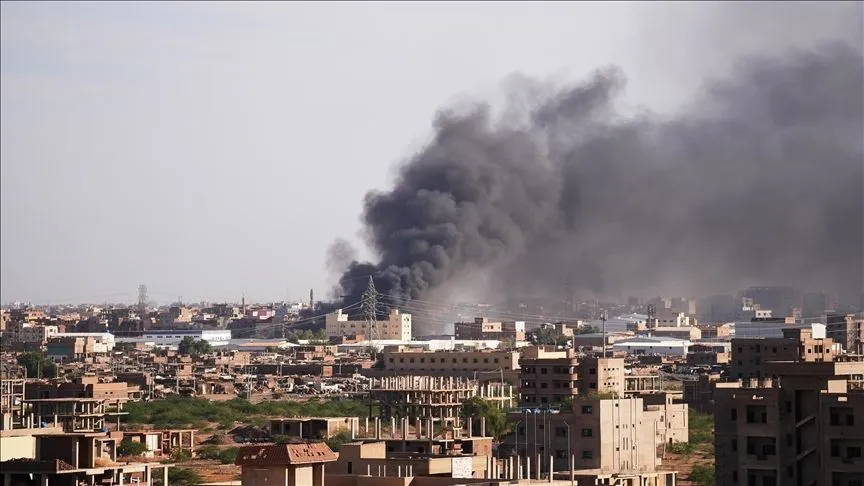
KHARTOUM, Sudan
Sudan's army-backed government has publicly accused Ethiopia of allowing its territory to be used to launch drone attacks, a charge that, if substantiated, would turn a three-and-a-half-year civil war into a dispute between two neighboring states. At a press conference in Khartoum on October 28 and a further briefing reported on October 29, officials said 162 attacks had been launched from Ethiopian soil, killing more than 400 civilians and 102 military personnel. Ethiopia has rejected the allegations as unfounded. None of the figures has been independently verified.
The accusation arrives as the war between the Sudanese Armed Forces (SAF) and the paramilitary Rapid Support Forces (RSF) enters a phase in which drones, not ground offensives, are the main instrument of violence. It also coincides with reports of an army drone strike in Darfur that killed more than 100 people on October 29, according to Africanews as summarized by Rio Times, a reminder that the weapon is used by both sides.

What Sudan is alleging
Muawiya Osman Khalid, undersecretary at Sudan's Foreign Ministry, told reporters in Khartoum that the alleged launches were "a dangerous development that could undermine security and stability in the region," Xinhua reported. He said Sudan reserves the right to protect its security by any lawful method and, according to Radio Dabanga, described a policy of "strategic patience" under which Khartoum will not compromise on sovereignty and territorial integrity. He called on the international community to take concrete action.
The briefing, attended by senior military and intelligence officials and undersecretaries from the foreign affairs and information ministries, laid out a detailed list. Officials named the towns they say were hit: El Damazin, El Mazmum, Sennar, Kosti, Rabak, Belong, El Kurmuk, El Dinder, Wad El Mahi, El Obeid, Abu Oileila, Bara and Umm Rawaba. They said the alleged launch sites include Assosa and Bahir Dar in Ethiopia, along with locations near the border, and that flight paths ran alongside South Sudan. They listed the aircraft as modified kamikaze drones, long-range models, Chinese-made drones, and Turkish-made Bayraktar Akinci and TB2 models, and said Sudanese forces had shot down several, including Akinci and CH-95 types.
Officials said dozens of schools, fuel stations, health centers and hospitals had been destroyed. Over the three days before the Khartoum briefing, Xinhua reported, drones believed to be linked to the RSF hit electricity stations in several Sudanese states. The stated purpose of the strikes, according to the officials, is to stop displaced people from returning home, particularly to Khartoum, and to undermine efforts to restore normal life.
Defence Minister Hassan Daoud Kabroun went further in an interview with the Sudan News Agency, saying more than 20 countries were involved in the war by supplying the RSF with logistical support, mercenaries, funding and drones. He described the conflict as a war to destroy Sudan, plunder its resources and change its demographic composition, rather than a civil war or a power struggle between generals. He said the government intends to defeat "the rebellion, militias, and illegal movements" and build a "modern democratic state based on transparency." Foreign Ministry officials also accused the United Arab Emirates alongside Ethiopia of aggression, according to the Rio Times summary of the day's reporting. The UAE's response was not found in the sources reviewed.

Ethiopia's position
Ethiopia has not, in the sources reviewed, offered a detailed rebuttal. Radio Dabanga and allAfrica report that it has rejected the allegations as unfounded; Xinhua, reporting earlier, said Ethiopia had not yet responded. The same Xinhua dispatch noted that media reports in February suggested Ethiopia hosted an RSF training camp near the border, which Ethiopia has not confirmed. This is not the first time Khartoum has made such claims: Sudan Tribune and Addis Standard headlines refer to Sudan "once again" accusing Ethiopia of involvement in drone strikes on power stations and civilian sites, though the full text of those articles could not be retrieved for this briefing.
Verifying the claim is difficult. Drone launch points are rarely documented in public, and attribution depends on wreckage, flight-path data and intelligence that outside investigators seldom see. Readers should treat the numbers, 162 attacks, more than 400 civilian and 102 military deaths, as the Sudanese government's assertion, not established fact.
The war behind the allegation
The conflict began in April 2023 between the army and the RSF. The United Nations describes it as the world's largest displacement and hunger crisis. UN human rights chief Volker Turk told the Human Rights Council in Geneva this year that his office had documented more than 1,000 civilians killed by drone strikes between January and May 2026, condemned a "sharp increase" in drone warfare, and said "rape and sexual violence are rampant," as reported by the Jordan Times. The conflict has killed tens of thousands and displaced more than 11 million, according to that report.
Al Jazeera reported in February that the UN Security Council condemned RSF attacks in Kordofan, denounced repeated drone attacks on civilians and aid workers, and imposed travel bans and asset freezes on four senior RSF figures, including a brother of RSF leader Mohamed Hamdan Dagalo. The World Food Programme said at least 21.2 million people, 41 percent of the population, face high levels of acute food insecurity, and about 12 million had been forced from their homes. The RSF captured El Fasher in October 2025, the army's last major stronghold in western Darfur; the UN has called the city a "crime scene." The International Criminal Court has opened a probe into alleged war crimes by both sides.
Geography explains Khartoum's focus on Ethiopia. Fighting has intensified in Kordofan and Blue Nile state, which borders Ethiopia, and several of the towns Sudan lists, such as El Kurmuk and Sennar, are named as targets. The army said it shot down a drone in Blue Nile in May 2026, according to an archive-photo caption on Radio Dabanga's report.

Analysis: why the claim matters now
Sudan's accusation is simultaneously a military claim, a diplomatic move and a narrative device. As a military claim, it seeks to explain a campaign against the power grid and civilian infrastructure that the army has struggled to stop. As diplomacy, it is an appeal to the Security Council, the African Union and the Intergovernmental Authority on Development (IGAD) to treat the RSF as a foreign-backed insurgency, not a party to a civil war. As narrative, it fits the defense minister's framing of a war imposed from outside, which helps the government reject calls for a negotiated settlement with the RSF.
The risks are real and cut in two directions. If Khartoum is right, an Ethiopian role would mark a dangerous widening: Ethiopia is a major regional power with its own internal conflicts, and a state-to-state quarrel along a long, porous border could displace more people and draw in others, including South Sudan, which lies along the alleged flight paths. If Khartoum is wrong or exaggerating, the allegation could still harm relations with Addis Ababa, which has strong interests in the Nile and the border and has little reason to welcome a hostile Sudan.
It is also worth noticing what the government did not say. Officials spoke of "strategic patience" and the right to self-defense, and called for international action, rather than announcing retaliation. That language suggests Khartoum wants to build a diplomatic record and keep military options in reserve, not to open a new front while it is stretched in Kordofan and Darfur.
At the same time, the army's own conduct complicates its moral case. The reported strike in Darfur on October 29 that killed more than 100 people, if confirmed, would be among the deadliest of the year, and the Rio Times summary offered no details on the victims, location or responsibility. The UN has documented drone attacks on civilians by both sides in this war; a government that appeals to international law will face questions about its own strikes.
What to watch
Several developments will show whether this dispute escalates. The first is Ethiopia's formal response, including whether Addis Ababa offers evidence, proposes a joint investigation or accuses Sudan of its own interference. The second is whether the African Union or IGAD convenes a mediation or fact-finding mission, and whether the Security Council takes up Sudan's request. The third is independent verification by researchers who track drone wreckage and flight data; the Yale report on El Fasher a year after the RSF takeover, published October 29, shows that outside analysts are examining the war, though it does not address this claim. The fourth is the humanitarian situation, as attacks on power stations threaten water, hospitals and returns to Khartoum. Finally, watch whether the UAE or other named states respond to the defense minister's claim that more than 20 countries back the RSF; so far the claim is unsubstantiated in public.
For civilians, the diplomatic argument is secondary. The dozens of destroyed schools, clinics and fuel stations that officials describe, and the electricity stations hit this week, will determine whether displaced families can return or must keep moving. A war fought increasingly from the air is one that ordinary Sudanese can neither flee nor negotiate with.
Published By | News Editor