Togo, a country of roughly 8.7 million people wedged between Ghana and Benin on the Gulf of Guinea, has spent the past four years quietly assembling the building blocks of a digital economy: a national fiber and submarine-cable backbone, a biometric digital identity system now covering more than six million people, a competitive mobile money market, and a small but increasingly organized startup scene. In July 2026 that push crossed a new financing threshold, with the government signing CFA257.4 billion (roughly $429 million) in agreements with the World Bank tied directly to its Vision 2040 digital transformation blueprint. The scale of the commitment, and the specificity of the projects behind it, mark Togo out as one of the more methodical digital-transformation stories in Francophone West Africa this year.
Vision 2040 and a New Government Roadmap
Togo's digital push is now organized under Vision 2040, a long-range blueprint that sets out the country's digital transformation and broader socio-economic objectives, nested within a 2026-2031 government development plan. Digital identity sits inside the plan's "Unite" pillar, which frames connectivity and identification systems as instruments of trust, inclusion, and regional integration rather than purely technical infrastructure. According to Togo First, the government has been consulting the private sector through mid-2026 on how to implement the 2040 vision and the accompanying roadmap, with officials signaling that private investment will be channeled toward industry, agro-industry, infrastructure, logistics, energy, digital technology, and high-value-added services. Vision 2040 succeeds the earlier Digital Togo 2025 strategy, adopted in 2022 under the Ministry of Digital Economy and Digital Transformation (MENTD) and implemented through the Togo Digital Agency (ATD), which set becoming a regional digital hub as one of ten national ambitions.
Digital Identity at National Scale
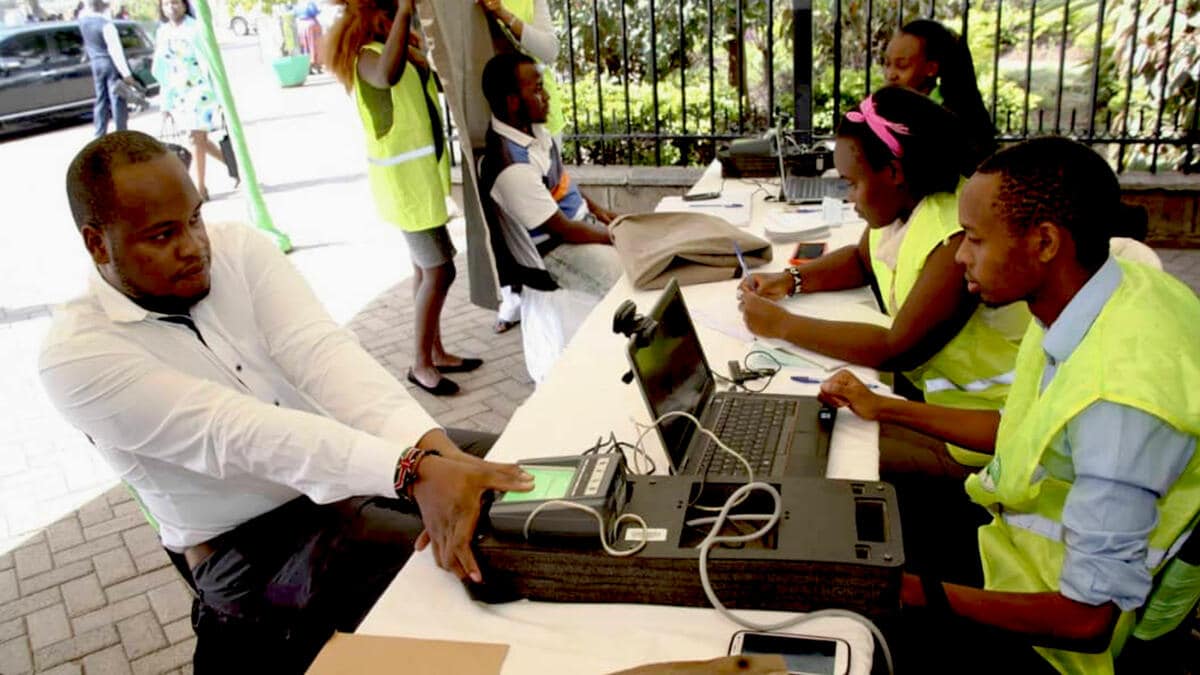
The most tangible sign of progress is Togo's national digital identity rollout. As of December 2025, more than six million Unique Identification Numbers (NIUs) had been issued, according to Biometric Update, driven largely by nationwide sensitization campaigns run by the National Identification Agency (ANID). The system is built on the open-source MOSIP platform under a 2021 agreement, and forms part of the West Africa Unique Identification for Regional Integration and Inclusion project (WURI), a World Bank-backed program spanning six West African countries that is now in its second phase. On July 16, 2026, during a visit by World Bank Managing Director of Operations Anna Bjerde, Togo signed the CFA257.4 billion ($429 million) financing package referenced above, which includes a further $20 million specifically earmarked to expand WURI's field operations and grow the number of ID card holders able to use their credentials for services and regional-integration activities. Total World Bank funding committed to WURI Togo now stands at roughly $72 million. A separate, earlier commitment — a $100 million Togo Digital Acceleration Project announced by the World Bank in December 2024 — is financing the broader digital transformation agenda that the identity system feeds into, including digital public platforms and government services.
The Connectivity Backbone: Equiano and Woezon
None of this digital public infrastructure works without physical connectivity, and Togo's is anchored by the Equiano submarine cable, a Google-backed project that landed in the country in 2022 in partnership with fiber operator CSquared. According to an Africa Practice impact assessment cited by Data Center Dynamics, the cable's arrival has been associated with more than 37,000 new jobs and an estimated $351 million contribution to Togolese GDP by expanding available internet capacity and lowering data costs. On the domestic side, the CSquared Woezon joint venture — a public-private partnership between the government and the private sector — continues to extend Togo's fiber-optic network into rural and previously isolated areas, a necessary complement to a coastal cable landing. Even so, Togo's underlying connectivity gap remains real: DataReportal's Digital 2026 report put internet penetration at 37.0% of the population (3.62 million users) as of October 2025, against mobile connections equivalent to 86.0% of the population — a familiar African pattern in which mobile access far outstrips actual internet use, underscoring why affordability and last-mile fiber expansion remain policy priorities even after the headline submarine-cable win.
A Two-Horse Mobile Money Race — Now With a Third Challenger
Togo's mobile money market is unusually concentrated and competitive for the region. Mixx by Yas holds roughly 58% of mobile money subscribers versus 42% for rival Flooz, according to industry data compiled by Riverpe, with overall mobile money penetration estimated at 57.2% of the population — a relatively high figure by West African standards. The market gained a new entrant in late 2025 when Gozem Money, the fintech arm of Lomé-based ride-hailing and delivery "super app" Gozem, launched its own mobile money service explicitly positioned to compete on price against the incumbent duopoly. Gozem's broader financial credibility was underscored in February 2025, when the company closed a $30 million Series B funding round — a deal size that, per African Business, briefly placed Togo among the continent's top five startup funding destinations for the period, an unusual feat for a market of Togo's size.
Plugging Into Regional Payment Rails
Togo's fintech sector is also being pulled into a larger regional integration project led by the Central Bank of West African States (BCEAO). The bank's PI-SPI instant payment platform, which launched across the eight-country West African Economic and Monetary Union (WAEMU/UEMOA) on September 30, 2025, allows instant, 24/7 transfers between banks, microfinance institutions, electronic money issuers, and payment institutions across the currency union. As of July 20, 2026, PI-SPI had connected 30 million users — nearly 40% of the union's estimated 75-80 million adults — and processed a million transactions worth 110 billion CFA francs (about $190 million), according to Togo First. In Togo specifically, BIA, Bank of Africa, Coris Bank, Ecobank, Orabank, and Cofina were listed among the institutions authorized to connect as of a February 24, 2026 BCEAO publication, while mobile money operator Mixx Togo has already joined the platform, enabling cross-border transfers across the currency union directly from mobile wallets. The BCEAO has extended connection deadlines twice, most recently pushing full bank and e-money issuer integration to September 30, 2026, with microfinance institutions given until June 2027 — a sign of both the platform's ambition and the practical difficulty of onboarding smaller financial institutions.

A Homegrown Startup Scene Finds Its Voice
Beyond Gozem's outsized fundraising, Togo's broader startup ecosystem has begun organizing itself more visibly. Fifteen Togolese startups came together in 2025 to form TogoTech, a collective aimed at strengthening the national tech ecosystem; the group represents a combined CFA2 billion (roughly $3.2 million) in revenue and more than 100 direct jobs, modest figures that nonetheless signal a maturing base of local operating companies rather than purely aid- or grant-funded pilots. African Business, describing Lomé's "quiet rise as a startup contender" in March 2026, credited a combination of policy reform, physical infrastructure, and standout ventures like Gozem for the shift, while cautioning that early-stage funding gaps and inconsistent policy execution still constrain the ecosystem's growth relative to larger regional hubs like Lagos, Nairobi, or Accra.
Outlook
Togo's digital transformation strategy is notable less for any single flagship project than for the way its pieces reinforce one another: a submarine cable and domestic fiber network provide the physical layer; a MOSIP-based national ID system, now nearing full population coverage and backed by a fresh $20 million tranche of World Bank financing, provides the trust layer; and a genuinely competitive mobile money market, now being stitched into a region-wide instant payment system, provides the transactional layer. The test for the next phase of Vision 2040 will be whether Togo can convert that infrastructure into a startup ecosystem and digital-service economy that grows faster than the roughly 37% of the population still outside the internet, and whether the private-sector investment the government is now courting materializes at a scale that matches the ambition of the CFA257.4 billion financing package signed this July.
Published By | Business News Editor