Written By | Fashion and Design Desk
At Casa No Tempo in Portugal's Alentejo, Studio Corkinho's cork-block pavilion treats quiet as a design material.
ALENTEJO, Portugal
In a world of noise, one of the most radical things a designer can offer is quiet. At Casa No Tempo, a former farmhouse in southern Portugal, Antwerp-based Studio Corkinho has built a pavilion devoted to exactly that. Its walls are stacked solid cork blocks, held together without glue or screws, and the whole thing can be taken apart and rebuilt elsewhere. Dezeen reported the project on November 2 under the headline "Cork forms walls of pavilion dedicated to silence at Casa No Tempo."
The Place and the Idea
Casa No Tempo is a property in the Alentejo region that architect Manuel Aires Mateus converted into a holiday home in 2014 and that has since become a silent retreat under the Silent Living banner, with clay floors, marble thresholds and oak wardrobes. It is, by design, a place where little competes for attention.
Studio Corkinho calls the new structure a "still room," a space for slow, quiet activities such as reading, yoga, tea ceremonies and meditation. The label comes from the studio's earlier work: its Still Room in Antwerp, completed in 2020, was a cork-filled space in a 19th-century building, and Dezeen has previously reported founder Cédric Etienne's argument that hotels and offices could include such rooms.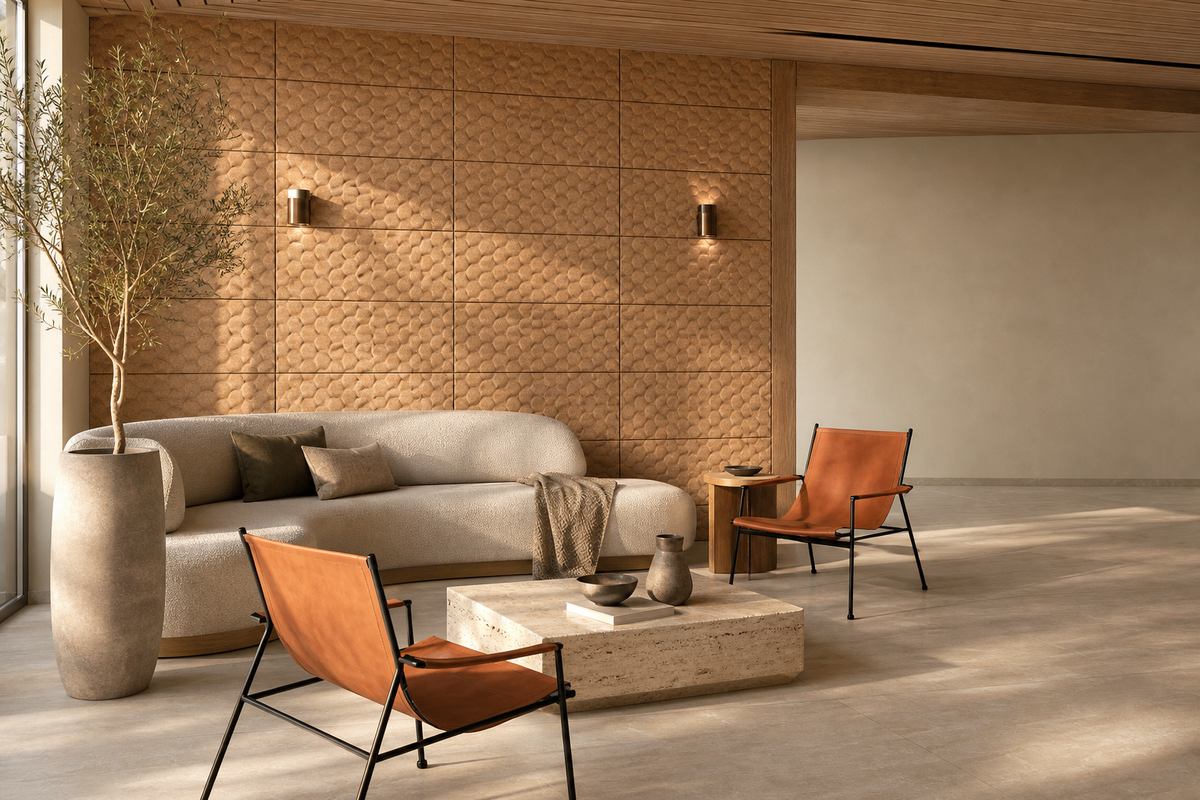
How It Is Built
The construction is the story. The floor is a timber deck set over removable concrete blocks. From it rise walls of solid cork blocks, stacked like oversized bricks. The blocks come from Sofalca, a locally based supplier, and were heat-treated to improve durability. Metal rods pass through milled channels in the blocks to hold the stack together, and a timber roof sits on top. Etienne describes the roof as "like a hat with four screws": its weight presses down on the cork, so nothing needs to be glued or fastened into the walls.
Because of that, the pavilion is demountable. It can be dismantled and reassembled on another site, leaving the land with minimal disturbance. Etienne compares the approach to Japanese teahouse construction, which emphasizes local materials and minimal harm to the ground, and says he aimed for zero waste and carbon neutrality.
Cork as Climate and Acoustic Control
Cork is not an arbitrary choice. The Alentejo region is home to cork oak forests, and the material is harvested from the bark, which regrows. According to Etienne, cork's properties, including its acoustics, scent and softness, shape the building's sensory and thermal character. He reports the interior stays at about 22 to 23 degrees Celsius when it is 40 degrees outside, a striking figure for a lightweight structure in a hot inland climate. These are the architect's own measurements, not independent testing, but they match cork's well-known insulating qualities.
The acoustic argument underpins the whole concept. In an earlier interview with Slowdown, Etienne described an "architecture of silence," arguing that cork absorbs sound and vibration and creates a void rather than a conventional room. "Cork allowed me to slow them down by giving them permission not to be busy," he said of the people who use such spaces, and he described his purpose as being "a voice for the empowering silence that the material offers to us all." He spent fifteen years as an event and set designer before turning to architecture focused on natural materials.
Why It Resonates Now
The project lands at a moment when design is paying close attention to circularity, the idea that a building should be able to be reused instead of demolished. A structure that stacks, tightens and comes apart is a literal expression of that principle. It also joins a wider interest in wellness architecture, with retreats and hospitality brands investing in rooms that offer rest and attention rather than entertainment.
There is a restraint to the approach that stands out. The pavilion has no technology, no smart controls and no decorative flourishes. Its sensory identity comes from a single material, used honestly. That discipline is what makes the case for silence persuasive.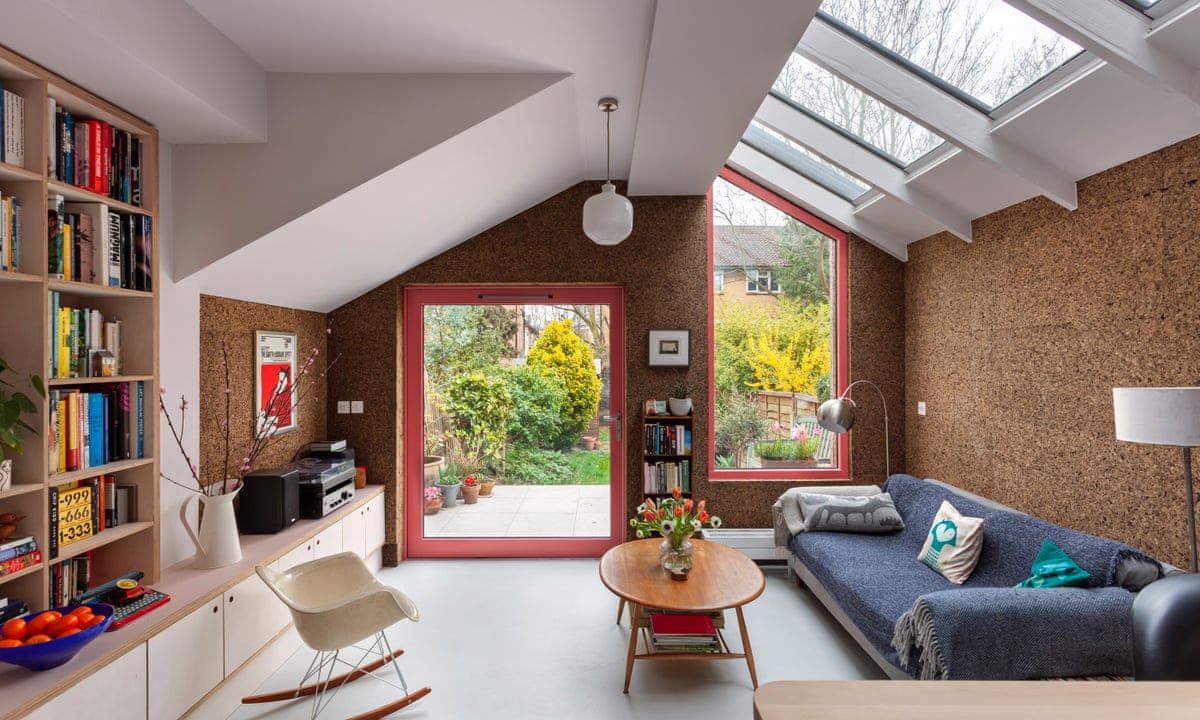
A Lineage of Quiet Rooms
Etienne's interest in cork is not new. Slowdown reports that a pop-up labyrinth he made for the 2014 Flanders Design Triennale used raw, burnt cork oak bark compressed into bricks, and that he was inspired by the cork harvest, which takes place only once every nine years. He has also described a philosophy of "contemplative hospitality," an approach that centers the guest's experience rather than the architect's ego.
Seen in that light, the Casa No Tempo pavilion is the latest step in a decade-long exploration of how a single material can shape behavior. Each project strips away more: fewer parts, fewer finishes, less to distract. The pavilion's stack-and-tighten structure feels like the most distilled version yet.
What This Means for You
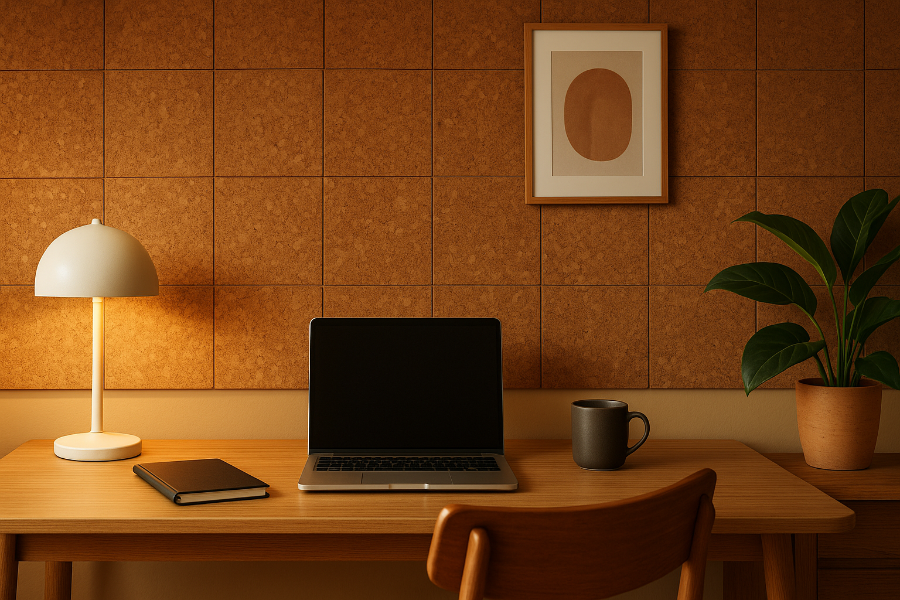
You do not need a pavilion to apply the idea. Cork is widely available as wall tiles, floor underlay and furniture, and it can soften a noisy room, particularly a home office or reading corner. More broadly, the project invites you to ask what a space is for. Designating one corner of a home as device-free and decorating it with natural, sound-absorbing materials is a modest version of a still room. For those planning renovations, choosing materials that can be reused or removed without waste is a practical echo of Etienne's approach.
The Bottom Line
Studio Corkinho's still room does not shout. That is precisely the point. By pairing a renewable material, a no-glue method and a clear purpose, it argues that sustainability and serenity can be the same design decision. Whether it stays in the Alentejo or one day gets rebuilt somewhere else, the pavilion offers a quiet lesson that good design can be loud with ideas and soft in sound.



