Written By | Joshua Nahamya
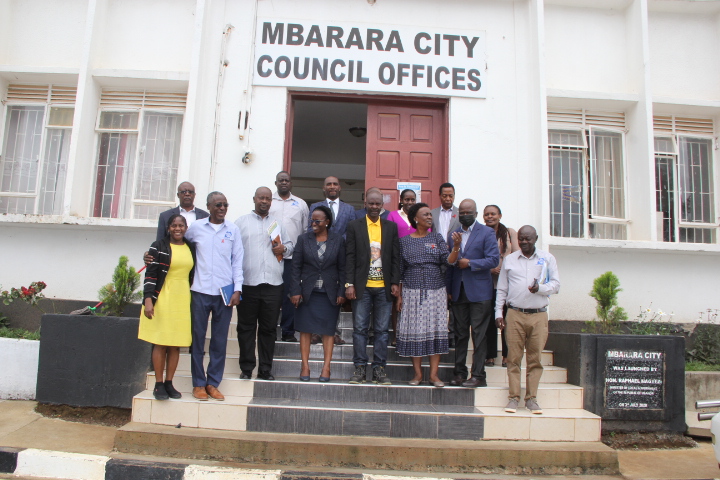
Mbarara City Council staff with Uganda AIDS Commission in a group photo at Mbarara City Council
MBARARA CITY
Leaders and health stakeholders in Mbarara have intensified efforts to accelerate HIV prevention and treatment interventions as part of the national campaign to end AIDS as a public health threat by 2030.
Officials from the Uganda AIDS Commission (UAC) joined Mbarara City authorities for a high-level engagement at the City Council Hall to review progress in the implementation of HIV prevention, treatment, and care services.
The campaign aligns with the global vision of UNAIDS to achieve the “Triple Zero” targets—zero new HIV infections, zero AIDS-related deaths, and zero discrimination.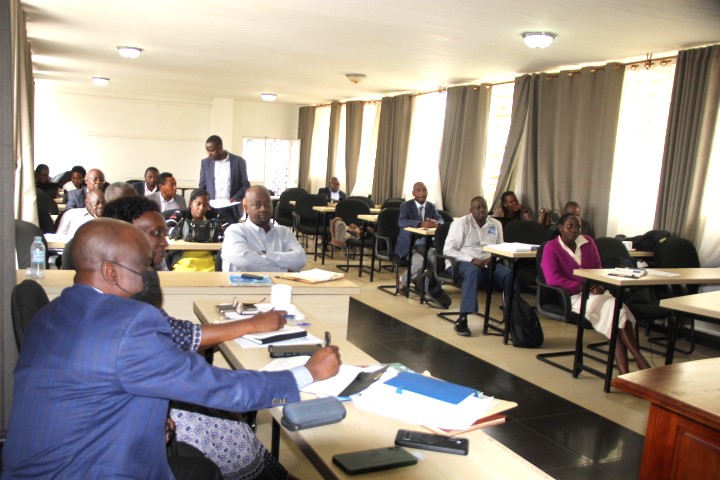
Mbarara City Authorities engaged in an HIV Stakeholders' Meeting on Tuesday
Rising HIV Infections Among Youth
During the meeting, the city’s HIV focal person, Dorcus Twinabaitu, presented recent health data showing that new HIV infections continue to affect residents across different age groups.
According to statistics recorded between January and December 2025, 42 children aged 0–14 years tested positive for HIV, including 20 girls and 22 boys.
However, the highest numbers were recorded among young people and adults. In the 15–24 age group, 367 females and 81 males tested positive, while in the 25–39 age bracket, 510 females and 373 males were diagnosed with HIV.
For individuals aged 40 years and above, 119 females and 186 males tested positive.
The data highlights the continued vulnerability of adolescent girls and young women, a trend that mirrors global HIV infection patterns.
In Total, 1016 females were positive while 662 males were positive
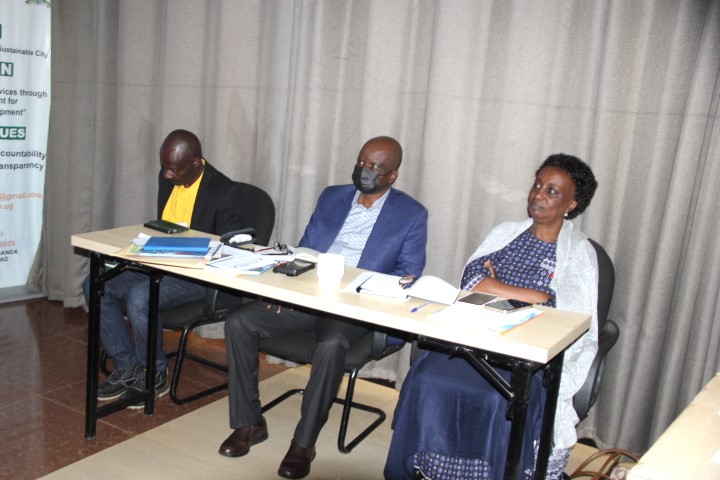
Some of the Officials from Uganda AIDS Commission sitted together with the Mayor Robert Kakyebezi
Call for Stronger Prevention Measures
Stakeholders were urged to strengthen implementation of the Presidential Fast-Track Initiative on HIV/AIDS, which promotes a comprehensive approach to prevention.
The initiative encourages abstinence, couple testing, consistent condom use, and strict adherence to antiretroviral (ARV) treatment among people living with HIV to achieve viral suppression.
The meeting brought together key city leaders and health officials, including Assistant Resident City Commissioner Polly Katwire, Mbarara City Mayor Robert Mugabe Kakyebezi, City Town Clerk Justine Barekye, officials from the Uganda AIDS Commission, and other health stakeholders.
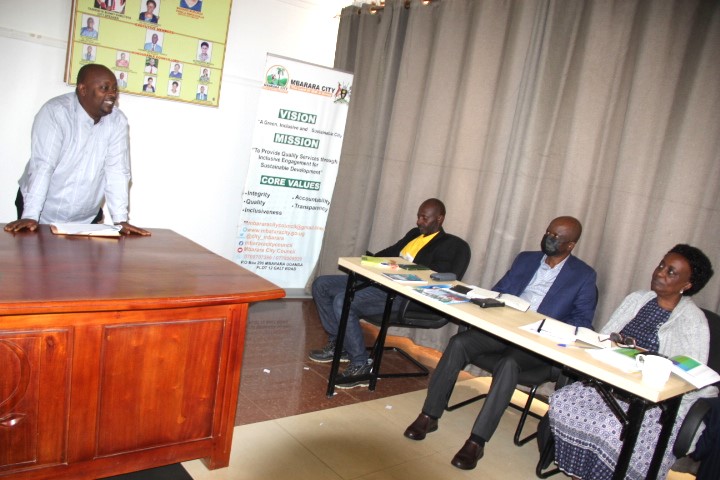
Polly Katwire, Assistant RCC addressing the gathering during the HIV engagement
Leaders Urge Personal Responsibility
Addressing the gathering, Mayor Kakyebezi appealed to residents—particularly young people—to take responsibility for protecting their health.
“I am appealing to the people of Mbarara City, especially the youth, to be mindful of their lives,” Kakyebezi said. “The future of our city depends on a healthy and productive generation. Government has provided the tools—testing kits, condoms, and ARVs—but individuals must also take responsibility.”
City Town Clerk Barekye reaffirmed the city administration’s commitment to working with the central government to scale up HIV prevention interventions.
“Together with the government, we will ensure that several interventions are strengthened so that HIV/AIDS is no longer a public health threat in Uganda by 2030,” Barekye said.
Focus on Global HIV Targets
Officials from the Uganda AIDS Commission reminded participants about the global 95-95-95 targets, which aim to ensure that 95 percent of people living with HIV know their status, 95 percent of those diagnosed receive treatment, and 95 percent of those on treatment achieve viral suppression.
Assistant Resident City Commissioner Katwire urged health teams to address persistent challenges such as stigma and treatment fatigue, which often discourage people from seeking testing and treatment.
“Testing is the first step to liberation,” Katwire said. “If you are positive, the medicine works—but you must take it consistently. If you are negative, remain that way through abstinence or protected sex.”
Renewed Commitment to End AIDS
The meeting concluded with stakeholders reaffirming their commitment to strengthening the Presidential Fast-Track Initiative and promoting the four key pillars of HIV prevention: abstinence for the unmarried, faithfulness in relationships and regular testing, consistent condom use, and strict adherence to ARV treatment for those living with HIV.
Officials said sustained community engagement and expanded access to testing and treatment services will be critical if Uganda is to achieve the goal of ending the AIDS epidemic by 2030.



