INDIANAPOLIS
For four years, 13,299 people in 30 countries injected themselves once a week and waited to find out whether they would have a heart attack.
They were not celebrities chasing a summer body. They were, on average, 64 years old. They had type 2 diabetes. They already had furred-up arteries — established atherosclerotic cardiovascular disease, in the language of the trial paperwork. Nearly half of them were on insulin. Their average blood sugar reading was 8.4 per cent, well above target. They were, in short, exactly the sort of patients who fill cardiology clinics on a wet Tuesday afternoon and who tend not to make the news.
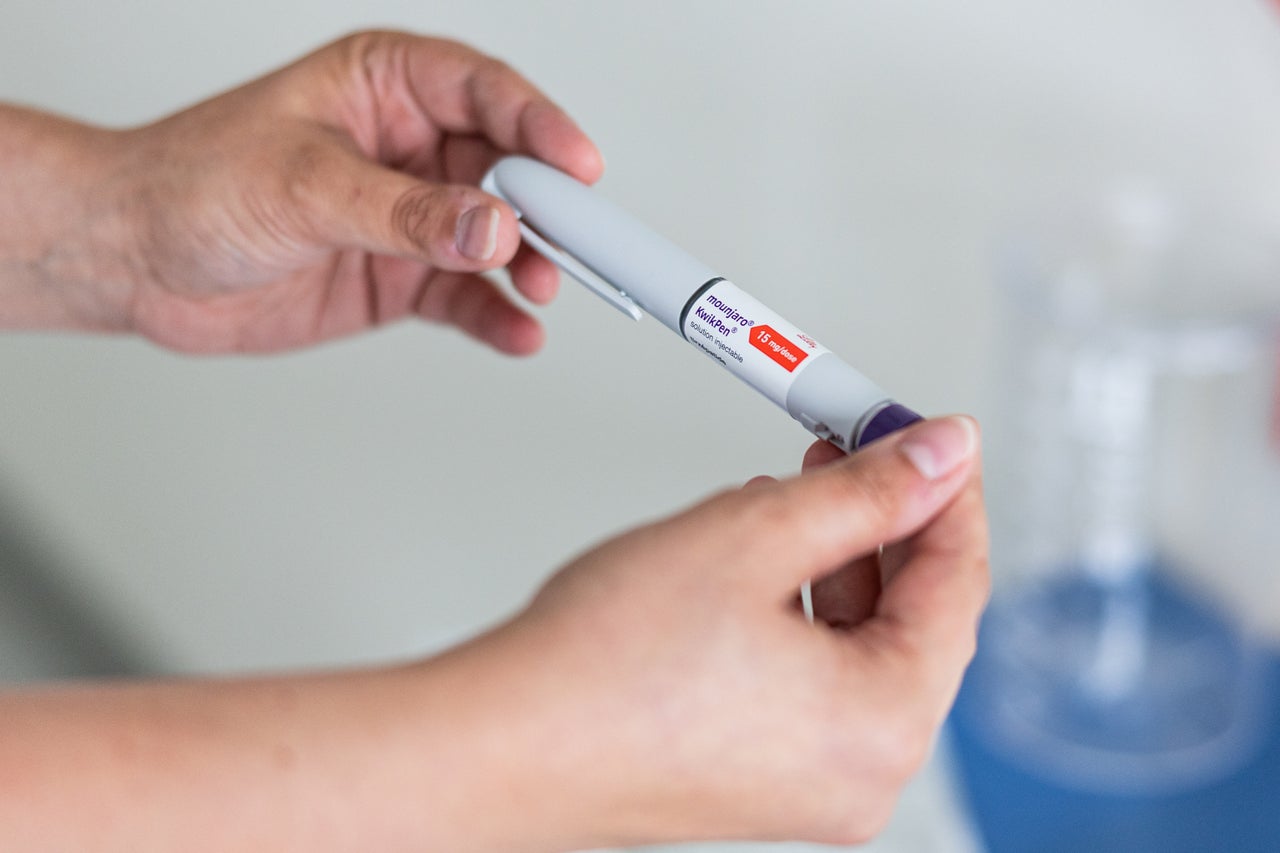
Last week, they made the news. On August 28, the US Food and Drug Administration approved Eli Lilly's Mounjaro — the drug the internet knows as a jab that melts stubborn weight — to reduce the risk of cardiovascular death, non-fatal heart attack and non-fatal stroke in adults with type 2 diabetes at high risk of those events.
It is the first and only dual GIP and GLP-1 receptor agonist ever cleared for that purpose. It is also, on the numbers, one of the most quietly contested approvals of the year.
WHAT THE FDA ACTUALLY SIGNED OFF
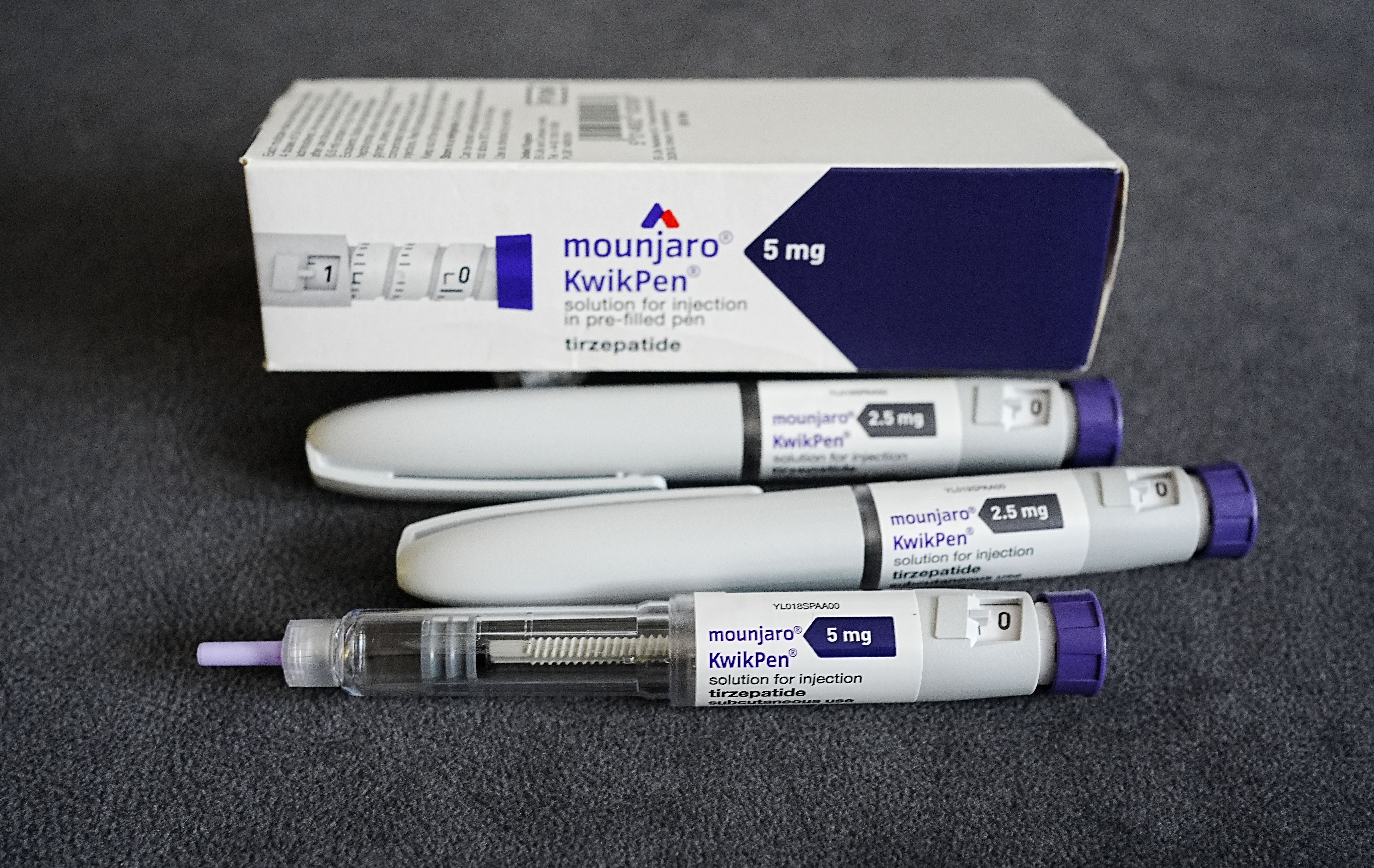
Mounjaro is tirzepatide. It has been on the US market since 2022 as a blood-sugar drug for adults and children aged 10 and over with type 2 diabetes. Lilly describes it as the number one most prescribed branded type 2 diabetes medicine for adults in the United States. Its chemical cousin, sold as Zepbound, carries the weight-loss label, and between them the two have made tirzepatide one of the most talked-about molecules on earth.
What changed on August 28 is not the drug. It is the promise printed on the box.
Until last week, a doctor prescribing Mounjaro could tell a patient it would bring their A1C down and very probably shrink their waistline. From now on, that same doctor can tell them something considerably more consequential: that a regulator has examined four and a half years of hard outcome data and agreed the drug lowers the odds of the thing that is most likely to kill them.
"For people with type 2 diabetes, heart disease is the leading cause of death," said Kenneth Custer, PhD, executive vice president and president of Lilly Cardiometabolic Health, in the company's announcement. Mounjaro "now gives them a proven way to lower that risk, adding to the strong foundation it has already built in A1C and weight."
Custer then said something that sounds like a boast and is actually a confession: "We set a higher bar by testing Mounjaro against a GLP-1 medicine with proven cardiovascular benefit."
That higher bar is where this story gets complicated.
THE TRIAL THAT REFUSED TO USE A SUGAR PILL
Almost every cardiovascular outcomes trial you have ever read about works the same way. Half the volunteers get the new drug. Half get a placebo — a dummy injection with nothing in it. You wait. You count the heart attacks. If the new drug's pile is smaller, you have a winner.
SURPASS-CVOT did not do that.
Lilly's researchers pitted Mounjaro head-to-head against Trulicity — dulaglutide — another Lilly drug, an older once-weekly GLP-1 injection that had already proved in the 2019 REWIND trial that it beat placebo at preventing cardiovascular events. It is the first cardiovascular outcomes trial ever to compare two incretin medicines directly rather than against a dummy.
Lead investigator Professor Stephen Nicholls of the Victorian Heart Institute at Monash University in Australia has explained the reasoning bluntly. Given how long the trial would run, GLP-1 use was only going to grow. "We felt that given this would be a long trial, there would be increasing use of GLP-1 receptor agonists, and it was the right thing to do: an active comparator study," he said. "Every patient gets an active drug, which we thought was good for patients and good for adherence."
There is an ethical argument buried in there, and it is a strong one. Jaime Almandoz, MD, of UT Southwestern Medical Center in Dallas, who had no involvement in the study, agreed the active-comparator design was the right call "given the strong evidence that GLP-1–based therapies reduce cardiovascular events, making a placebo-controlled trial inconsistent with current standards of care and ethical clinical practice."
Translation: by 2020, giving half of a group of high-risk diabetic patients nothing but salt water for four years had become something a decent researcher could no longer justify.
So Lilly gave everybody a real drug. And in doing so, it made its own headline result far harder to sell.
THE NUMBER THAT LAUNCHED A THOUSAND ARGUMENTS
Here is what happened over a median follow-up of 210.1 weeks — just over four years.
The primary endpoint was MACE-3: cardiovascular death, heart attack or stroke, whichever came first. It occurred in 12.2 per cent of the patients on Mounjaro and 13.1 per cent of those on Trulicity. The hazard ratio came in at 0.92, with a confidence interval running from 0.83 to 1.01.
That result cleared the bar for non-inferiority, with a p-value of 0.003. It did not clear the bar for superiority, where the p-value was 0.09.
In plain English: Mounjaro was proven to be at least as good as an already-good drug. It was not proven to be better.
For a company that has spent four years and an enormous amount of money on the largest and longest tirzepatide study ever conducted, "at least as good" is a strange trophy to hold up. And the awkwardness deepens when you look at what else the trial found.
Patients on Mounjaro lost dramatically more weight — 11.6 per cent of their body weight, against 4.5 per cent on Trulicity. Their blood sugar fell far further: a 1.66 percentage-point drop in HbA1c versus 0.88. Their triglycerides came down more. On every metabolic measure that the wellness industry has spent three years celebrating, tirzepatide crushed its rival.
And it still didn't move the heart attack needle enough to claim victory.
"THIS VALIDATES THE CARDIOVASCULAR BENEFIT"
Nicholls does not accept the pessimistic reading. "The take-home message is that this validates the cardiovascular benefit of tirzepatide," he told the cardiology outlet TCTMD when the full results were published in the New England Journal of Medicine. "We now have more evidence to use this agent in a range of clinical settings and, importantly, our patients have greater choice. What we now need to do is translate these benefits into better access: we have the tools to help our patients, so we just need to make sure they have access to use them."
He has a point, and the secondary results back him up. Individual rates of cardiovascular death, heart attack and stroke all numerically favoured Mounjaro. An expanded MACE endpoint that added coronary revascularisation — bypass surgery and stents — was significantly reduced with the newer drug. And all-cause mortality was lower on tirzepatide, a finding Nicholls said appeared to be driven by fewer non-cardiovascular deaths.
"This highlights the fact that ASCVD patients with diabetes are at a risk of a whole host of adverse clinical complications and we are seeing benefits of tirzepatide in this group," he said. "When you combine these findings with the metabolic benefits — better weight reduction, glycemic control, and effects on blood pressure and lipids — it adds up to a favorable outcome for patients."
Cardiologists writing in the specialist literature have been making a subtler defence still. The non-inferiority margin Lilly accepted in SURPASS-CVOT — an upper confidence bound of 1.05 — was unusually stringent, calibrated to preserve a substantial fraction of dulaglutide's own established effect. Set a brutal bar and clear it, and "non-inferior" means something very different from the same word attached to a lax one.
One analysis in Acta Diabetologica argued the trial "should not be interpreted simply as a study that failed to demonstrate superiority, but as a trial that illustrates how preserved efficacy, statistical governance, and drug mechanism jointly shape contemporary cardiovascular inference."
Which is a very long way of saying: this was not a flop. It was a draw with a champion.
WHY MORE WEIGHT LOSS DIDN'T MEAN MORE SAVED HEARTS
The most genuinely interesting puzzle in the whole affair is the one Nicholls himself finds hardest to answer. Mounjaro patients lost more than twice as much weight. Why did that not translate into a clear survival edge?
"If you look at the GLP-1 receptor agonist trials, whether they were in diabetes or overweight/obesity, the mediation analyses suggest the benefits are likely due to a complex interaction of multiple benefits as opposed to simply more weight loss," he said.
This is a quietly explosive idea for anyone who has been told that shedding pounds is the whole point. The cardiovascular protection these drugs offer appears to be doing something to blood vessels, inflammation and metabolism that is only loosely tethered to the number on the scale. Past a certain point, more weight loss may simply be delivering diminishing cardiac returns — even as it delivers real benefits elsewhere.
"That being said, more weight loss is likely to translate to specific clinical benefits: better control of sleep apnea, less need for joint replacements, and so on," Nicholls added.
Almandoz drew the practical conclusion for doctors. With cardioprotection now looking like a class effect across incretin drugs, "treatment decisions are likely to be guided less by expectations of large differences in cardiovascular outcomes and more by other factors, including weight loss, glycemic control, tolerability, and patient preference."

THE PART OF THE LABEL NOBODY QUOTES
Mounjaro's expanded indication arrives attached to a boxed warning that has not gone anywhere. The drug may cause thyroid tumours, including thyroid cancer, and must not be used by anyone with a personal or family history of medullary thyroid carcinoma or Multiple Endocrine Neoplasia syndrome type 2.
Beyond that sit pancreatitis, low blood sugar when combined with insulin or sulfonylureas, serious allergic reactions, dehydration severe enough to damage the kidneys, gallbladder problems, vision changes, and an increased risk of food getting into the lungs during surgery under anaesthesia — a warning worth remembering if you are booked in for an operation.
The trial's own tolerability data tell the honest story. Adverse events serious enough to make patients stop taking the drug were higher on Mounjaro than Trulicity — 13.2 per cent against 10.1 per cent — and the gap was driven overwhelmingly by gastrointestinal side effects. Roughly one in eight people quit. Nausea, diarrhoea, vomiting, constipation, indigestion and abdominal pain remain the everyday reality of dose escalation.
And there is one detail that ought to be shouted from rooftops rather than buried in a leaflet: Mounjaro can stop oral contraceptive pills from working properly. Lilly advises a different form of birth control for four weeks after starting the drug and for four weeks after every dose increase.
WHAT THIS MEANS FOR YOU
If you have type 2 diabetes and existing heart disease, this approval changes the conversation you should be having with your doctor — but probably not in the way the headlines imply.
First, the scale of the problem. Lilly's own release cites research suggesting as many as one in three US adults with type 2 diabetes have undetected cardiovascular disease. In the United States, one person dies of cardiovascular disease every 34 seconds; in 2023, 919,032 people died of it. Between 1999 and 2023, cardiovascular disease accounted for 626,706 deaths among American adults with type 2 diabetes. This is not an abstract risk.
Second, the practical takeaway. SURPASS-CVOT did not show that Mounjaro is the only heart-protective option — it showed the opposite. Trulicity, and by extension the wider class of GLP-1 drugs, held its own. If you are already stable and tolerating an older GLP-1, this trial is not a reason to switch. What it gives you is the confidence that if you and your doctor do choose tirzepatide for its superior weight and glucose effects, you are not trading away cardiac protection to get them.
Nicholls put the shared-decision framing plainly: "Where I'm aiming for more weight loss or better glycemic control, on top of good cardiovascular effects, I'm going to talk to my patients about tirzepatide being a better option for them."
Third, and unavoidably, the money. Lilly raised Mounjaro's US list price to $1,112.16 per 28-day supply on January 1, 2026. Without insurance, GLP-1 medications commonly run somewhere between $900 and $1,300 a month. Mounjaro is covered under Medicare Part D when prescribed for type 2 diabetes, and negotiated pricing is expected to bring the lowest doses closer to $245 a month with copays capped for eligible beneficiaries — but coverage remains a patchwork, and notably Mounjaro sits outside the new GLP-1 "bridge" pilot because it carries a diabetes indication rather than a weight-loss one.
A survey of 5,065 US adults conducted in May and June of this year found 11 per cent were currently taking a GLP-1 medication for weight loss, up from 3 per cent in 2024, with 15 per cent having used one at some point. The drugs are everywhere. Whether the people who need them most on cardiac grounds are the ones getting them is a different question entirely — and it is the one Nicholls keeps returning to.
Fourth, a caution about what this approval is not. It does not apply to people without type 2 diabetes. It does not apply to people with diabetes who are not at high cardiovascular risk. And it is not a licence to skip statins, blood pressure medication, or the unglamorous business of not smoking. In the trial, 81.4 per cent of participants were on metformin and 30.2 per cent on an SGLT2 inhibitor. Nobody was doing this with one injection alone.
THE BIGGER PICTURE
Strip away the marketing and SURPASS-CVOT tells a story about how quickly a field can move.
Six years ago, proving a diabetes drug protected the heart meant beating a placebo. Today, the evidence for GLP-1 cardioprotection is so solid that giving patients nothing is considered unethical, and a new drug has to fight an incumbent that already works. Mounjaro fought that fight over four and a half years, across 640 sites in 30 countries, and came out level on the primary measure and ahead on several secondary ones — while also delivering more than twice the weight loss and nearly twice the blood sugar reduction.
Regulators in the European Union have already folded the data into Mounjaro's product information, and submissions based on the trial are under review in additional markets.
Whether you read that as a triumph or an anticlimax depends largely on what you were told to expect. But for the 64-year-old with diabetes and clogged arteries sitting in a waiting room this morning, the practical answer is the same either way: there are now two proven ways to lower the odds, and a doctor who can help pick between them. That is not the miracle the internet was promised. It is considerably more useful.
Published By | Features Editor