LOS ANGELES
The Creative Arts Emmys are the part of Emmy season nobody live-tweets. Two nights at the Peacock Theater in downtown Los Angeles, a pre-taped broadcast dumped onto FXX a week later, and a long parade of categories with names like Outstanding Production Design for a Variety Special. It is where television hands out awards to the people who actually build television.
Which makes what happened on Saturday night unusually loud.
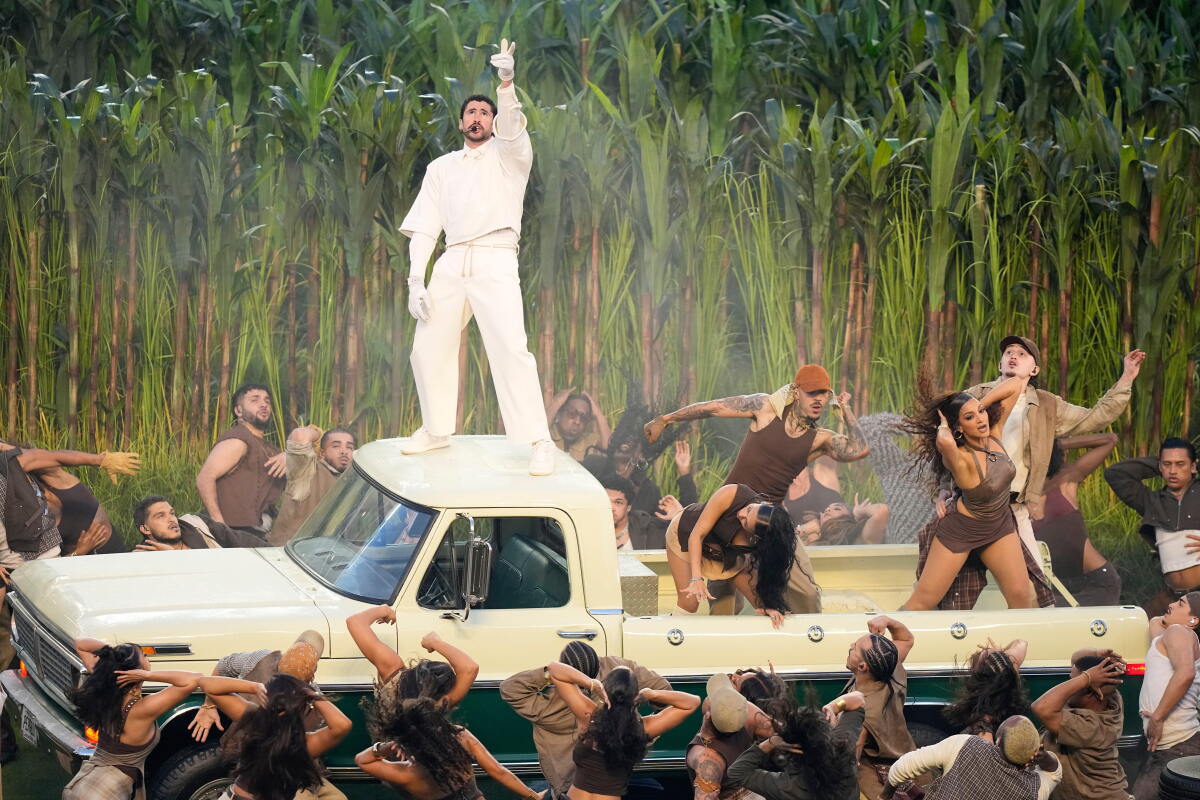
The Apple Music Super Bowl LX Halftime Show Starring Bad Bunny won seven Emmys — more than any Super Bowl halftime show has ever won. It led every programme on the night, including Outstanding Variety Special (Live) and Outstanding Directing for a Variety Special, plus a sweep of technical categories. For Benito Antonio Martínez Ocasio, it was a first Primetime Emmy.
Seven trophies for twelve minutes of television. It is worth sitting with that number.

The show that was a fight before it was a broadcast
When the halftime slot was announced, the reaction split along entirely predictable lines. A Spanish-language performance at the centre of the most-watched American broadcast of the year was, to a section of the commentary class, a provocation. There were calls for boycotts. There were op-eds about what the NFL owed its audience. The phrase "matter of contention" is doing a lot of work in the official write-ups.
Bad Bunny did not adjust. The show went out in Spanish, as promised, to the largest live audience American television assembles.
What the Television Academy has now done — and awards bodies are, whatever they claim, always doing this — is render a verdict. Seven Emmys is not a polite nod. It is the industry's technical membership, the directors and designers and lighting crews and sound mixers, voting in numbers that the show was not merely brave but *good*. Well-made. Better-made than anything else in its category.
That distinction matters. It is easy to give an award for courage. It is much harder to sweep the craft categories, because craft voters are notoriously indifferent to context. They are looking at camera moves and audio mixes and whether the lighting cues hit.
Who else won
The Traitors finished second on the night with six wins, including a repeat hosting award for Alan Cumming and Outstanding Directing for a Reality Program — confirmation that the format's peculiar alchemy of Scottish castles, cashmere capes and casual betrayal has settled into genuine institutional respect rather than novelty.
The Late Show with Stephen Colbert collected five, in its final season. There is a particular poignancy to that tally, a body of work being decorated on the way out the door rather than in the middle of a run.
The Muppet Show took four. Love on the Spectrum took three.
The wider Emmy picture, meanwhile, is set up for a genuine contest on September 14, when the 78th Primetime Emmy Awards proper are handed out. HBO Max's medical drama The Pitt led all programmes with 25 nominations. Hacks collected 24 for its fifth and final season — a new single-year record for a comedy series.
Why the technical categories are the real story
There is a temptation to read the halftime show's seven wins purely as a cultural statement, and that reading undersells the achievement.
A Super Bowl halftime show is one of the hardest live-television problems in the world. You have roughly six minutes to build a stage on a football field, twelve to perform, and six to remove every trace of it. There is no second take. The audio has to work in a stadium built for crowd noise and simultaneously mix for a hundred million television sets. The lighting has to read on camera in a venue with no lighting grid. The camera plan has to be choreographed to a performance that has never been run at full scale in the actual space.
Winning Outstanding Directing for a Variety Special under those conditions is not a sympathy vote. Neither are the six technical trophies that came with it.
The Creative Arts ceremonies exist precisely to make this visible — to separate the person on the stage from the several hundred people who made the stage possible, and then to reward both. In this case the Academy rewarded both, heavily, in one night.
The bigger shift underneath
For two decades the halftime show has functioned as American music's most conservative institution: a legacy-artist showcase, a greatest-hits medley, a nostalgia machine engineered to offend nobody in a room of a hundred million people.
A Spanish-language set winning the most Emmys in the event's history is a data point about where that machine now points. Not because of any single artist, but because the arithmetic of the audience changed and the programming eventually followed. Bad Bunny has been the most-streamed artist on the planet in multiple years without releasing an English-language album. The halftime booking was, in commercial terms, overdue rather than radical.
What the awards add is legitimacy of a different kind. Streaming numbers prove popularity. Craft Emmys prove quality, as judged by the people who do the work.

What this means for you
If you watched the show in February and argued about it with someone at a party, you now have a footnote to add. If you skipped it, the pre-taped Creative Arts broadcast airs on FXX on September 12 — worth an hour if you have any interest in how live television is actually assembled.
More usefully: this is a decent moment to notice how quickly a thing can move from contested to canonical. In February the halftime show was a culture-war item. By September it is the most-decorated halftime show ever made, and the argument has quietly moved on. That happens more often than the argument-havers admit.
And on September 14, at the main ceremony, The Pitt and Hacks will settle the year's other question. Hacks arrives with a comedy nomination record and a final season to send off. The Pitt arrives with 25 nominations and the weight of the year's most-discussed drama.
The loud part of Emmy season is still to come. But the record book was rewritten in the quiet part.
Published By | Entertainment Editor