MONTE CARLO
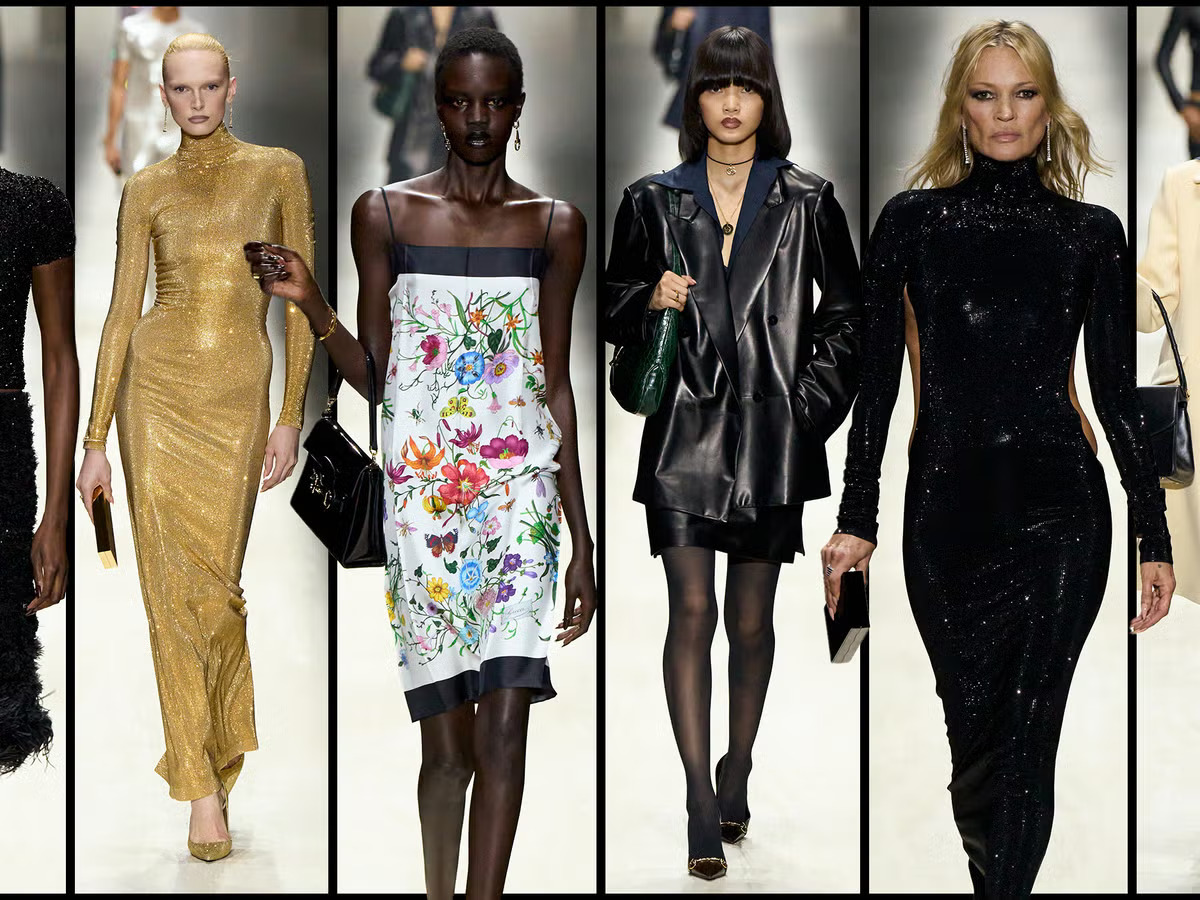
When Demna staged his debut as Gucci's artistic director in February, he skipped the runway almost entirely. In its place, the house premiered The Tiger, a short film directed by Spike Jonze and Halina Reijn, introducing a cast of characters grouped under the title "La Famiglia" — each with a distinct attitude that critics quickly identified as 1990s femme fatale by way of deliberate kitsch. Four months later, that vision has migrated from the screen to the south of France, where Gucci's spring/summer 2026 campaign is unfolding across Monte Carlo, giving the wider public its clearest look yet at what "Gucci-ness" means under its new creative leadership.
From La Famiglia to the Riviera
The new campaign, shot by veteran photographer Mark Seliger, is built around what the house describes as moments shaped by motion, light, and the spirit of escape — a fittingly cinematic brief for a setting that has functioned as a stage for fashion and glamour for the better part of a century. Monaco's blend of old-money permanence and jet-set transience gives Demna's Gucci a backdrop that does much of the storytelling on its own.
Gucci by Demna is for rich people who rich right. — critical assessment of the house's reinvented identity
Central to the campaign's visual identity is the Flora print, the house's six-decade-old botanical motif, reborn here in nocturnal hues rather than its traditionally sunlit palette — a small but telling choice. Rather than discard Gucci's most recognizable heritage signatures, Demna has chosen to bend them: keeping the Flora print legible while pushing its tonality into moodier territory.
Taking Over a Beach Club
The campaign's most visible real-world manifestation has been a full creative takeover of La Rose des Vents, Monte Carlo's storied beach club, which Gucci transformed into a living canvas for the Flora motif throughout the summer season. A special gathering on June 6 marked the launch of the activation, which runs through October. It's a strategy that trades the controlled environment of a runway show for the diffuse exposure of being woven into an actual summer destination — betting that authentic-looking lifestyle imagery will travel further organically than a conventional ad campaign.
That bet is consistent with Demna's broader strategy since arriving at Gucci in March 2025. Industry observers note his mandate from parent company Kering was explicit: steady a business that had been losing momentum, reassert creative authority, and refresh storytelling without abandoning heritage signatures. His February debut accomplished the first two goals largely through critical goodwill — reviewers broadly praised the collection's confidence even as some noted its retro sensuality occasionally tipped into nostalgia.

The Stakes for the House
Demna's appointment was always going to be scrutinized closely. He arrived at Gucci having built his reputation at Balenciaga and Vetements on a very different register — ironic, sometimes deliberately ugly, always conversation-starting — and the question has been whether that sensibility could be calibrated for a house whose identity has historically leaned toward maximalist glamour. The Monte Carlo campaign suggests an answer: glamour, but run through Demna's particular filter, where archive motifs get reinterpreted rather than replicated.
For Kering, the stakes extend beyond aesthetics. Gucci has long been the conglomerate's most important revenue driver, and a creative reset is understood as an attempt to reverse several quarters of softening sales. Early reception has been cautiously positive, but the real test — as with any creative-director transition at a house this size — will be measured in sales data well after the campaign imagery stops circulating.
What This Means for Shoppers
For consumers, the Monte Carlo campaign functions as a preview of where Demna intends to take Gucci's aesthetic: heritage motifs retained but recontextualized, a confident reassertion of maximalist instincts, and marketing built around lived-in lifestyle moments rather than studio-shot product imagery. Shoppers hunting for the Flora pieces should expect them positioned as statement items rather than entry-level accessories, continuing the house's push toward higher price points.
Whether the Riviera glamour translates into cultural momentum remains to be seen. But four months into the Demna era, the house has at least answered the question that greeted his arrival with clarity: this is still Gucci, just louder, moodier, and considerably more self-aware about its own excess.
Sources: Gucci; Kering; WWD; The Business of Fashion
Published By | Features Editor