Economic & Social Transformation
Two years of the most aggressive macroeconomic reform programme in a generation have left Nigeria a statistically larger, financially steadier, and yet socially strained economy. A sweeping national-accounts rebasing has redrawn the map of Africa's biggest population, floating-rate discipline has stabilised the naira, and a consolidated tax code took effect on January 1, 2026. But the same period has seen the number of Nigerians in poverty climb even as headline growth accelerated, exposing the gap between statistical recovery and lived experience.
A Bigger Economy on Paper
In 2025 Nigeria's National Bureau of Statistics completed a long-overdue rebasing of the national accounts, shifting the base year to 2019. The exercise captured activity that older methodology had missed — the digital economy, informal agriculture, modular refining and other fast-growing segments — and lifted nominal GDP by more than 40 percent. The International Monetary Fund incorporated the revised series into its April 2026 World Economic Outlook, which showed Nigeria's economy at roughly US$285 billion in 2025 and projected it to reach about US$334 billion in 2026.
At that level Nigeria is set to overtake Algeria, whose economy the IMF put near US$284 billion, to reclaim its position as Africa's third-largest economy behind South Africa (around US$443 billion) and Egypt (around US$399 billion). The rebasing is more than a vanity metric: a larger denominator mechanically improves Nigeria's debt-to-GDP and revenue-to-GDP ratios, giving the government more fiscal headroom on paper even before any new policy takes effect.
Growth, Oil, and a Strengthening External Account
The IMF upgraded Nigeria's 2025 growth estimate to 3.9 percent, half a percentage point above its earlier projection, before pencilling in about 4.1 percent for 2026 in the April 2026 outlook — a modest downgrade from the 4.4 percent it had flagged in January but still the country's firmest expansion in years. Domestic policymakers have been more bullish, with the Central Bank of Nigeria's macroeconomic outlook citing growth near 4.5 percent.
Higher oil output has underwritten the improvement. Crude and condensate production reached about 1.51 million barrels per day in July 2025 and climbed to roughly 1.663 million barrels per day in April 2026 — the highest monthly level of the year — as security around the Niger Delta improved and metering tightened. The external accounts have swung firmly into surplus: the current-account balance recorded a US$4.98 billion surplus in the first quarter of 2026, up from US$1.40 billion in the previous quarter, having already posted a US$5.28 billion surplus in the second quarter of 2025.
Foreign reserves have risen in step. Gross external reserves reached US$50.45 billion in February 2026, a thirteen-year high, after closing 2024 near US$40.8 billion and 2025 near US$45.5 billion. The CBN has projected reserves could touch US$51 billion by the end of 2026. The buffer has given the monetary authority room to defend a more stable currency.
The Reform Trinity: Subsidy, Naira, and Tax
The transformation rests on three politically costly reforms. The removal of the petrol subsidy freed up fiscal resources that the Federal Ministry of Finance has reallocated toward revenue and spending priorities. Complementing it, the February 2026 attainment of full 650,000-barrel-per-day capacity at the Dangote Refinery has begun to reduce Nigeria's reliance on imported fuel, easing pressure on both prices and the foreign-exchange market.
The second reform — the unification and floating of the naira — has matured into relative stability. In 2026 the currency strengthened below the psychologically important N1,400 mark on the official Nigerian Foreign Exchange Market for the first time in over a year, with the official rate firming toward N1,372 to the dollar. Governor Olayemi Cardoso has emphasised that the spread between the official and parallel markets has narrowed to under two percent, from more than sixty percent before the reforms.
The third pillar is the most structural. President Bola Tinubu signed the Nigeria Tax Act 2025 on June 26, 2025, alongside the Nigeria Revenue Service (Establishment) Act and companion administration bills. Effective January 1, 2026, the legislation repeals and consolidates a thicket of older statutes — company income tax, personal income tax, petroleum profits tax, value-added tax, capital gains tax and stamp duties — into a single modern code and establishes the Nigeria Revenue Service to replace the former revenue agency. Critically for equity, individuals earning ₦800,000 or less a year are now fully exempt from personal income tax; the government has said the reforms exempt roughly 98 percent of workers while broadening the overall base.
Inflation and the Limits of Disinflation
Price stability remains the softest part of the story. The CBN's monetary policy rate stood at 27 percent late in 2025, and the bank has signalled gradual loosening as inflation eases. Its own outlook envisaged average inflation of about 12.94 percent in 2026, down sharply from an estimated 21.26 percent in 2025. Yet the disinflation has proven uneven: annual inflation rose to 15.93 percent in May 2026, its highest reading in months, and under a new framework the central bank has set a 16.5 percent target for 2026. Food and fuel costs remain the swing factors, and the pace of rate cuts will hinge on whether the recent uptick proves temporary.
The Social Paradox: Growth Without Relief
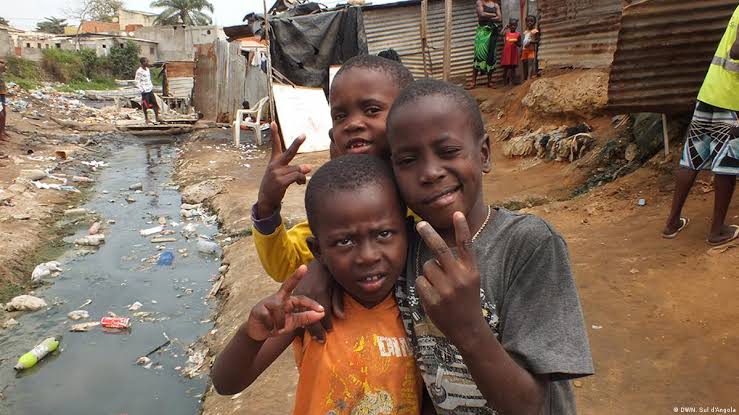
The starkest feature of Nigeria's 2026 is the divergence between macro recovery and household welfare. The World Bank projects that about 141 million Nigerians will live in poverty in 2026, with the poverty rate near 62 percent before edging down to 61 percent in 2027 — and separate readings have put the rate as high as 63 percent even as inflation cooled. The share of Nigerians in ultra-poverty, unable to meet basic caloric needs even by spending all income on food, rose from 14 percent to 27 percent between 2019 and 2023, equivalent to roughly 139 million people.
The Bank's April 2026 Nigeria Development Update, subtitled "Nigeria's Tomorrow Must Start Today: The Case for Early Childhood Development," warned that weak outcomes in child health, nutrition and learning threaten the country's long-run productivity. The implication is that macro stabilisation, however impressive, has not yet translated into improved living standards for most citizens. Reform savings will need to be channelled decisively into human capital and targeted transfers if the statistical recovery is to become a social one.
Outlook
Nigeria enters the second half of 2026 with genuine momentum: a rebased and larger economy, record reserves, a stabilised currency, a modern tax code and a refinery finally at full tilt. The unfinished business is distributional. Whether the Tinubu administration can convert a stronger balance sheet into falling poverty — through credible cash transfers, cheaper food and investment in early childhood development — will determine whether 2026 is remembered as the year Nigeria's reforms began to pay social dividends, or merely the year the numbers looked better than daily life.
Published By | Business News Editor