Written By | International News Agencies
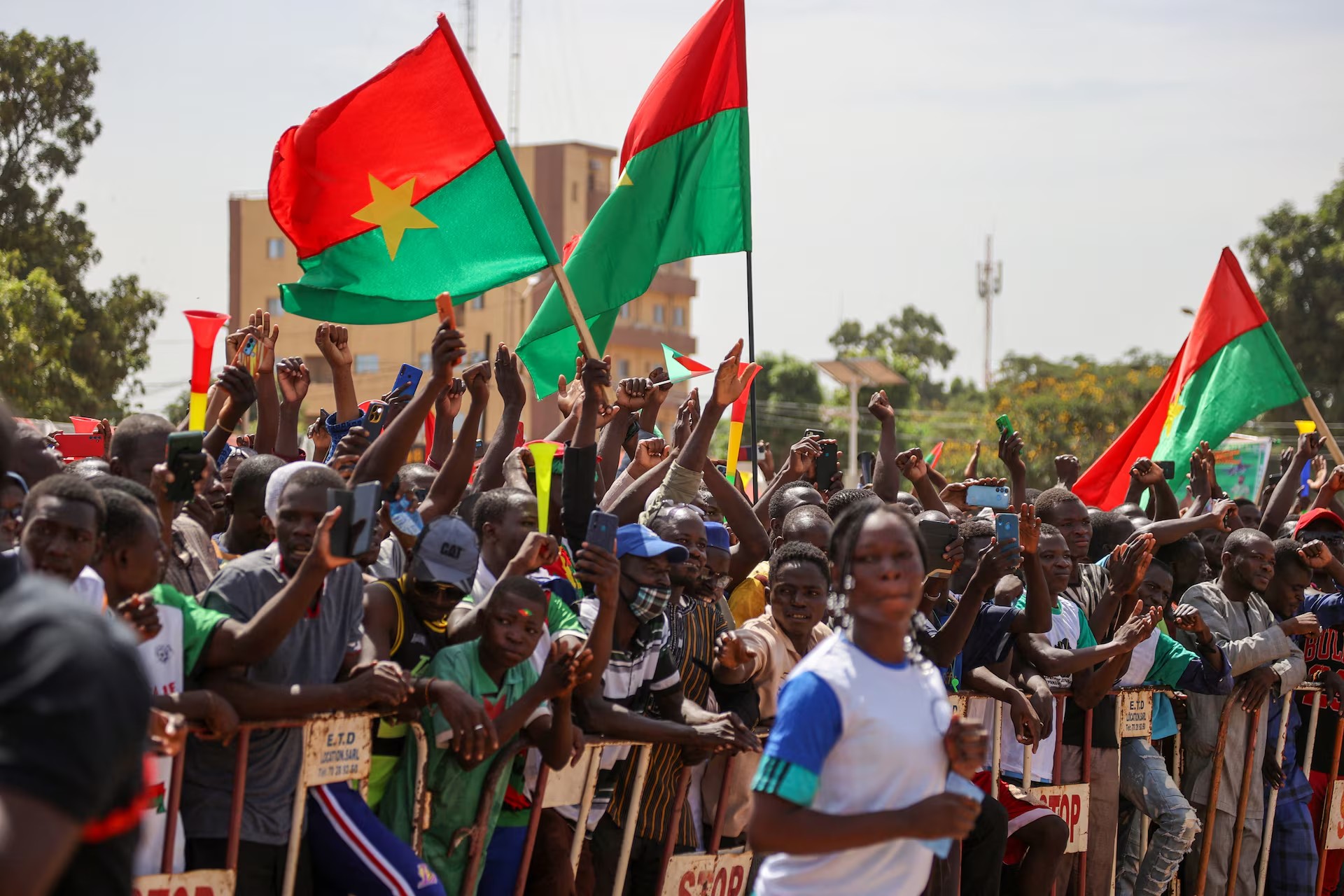
Burkina Faso extends junta rule by five years
OUAGADOUGOU, Burkina Faso
Burkina Faso's military government has spent 2026 dismantling what remains of the country's independent civic life at a pace that international rights monitors say is unmatched since the junta seized power nearly four years ago, culminating this month in a formal downgrade by the global civil society alliance CIVICUS, which added the country to its Monitor Watchlist on Aug. 1 and rated its civic space as "repressed." The designation, one of the starkest available under CIVICUS's rating system, caps a year in which the government led by military ruler Capt. Ibrahim Traoré dissolved more than 1,100 nongovernmental organizations, banned the country's largest student union, formally abolished all political parties and indefinitely suspended a major international broadcaster — even as Traoré has cultivated an image across the region and on social media as a defiant, pan-African champion of sovereignty against Western influence.
The watchlist decision, first reported by rights groups and regional outlets including Ghana's YEN.com.gh, places Burkina Faso alongside Bahrain, Georgia, India and Ecuador among countries CIVICUS is flagging for a rapid deterioration in civic freedoms. It follows years of tightening restrictions since Traoré, then a 34-year-old army captain, overthrew a preceding military government in September 2022 amid the country's decade-long war against Islamist insurgents linked to al-Qaeda and the Islamic State. But the scale of this year's campaign against civil society marks a distinct escalation, according to Human Rights Watch, the International Federation for Human Rights (FIDH), the World Organisation Against Torture and the Burkinabè rights group Observatoire KISAL, which jointly documented the crackdown in an April report.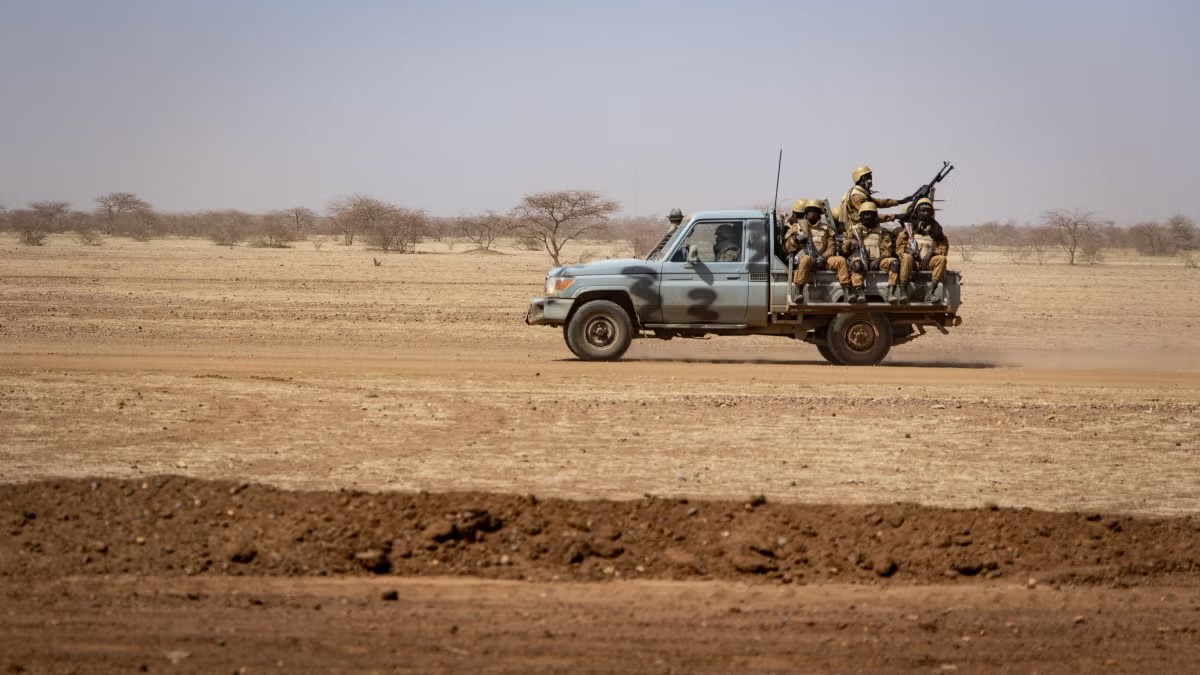
The immediate trigger was an April 15 decree from Burkina Faso's minister of territorial administration and mobility ordering the dissolution of 118 civil society organizations, many of them engaged in human rights work, citing alleged noncompliance with a July 2025 law on freedom of association, known as Law 011-2025/ALT. The law was introduced by the junta as a measure to regulate the nonprofit sector and combat money laundering and terrorism financing, but rights groups say it has functioned chiefly as a tool of control: it imposes burdensome new administrative requirements on organizations, mandates that foreign groups appoint Burkinabè nationals to leadership and financial posts — exposing those individuals to personal legal risk — and grants authorities broad discretion over registration. Crucially, the law gave organizations a full year to come into compliance, a deadline that, as of the April dissolutions, had not yet expired. "The military government's action, if based on alleged noncompliance with the 2025 law, appears legally questionable since the required time frame has not yet ended," said Ilaria Allegrozzi, a senior Africa researcher at Human Rights Watch, in the organizations' joint statement. "The scale of the shutdown is one of the most significant blows to civil society groups since the military took power and sends a chilling message to everyone else."
The April dissolutions were only the beginning. Between mid-April and early June, the government suspended hundreds of additional organizations on administrative grounds, and by June 11, at least 1,174 civil society organizations had been either suspended or dissolved, according to CIVICUS's tally. Among the casualties was the General Student Union of Burkina Faso, known by its French acronym UGEB and the country's largest student organization, which authorities suspended on May 26 for a renewable three-month period after it issued a statement criticizing the government's approach to national security. Press freedom has come under similar pressure: on May 5, Burkina Faso's national media regulator indefinitely suspended the French television broadcaster TV5 Monde, accusing it of spreading "disinformation" and content it characterized as an "apology of terrorist acts" — the channel's third suspension since 2024. In January, the junta went further still, formally dissolving all of Burkina Faso's political parties outright, saying the move was necessary to "rebuild the state," although party activity had effectively been frozen since the 2022 coup.
Binta Sidibé Gascon, president of Observatoire KISAL, described the dissolutions as part of a deliberate strategy of intimidation. "The mass dissolution of civil society groups is the Burkina Faso junta's latest effort to silence dissent and avoid scrutiny of its grim human rights record," she said. "The decision reinforces a climate of fear that is crippling independent civic activity." Some organizations targeted, including Action by Christians Against Torture and the Burkinabè Coalition for Women's Rights, were operational and appeared to meet the law's requirements, according to the joint rights groups' investigation, undercutting the government's stated legal rationale.
The pressure on civic space has extended well beyond organizational dissolutions to the treatment of individuals. Since the 2022 coup, Burkinabè authorities have detained more than 70 humanitarian workers, according to reporting cited by Human Rights Watch, and have used a sweeping April 2023 "general mobilization" decree — originally framed as a wartime measure to requisition people and resources for the counterinsurgency campaign — to forcibly conscript into military service dozens of journalists, activists and judicial personnel who have criticized the government. Prominent investigative journalist Serge Oulon remains missing after being feared unlawfully conscripted, one of several cases that rights groups say fit a pattern of using military mobilization as a pretext for silencing critics; other journalists and activists conscripted in 2025 were released between July and October of that year, but not all. In a case that drew international attention, security forces in mid-2025 arbitrarily detained eight staff members of the Netherlands-based International Group Safety Organization, a humanitarian safety group, accusing them of espionage and treason before finally releasing them in December 2025. Burkinabè authorities also expelled the United Nations' top human rights official in the country, Carol Flore-Smereczniak, in August 2025, declaring her persona non grata after a UN report documented violations against children in the conflict. Adding to the climate of fear, a September 2025 family code provision now allows authorities to strip Burkinabè citizenship from anyone deemed to be acting against state interests, creating what rights groups describe as a risk of statelessness for targeted activists, journalists and dissidents.
Drissa Traoré, FIDH's secretary general (no relation to the junta leader), framed the crackdown as a direct threat to the country's long-term stability. "A strong and independent civil society acts as a safeguard against abuses of power and amplifying the voices of marginalized communities," he said. "The Burkinabè authorities should enable civil society groups to work freely and uphold the fundamental rights and liberties of everyone in Burkina Faso." CIVICUS, in its own analysis published through its Lens platform, went further, warning that despite Ibrahim Traoré's carefully cultivated image on social media as a youthful, defiant pan-African leader standing up to former colonial powers — an image with genuine resonance among young people across West Africa and beyond — he in fact presides over a government responsible for enforced disappearances, forced conscription of journalists and activists, and arbitrary arrests.
The crackdown is unfolding against the backdrop of a worsening security crisis that the junta itself has struggled to contain despite promising, as its central justification for seizing power, to defeat the Islamist insurgency more effectively than the civilian government it overthrew. A separate Human Rights Watch report published in April documented war crimes and crimes against humanity committed by all parties to the conflict since 2023, a finding the military government responded to by threatening "firm measures" against what it called "imperialist labs disguised as NGOs." That threat appears to have been followed through on in the ensuing months. The government has also imposed a "statistical visa" requirement on organizations before they can conduct surveys or research — a costly and time-consuming process one humanitarian worker told Human Rights Watch "impedes independent data collection and analysis in a context which is already extremely closed."
The international response so far has been limited largely to statements of condemnation and, from the United States, tangible but narrow measures: Washington has placed Burkina Faso under an expanded travel ban alongside Mali, Niger, South Sudan and Syria, citing security concerns, though the practical leverage such measures exert over the junta remains uncertain. Burkina Faso's alignment with Mali and Niger in the Alliance of Sahel States — a bloc the three military governments formed after breaking from the regional body ECOWAS — has in some respects insulated Traoré from regional pressure, since all three governments have pursued similar crackdowns on civil society, media and political opposition and have found mutual diplomatic cover in doing so.
What happens next will likely determine whether Burkina Faso's civic space, already rated among the most restricted in the world, contracts further still. CIVICUS and its partner organizations are calling on African democracies and international partners to press for a return to civilian rule and to protect the remaining independent civil society and media organizations from further reprisals, but with elections nowhere on the junta's horizon and the security crisis showing no signs of resolution, rights groups say they expect the pattern of dissolutions, detentions and disappearances to continue. For a government whose founding promise was to restore security, the mounting toll on civilian institutions — measured now in the thousands of suspended organizations and the dozens of missing or detained critics — has become as defining a feature of its rule as the war it was meant to win.



