Written By | International News Agencies
Paul St-Pierre Plamondon, becomes premier-designate
World Politics
Overview
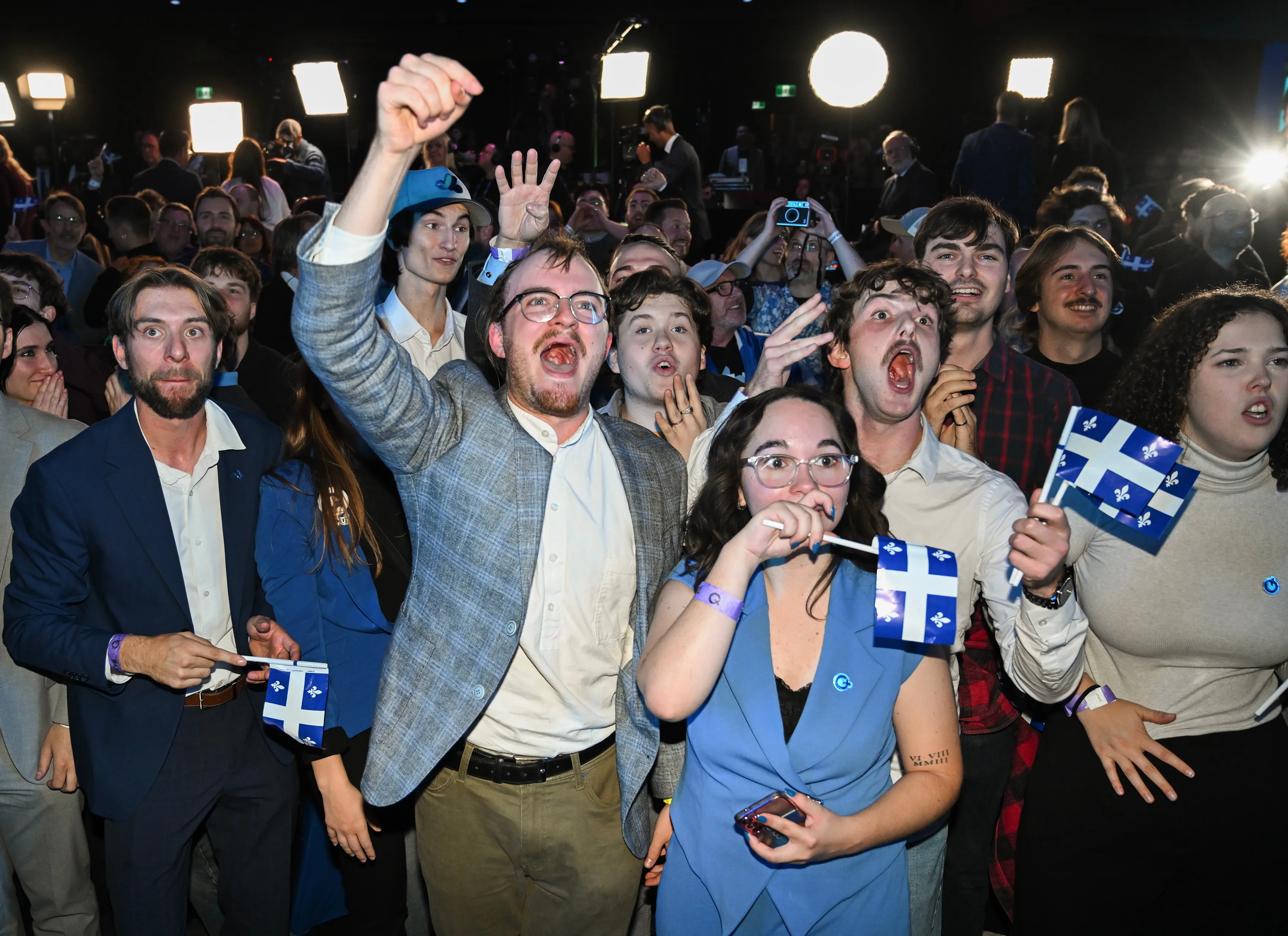
Quebec voters ended eight years of Coalition Avenir Québec government on October 5 and handed the most seats to the Parti Québécois, the party whose founding purpose is to take the province out of Canada. The result, reported by CBC, CTV, Al Jazeera and others on October 5 and 6, is a minority government rather than a mandate: the PQ won 59 of the National Assembly's 127 seats, five short of the 64 needed for a majority. Its leader, Paul St-Pierre Plamondon, becomes premier-designate and has repeated his promise to hold a third referendum on sovereignty during his first term.
The election was remarkable on several fronts at once. The outgoing governing party, the CAQ, was wiped out entirely, winning no seats at all, and its leader and premier, Christine Fréchette, lost her own Trois-Rivières seat by 499 votes according to one account. The winning party took only about 28 percent of the vote by one tally, which The Walrus described as the lowest winning share in a Quebec general election since Confederation. And the province's politics now look genuinely five-sided, with Liberals, Conservatives and the left-wing Québec solidaire all holding meaningful blocs. For Prime Minister Mark Carney, who has made national unity a theme of his government, the result opens a new and unwelcome front.
Background: How a Third-Place Party Came Back
The scale of the turnaround is easiest to see against the 2022 election, when the CAQ under François Legault won 90 seats on 41 percent of the vote and the Parti Québécois collapsed to just three seats on roughly 14.6 percent. The PQ had been written off by many commentators as a spent force. St-Pierre Plamondon, who became leader in 2020, spent years rebuilding the party, and the Walrus noted that he never wavered on the referendum pledge even when presented with opportunities to soften or abandon it. The party's recovery became visible in by-elections, including a fourth by-election win reported in February 2026.
The CAQ, meanwhile, came apart. Legault, who had blown up Quebec's old Liberal-versus-PQ order when he won in 2018, resigned as premier on January 14, 2026. Fréchette won the party's leadership on April 12 and took over as premier, then asked the lieutenant governor to dissolve the legislature on August 27, triggering the campaign. Before dissolution the CAQ still held 79 seats in the Assembly, according to Wikipedia's pre-election summary, so the fall to zero is among the most complete collapses of a governing party in modern Canadian provincial politics.
The campaign was fought largely over housing affordability, the cost of living, health care and the governance of Santé Québec, French-language protection and immigration levels, with sovereignty and referendum timing running through all of them. Polling in early September had the PQ leading at around 29 percent, with the CAQ at 23 to 24 percent and the Liberals at 20 to 22 percent, and seat projections already pointed toward a PQ minority.
Key Developments: The Numbers
According to the seat tally reported by Okay News, the PQ won 59 seats, the Quebec Liberal Party 40, the Conservative Party of Quebec 19, Québec solidaire nine, and the CAQ none, which sums to 127. Vote shares reported in the same account were 28.02 percent for the PQ, 24.22 percent for the Liberals, 20.67 percent for the Conservatives, 13.35 percent for the CAQ and 12.43 percent for Québec solidaire. Turnout was reported at 66.89 percent, with just over 4.3 million ballots cast. Some outlets rounded the PQ's share to about 30 percent, so the exact figure is worth checking against Élections Québec's final count.
The Liberals, led by Charles Milliard, more than doubled the seat total they held at dissolution of 18 and now form the official opposition. Éric Duhaime's Conservatives went from a single seat to 19 and reached what The Walrus called a new high of about 20 percent among francophone voters; Duhaime told supporters on election night, "You have now a real choice." Québec solidaire, led by co-spokespeople Ruba Ghazal and Sol Zanetti, lost ground, falling from 11 seats at dissolution to nine.
On election night St-Pierre Plamondon struck a conciliatory note, pledging to serve all Quebecers and acknowledging, in the words of one report, that voters wanted him to work with other parties. He did not retreat from the referendum, but he added a timing caveat that has become the most discussed line of the night: he indicated he would wait until United States President Donald Trump leaves office in January 2029 before holding a vote. That places a referendum in the second half of a four-year mandate at the earliest, assuming the government survives that long.
The Minority Problem
A minority government in Quebec's 127-seat Assembly has to find five or more additional votes on every confidence question, and none of the obvious partners is a natural fit. The Liberals and Conservatives are both federalist and have little interest in propping up a referendum project. Québec solidaire is sovereigntist but sits to the left of the PQ on many economic questions, and with nine seats it cannot deliver a majority alone; the PQ would need it plus at least one more member. In practice the PQ can expect to govern issue by issue, and any legislation tied to a referendum, such as a law setting out the process or the question, would likely face a hard path.
Analysts quoted in the coverage read the minority as a deliberate signal from voters. Former NDP leader Tom Mulcair said Quebecers seemed to be breathing a big sigh of relief that the PQ had not won a majority. The Walrus made a similar point, arguing that St-Pierre Plamondon must balance his sovereignty ambitions against winning over a public that mostly is not interested in either a referendum or secession. Al Jazeera cited McGill professor Daniel Béland as saying support for independence remains around 30 percent, low by historical standards. Quebecers rejected independence in 1980 and again, by a razor-thin margin, in 1995.
The gap between voting for the PQ and voting for sovereignty is the central fact of the election. Many ballots for the party appear to have been a rejection of the CAQ and a vote for change on housing and cost of living, not a vote to leave Canada. That gap is the PQ's main vulnerability and also its main argument: St-Pierre Plamondon can claim that a governing party that delivers competent services will gradually make independence look more plausible.
Reactions
Prime Minister Carney spoke with the premier-designate after the result and described Canada as being at a crucial time, a notably measured choice of words that avoided confrontation while acknowledging the stakes. Ottawa's approach to a sovereigntist government will be closely watched. Federal law since the Clarity Act of 2000 requires a clear question and a clear majority before the federal government would negotiate secession, a framework that the PQ has long rejected as illegitimate, so a legal and political argument over the terms of any vote is likely well before a ballot is held.
The result also lands in a country already discussing other constitutional tensions. Al Jazeera noted that talk of an independence-related referendum in Alberta has been circulating, and commentators are likely to read Quebec's vote alongside it as a sign of strain in the federation. Business groups, which historically become nervous about sovereignty politics, had not yet issued detailed responses in the sources reviewed for this article, and it remains to be seen whether investment or bond markets react.
What Comes Next
The immediate steps are procedural. The premier-designate must be sworn in with a cabinet, and the new Assembly must meet and pass a throne speech, which will be the first confidence test. Watch whether the Liberals and Conservatives treat that vote as an opportunity to force an early election or choose to let the PQ govern for a time, an option that may suit parties still absorbing their own gains and losses. The CAQ's leaderless, seatless condition also raises questions about whether it survives as a political force or whether its voters and organizers are absorbed by the Conservatives and Liberals.
Over the longer term, the question is whether the referendum pledge is a plan or a posture. Waiting until January 2029 gives the PQ time to build support from roughly 30 percent toward a threshold that would make a vote winnable, but it also exposes the party to a full term of minority-government compromises and to a federal government that can use the time to make its own case. Polls on independence, the PQ's standing among younger francophones, and the behavior of the Conservatives, who now compete for the same nationalist-leaning voters on identity and immigration, will be the indicators to follow.
For Carney, the challenge is to respond without feeding the grievance narrative that sovereigntists rely on. For Quebecers, the more immediate stakes are mundane: whether a fragile government can address housing and health care. The paradox of the election is that the party that exists to pursue a constitutional rupture was elected, in large part, on promises of ordinary governance, and its success or failure at the latter will determine its odds at the former.



